Subaortic Stenosis in a Young German Shorthaired Pointer
Subaortic stenosis in German Shorthaired Pointers causes left ventricular hypertrophy, impacting blood flow through the aortic valve.
Know what to watch for.
Breed-specific conditions, screening and DNA tests, what surgery actually costs, and the daily habits that stretch a healthy lifespan.
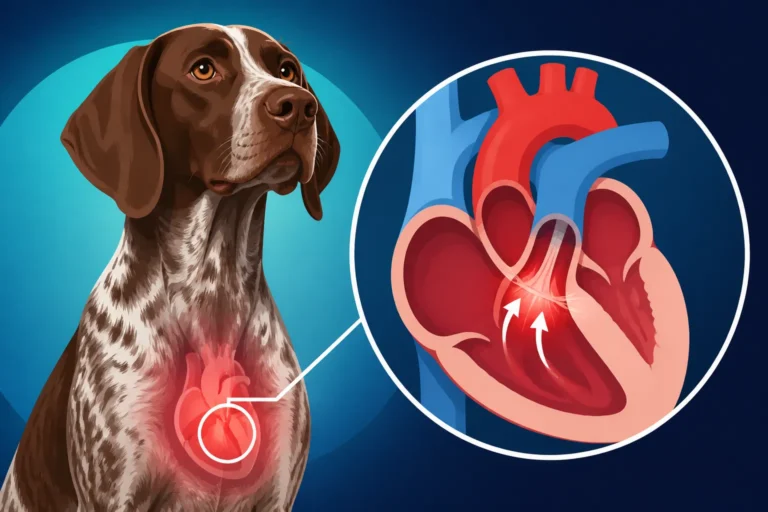
Subaortic stenosis in German Shorthaired Pointers causes left ventricular hypertrophy, impacting blood flow through the aortic valve.
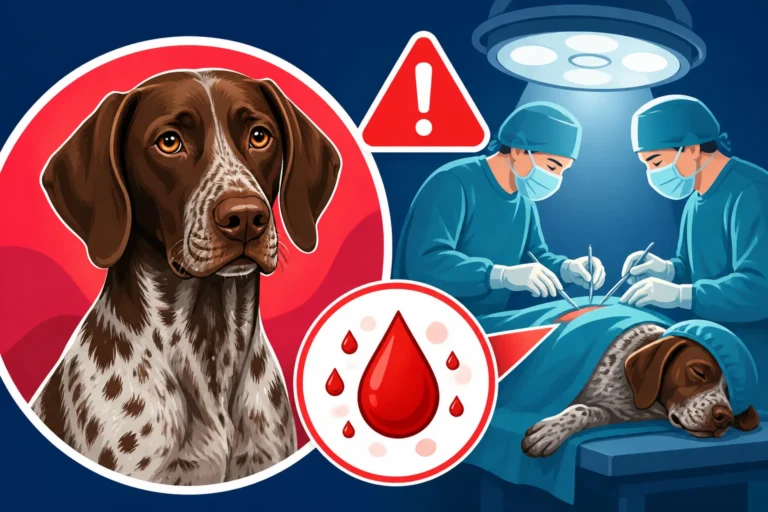
Bleeding risks during German Shorthaired Pointer surgery, including clotting factors, platelets, and Von Willebrand Disease type two.

Von Willebrand disease testing for German Shorthaired Pointers explains Type II bleeding disorders before breeding dogs.
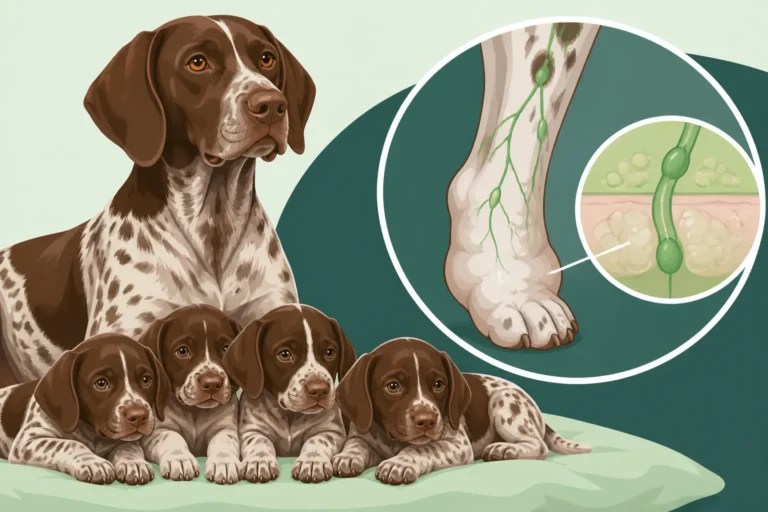
Primary lymphedema in German Shorthaired Pointer litters causes swollen limbs due to lymphatic system defects present from birth.

German Shorthaired Pointer chronic skin disease management involves identifying food allergies and inherited conditions like lupoid dermatosis.
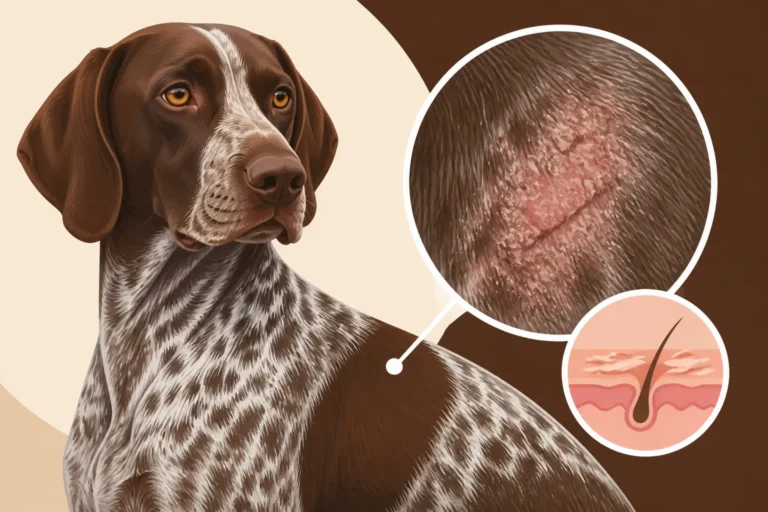
Lupoid dermatosis in German Shorthaired Pointers is an autoimmune disease causing scaling skin, hair loss, and sebaceous gland damage.
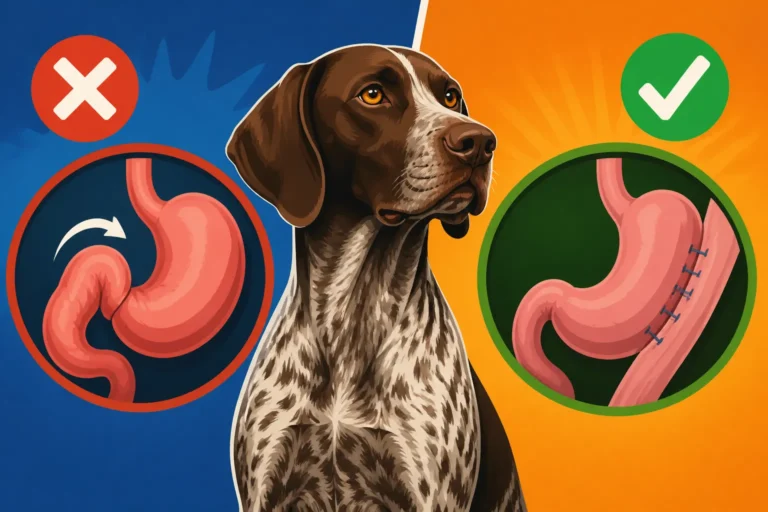
Gastropexy surgery prevents fatal stomach twisting in German Shorthaired Pointers by securely tacking the organ to the abdominal wall.
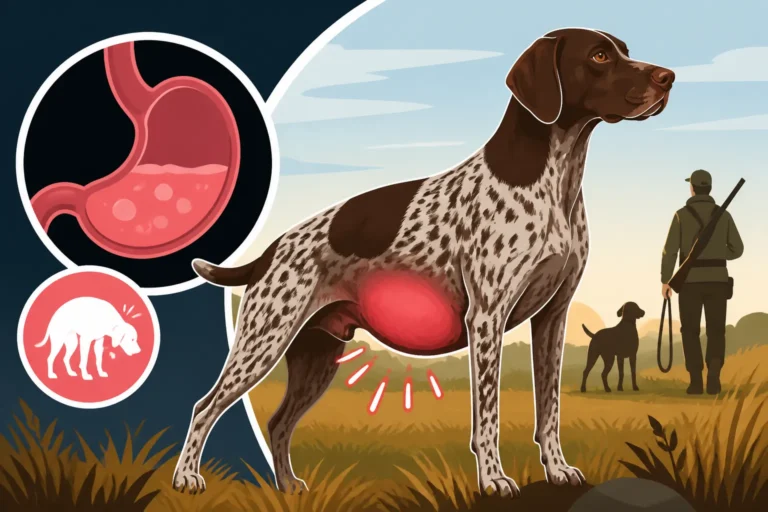
Gastric dilatation-volvulus in German Shorthaired Pointers explains how the stomach fills, twists, and causes fatal medical emergencies.
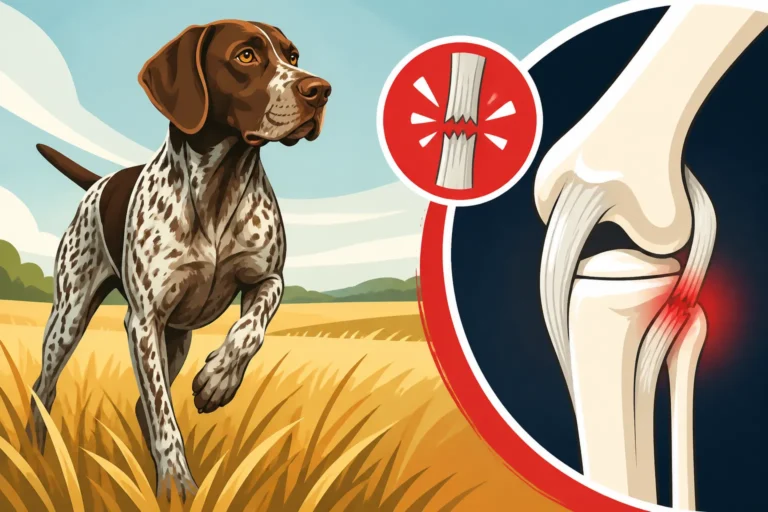
Cranial cruciate ligament tears in field bred German Shorthaired Pointers cause knee instability, pain, and tibia sliding.

The five required health screenings for German Shorthaired Pointers explain how dogs earn an official CHIC database number.