PennHIP Numbers on a German Shorthaired Pointer
PennHIP numbers and the distraction index measure hip joint laxity to evaluate dysplasia risk in German Shorthaired Pointers.
Know what to watch for.
Breed-specific conditions, screening and DNA tests, what surgery actually costs, and the daily habits that stretch a healthy lifespan.
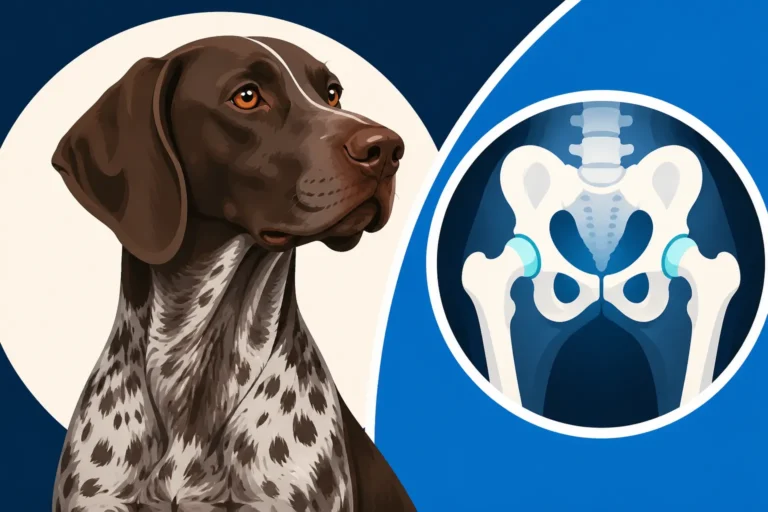
PennHIP numbers and the distraction index measure hip joint laxity to evaluate dysplasia risk in German Shorthaired Pointers.
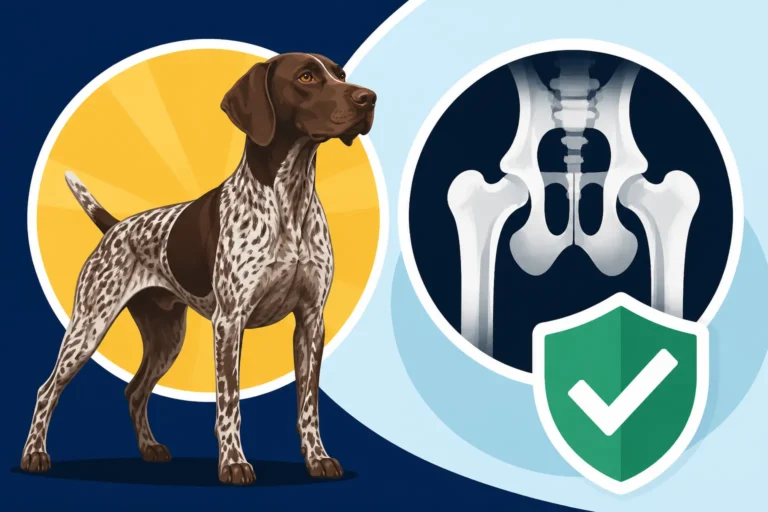
Orthopedic Foundation for Animals hip certification requires German Shorthaired Pointers to reach twenty four months of age.
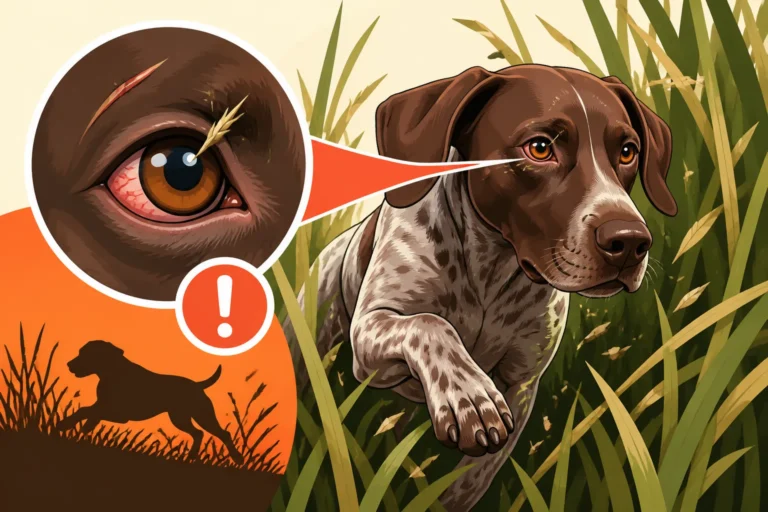
German Shorthaired Pointer eye injuries from heavy cover include corneal abrasions, scratches, and punctures from thorny bushes and grasses.
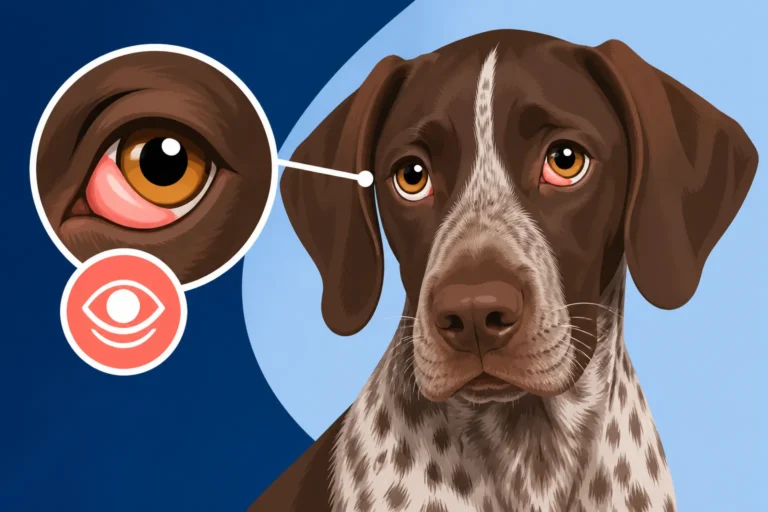
German Shorthaired Pointer cherry eye causes, third eyelid anatomy, and why young dogs develop this condition under two years old.
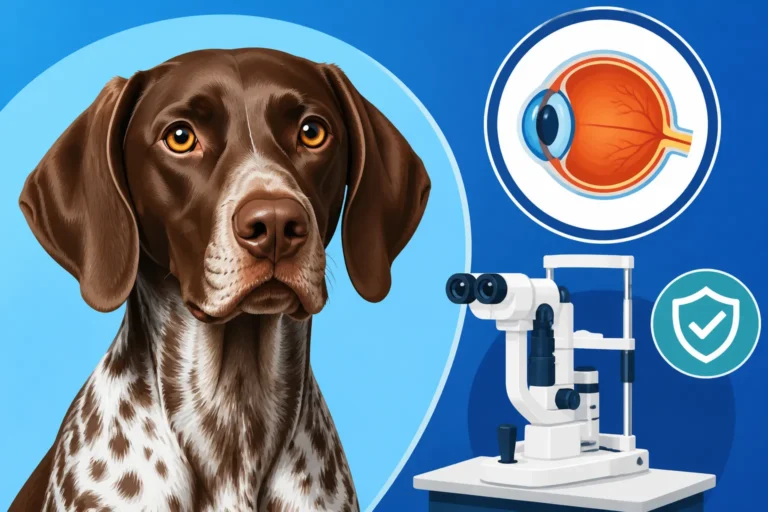
Annual ACVO eye exams help veterinary ophthalmologists detect inherited conditions, corneal scratches, and cataracts in German Shorthaired Pointers early.
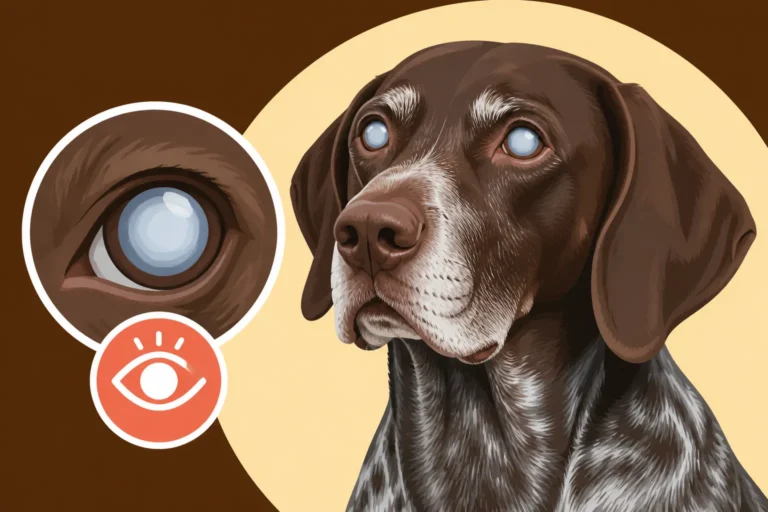
Senior German Shorthaired Pointer eye changes explain lenticular sclerosis, cataracts, and glaucoma risks in aging dogs.
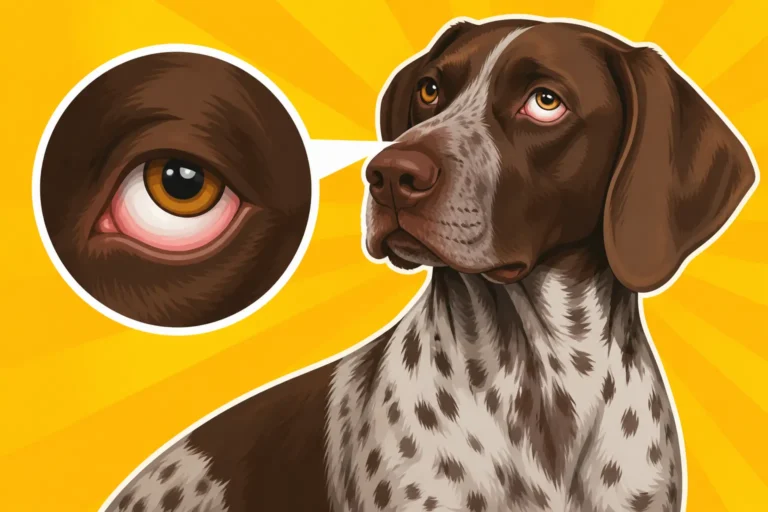
Entropion causes eyelids to roll inward on German Shorthaired Pointers, leading to eye irritation, squinting, and corneal damage.
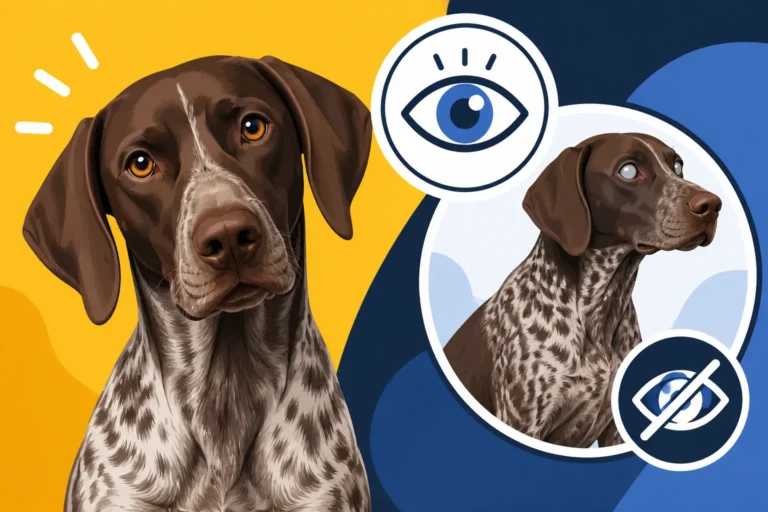
German Shorthaired Pointer carrier status for cone degeneration does not cause vision loss because carriers retain normal day vision.
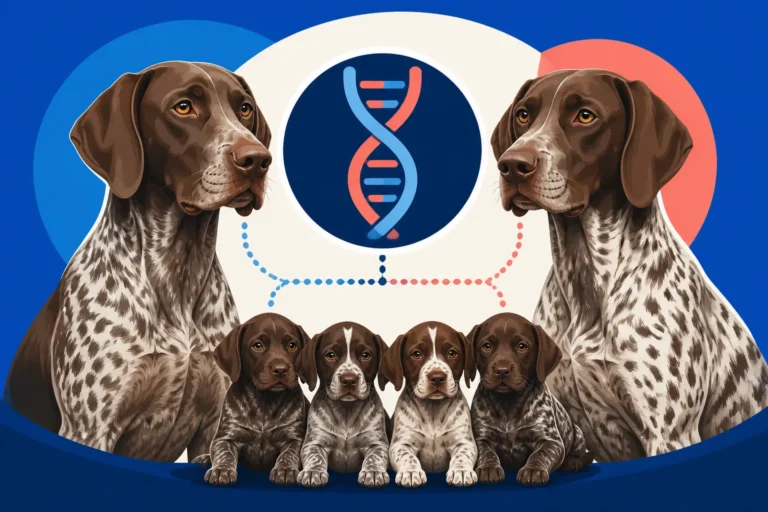
Breeding two German Shorthaired Pointer carriers explains the genetic outcomes and probabilities for puppies inheriting cone degeneration.

Cone degeneration testing helps German Shorthaired Pointer owners identify hereditary day blindness in puppies to manage their vision.