The Shifting Lameness in a Six Month Shorthair
Shifting lameness in a six-month German Shorthaired Pointer explains causes like panosteitis and how veterinarians diagnose it.
Know what to watch for.
Breed-specific conditions, screening and DNA tests, what surgery actually costs, and the daily habits that stretch a healthy lifespan.
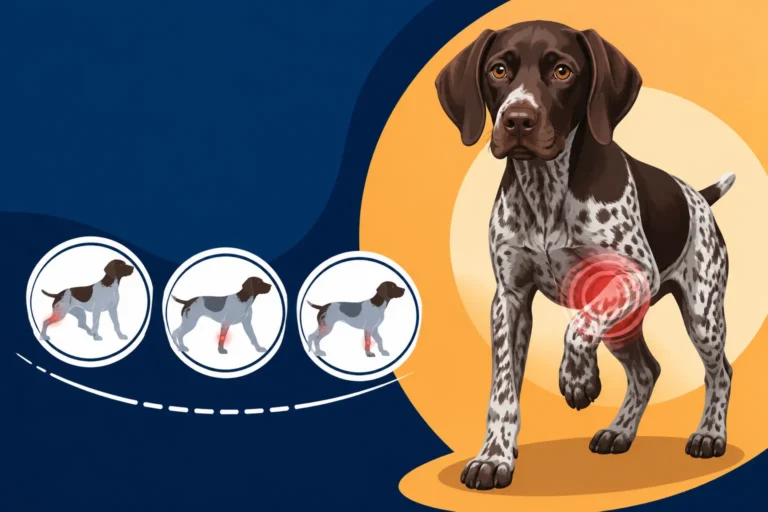
Shifting lameness in a six-month German Shorthaired Pointer explains causes like panosteitis and how veterinarians diagnose it.
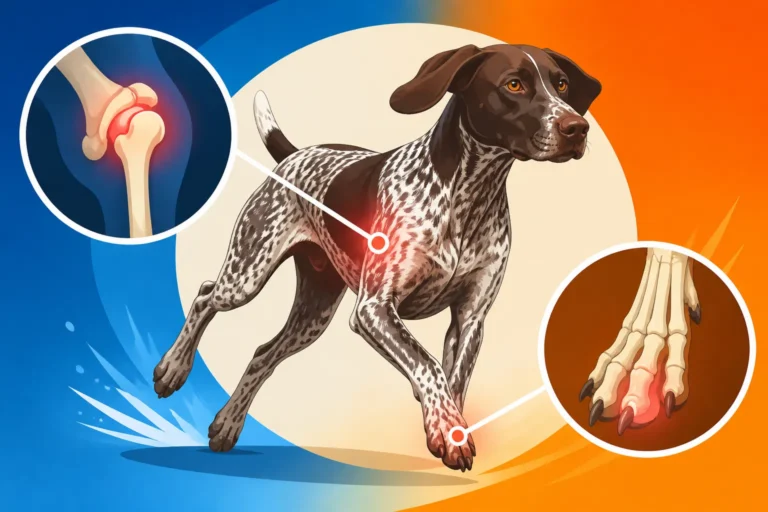
German Shorthaired Pointer shoulder and toe injuries explained, including symptoms, immediate care steps, and prevention methods for active dogs.
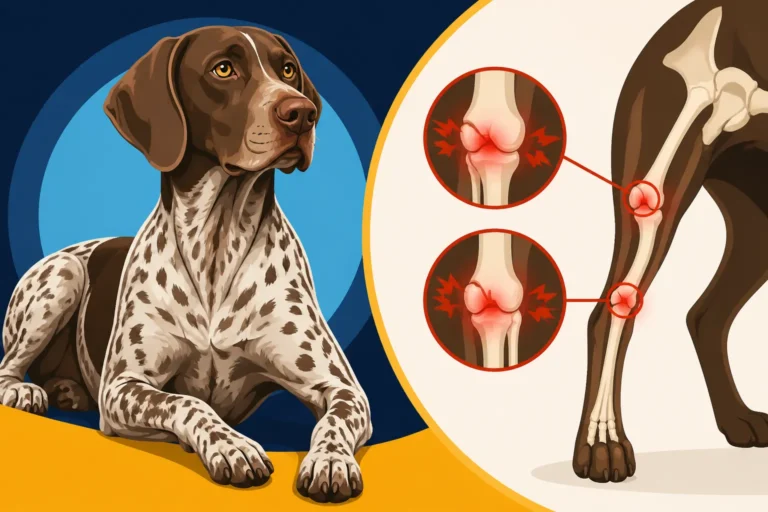
German Shorthaired Pointer cranial cruciate ligament tears and the risks of injuring both knees sequentially or simultaneously.
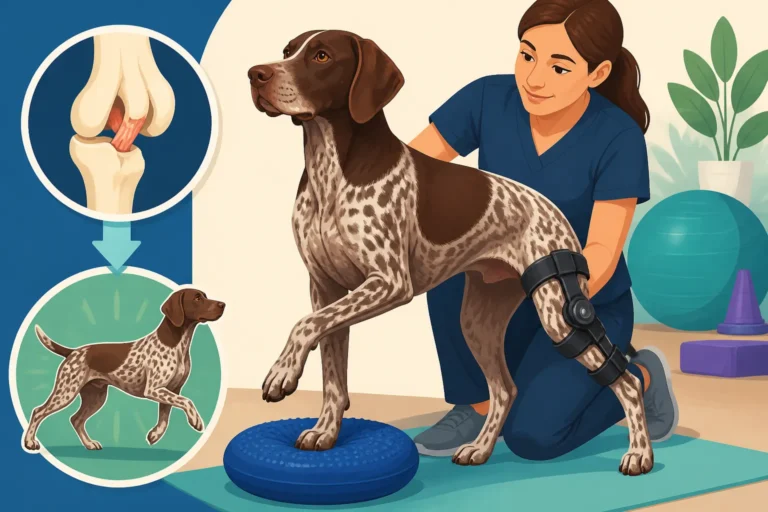
German Shorthaired Pointer cruciate surgery recovery requires strict confinement, precise pain medication schedules, and careful home care.

Joint supplements help maintain mobility and reduce stiffness in hardworking hunting German Shorthaired Pointers experiencing joint strain.
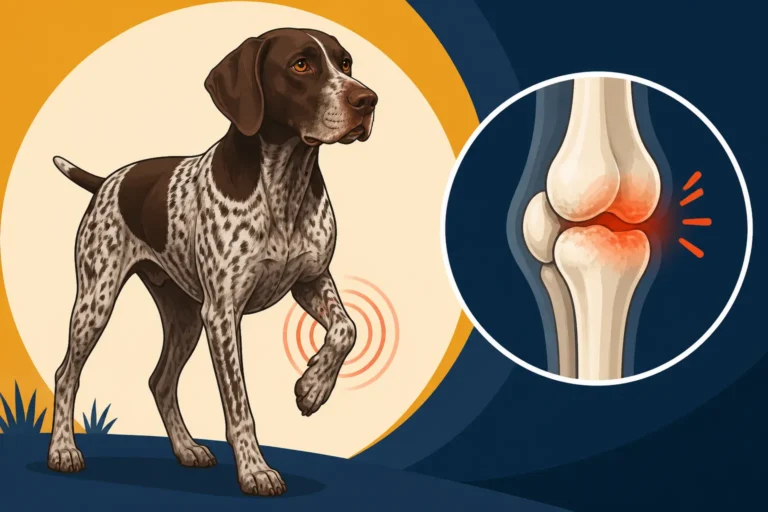
Arthritis in an eight year old German Shorthaired Pointer shows subtle warning signs like morning stiffness, hesitant stairs, and changes in gait.
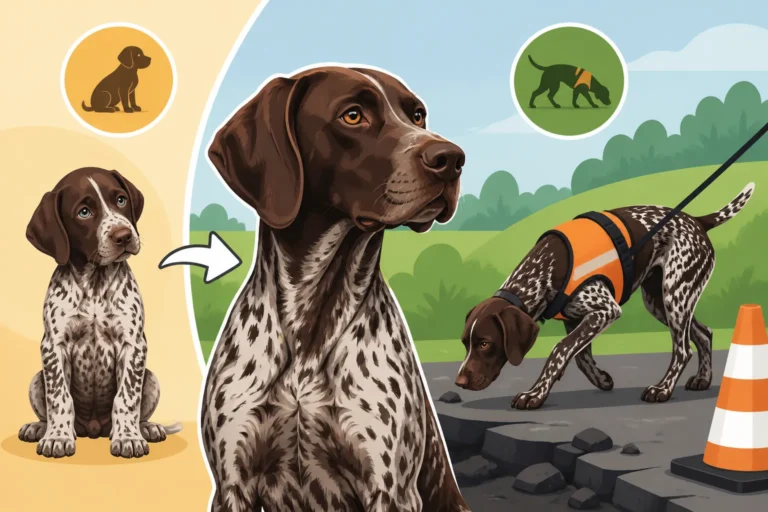
German Shorthaired Pointer roadwork timing depends on growth plate closure, which typically occurs between twelve and eighteen months of age.
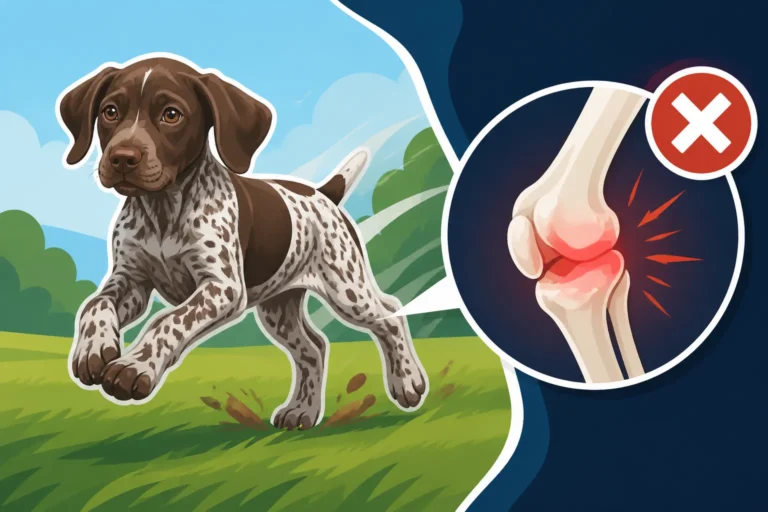
German Shorthaired Pointer puppy exercise and growth plate development between twelve and eighteen months influence joint health.
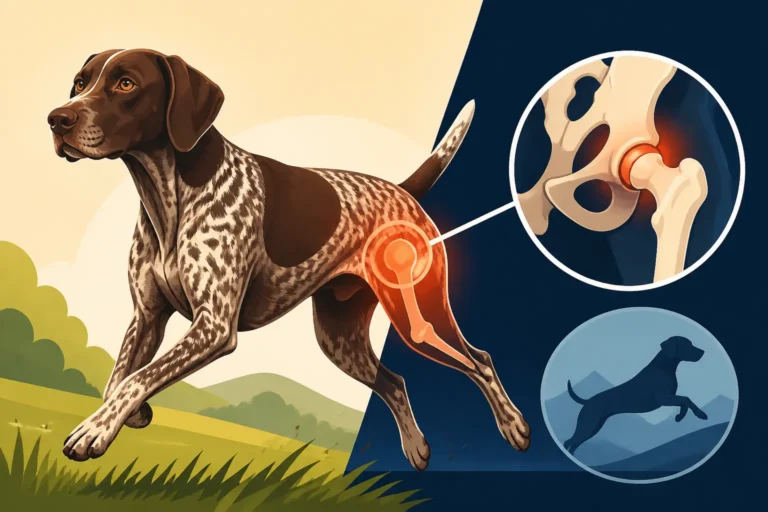
German Shorthaired Pointer hip dysplasia signs include a shortened rear stride and bunny hopping behaviors that indicate joint pain.
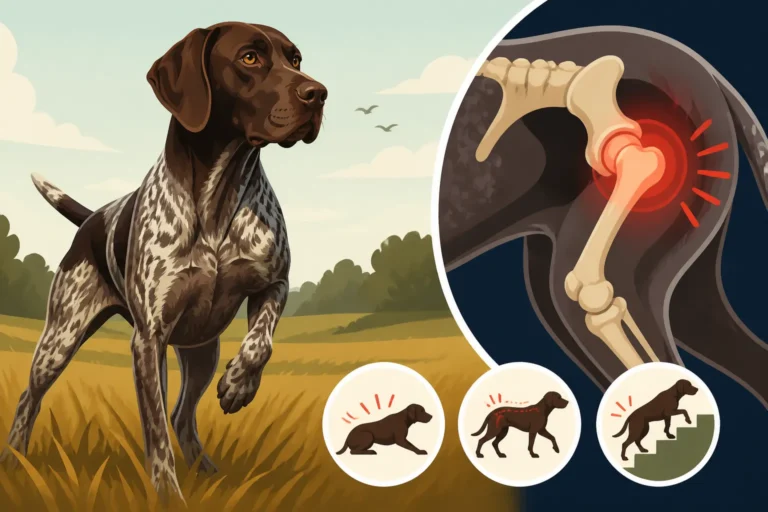
German Shorthaired Pointer hip dysplasia signs include a bunny hopping gait, shifting lameness, and subtle stiffness after field work.