Whether the Shorthair Descends From Scent Hounds
One of the first things anyone notices about a German Shorthaired Pointer is that incredible nose. They'll follow a scent trail with a laser focus that can leave you wondering if you've got a true scent hound on your hands. This guide dives into the fascinating history of the GSP, exploring their lineage to clarify how much of their superb scenting ability comes from traditional scent hound ancestors and how much from deliberate breeding for versatility.
Delving into the German Shorthaired Pointer's Ancestry
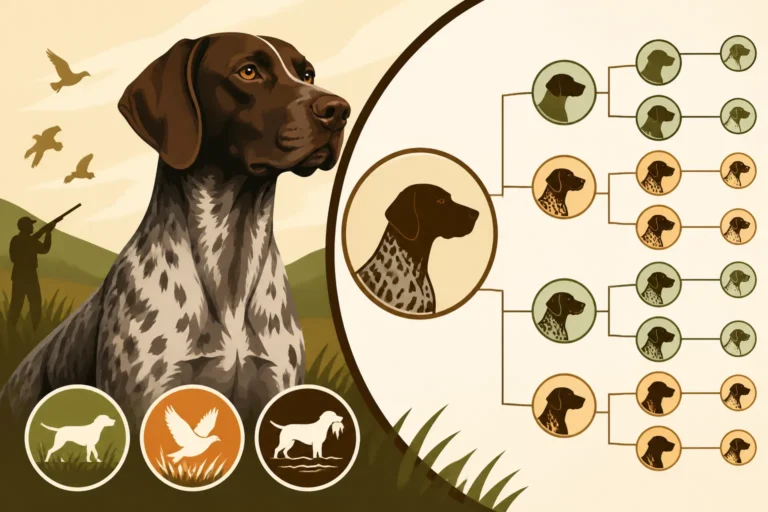
When we talk about the origins of the German Shorthaired Pointer, we're really looking at a masterclass in canine engineering. Unlike some breeds that evolved more organically, the GSP was meticulously developed in 19th-century Germany by hunters who envisioned one dog to do the job of many. They weren't just after a dog with a good nose; they wanted a true "do-it-all" partner. The common frustration among hunters at the time was the need for multiple specialized dogs—one for pointing, one for retrieving, one for tracking wounded game, and perhaps another for working in water. The GSP was bred to combine all these abilities into a single, efficient package.
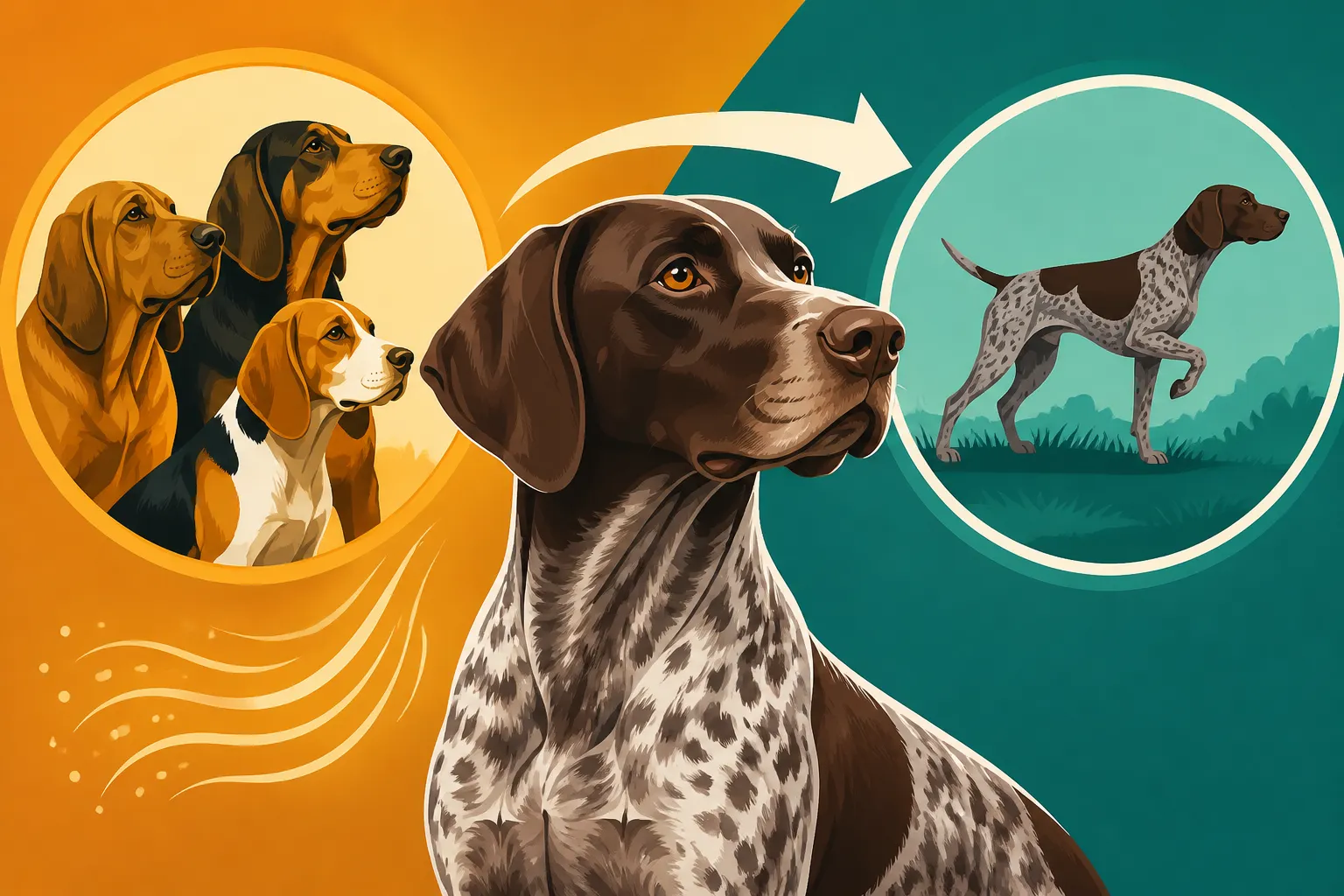
The foundational stock for what would become the GSP began with the old Spanish Pointer, a breed known for its excellent nose and pointing instincts. These dogs brought a strong scenting capability to the mix. However, the German breeders didn't stop there. To enhance various desired traits, they incorporated other breeds. You'll find historical references to breeds like early German Bloodhounds, which certainly would have contributed to the GSP's impressive scenting prowess. There's also the influence of other hounds, like certain types of foxhounds, which added stamina and drive. Then, significantly, English Pointers were introduced into the lines. These dogs brought speed, a refined pointing style, and an intensity that elevated the emerging German Shorthaired Pointer to a new level. It was a conscious effort to create a dog that could excel in varied terrains and hunting scenarios, from open fields to dense cover and even water, truly embodying the concept of What Versatile Actually Means for a Shorthair. This complex blending of types, each contributing different strengths, is why the GSP isn't simply a scent hound but something much more unique. You can learn more about this foundational work in articles like The German Kennels the Shorthair Was Built In.
The Nose Knows: Tracing Scenting Ability Through History
So, given their incredible noses, it's natural to wonder about the scent hound connection. And yes, elements of scent hound ancestry certainly play a role in the German Shorthaired Pointer's olfactory prowess. When we discuss The Hound Blood Behind a Shorthair's Nose, it's clear that the early breeders deliberately selected for dogs with superior scenting capabilities. This wasn't just a happy accident; it was a core requirement for a dog expected to locate game birds in varied cover and track wounded animals. Imagine a pheasant that has been shot but manages to glide a quarter-mile into thick brush. Without a dog capable of following that faint scent trail, the bird would be lost, and the hunter's efforts wasted.
The GSP's nose is a marvel, designed to pick up both air currents carrying scent and ground trails. This dual ability is crucial for their work. Unlike pure scent hounds, whose primary mode of operation is often nose-to-the-ground trailing for extended periods, the GSP uses its nose more dynamically. They lift their heads to catch airborne scent, helping them locate birds quickly, then drop their nose to pinpoint the exact location or follow a short track. This targeted, efficient use of scent is what differentiates them. They were not bred to bay loudly on a long chase, but rather to locate, point, and, if necessary, quietly track. The focus was on precise game retrieval, not just pursuit. Finding robust, meat-based training treats from retailers like Chewy can be a great way to tap into and reward this incredible natural scenting ability, whether you're working in the field or just playing scent games in the backyard. The careful selection for The Nose the German Shorthaired Pointer Was Selected For ensured that every GSP would possess this invaluable tool.
The Blend: Why "Scent Hound" Doesn't Quite Fit the Whole Picture
While the German Shorthaired Pointer undeniably possesses an incredible nose, calling them simply a "scent hound" doesn't quite capture their essence. True scent hounds, like Beagles, Basset Hounds, or Bloodhounds, are bred almost exclusively for their ability to follow a scent trail over long distances, often with their noses glued to the ground, and typically communicating their progress with a distinctive bay. Their entire physiology—low-slung bodies, long ears that help funnel scent, powerful vocalizations—is geared towards this specialized task.
The GSP, on the other hand, is a versatile gun dog. Their primary job is to locate game birds, point them, and then retrieve them once shot. Tracking wounded game is certainly part of their skillset, a task where their scenting ability shines, but it's part of a broader repertoire. They are expected to hunt quietly, quartering fields diligently, and then freeze into that iconic pointer stance. A traditional scent hound's baying would be counterproductive to upland bird hunting, potentially flushing game prematurely. The GSP's physique—athletic, agile, and built for speed and endurance—also differs significantly from most scent hounds. They need to cover ground quickly, leap over obstacles, and swim, all while maintaining a connection with their handler, often at a distance. This comprehensive skillset is what makes them so remarkable. If you're looking for gear that supports all these aspects of their active life, from field vests to durable toys, you'll find plenty of options on Chewy that cater to their versatile needs.
Here's a quick comparison to illustrate the differences:
| Trait | German Shorthaired Pointer (GSP) | Traditional Scent Hound (e.g., Beagle, Bloodhound) |
|---|---|---|
| Primary Hunting Role | Pointing, retrieving, tracking wounded game | Trailing, pursuit of game (often for fur, not feather) |
| Scenting Style | Both air-scenting and ground-scenting; dynamic | Primarily ground-scenting; nose-to-ground for long trails |
| Communication | Generally quiet; uses body language (point, retrieve) | Vocal (baying, howling) during pursuit |
| Physical Build | Athletic, muscular, agile; built for speed & endurance | Often heavier, lower-slung; built for steady trailing |
| Working Range | Medium to wide, but responsive to handler | Can work independently over very long distances |
| Key Instincts | Pointing, retrieving, tracking | Trailing, chasing, vocalizing |
This table clearly highlights that while the GSP certainly utilizes its nose, its overall role and physical characteristics diverge from what defines a typical scent hound. They are a carefully balanced breed designed for Pointing, Retrieving and Tracking in One Shorthair.
More Than Just a Nose: The Versatile Hunter
The German Shorthaired Pointer's true genius lies in its versatility. They are not merely scent hounds, nor are they just pointers or retrievers. They are a combination of all these attributes, carefully curated over generations. Think about a typical hunting day with a GSP: they might start by quartering a field, head up, air-scenting for pheasants, then suddenly lock onto point. After the flush and shot, they might retrieve the bird from thorny cover. Later, if a deer is wounded and disappears, your GSP could be called upon to track it for miles through varying terrain, using their incredible ground-scenting ability to follow the faintest trail of blood or disturbed earth. This full range of capabilities is precisely Why German Hunters Bred the Shorthair Instead of Four Dogs.
This incredible drive and diverse skillset mean that a German Shorthaired Pointer isn't just a hunting machine; they're also incredibly intelligent and eager to please, making them wonderful companions for active families. However, that powerful hunting instinct, including their amazing nose, means they need consistent training and plenty of mental and physical stimulation. Just going for a walk around the block isn't enough to satisfy a GSP; they crave purpose and a chance to use their innate abilities. Consider engaging them in activities like The Predator Work a Shorthair Was Expected to Do or even advanced scent work like tracking drills, even if you don't hunt. Websites like Chewy offer a fantastic array of puzzle toys and training equipment that can help you channel that energy and keen sense of smell into productive, fun activities. Understanding their rich and multifaceted heritage helps us appreciate these magnificent dogs for the true all-around athletes and intelligent partners they are.
Disclaimer
This article is for general informational purposes only and does not constitute professional advice. Laws, prices and regulations vary by location and change over time. Consult a qualified professional for guidance on your specific situation.