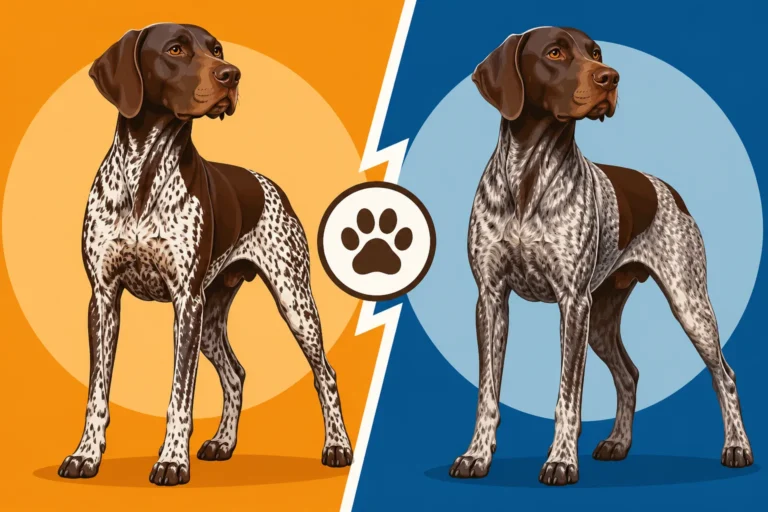
Whether More Families Are Buying Shorthairs Now
It's becoming more and more common to see German Shorthaired Pointers trotting happily alongside families in suburban parks or curled up on couches in busy households. While their striking looks and boundless energy are certainly appealing, many prospective owners, especially families, wonder if this breed, traditionally bred for intense hunting, truly fits into a modern, often non-hunting family lifestyle. This guide will delve into the rising trend of GSPs in family homes and help you discern the realities from the romanticized image.
The Growing Appeal of German Shorthaired Pointers to Families
There's no denying the magnetic pull of a German Shorthaired Pointer. Their sleek, athletic build, expressive eyes, and generally friendly demeanor make them incredibly attractive. Over recent years, their visibility has grown, not just in hunting circles or field trials, but in mainstream media and pet ownership discussions. This increased exposure naturally leads more families to consider them, often based on glimpses of their agility or perceived easygoing nature.
Why the Shorthair is Catching On
The German Shorthaired Pointer often catches the eye due to its undeniable charisma. They carry themselves with an air of noble athleticism, and their short, easy-care coat seems like a dream compared to many long-haired breeds. For families seeking an active companion, the idea of a dog that can keep up with hiking, running, or even just long walks is incredibly appealing. Plus, their reputation as "Velcro dogs" — always wanting to be close to their people — is often misinterpreted as a sign of being a low-maintenance, affectionate house pet.
Many families are also drawn to the "versatile" label associated with the breed. They hear stories of GSPs excelling in everything from agility and dock diving to obedience and therapy work, alongside their hunting prowess. This breadth of capability makes them seem like the ultimate family dog, able to adapt to whatever activity the household enjoys. It suggests a dog that is smart, eager to please, and robust enough for any adventure, which on the surface, sounds perfect for a bustling family environment.
However, this versatility stems from their intense working drive. It means they can do all those things, but only if that drive is channeled appropriately and consistently. Without a clear job or outlet for their energy, that versatility can quickly turn into destructive behaviors or unmanageable enthusiasm within a typical family setting. It’s a crucial distinction that can be missed when the initial attraction is purely based on aesthetics and perceived adaptability.
Social Media and Breed Visibility
Social media platforms, in particular, have played a huge role in boosting the German Shorthaired Pointer's profile. You'll see countless videos and photos of GSPs happily playing with children, cuddling with their owners, or performing impressive feats of athleticism. These snippets, while heartwarming, often only show a fraction of the breed's daily reality. They highlight the ideal moments, the perfectly trained retrieves, or the serene naps, rather than the relentless energy requirements or the extensive training investment.
The algorithms on these platforms tend to favor engaging, visually appealing content, and a beautiful, energetic GSP certainly fits the bill. This can create a skewed perception for potential owners, leading them to believe that the breed naturally possesses these desirable traits without the monumental effort required from their human counterparts. It's easy to scroll through Instagram and think, "My kids would love a dog like that!" without understanding the hours of commitment behind that perfectly behaved canine.
The sheer accessibility of information, or rather, misinformation, also contributes. A quick search can bring up images of GSPs in family settings, but often lacks the deep dives into their inherent needs for mental stimulation, physical exercise, and consistent training. This leads to impulse decisions based on curated online personas rather than a holistic understanding of the breed's requirements. It's a common trap in the digital age, where surface-level appeal overshadows the gritty realities of responsible pet ownership, especially with high-drive breeds.
Unpacking the Realities: What a Shorthair Truly Demands
While the German Shorthaired Pointer can be an incredible family dog, it’s vital to understand that they are not a "plug and play" pet. Their genetics are steeped in centuries of selective breeding for a specific purpose: to be an indefatigable hunting companion, capable of pointing, tracking, and retrieving. This heritage dictates a very high set of needs that often surprise families unprepared for the reality.
The Unwavering Need for Exercise
Let's be brutally honest: a German Shorthaired Pointer needs a colossal amount of exercise. We're not talking about a leisurely stroll around the block. We're talking about serious, lung-burning, muscle-straining activity, often for The Two Hours a Day a German Shorthaired Pointer Needs. This isn't just to keep them physically fit, but also mentally balanced. Imagine a marathon runner being confined to a studio apartment; that's often how a GSP feels without adequate activity.
If a GSP doesn't get to run, explore, and burn off its immense energy, it will find its own ways to do so. And believe me, those ways are rarely convenient or pleasant for the homeowner. Think chewed furniture, frantic pacing, incessant whining, or even digging craters in the backyard that rival small swimming pools. What an Under Exercised Shorthair Does to a House is often a horror story for unprepared families, leading to frustration and, sadly, rehoming. These dogs are built to cover miles in a day, often through rugged terrain, and simply cannot "chill out" with a couple of short walks.
Families with busy schedules, or those who envision a dog that will happily entertain itself while they work or attend to children, often find themselves completely overwhelmed. A GSP needs active participation in its exercise routine. This means you, or another dedicated family member, must be willing and able to commit to rigorous daily activity, rain or shine, hot or cold. It's a lifestyle commitment, not just an addition to a routine.
The Intelligence and Drive for Mental Work
Beyond physical exertion, the German Shorthaired Pointer is a highly intelligent breed, bred to solve problems in the field. This means they need a significant amount of mental stimulation, or they'll invent their own "puzzles," which often involve disassembling household items or outsmarting baby gates. Training isn't just about teaching commands; it's about engaging their sharp minds and giving them a job to do.
Many families get a GSP puppy with the best intentions, enrolling them in basic puppy classes, which is a great start. But a GSP's training journey doesn't end there; it's a lifelong commitment. They thrive on learning new things, participating in advanced obedience, nose work, agility, or even trick training. If their brains aren't tired out, they'll be physically exhausted but still mentally buzzing, which can manifest as destructive behavior or a dog that just won't settle down indoors.
Consider their hunting heritage: they were developed to make quick decisions, track subtle scents, and work cooperatively with a human handler. This inherent drive for purposeful activity means that simply tossing a ball for five minutes won't cut it. They need structured engagement that challenges their intellect and allows them to utilize their natural instincts. This is why many successful GSP owners find themselves deeply involved in canine sports or structured daily training sessions.
Living with a High-Energy Companion in a Family Setting
Integrating a German Shorthaired Pointer into a family, especially one with young children or other pets, requires careful management and consistent effort. Their exuberance, combined with their size and speed, can be a lot for small children to handle. While generally good-natured, an excited GSP can easily knock over a toddler without meaning to. A German Shorthaired Pointer With Children and Cats can be a harmonious blend, but it demands constant supervision and proactive training from the owners.
Families often underestimate the puppy stage, which for a GSP, is an extended period of high-octane energy and insatiable curiosity. These puppies are known for their mouthing, jumping, and general "go-go-go" attitude. What a Shorthair Destroys in Its First Year can be a significant financial and emotional burden if not managed with appropriate chew toys, crate training, and consistent redirection. They aren't content to snooze quietly in a corner; they want to be in the thick of family life, often with a mischievous twinkle in their eye.
Ultimately, the reality of living with a German Shorthaired Pointer is that their needs are not optional. They are non-negotiable aspects of the breed's temperament and physical makeup. Families considering a GSP must be prepared to adjust their own lifestyles to meet these demands, rather than expecting the dog to conform to a more sedate family pace. It's a partnership where the human side takes on the responsibility of providing the outlets this magnificent breed requires.
Is Your Family Ready? Assessing Life with a GSP
Before welcoming a German Shorthaired Pointer into your home, it’s crucial for every family member to honestly assess whether their lifestyle truly aligns with the breed's needs. This isn't just about desire; it's about capacity and commitment. Many well-meaning families fall in love with the idea of a GSP, only to find the reality far more demanding than anticipated.
Lifestyle Compatibility Checklist
To help you get a clearer picture, here’s a straightforward checklist designed to provoke honest reflection about whether your family can truly accommodate a German Shorthaired Pointer. Go through each point and be brutally honest with your answers.
| Feature / Need | Family Lifestyle Assessment |
|---|---|
| Daily Exercise | Can you commit to 1-2 hours of vigorous activity daily (running, hiking, serious fetch)? |
| Time Commitment | Is there someone home for a good part of the day, or can you arrange dog walking/daycare? |
| Training Dedication | Are you prepared for consistent, ongoing training, beyond basic puppy classes? |
| Patience for Puppyhood | Can you handle an energetic, often mouthy puppy for 18-24 months? |
| Financial Resources | Can you afford high-quality food, vet care (including potential injury treatments), and training? |
| Outdoor Space | Do you have a securely fenced yard, or reliable access to safe, open spaces? |
| Tolerance for Mess | Are you okay with some shedding, muddy paws, and potential chewing incidents? |
| Travel & Social Life | Will the dog be integrated into your activities, or left alone frequently? |
Think about what The Household a German Shorthaired Pointer Actually Fits looks like. It's often an active family, perhaps with older children who can participate in the dog's exercise and training, or individuals who are passionate about outdoor sports. It’s a home where routine and structure are appreciated, and where canine companionship is seen as an integral part of daily life, not just an accessory.
The Commitment Beyond Cuteness
The initial cuteness of a German Shorthaired Pointer puppy is undeniable, but it's important to remember that this "puppy stage" lasts longer and is far more intense than with many other breeds. They mature slowly, often retaining a high level of puppy exuberance well into their second year. This means consistent training, patience, and a sense of humor are paramount during this demanding period. Whether a First Time Owner Can Handle a Shorthair is a question that often comes down to their readiness for this extended, high-energy adolescence.
Moreover, the financial commitment is significant. Beyond the initial purchase price, there are ongoing costs for premium food—especially for a high-energy working dog (many owners opt to buy in bulk from retailers like Chewy)—regular vet visits, vaccinations, and potential emergency care for active dogs. The Cost a German Shorthaired Pointer Puppy's First Shots Cost is just the tip of the iceberg. Field injuries, like torn ligaments or foxtail removals, can quickly add up, making pet insurance a serious consideration for active GSPs.
Consider your long-term plans. Are you moving soon? Are your kids growing up and moving out? A GSP is a commitment for The Twelve to Fourteen Years a German Shorthaired Pointer Gets, if not more. They bond deeply with their families and thrive on stability. Rushing into ownership without a clear, long-term plan is a recipe for heartache, both for the family and for the dog.
The Honest Truth About "Pet" Shorthairs
Sometimes, families try to fit a square peg into a round hole, believing they can simply turn a hunting dog into a couch potato. While some GSPs adapt better than others, fundamentally, Whether a German Shorthaired Pointer Needs to Hunt to Be Happy is almost always answered with a resounding "yes" – they need to work. If not in a traditional hunting role, then in equivalent activities that satisfy their prey drive, scenting ability, and desire to retrieve.
This doesn't mean every GSP needs to be chasing pheasants every weekend. It means their innate drives must be acknowledged and channeled. This could be through advanced obedience, competitive agility, extensive retrieve games, or even long-distance running with a dedicated owner. The crucial point is that ignoring these deep-seated needs will inevitably lead to an unhappy, frustrated, and potentially destructive dog.
Many families see the rise in GSP popularity and assume the breed has softened or adapted to a more sedate domestic life. While breeders work to produce dogs with good temperaments, the core drive remains. It's up to prospective families to understand that they are bringing a highly specialized, athletic, and intelligent animal into their home, one that requires a significant investment of time, energy, and resources to truly thrive.
Responsible Choices: Where to Find a German Shorthaired Pointer
If, after a thorough self-assessment, your family genuinely believes you can meet the demanding needs of a German Shorthaired Pointer, the next critical step is to find one responsibly. The rising popularity of the breed, unfortunately, also brings with it a rise in irresponsible breeding practices.
Seeking a Reputable Breeder
A reputable breeder will be your best resource for a well-bred, healthy GSP puppy. They won't just sell you a puppy; they will interview you extensively, ask about your lifestyle, and ensure their puppies are going to appropriate homes. They'll be transparent about the health clearances of the parent dogs, including hip, elbow, and eye certifications. You should be able to see where the puppies are raised and interact with the mother. They'll also provide a contract and often have a "take back" clause if things don't work out, demonstrating their lifelong commitment to their dogs.
Expect a waiting list for a puppy from a truly reputable breeder. This isn't a bad thing; it shows they are carefully planning litters and placing puppies thoughtfully. They also won't advertise their puppies for wildly low prices; quality breeding, health testing, and proper care come at a cost. Be wary of breeders who have multiple litters at once, don't ask you many questions, or can't provide verifiable health clearances and pedigrees.
A good breeder will also be an invaluable source of information and support throughout your dog's life. They understand the breed inside and out and can offer guidance on everything from training challenges to health concerns. Many are deeply involved in breed clubs, hunting organizations like NAVHDA, or show circuits, and are dedicated to preserving the integrity and health of the German Shorthaired Pointer.
Considering German Shorthaired Pointer Rescue
Another incredibly rewarding path is adopting a German Shorthaired Pointer through a dedicated breed rescue organization. While many families are set on a puppy, there are countless adult GSPs in need of loving homes. These dogs often end up in rescue through no fault of their own—sometimes due to owners underestimating their needs, lifestyle changes, or unforeseen circumstances.
Rescue organizations, like local GSP rescues across the country, are experts in the breed. They typically house their dogs in foster homes, where volunteers get to know each dog's personality, energy levels, and training needs intimately. This allows them to make excellent matches between dogs and prospective families. Adopting an adult dog can also be beneficial as their personality and size are already established, and they may even come with some basic training. German Shorthaired Pointer Rescue Fees are generally much lower than puppy prices and typically cover spaying/neutering, vaccinations, and other veterinary care.
Bringing home a rescue GSP means giving a second chance to a deserving dog. Many families find that an adult rescue GSP integrates beautifully into their home, especially if the rescue has done its due diligence in matching the dog's energy and temperament to the family's lifestyle. It's an opportunity to provide a loving "forever home" and often skip some of the more intense puppy behaviors.
Understanding the Pitfalls of Uninformed Purchasing
The increased demand for German Shorthaired Pointers can sadly fuel irresponsible breeding. Online marketplaces and casual advertisements often feature puppies at tempting prices, but these sources rarely prioritize health, temperament, or responsible placement. Purchasing from such sources often means unknowingly supporting puppy mills or backyard breeders who cut corners on health testing, proper socialization, and genetic screening.
A puppy from an unvetted source might seem like a bargain initially, but can quickly become a significant financial and emotional burden due to unforeseen health issues, behavioral problems stemming from poor breeding or early socialization, or a temperament that is ill-suited for a family environment. This is why Why So Many Shorthairs End Up Rehomed at Eighteen Months is a tragic reality—the adorable puppy grows into a challenging adolescent whose needs weren't properly understood or met from the beginning.
Ultimately, whether you choose a breeder or a rescue, the most crucial step is thorough research and an honest assessment of your family's capacity to provide a fulfilling life for a German Shorthaired Pointer. Their rising popularity is a testament to their incredible qualities, but those qualities come with significant responsibilities. By understanding and embracing these demands, your family can truly enjoy the unique companionship of this magnificent breed.
Disclaimer
This article is for general informational purposes only and does not constitute professional advice. Laws, prices and regulations vary by location and change over time. Consult a qualified professional for guidance on your specific situation.