The Twenty Five Inch Ceiling on a Male Shorthair
It can be really frustrating when you're trying to understand the nuances of a breed standard, especially something as specific as height, and all you find are vague statements. You love your German Shorthaired Pointer, but if you're thinking about showing, breeding, or even just curious about how your dog measures up, getting clarity on those precise measurements, like the twenty-five-inch ceiling for males, is crucial. This guide is here to demystify what those numbers mean, why they matter, and what to consider if your beloved GSP falls a little outside the "ideal."
Understanding the German Shorthaired Pointer Standard
The official breed standard for any purebred dog isn't just a random set of numbers; it's a blueprint designed to preserve the physical and temperamental traits that define the breed and ensure it can perform its historical function. For the German Shorthaired Pointer, a versatile hunting dog, every aspect of the standard, including height, plays a role in its ability to cover ground, point birds, and retrieve efficiently.
Deciphering the AKC Breed Standard for Males
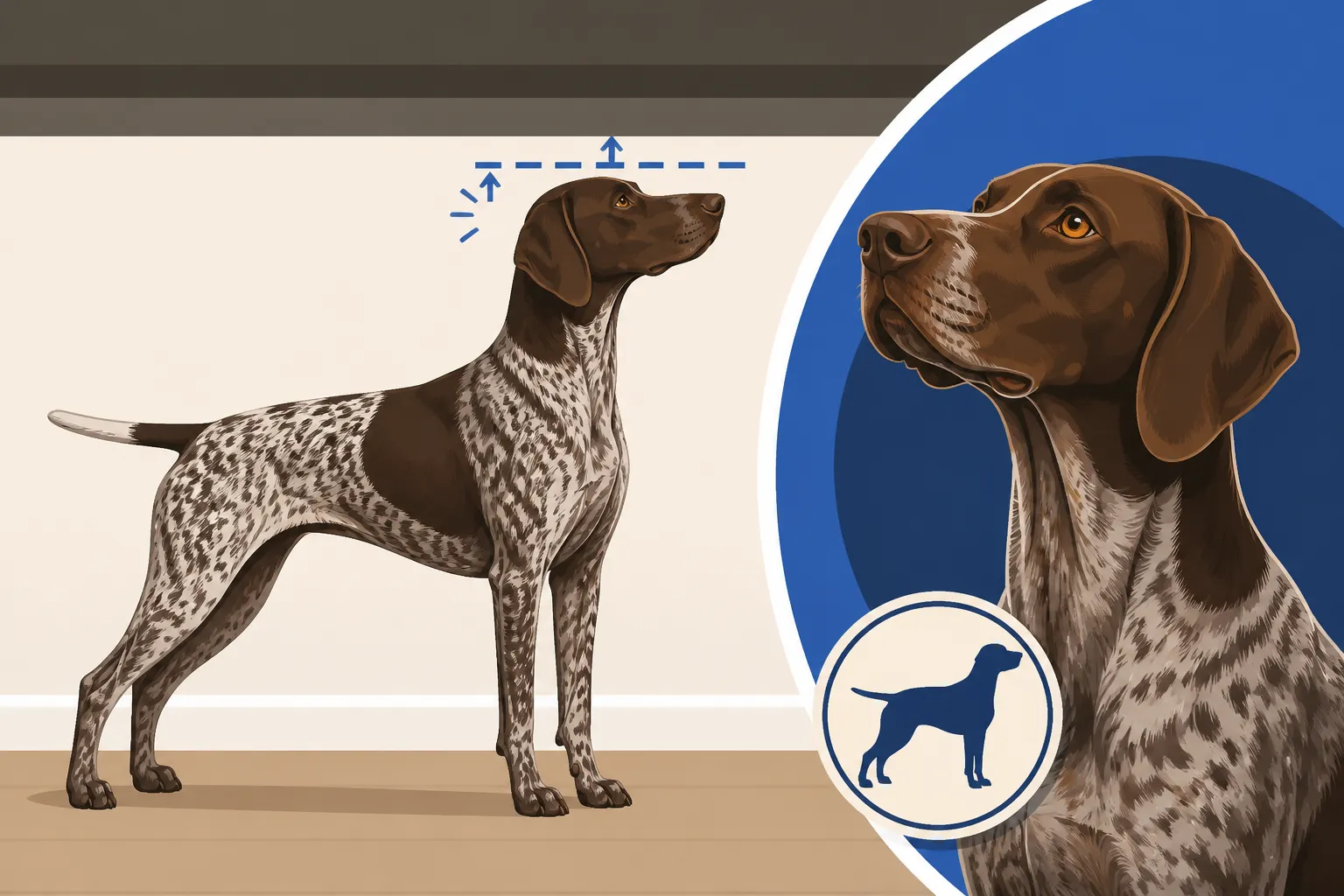
When we talk about the "twenty-five-inch ceiling" for a male German Shorthaired Pointer, we're referring to the upper limit of the acceptable height range as defined by the American Kennel Club (AKC) breed standard. For males, the standard specifies a height at the withers (the highest point of the shoulder blades) of 23 to 25 inches. This isn't just a suggestion; it's a critical component for dogs intending to compete in conformation shows or be considered for breeding programs aiming to produce "type." A dog that stands significantly over this maximum risks being penalized or even disqualified, which can be heartbreaking for an owner who's put in so much time and effort. It’s all about maintaining that quintessential GSP outline and proportion.
This specific height range is carefully chosen to ensure the GSP retains its athletic, yet sturdy, build. Too tall, and a dog might become gangly, losing its powerful, balanced gait and endurance in the field. Too short, and it might lack the leg length to navigate varied terrain or keep pace with a hunter. Breeders spend generations striving to consistently produce dogs within this window, balancing all the other desirable traits. Understanding The Inches at the Withers a Shorthair Is Judged On helps put this particular measurement into perspective regarding the overall evaluation.
The Historical Context of Size in Versatile Hunters
The German Shorthaired Pointer was meticulously developed in Germany during the 19th century, specifically to be an all-around hunting dog. Before the Shorthair, a hunter often needed several different dogs—one for pointing, one for retrieving, one for tracking. The Germans wanted one dog that could do it all, on land and in water, and hunt various game from birds to small furred animals. This meant the dog needed to be agile, powerful, and enduring, but not so large as to be cumbersome, nor so small as to be easily overlooked in heavy cover.
The size standard, including the height, directly reflects this versatile working purpose. A dog of around 23 to 25 inches is large enough to handle retrieving larger game birds, swim in cold water, and penetrate thick brush without getting lost or hung up. Yet, it's compact enough to be manageable in the home, fit comfortably in a kennel or vehicle, and conserve energy over long hunting days. The breed's early development in The German Kennels the Shorthair Was Built In solidified these functional requirements, which are still enshrined in the standard today.
International Standards: A Brief Comparison
While the AKC standard is what most American owners and breeders look to, it's interesting to note that other kennel clubs around the world, particularly the Fédération Cynologique Internationale (FCI) which governs many European countries, have similar but sometimes slightly different requirements. For example, the FCI standard often provides a range that translates closely to the AKC's, but the emphasis or interpretation in the show ring might vary subtly.
It’s not uncommon for a male GSP that is perfectly within the standard in one country to be considered at the very edge in another. These minor differences highlight the ongoing efforts of various clubs to preserve the breed's type as they understand it. For GSP enthusiasts interested in the global picture, these variations are fascinating and can influence breeding decisions, especially for those importing or exporting dogs. Regardless of the exact measurement, the core intent remains the same: to define and maintain the ideal working structure for this incredible breed.
The Nuance of "Ideal" vs. "Acceptable" Height
The breed standard provides a range, not a single number, which means there's a spectrum of "acceptable." However, within that acceptable range, there's often an "ideal" that judges and experienced breeders lean towards. Understanding this nuance is crucial for anyone involved with showing or serious breeding.
Show Ring Implications: Faults and Disqualifications
In the conformation ring, a male German Shorthaired Pointer measuring 23 to 25 inches at the withers is within the acceptable range. A dog at 23 inches is just as "correct" by the standard as one at 25 inches, provided all other aspects of its structure, balance, and movement are also correct. However, if a male GSP is over 25 inches or under 23 inches, it constitutes a fault, and depending on the degree, it can even lead to disqualification.
Judges are looking for a dog that embodies the standard as closely as possible. A dog that is, say, 25.5 inches might receive a fault and place lower than a dog perfectly within the range, even if it has other wonderful qualities. If a dog is significantly over the limit—perhaps 26 inches or more—it often results in a disqualification, meaning it cannot receive any points or awards. This can be incredibly disheartening for owners and handlers, but it underscores the importance of the standard in maintaining breed type. It also means that even a phenomenal hunter might not succeed in the show ring if it doesn't meet these strict physical guidelines. You can also explore The Weight Range in the Shorthair Standard to understand other critical physical parameters.
The Impact on Breeding Programs
For breeders, adhering to the height standard is more than just about winning ribbons; it's about responsible breeding and maintaining the health and functionality of the breed. Breeders carefully select pairings to produce offspring that will fall within the standard's parameters, not just for height but for all traits. If a male is consistently producing oversized or undersized offspring, even if he himself is within the range, it might indicate that he carries genes for extreme size that could be detrimental to the breed's long-term health or working ability.
Conversely, a male who is ideally sized and produces consistently standard-sized puppies is highly valued. This is why good breeders are so meticulous in their choices, looking at multiple generations of pedigrees and the size of siblings and ancestors. They're trying to improve the breed, not just make puppies. A responsible breeder will openly discuss the height and other physical traits of their breeding stock, often providing information from reputable sources or even their own measurements.
When a Dog Falls Outside the "Ceiling"
So, what if your beloved male GSP is 25.5 inches? Does it make him any less of a wonderful companion or capable hunting dog? Absolutely not! For many German Shorthaired Pointers, being slightly over the "ceiling" has no practical impact on their life as a family pet or a weekend hunting partner. Most owners aren't looking to campaign their dog in the show ring, and a half-inch or even an inch outside the standard doesn't diminish their incredible personality or drive.
However, it does mean that such a dog would not be suitable for conformation showing or for a serious breeding program aiming to adhere strictly to the breed standard. This is an important distinction: a dog can be a fantastic individual without being a "standard" dog. If you purchased your GSP as a companion, a slight deviation from the height standard is usually nothing to worry about and won't affect his ability to be a loving, energetic member of your family, or an enthusiastic hunter. It's truly a matter of purpose and expectations.
Beyond the Measuring Stick: Practical Considerations for a Taller Shorthair
While the breed standard is important for maintaining the integrity of the German Shorthaired Pointer, daily life with a GSP, especially one who might be a bit taller, brings its own set of practical considerations.
Living with an Oversized GSP: Daily Life and Equipment
If you have a male GSP who nudges or even exceeds that 25-inch mark, you'll find that many aspects of daily life remain the same as with a standard-sized dog. However, some things might need a slight adjustment. For instance, a larger dog might need a larger crate or dog bed to stretch out comfortably. You might find yourself opting for "extra-large" collars and harnesses instead of just "large." Even something as simple as a food bowl stand might need to be a little taller to prevent him from stooping too much, which can be easier on his joints over time.
Transporting a larger GSP, especially in a dog box in the back of a truck or SUV, also requires a bit more space. You'll want to ensure he has enough room to stand, turn around, and lie down comfortably during travel to and from the field or on family trips. Companies like Chewy offer a wide array of oversized beds, crates, and accessories that can accommodate a larger Shorthair, ensuring he's comfortable and safe in every situation. Even if he's not "show standard," his comfort and well-being should always be top priority.
Performance in the Field: Does Height Really Affect Hunting?
For the average hunter, a male German Shorthaired Pointer being an inch or two over the 25-inch ceiling is unlikely to make a noticeable difference in its field performance. In fact, some hunters might even prefer a slightly larger dog if it means a longer stride for covering vast fields or a bit more physical presence for pushing through heavy cover. What truly matters in the field is a dog's drive, intelligence, nose, biddability, and endurance, all of which are independent of whether it measures exactly 25 inches.
A dog's conformation, including its height, contributes to its overall athleticism and ability to sustain work. A well-proportioned dog, even if slightly larger, will move efficiently. A gangly dog, regardless of exact height, might be less efficient. A German Shorthaired Pointer's hunting prowess is built on generations of selection for working traits. While extreme deviations from the standard can lead to structural imbalances that hinder performance, minor variations typically do not impede a dog's ability to locate, point, and retrieve game. This is often where How a Field Bred Shorthair Differs in Build comes into play, as some field lines might prioritize working function over strict conformation guidelines.
Health Implications of Being Larger Than Standard
Generally, a healthy male GSP that is slightly over 25 inches is not inherently prone to more health problems simply due to its size. The health concerns associated with GSPs, such as hip and elbow dysplasia, certain eye conditions, and cardiac issues, are linked to genetics and overall conformation, not necessarily a few extra inches in height. However, extremely oversized dogs can sometimes experience increased strain on their joints and ligaments, which could potentially exacerbate conditions like hip dysplasia if they are genetically predisposed.
Proper nutrition, maintaining a lean body condition, and appropriate exercise are far more critical for a GSP's long-term health than hitting an exact height. Owners of larger dogs should pay close attention to their dog's weight, ensuring they don't carry extra pounds that could stress their frame. Choosing a high-quality dog food from a trusted retailer like Chewy that supports large, active breeds can help manage growth and provide the necessary nutrients. Regular veterinary check-ups are also vital to monitor joint health and address any concerns proactively, regardless of size.
Why Height Matters: Functionality and Breed Type
The adherence to a height standard isn't about arbitrary rules; it's about preserving the core characteristics that define the German Shorthaired Pointer as a breed. This includes its functionality as a hunting dog and its unique breed type.
Balance and Proportion in the German Shorthaired Pointer
The 23-25 inch height range for males is intrinsically linked to the GSP's overall balance and proportion. The standard describes a dog that is slightly longer than tall, with a strong, muscular build, and a deep chest. This specific architecture allows for a powerful, ground-covering gait that is essential for long days in the field. When a dog deviates significantly from the height standard, it can throw off these proportions. A dog that is too tall might appear leggy and shallow-bodied, lacking the necessary substance and lung capacity for endurance. One that is too short might seem stocky or heavy, losing the agile, athletic appearance crucial to the breed.
Judges and breeders look for a harmonious overall picture, where every part of the dog fits together perfectly to create an efficient and aesthetically pleasing working animal. It's about how the height relates to the length of the body, the depth of the chest, and the length of the legs, all working in unison. A GSP's movement, often described as powerful yet graceful, is a direct result of these balanced proportions. Understanding The Size and Build the Shorthair Standard Asks For reinforces how all these elements combine to define the breed.
Avoiding Extremes: The Purpose of a Standard
One of the primary reasons for having clear height limits in a breed standard is to prevent the breeding of extremes. Without such guidelines, breeders might inadvertently or intentionally select for dogs that are excessively large or unusually small, leading to health problems and a departure from the breed's original purpose. For instance, an extremely tall GSP might struggle with joint issues due to rapid growth or increased leverage on its limbs, while an unusually small one might lack the stamina or physical presence needed for certain types of hunting.
The standard acts as a safeguard, guiding breeders towards maintaining a moderate, functional size that has proven to be healthy and effective for the breed's intended work. It helps ensure that the German Shorthaired Pointer remains a mid-sized, athletic gun dog, rather than drifting towards the characteristics of much larger or smaller breeds. This careful balance is what has allowed the GSP to remain such a successful and popular versatile hunting companion.
The Role of the Standard in Preserving the Breed
Ultimately, the breed standard, including specific height requirements like the 25-inch ceiling for males, serves to preserve the German Shorthaired Pointer for future generations. It's a living document that guides responsible breeding practices and ensures that the qualities that make a GSP unique—its athletic ability, keen intelligence, and friendly disposition—are maintained. By adhering to these standards, breeders contribute to a lineage of dogs that are not only beautiful but also capable and healthy.
For those who are passionate about the breed, understanding and respecting the standard is a way of honoring the dedication of the early breeders who crafted this magnificent dog. While a pet owner may not need to worry about the exact inches, knowing the ideal provides insight into the history and purpose of their loyal companion. It helps us appreciate why our dogs look and act the way they do, and how every feature, from the tip of their nose to the set of their tail, contributes to the overall marvel that is the German Shorthaired Pointer.
German Shorthaired Pointer Male Height at a Glance
For those looking for a quick reference on the standard height expectations for male German Shorthaired Pointers, here’s a simplified breakdown:
| Characteristic | AKC Breed Standard (Male GSP) | Notes |
|---|---|---|
| Height at Withers | 23 to 25 inches | Measured from the highest point of the shoulder blades to the ground |
| Ideal Range | Generally within the 23-25" | Judges look for balance within this range |
| Minor Fault | Slightly over 25" | May be penalized in the show ring, but not disqualified |
| Disqualification | Significantly over 25" | Serious deviation; dog cannot receive awards |
| Functional Impact | Little to none for minor dev. | Focuses on overall proportion, health, and working ability |
Remember, this chart refers to the specifics for males. If you're curious about the other half of the picture, you might want to look into The Height a Female German Shorthaired Pointer Reaches to see how their standards compare.
Disclaimer
This article is for general informational purposes only and does not constitute professional advice. Laws, prices and regulations vary by location and change over time. Consult a qualified professional for guidance on your specific situation.