Whether a Longhaired German Shorthaired Pointer Is Purebred
It can be incredibly perplexing when you've fallen in love with the idea of a sleek, short-coated German Shorthaired Pointer, only to encounter a puppy with distinctly longer fur. You might find yourself questioning everything – is this dog really a purebred GSP? This guide is here to unravel that mystery, explaining why some German Shorthaired Pointers develop longer coats and what that means for their purebred status and life as a companion or hunting partner.
Understanding the German Shorthaired Pointer Breed Standard
When we talk about whether a dog is "purebred," it's easy to get caught up in the idea of perfection. However, purebred simply means that both parents were of the same recognized breed, and their lineage traces back to that breed. Whether a dog meets the breed standard is a separate, though related, consideration. For German Shorthaired Pointers, the clue is right there in the name: "Shorthaired."
The "Short Hair" in German Shorthaired Pointer
The German Shorthaired Pointer was meticulously developed in Germany to be a versatile hunting dog, capable of pointing, retrieving from land and water, and even tracking. Part of this design included a specific coat type: short, dense, and water-resistant. This coat serves several practical purposes in the field. It's tough enough to offer some protection from briars and harsh weather, yet short enough to dry quickly and be low-maintenance, preventing burrs and debris from clinging. It's a hallmark feature, deeply ingrained in the breed's identity and function.
When breeders initially established The German Kennels the Shorthair Was Built In, this coat characteristic was a key trait they selected for. It wasn't just about aesthetics; it was about performance and practicality for the working dog. The breeders wanted a dog that could push through cover, retrieve from icy water, and then shake dry without carrying half the marsh home.
What the Breed Standard Says About Coat Length
Official breed standards, set by kennel clubs like the American Kennel Club (AKC), are the blueprints that describe the ideal characteristics of a purebred dog. These standards cover everything from temperament and movement to eye color and, yes, coat type. For the German Shorthaired Pointer, the standard is quite clear about the coat: it should be short, thick, and coarse to the touch. It's meant to be close-lying, providing insulation without excessive length. Any deviation from this, especially significant length or feathering, is considered a fault.
For example, the AKC standard specifically states, "Coat: Short, thick, and coarse to the touch; it is thicker and longer on the underside of the tail and back edges of the haunches. The coat is softer, thinner, and shorter on the ears and head." This description leaves little room for ambiguity. A true "longhaired" German Shorthaired Pointer would have hair significantly longer than described, with noticeable feathering on the legs, tail, and possibly the body, which is not what The Coat Length a Shorthair Standard Allows for in a show dog. This meticulous description helps maintain the uniformity and functional integrity of the breed.
Why the Standard Matters for Purebred Status
While the breed standard describes the ideal, it's important to understand its role in relation to purebred status. A dog is purebred if its parents are both purebred German Shorthaired Pointers and it can trace its ancestry back through registered lines. However, to be shown in conformation events (dog shows where dogs are judged against the breed standard) or to be used for breeding by responsible breeders, a dog must meet the breed standard as closely as possible.
A longhaired German Shorthaired Pointer, despite having purebred parents, would not be eligible to compete in conformation shows because its coat would be considered a disqualifying fault. This doesn't mean it's "not purebred" in the genetic sense, but rather that it doesn't conform to the physical ideal established for the breed. Think of it like a beautiful antique car that might have a slightly non-original paint job – it's still the model it claims to be, but it might not win a concourse d'elegance competition. This distinction is crucial for breeders aiming to produce dogs that consistently embody the breed's characteristics, and it's a key reason why dogs registered through organizations like the AKC must conform to these standards. Many early Shorthair enthusiasts were careful to document their dogs when How the Shorthair Reached the United States and began to gain popularity.
The Genetic Reality of Coat Length in GSPs
The appearance of a longhaired German Shorthaired Pointer is usually a surprise to owners and sometimes even breeders. It stems from the fascinating world of genetics, where certain traits can lie dormant for generations only to resurface when the right combination of genes occurs.
Recessive Genes and Unexpected Coats
Coat length in many dog breeds, including the German Shorthaired Pointer, is often controlled by a gene that has both dominant and recessive alleles. In simple terms, a "short coat" allele is typically dominant, while a "long coat" allele is recessive. This means that if a dog inherits at least one dominant short coat allele, it will have a short coat, even if it also carries a recessive long coat allele. Such a dog is called a "carrier."
The surprise comes when two carrier dogs (each having one short coat allele and one long coat allele) are bred together. While most of their puppies will inherit at least one dominant short coat allele and therefore be short-coated, there's a statistical chance (about 25%) that a puppy will inherit two copies of the recessive long coat allele. When this happens, with no dominant short coat allele to override it, the puppy will express the long coat trait. These genes can exist quietly in lines for many generations, only showing up when the stars (or, rather, the alleles) align.
"Longcoat" or "Fluffy" Shorthairs
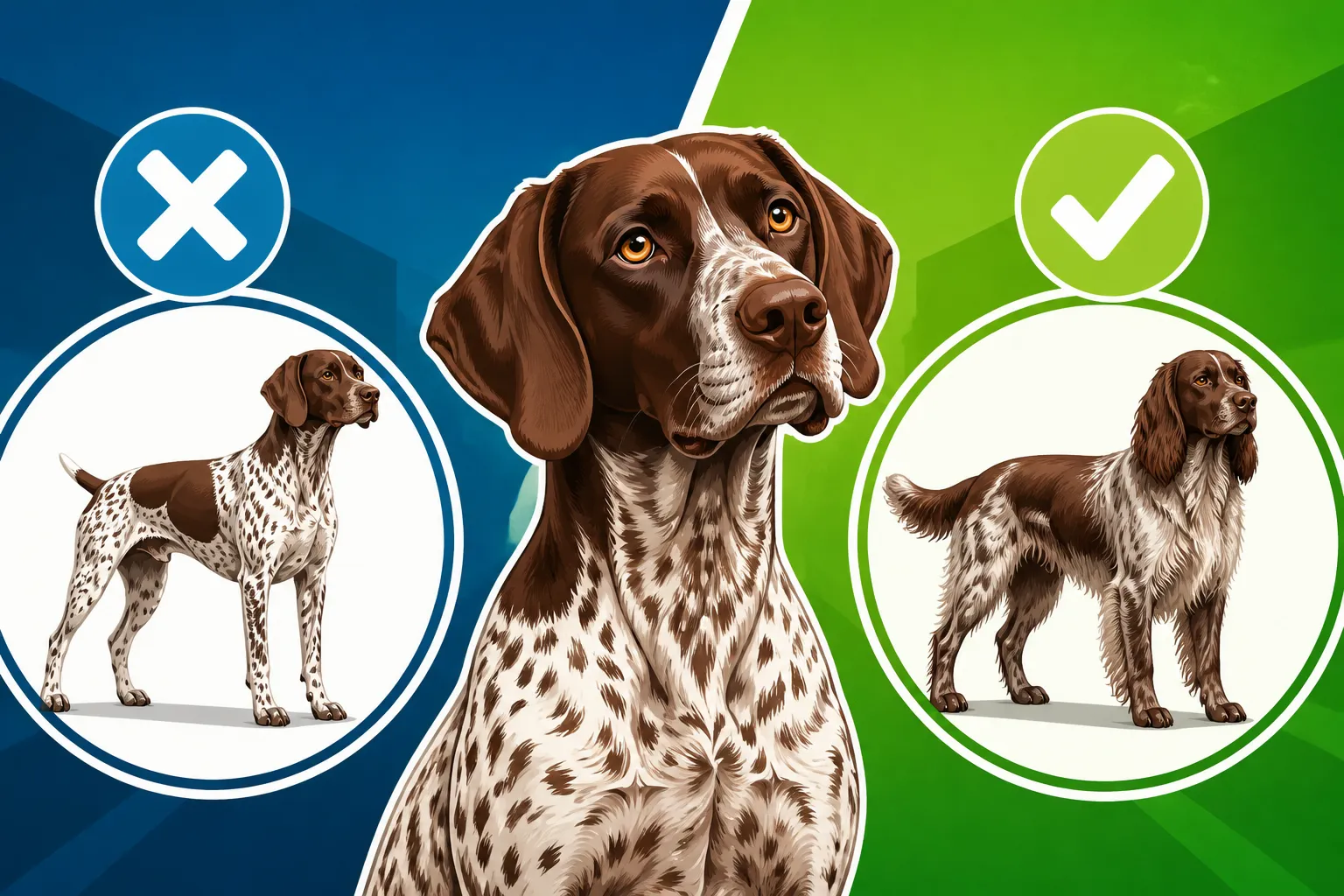
When a German Shorthaired Pointer carries two copies of the recessive long coat gene, its coat will be noticeably longer than the breed standard. This isn't usually a shaggy, heavy coat like a retriever or a setter, but rather a soft, flowing coat with pronounced feathering on the ears, chest, belly, legs, and tail. These dogs are sometimes affectionately called "longcoat" or "fluffy" Shorthairs. The body coat itself might still be relatively dense, but the feathering is unmistakable.
These long-coated GSPs still possess all the other classic German Shorthaired Pointer traits: their distinctive head, their athletic build, their energetic temperament, and their desire to please. The only difference is the length and texture of their fur. They are often strikingly beautiful in their own way, even if their appearance deviates from the standard.
How a Longhaired Shorthair Can Still Be Purebred
This is the key takeaway: a longhaired German Shorthaired Pointer can absolutely be 100% purebred. Their parents were GSPs, their grandparents were GSPs, and so on. The long coat is simply the expression of a recessive gene that has been carried within the breed's gene pool. It's not a sign of a mixed breed, nor does it mean their lineage is tainted.
Reputable breeders who encounter a longcoat puppy in their litter will often test the parents for the long coat gene. This information allows them to make informed breeding decisions moving forward, perhaps avoiding pairing two known carriers to prevent future longcoat puppies if their goal is strict adherence to the show ring standard. For many owners, however, the longer coat is merely a cosmetic difference, and their purebred German Shorthaired Pointer remains a beloved and capable companion.
Implications for Owners and Breeders
Discovering you have a longhaired German Shorthaired Pointer can bring up a few questions, especially if you had plans for your dog. While the coat may not meet the breed standard, it doesn't diminish the dog's intrinsic value or ability to be a fantastic pet and hunting partner.
Showing and Breeding Restrictions
For those interested in dog shows, a longhaired German Shorthaired Pointer would not be able to compete in conformation events. Their coat would be deemed a fault or even a disqualification by judges who are looking for strict adherence to The Size and Build the Shorthair Standard Asks For and coat type. Similarly, responsible breeders typically avoid breeding longcoated GSPs, or even carriers of the long coat gene, if their primary objective is to produce dogs for the conformation ring or to maintain the traditional appearance of the breed. They might view it as preserving the standard set by the parent club that helped shepherd The Shorthair's Move Into the AKC Sporting Group.
However, this doesn't preclude them from participating in other dog sports! Many longhaired GSPs excel in activities like agility, obedience, tracking, and even hunting tests (non-conformation events) where their coat length is irrelevant to their performance. Their natural intelligence and boundless energy make them superstars in these venues.
Living with a Longhaired German Shorthaired Pointer
Living with a longhaired GSP is largely the same as living with a short-coated one, with a few minor differences related to grooming. While German Shorthaired Pointers are generally considered low-maintenance in the grooming department, a longcoat will require a bit more attention. The feathering on their legs, ears, and tail can collect burrs, stickers, and debris, especially if they are active outdoors, which most GSPs certainly are. You might find yourself needing to brush them more frequently, particularly after a romp in the woods or a field session. A good grooming mitt or slicker brush, perhaps found on Chewy, will become your best friend.
Their longer coat might also mean they shed slightly differently, though GSPs are not typically heavy shedders to begin with. You might notice longer hairs around the house during shedding season. Otherwise, their care, exercise needs, and dietary requirements are identical to their short-coated counterparts. Remember, The Two Hours a Day a German Shorthaired Pointer Needs for exercise still applies, regardless of coat length!
Health and Temperament Are Unaffected
Crucially, the long coat trait is purely cosmetic. It has no bearing on a German Shorthaired Pointer's health, temperament, or their innate working abilities. A longhaired GSP will have the same vibrant personality, intelligence, boundless energy, and strong prey drive as any other GSP. They are just as affectionate, just as prone to being "Velcro dogs," and just as eager to join you on any adventure.
You won't find specific health issues linked to the long coat gene. They are still susceptible to the same potential genetic conditions that can affect the breed as a whole, such as hip and elbow dysplasia, eye conditions, or cardiac concerns. Owners should remain diligent about routine veterinary care, a balanced diet (which you can easily find on Chewy), and appropriate exercise to ensure their longhaired GSP lives a long, healthy life. Investing in supplements, which can also be sourced from Chewy, for joint health or skin and coat condition is something many GSP owners consider, as detailed in What a Shorthair Owner Spends on Supplements Each Season.
Differentiating from Other Breeds and Mixes
Sometimes, seeing a German Shorthaired Pointer with a longer coat can lead to confusion, especially with other similar-looking breeds or mixed breeds. It's important to know the distinctions.
Not to be Confused with German Longhaired Pointers
It's vital to note that there is a completely separate and distinct breed called the German Longhaired Pointer (GLP). The German Longhaired Pointer is a different breed, also originating from Germany, specifically bred to have a long, flowing coat. They are elegant, intelligent, and versatile hunting dogs in their own right, but they are not simply a GSP with long hair. While they share some ancestral roots and purpose, they are recognized as a separate breed by international kennel clubs.
A GLP's coat is typically much longer and more profuse than what you would see on a "longcoat" German Shorthaired Pointer, with extensive feathering and a softer texture. If you encounter a dog that looks like a German Shorthaired Pointer but has truly long hair, it's more likely to be a German Longhaired Pointer or a mix, rather than a "longcoat" GSP.
Recognizing a GSP Mix with Longer Hair
Another scenario that can result in a GSP-like dog with longer hair is a mixed breed. If a purebred German Shorthaired Pointer is bred with another breed that has longer hair, their offspring could certainly inherit a coat that is longer than the GSP standard. For example, a GSP mixed with a Labrador Retriever (which has a denser, slightly longer coat than a GSP) or even a setter breed could result in puppies with varying coat lengths and textures.
Identifying a true GSP longcoat versus a GSP mix often comes down to pedigree. If your dog has a verified purebred GSP pedigree from recognized kennel clubs, then despite its longer coat, it is genetically purebred. If there's no such documentation, and the coat length is very pronounced or combined with other physical traits not typical of a GSP, then a mixed heritage is a distinct possibility. DNA testing services for dogs have become quite common and can provide clarity on a dog's genetic background if its lineage is unknown.
A German Shorthaired Pointer with a longer coat is a fascinating genetic occurrence, proving that even within the most carefully bred lines, nature can still surprise us. While these "longcoat" GSPs might not fit the precise visual description of the breed standard, they are, in every other way, quintessential German Shorthaired Pointers. They boast the same intelligence, athleticism, and loving temperament that has made the breed so popular.
Comparison of Standard GSP vs. "Longcoat" GSP
| Feature | Standard German Shorthaired Pointer | "Longcoat" German Shorthaired Pointer |
|---|---|---|
| Coat Length | Short, thick, coarse, close-lying | Longer, softer coat; pronounced feathering on ears, legs, tail, belly |
| Purebred Status | Yes, if parents are purebred GSPs | Yes, if parents are purebred GSPs (result of recessive gene) |
| Show Eligibility | Eligible for conformation shows (if other standards met) | Not eligible for conformation shows (coat is a disqualifying fault) |
| Grooming Needs | Low maintenance; occasional brushing | Moderate maintenance; more frequent brushing to prevent tangles/burrs |
| Temperament | Energetic, intelligent, affectionate, strong prey drive | Identical to standard GSP |
| Health | Same health considerations as standard GSP | Same health considerations as standard GSP |
| Working Ability | Excellent versatile hunting dog | Excellent versatile hunting dog; coat length does not impact ability |
So, if you have a longhaired German Shorthaired Pointer, embrace their unique beauty! They are a testament to the genetic diversity within the breed and are just as capable and loving as their short-coated relatives. Whether they're tracking birds in the field or snuggling on the couch, they embody the What Versatile Actually Means for a Shorthair spirit through and through.
Disclaimer
This article is for general informational purposes only and does not constitute professional advice. Laws, prices and regulations vary by location and change over time. Consult a qualified professional for guidance on your specific situation.