Whether Shorthair Puppies Change Color as They Grow
It's a common and completely understandable wonder when you bring home a German Shorthaired Pointer puppy – those tiny, adorable bundles of energy often look a bit different in terms of coat color than the sleek, patterned adults we all recognize. Many new GSP owners find themselves asking if their puppy's current spots and patches are the final version, or if something more is on the horizon. This guide is here to walk you through the fascinating journey of a GSP's coat development, explaining why those colors can indeed shift and change as your beloved companion grows.
Understanding German Shorthaired Pointer Coat Genetics
The German Shorthaired Pointer's coat is one of its defining features, known for its short, dense, and water-resistant quality. The core colors and patterns are genetically determined, but how they express themselves can certainly evolve during puppyhood. It's not magic, it's just biology at play, and understanding the basics can help you appreciate the unique beauty of your dog's evolving appearance.
The Core Colors: Liver and Black
At their heart, German Shorthaired Pointers primarily come in two base colors: liver (a rich brown) and black. These are the fundamental pigments that dictate the overall hue of your dog's coat. A GSP puppy will be born with either a liver or a black base, and this base color itself won't change. You won't see a liver puppy suddenly become black or vice-versa. What does change is how these base colors are distributed and presented through various patterns.
Think of it like this: if you have a paint palette, your primary colors are liver and black. They're set. But the way you apply those colors – whether in solid blocks, sprinkled dots, or marbled swirls – that's where the variation comes in. The liver is by far the most traditional and common color you'll encounter in the breed, echoing their historical roots. While black GSPs are perfectly standard and recognized, historically, there was a period where Why Black German Shorthaired Pointers Were Once Refused registration in certain circles, though that's long since changed. Both are equally beautiful and legitimate.
Patterns and Markings: Roan, Ticked, and Patches
This is where the real fun begins and where you'll see the most dramatic changes in a GSP puppy's appearance. German Shorthaired Pointers are famous for their distinctive patterns, which often involve varying degrees of white mixed with their base color. The three main patterns are solid, patched, ticked, and roan, though solid white is disallowed in the show ring.
- Patches: These are clear, distinct areas of solid liver or black on a white background. These large patches are usually visible from birth and generally remain stable. A puppy with large liver or black patches will keep those patches.
- Ticked: Ticking refers to small, isolated dots of color (liver or black) on the white areas of the coat. These specks look like tiny freckles. When a GSP is born, these ticked areas might appear pure white, or only have the faintest hint of a spot.
- Roan: Roan is a much more dense intermingling of colored and white hairs, giving a mottled or blended appearance. Instead of distinct spots, roan areas look like a uniform, lighter shade of the base color. For example, a liver roan appears as a lighter, almost purple-brown shade, rather than clear brown spots on white. The key difference between these patterns is crucial, and it's a topic we've covered in detail in The Difference Between Ticked and Roan on a Shorthair.
The genetic blueprint for these patterns is there from day one, but their full expression often takes time to develop. What might look like a mostly white puppy with a few big patches could transform into a much more heavily marked dog as the ticking or roan fills in.
The Dynamic Nature of Puppy Coats
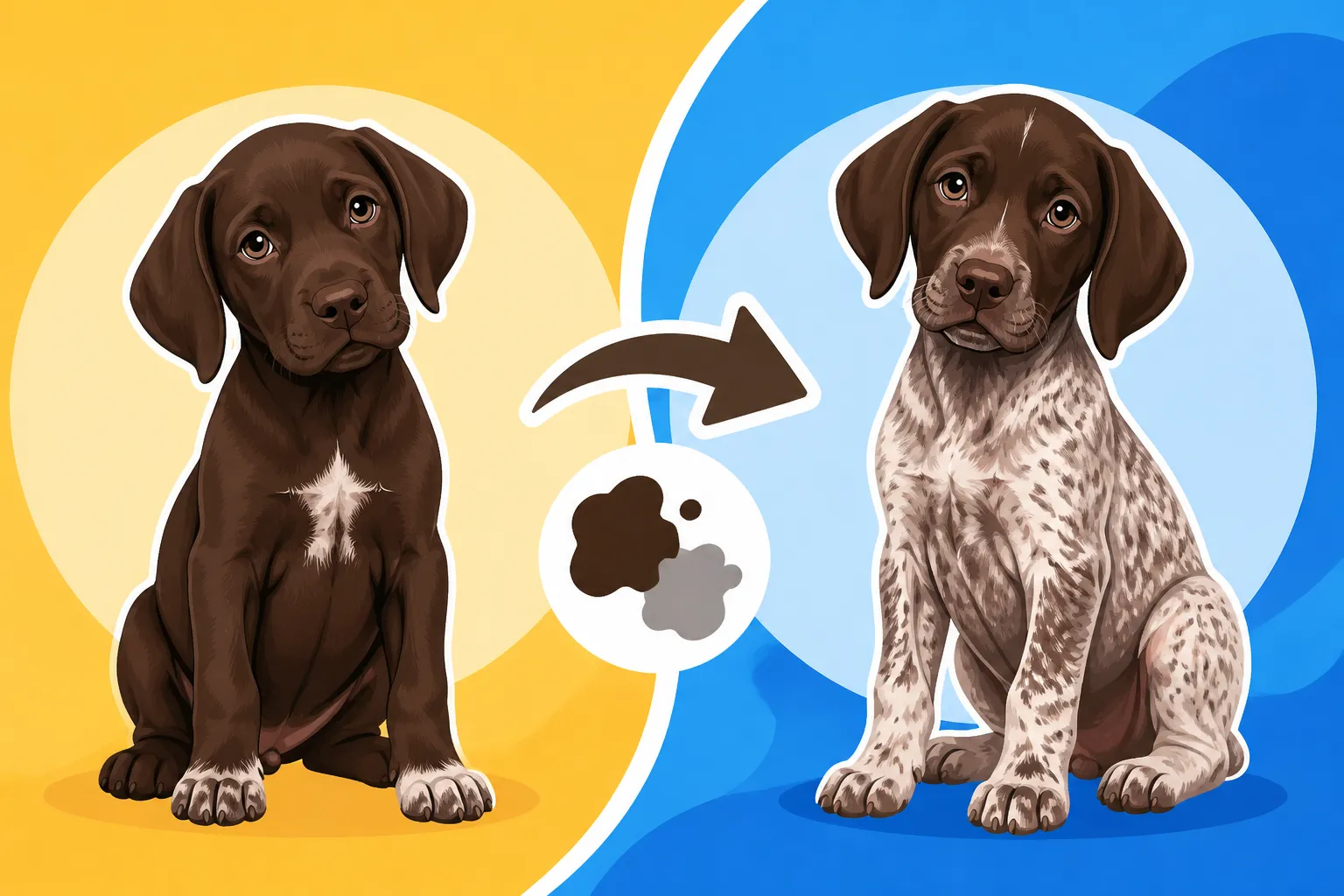
So, back to the big question: do Shorthair puppies change color as they grow? The answer is a resounding yes, especially concerning the development of ticking and roan patterns. This isn't a change in the type of color, but rather an increase in the visibility and density of the genetically predisposed markings.
Ticking and Roan Development Over Weeks
When a German Shorthaired Pointer puppy is born, the areas that will eventually become ticked or roan are often very pale, sometimes appearing almost pure white. It can be quite a surprise for first-time owners to watch these markings slowly emerge. Over the first few weeks and months of life, those tiny colored hairs begin to grow in, filling out those lighter patches.
Imagine a canvas that's mostly white with some broad strokes of liver. As the weeks pass, someone starts meticulously adding tiny dots of liver all over the white spaces. That's essentially what happens with ticking. A puppy that looked mostly white with a liver head and saddle might, by three to six months old, have a dense array of liver freckles across its chest, legs, and flanks. The same goes for roan; what looked like a faded patch will gradually deepen in color as more colored hairs grow in and intertwine with the white ones. This process can continue and intensify throughout their first year, sometimes even subtly changing up to two years of age. It's a gradual, fascinating process that makes each GSP puppy's development unique to watch.
Pigmentation Changes in Nose and Eye Rims
Beyond the coat itself, you might also notice changes in other pigmented areas of your GSP puppy. Their nose, paw pads, and eye rims are all important indicators of their underlying color genetics. For a liver GSP, these areas should be liver. For a black GSP, they should be black. However, in very young puppies, especially those with lighter roan or ticked patterns, these areas might not be fully pigmented at birth.
A liver GSP puppy might start with a somewhat pinkish or faded liver nose. Over the first few weeks, as their pigment genes fully kick in, that nose should darken to a rich, uniform liver color. The same applies to their paw pads and eye rims. If you have a black GSP, these areas might be lighter at first, but should eventually darken to true black. This development is usually complete by the time they are a few months old. It's a good sign of healthy pigment development and something breeders often check carefully when puppies are very young.
What to Expect as Your Shorthair Matures
While the most dramatic changes happen in puppyhood, subtle shifts in coat appearance can continue as your GSP grows into adulthood. Understanding these long-term trends helps set realistic expectations for your dog's final look.
Final Coloration and Coat Density
By the time a German Shorthaired Pointer reaches maturity, typically around one to two years of age, their ticking and roan patterns will have largely "filled in." The density and spread of these markings will be established, giving them their adult coat. At this point, the likelihood of significant further color change is minimal. The coat will retain its short, dense, and hard texture, which is crucial for their working ability in various environments.
Their coat will also reach its full density. While GSPs are short-coated, they do have a double coat that provides insulation and protection. The puppy fuzz gives way to a more robust adult coat, which can sometimes make the colors appear richer or more defined simply because the hair itself is thicker and stronger. Regular grooming, even for short-coated dogs, helps maintain coat health and shine. You might want to consider products from retailers like Chewy for specialized shampoos or grooming tools designed for short, dense coats.
When to Be Concerned About Coat Changes
While gradual development of patterns is normal, sudden or unusual changes in coat color or quality in an adult GSP can sometimes signal an underlying health issue. It's always a good idea to monitor your dog's coat as it can be a window into their overall well-being.
- Fading: If an adult GSP's black or liver coat starts to look reddish, rusty, or noticeably faded, particularly in patches, it could be due to nutritional deficiencies, certain medical conditions (like thyroid issues), or even prolonged sun exposure. We've discussed how Sun Damage on a White Marked German Shorthaired Pointer can affect their skin and coat, so always be mindful of prolonged sun time.
- Hair Loss or Thinning: While GSPs do shed, excessive hair loss or thinning can indicate hormonal imbalances, allergies, or parasitic infestations. Patches of hair loss that don't regrow, or a dull, brittle coat, warrant a vet visit.
- Skin Issues: The coat and skin are intimately connected. If you notice persistent redness, scaling, flakiness, or a greasy feel to the coat, especially if accompanied by itching, it could point to a skin condition. German Shorthaired Pointers, unfortunately, are not immune to such problems, and conditions like Lupoid Dermatosis and a Shorthair's Scaling Skin can definitely affect coat appearance.
Any noticeable, sustained, and unexplained change in your adult GSP's coat that goes beyond minor seasonal shedding should prompt a discussion with your veterinarian.
Factors Influencing Coat Appearance Beyond Genetics
While genetics lay the foundation for your German Shorthaired Pointer's coat color and pattern, external factors can play a role in how that coat looks day-to-day. These aren't changes to their genetic color, but rather influences on its condition and perceived hue.
Sun Exposure and Fading
Just like human hair, a dog's coat can be affected by sun exposure. For German Shorthaired Pointers, particularly those with liver or black coats, prolonged time in the sun can cause the pigments to lighten or take on a reddish tint. This is often referred to as "sun bleaching." You might notice it most prominently on their back, shoulders, or other areas that get a lot of direct sunlight.
This isn't a permanent genetic change, and typically, new growth will come in with the original, rich color. However, consistent sun exposure can maintain this faded look. If your GSP spends a lot of time outdoors, especially during hunting season or simply enjoying the yard, consider offering shaded areas or even specialized UV-protective clothing if the fading becomes extreme or concerns you. Protecting their skin, especially on white-marked areas, from excessive sun is also important for their long-term health.
Nutritional Impact on Coat Health
A beautiful, vibrant coat is often a reflection of excellent internal health, and nutrition plays a huge role in that. A diet lacking essential nutrients, particularly quality proteins, omega fatty acids, and certain vitamins and minerals, can lead to a dull, dry, and sometimes even faded coat. While it won't change a liver dog to a black dog, it can certainly make a rich liver coat look lackluster.
Ensure your GSP is on a high-quality dog food appropriate for their life stage and activity level. For a breed as active as the German Shorthaired Pointer, a performance-oriented kibble with good fat and protein content is often recommended. Many owners find options for their performance dogs, including various supplements like fish oil for healthy skin and coat, on platforms like Chewy. A balanced diet supports not only a shiny coat but also overall vitality and energy, which is essential for these tireless dogs. Don't underestimate the power of good food in keeping that coat looking its best.
| Age Stage | Ticking/Roan Appearance | Base Color (Liver/Black) | Pigment (Nose/Pads) | Expected Change |
|---|---|---|---|---|
| Newborn – 8 weeks | Often very pale/white, faint spots | Established | May be lighter/pinkish | Ticking/roan begins to emerge, pigment areas darken. |
| 2 – 6 months | Rapid development, spots darken/spread | Stable | Darkening to full adult shade | Significant increase in visible ticking/roan density. |
| 6 – 12 months | Continued filling in, density increases | Stable | Adult shade achieved | Patterns become well-defined, coat reaches near-adult appearance. |
| 1 – 2 years (Adult) | Fully developed, stable patterns | Stable | Stable adult shade | Minor subtle changes possible; sun fading or nutritional impact more likely. |
Disclaimer
This article is for general informational purposes only and does not constitute professional advice. Laws, prices and regulations vary by location and change over time. Consult a qualified professional for guidance on your specific situation.