How a Field Bred Shorthair Differs in Build
A field-bred German Shorthaired Pointer may look leaner, lighter and more angular than one bred primarily for the show ring, but those are tendencies—not guarantees. If you are comparing puppies, choosing a working dog or wondering whether your Shorthair is built for its job, this guide explains which physical differences matter and how to judge the individual dog beyond its label.
What field bred and show bred mean
Two breeding priorities within one breed
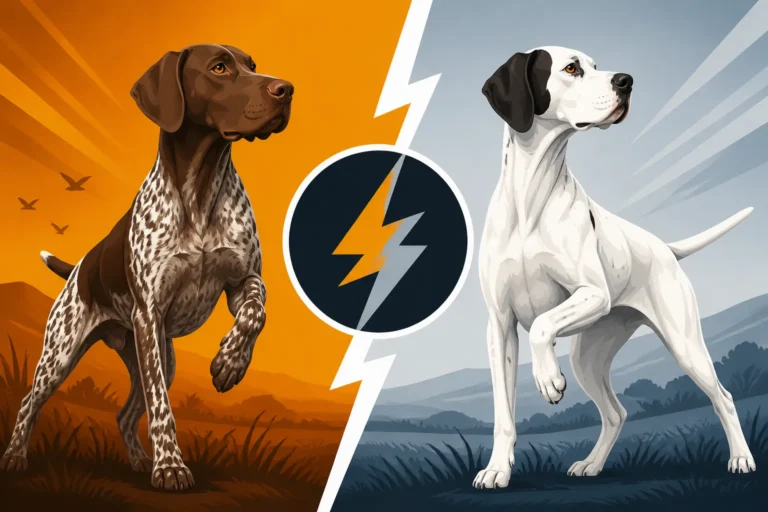
Field-bred and show-bred German Shorthaired Pointers belong to the same breed. The distinction describes the priorities breeders emphasize, not two separate breeds with completely different bodies. Field programs generally select for traits useful in hunting and performance, while show programs place greater emphasis on how a dog compares with the breed standard in a show ring.
Those priorities can shape appearance across generations. A breeder selecting dogs for speed, stamina and practical work may favor a lighter, more athletic outline. A breeder selecting for conformation may put closer attention on details such as proportions, head shape, topline and movement. Neither purpose automatically produces a healthy, capable or attractive dog; those depend on the dogs, the breeding decisions and the care they receive.
Even within a litter, puppies may differ in substance, leg length and outline. And there are plenty of exceptions: some show-bred Shorthairs are athletic and field capable, while some field-bred dogs are substantial and closely resemble the traditional show-ring type. The breed’s history and the modern differences between lines are explored in The Split Between Field and Show Shorthairs and How Shorthair Field Lines and Show Lines Diverged.
Why labels do not tell the whole story
“Field bred” is not a precise measurement of a dog’s build. It is a broad description of breeding goals, and breeders may use it differently. One field line might emphasize a dog’s range and speed; another might select for versatile hunting ability, steadiness and retrieving. Those dogs may not share one identical silhouette.
The same is true of “show bred.” A dog bred with conformation in mind still has the breed’s working heritage. It may hunt, run and retrieve, depending on its individual ability, training, health and experience. A show-ring background does not prove that a dog cannot work, just as a field title does not reveal every detail of a dog’s structure.
When you are considering a puppy, ask what the parents actually do and what traits the breeder values. Look for clear, specific answers rather than relying on a label. For guidance on interpreting a pedigree’s working background, see How to Read a Shorthair Pedigree for Hunting Ability.
How their builds may differ
Frame, substance and outline
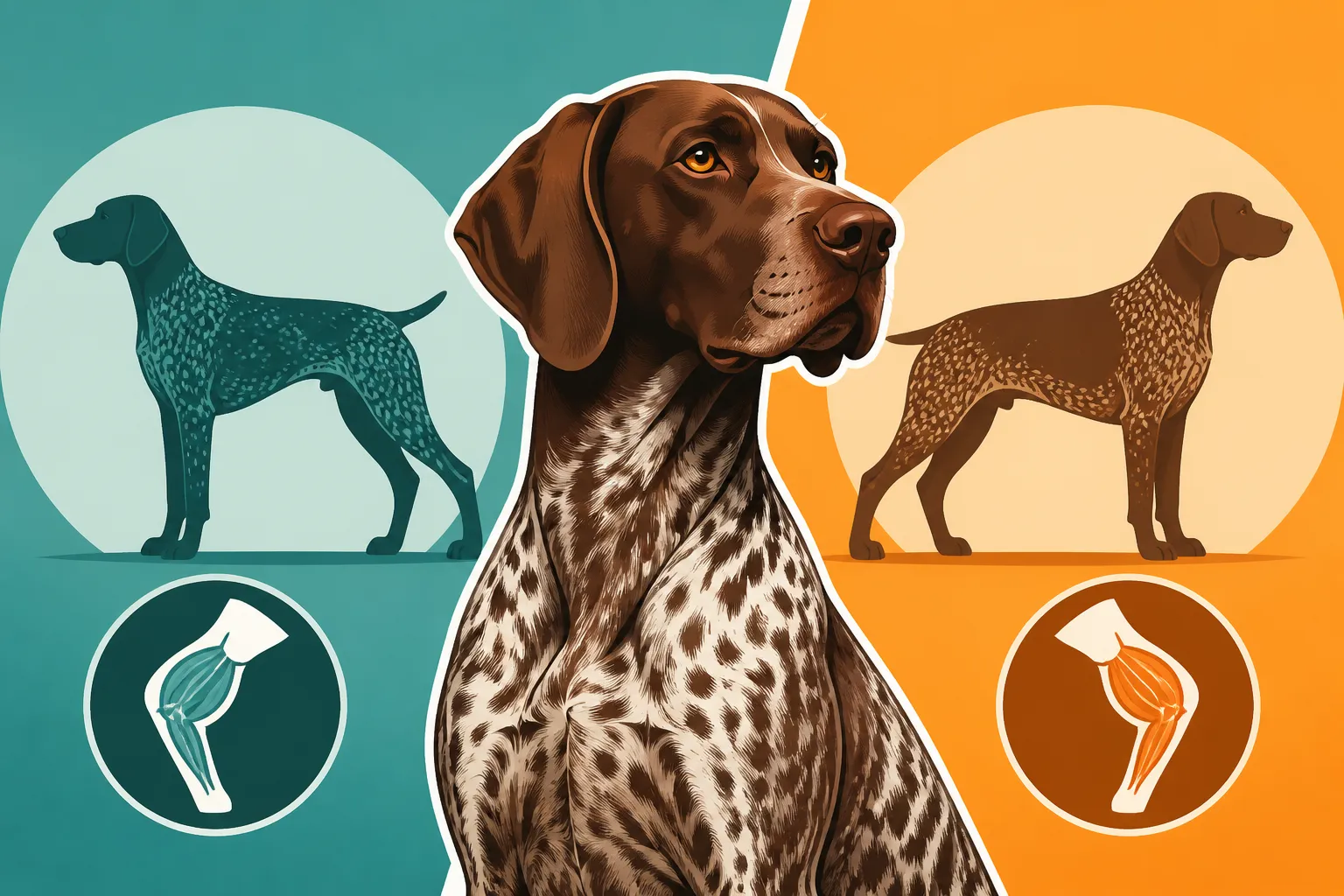
A field-bred Shorthair may appear more lightly built, with a leaner outline and less overall substance. The dog might look especially leggy when viewed from the side, or have a narrower profile through the body. That impression can come from several features together: body proportions, muscle, chest depth, rib shape and the dog’s condition—not simply from low weight.
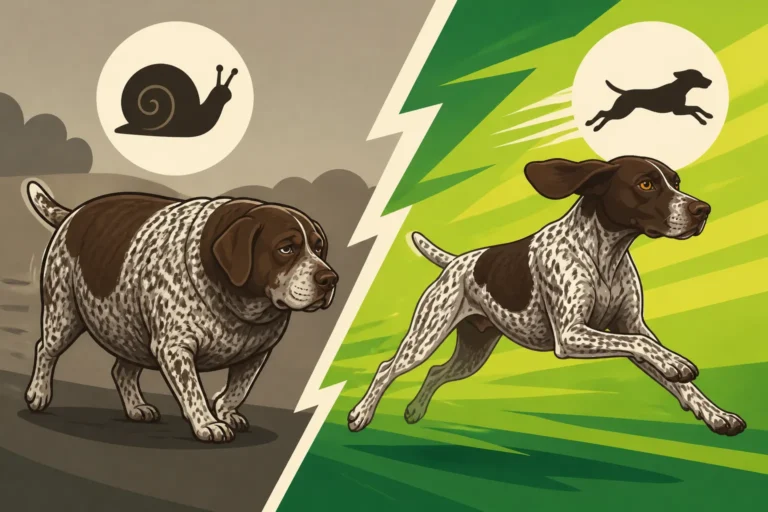
A show-bred Shorthair may look more substantial or balanced in a different way, with a fuller outline and a stronger impression of bone and body. But “more substantial” should not mean heavy, coarse or out of condition. A lean field dog should not look underfed, and a well-made show dog should not look cumbersome. Healthy examples of both types should move freely and carry useful muscle.
The breed standard offers a reference point for proportions and overall structure, but it does not turn every dog into the same shape. For a closer look at the standard’s expectations, read The Size and Build the Shorthair Standard Asks For and The Weight Range in the Shorthair Standard. When comparing dogs, look at their whole outline instead of deciding from one feature such as height, chest width or apparent weight.
Chest, legs, feet and movement
A field dog’s outline may suggest a body suited to covering ground, but appearance alone does not prove speed or endurance. A deep chest, for instance, needs to be considered alongside the dog’s overall proportions and movement. Long legs are not automatically a sign of athletic ability, and a narrow-looking dog is not necessarily more agile than a broader one.
Pay attention to the feet and legs as well. A dog that works outdoors needs sound, well-functioning limbs and feet, but you cannot confirm joint health by looking at a dog standing still. Watch the dog walk and trot on a level surface, paying attention to whether its stride looks coordinated and comfortable. If you see persistent stiffness, uneven weight-bearing or reluctance to move, ask a veterinarian rather than treating the issue as a harmless difference between lines.
Movement matters because structure is not just a still pose. A Shorthair should be able to move smoothly and efficiently for its individual build. The way a dog travels can tell you more than a dramatic side-on photograph; The Movement a German Shorthaired Pointer Should Show explains what to observe.
| Feature | Common impression in some field-bred dogs | Common impression in some show-bred dogs | What to assess in the individual |
|---|---|---|---|
| Overall outline | Leaner or more angular | More substantial or show-ring balanced | Proportion, muscle and healthy condition |
| Frame | May look lighter | May look stronger or fuller | Whether the dog moves comfortably and freely |
| Chest and body | May look narrower | May look deeper or more developed | Fit with the dog’s overall proportions |
| Movement | Often associated with practical athletic work | May be evaluated closely for conformation | Smooth, coordinated movement rather than labels |
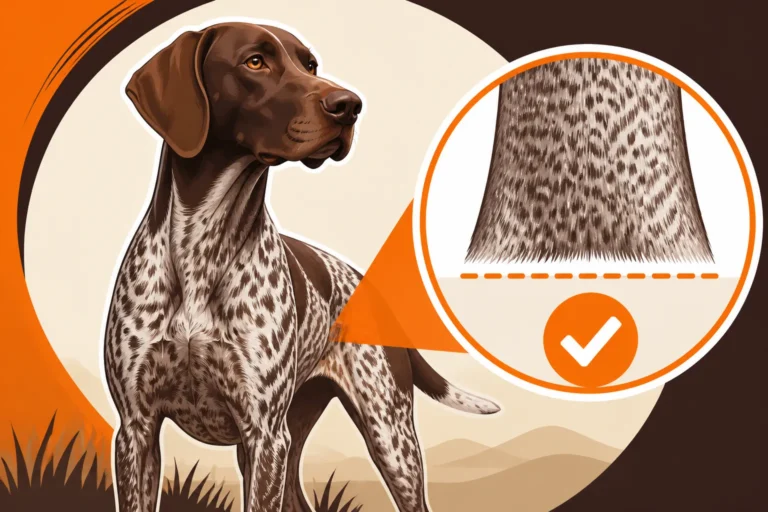
| Coat and appearance | Can vary widely | Can vary widely | Individual coat, skin and breed traits |
These descriptions are broad tendencies, not rules. A single dog may fall between the impressions, and both types can have strengths or faults that are not obvious from a quick look.
What build means for work and everyday care
Athletic appearance is not the same as working ability
A lean, leggy dog may look ready to run, but field performance depends on more than body shape. Conditioning, training, temperament, health, experience and the kind of work involved all matter. A dog cannot be judged as a finished hunting partner from its outline, and a puppy’s proportions are especially likely to change as it grows.
If you want a hunting dog, ask to see the parents or close relatives in the kind of work you hope to do. Ask how the dogs handle birds, water, terrain and time in the field, and what health clearances or veterinary evaluations have been completed. A dog’s structure can contribute to its ability to work, but breeding records and firsthand observation offer a fuller picture.
A show-bred Shorthair may still be a capable hunting companion, and a field-bred one may need training and conditioning just as much as any other dog. For a practical discussion of that distinction, see Whether a Show Bred Shorthair Can Still Hunt. Whatever the line, build a young dog’s exercise gradually rather than assuming its athletic appearance means it is ready for demanding, repetitive work.
Fit equipment to the dog, not the category
Differences in chest depth, neck shape and body length can affect how a harness, coat or protective vest fits. Do not choose equipment just because a dog is field bred or show bred. Measure the actual dog and check the fit while it is standing and moving. A harness that rubs behind the elbows or shifts across the chest can be uncomfortable, even if the size on the package seems right.
When comparing adjustable harnesses at a retailer such as Chewy or a local pet shop, use the specific product’s measuring guidance rather than relying on a breed label. Check that straps stay in place without restricting shoulder movement. If you are considering a coat or vest, measure the dog’s back and chest, then confirm that it can walk, sit and turn naturally in the gear.
The same principle applies to boots and other field equipment. A dog with narrow feet may need a different fit from a dog with broader feet, regardless of its pedigree. If you browse Chewy for boots or protective gear, compare the maker’s size chart with your dog’s measurements and introduce the item slowly at home. A few calm fitting sessions can reveal rubbing or slipping before the first long outing.
For working dogs, physical preparation matters too: a lean outline does not mean the pads are ready for rough terrain or long days. See Conditioning a Shorthair's Pads Before Opening Day for more on gradually preparing a dog’s feet.
How to evaluate a Shorthair in front of you
Look at the whole dog and ask useful questions
Start by observing the dog at rest and in motion. Does its body look balanced, or does one feature seem out of proportion? Does it stand comfortably? When it walks and trots, does it move with an even, coordinated stride? These observations cannot replace a veterinary exam, but they can help you ask better questions.
If you are meeting a breeder, ask what they mean when they describe their dogs as field bred or show bred. Ask what the parents are like at home as well as at work or in the ring. You can also ask how the breeder evaluates structure and health, and whether the adult dogs’ builds suit the activities they are expected to do. Specific answers are more useful than claims that a line is simply “faster,” “stronger” or “better.”
If you are evaluating an adult dog, consider its age, training, daily activity and body condition. A dog that has been running regularly may look more muscular than one that has had a quiet season. Weight changes, illness or an injury can affect appearance, too. If you are uncertain whether a dog is too thin or carrying excess weight, ask your veterinarian to assess its condition rather than using a comparison photo as a standard.
Separate build from health and temperament
A dog’s visible structure does not tell you everything about its joints, heart, eyes or inherited health risks. Nor does a field or show label predict whether it will be easy to live with. Ask about documented health testing where relevant, and have a veterinarian examine a dog before making major decisions about strenuous work.
Temperament deserves its own attention. A dog may be physically athletic but poorly suited to your household’s schedule, experience or activity level. Another may have an attractive show outline and still need substantial daily exercise and training. If you are trying to understand the broader differences between working lines and home life, Whether a Field Line Shorthair Is Harder to Live With can help frame the questions to ask.
The most useful takeaway is simple: field-bred Shorthairs often look leaner or more work-oriented, while show-bred dogs may appear more substantial or more closely shaped by conformation priorities. Those are tendencies, not guarantees. Judge the individual dog’s proportions, movement, condition, health, temperament and real-world ability—and remember that the right build is the one that is sound and suited to the dog’s life.
Disclaimer
This article is for general informational purposes only and does not constitute professional advice. Laws, prices and regulations vary by location and change over time. Consult a qualified professional for guidance on your specific situation.