Whether Shorthair Pet Lines Are Losing Hunting Ability
A German Shorthaired Pointer can look every bit like a hunter and still have little experience finding birds, holding a point, or responding to a handler in the field. That gap can make owners wonder whether pet-bred Shorthairs are losing their hunting ability. The answer is more nuanced: breeding priorities matter, but individual genetics, early experiences, training, and opportunity matter too.
Are pet lines losing hunting ability
Pet bred does not mean a dog cannot hunt
“Pet line” is an informal label, not a single, consistent breeding category. It may describe dogs bred mainly as companions, dogs from show-oriented pedigrees, or simply a litter whose breeder is not selecting specifically for hunting performance. Those are not interchangeable situations, and the label alone cannot tell you what a particular dog will do in the field.
German Shorthaired Pointers were developed as versatile hunting dogs, and pointing, scenting, retrieving, and tracking are part of the breed’s history. But breed heritage is not a guarantee that every dog will show the same level of instinct, confidence, range, or steadiness. A dog may show an early interest in scent and birds while needing considerable guidance to turn that interest into useful hunting behavior.
It also helps to separate instinct from trained performance. A young Shorthair that notices a bird, follows its scent, or freezes briefly may be showing natural tendencies. A finished hunting dog has learned how to work with a handler, respond to cues, and behave appropriately around birds and gunfire. Those skills are developed; they do not appear fully formed because a dog comes from a hunting breed.
Selection priorities shape what gets passed on
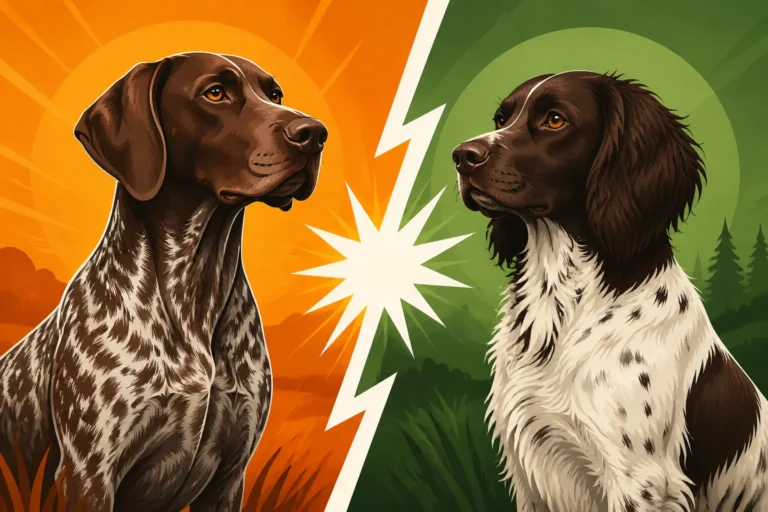
Breeders make choices about which dogs to breed and which traits to prioritize. A breeder focused on working ability may pay close attention to hunting drive, nose, range, bird contact, trainability, and performance in the conditions their dogs are expected to handle. A breeder with different goals may put more emphasis on conformation, temperament, or suitability as a companion. A dog can be a loving, well-built Shorthair without having been selected or evaluated for demanding field work.
That does not mean every show-bred or companion-bred dog lacks hunting ability. It means that the pedigree may offer different evidence about what traits were deliberately selected and demonstrated. Even within one litter, puppies can differ in confidence, intensity, sensitivity, and interest in game. The parents’ records and the breeder’s goals provide clues, not a promise about the puppy’s adult ability.
For a closer look at how the breed’s working and show populations developed, read How Shorthair Field Lines and Show Lines Diverged. The distinction can help you ask more useful questions than simply, “Is this a hunting line?” Ask what the parents actually do, how their abilities were assessed, and whether the breeder has seen the puppies respond to bird scent or field environments.
What influences a Shorthair’s hunting ability
Genetics matter, but they do not work alone
A dog’s inherited traits can influence its interest in scent, birds, retrieving, persistence, confidence, and responsiveness. Those qualities are not a single on-or-off “hunting gene.” They involve a combination of traits, and their expression can vary between relatives. Two Shorthairs from similar pedigrees may develop differently, especially if their experiences and training differ.
A pedigree becomes more useful when it connects names to observable work. Were parents or close relatives taken hunting? Have they been evaluated in field events? Do owners describe a dog that searches independently, stays connected to a handler, and recovers from new or difficult situations? Titles and scores can provide structured evidence, but they should be considered alongside the dog’s temperament, health, and everyday behavior.
If you are assessing a puppy or adult dog, look beyond a marketing phrase such as “natural hunter.” A breeder or previous owner who can describe specific examples—such as a dog locating birds, showing a point, or working in cover—gives you more to evaluate than a broad claim about bloodlines. The breed’s versatile background is explained further in Pointing, Retrieving and Tracking in One Shorthair.
Exposure and training can bring out—or obscure—talent
A Shorthair that has never encountered birds may not know what to do when it first smells one. That does not automatically mean the dog lacks ability. Likewise, a dog that chases every bird it sees may have plenty of enthusiasm but little training. Safe, well-managed exposure and patient instruction help a handler distinguish curiosity and raw instinct from learned skills.
The quality of those early experiences matters. A dog introduced to birds in a calm, age-appropriate way may become more confident and interested. A frightening or chaotic encounter can make the dog hesitant. Gun introduction deserves particular care: enthusiasm around birds does not mean a dog is ready for loud gunfire. Owners unsure how to proceed can work with an experienced trainer rather than improvising.
The age a dog first meets birds is only one part of the picture. The setting, the dog’s confidence, the handler’s timing, and the bird experience all matter. For a practical starting point, see The Age a Shorthair Meets Its First Wild Bird and The First Live Bird for a German Shorthaired Pointer. A puppy’s early interest is worth noticing, but it is not a final verdict on adult hunting potential.
How to assess a pet line or an individual dog
Ask about demonstrated traits, not labels
Whether you are choosing a puppy or evaluating a dog you already own, ask for concrete information. A useful conversation with a breeder might cover what the parents do, whether they have hunted or participated in field tests, how they behave around birds, and what their temperaments are like at home. If the breeder has raised several generations, ask what traits tend to repeat and what variation they have seen among littermates.
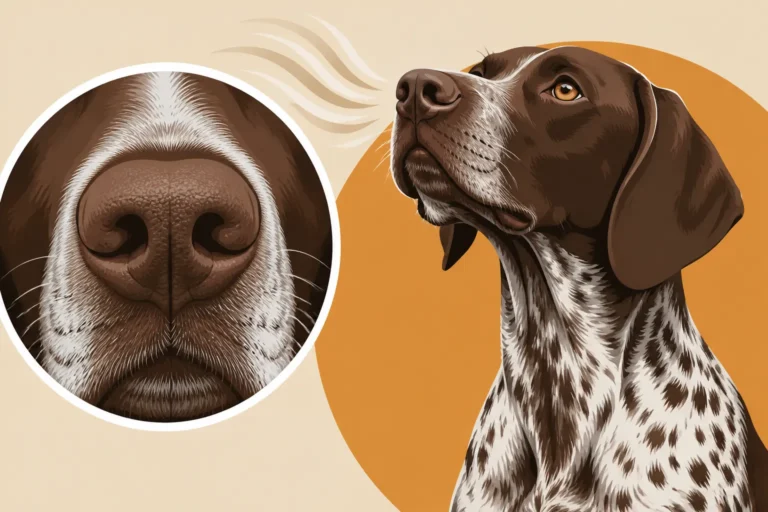
For an adult dog, observe what it does in safe, familiar settings before drawing conclusions. Does it investigate scent? Does it show curiosity about birds? Can it engage with you when something exciting is nearby? Does it recover after being startled by an unfamiliar sound or surface? These observations are informative, but they are not a substitute for a skilled assessment in the field.
| What you want to know | Helpful evidence | What it cannot prove by itself |
|---|---|---|
| Whether hunting traits were selected for | Breeder’s stated goals and examples from relatives | That every puppy will work the same way |
| Whether relatives have field experience | Hunting stories, event records, or direct observation | That a relative’s performance guarantees the puppy’s |
| Whether the dog shows interest | Scent investigation, bird curiosity, or retrieving interest | That the dog is trained or ready to hunt |
| Whether the dog can work with a handler | Recall, attention, and response to simple cues | That it will remain steady around birds |
| Whether it is ready for a particular hunt | Training, conditioning, health, and behavior assessment | That enthusiasm alone makes the outing safe |
Pedigree terms and titles can be confusing if you are new to the breed. How to Read a Shorthair Pedigree for Hunting Ability can help you focus on what the records indicate, while What NA, UPT and UT Mean on a Shorthair Pedigree explains common test abbreviations. A title or score is evidence of an evaluation under particular conditions; it is not a guarantee that a dog will fit every hunter’s needs.
Build skills without forcing a conclusion
Start with foundations that make field experiences safer and more enjoyable: a dependable recall, comfort on a leash or check cord, basic handling, and calm exposure to new environments. Keep sessions short enough that the dog remains engaged. If the dog is unsure, reduce the difficulty instead of pushing it closer to birds, noise, or cover.
Simple training equipment can help with controlled practice. Owners sometimes look at retailers such as Chewy for basics like leads, check cords, and training dummies; choose equipment suited to the dog and the setting, and get hands-on advice if you are unsure how to use it. A toy retrieve at home may build interest in carrying an object, but it is not the same as a trained bird retrieve.
For field-specific questions, a local pointing-dog trainer, experienced hunting handler, or breed club can help you assess the dog without expecting instant polish. A trainer can also help you decide whether the dog needs more exposure, clearer cues, or a different pace. Chewy may be a convenient place to browse ordinary practice supplies, but equipment cannot replace thoughtful instruction or suitable field conditions.
What owners can reasonably expect
Hunting ability is a spectrum, not a pass-or-fail trait
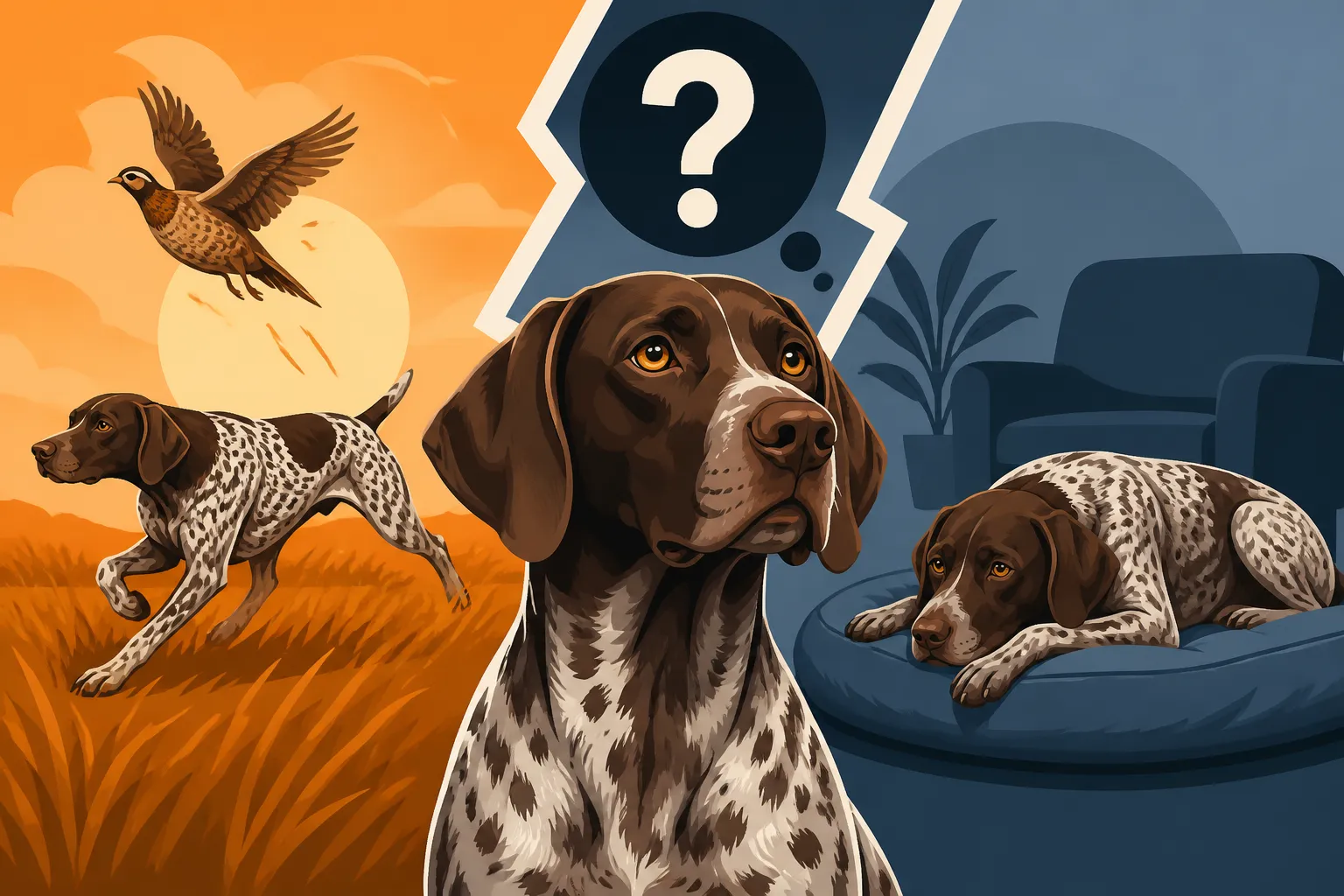
One Shorthair may become a driven, wide-ranging hunting partner; another may enjoy scent games, retrieving, and occasional bird exposure without becoming a polished field dog. Both can be healthy, capable members of the breed. The right expectation depends on the individual dog and what you want to do together.
If your dog seems less intense than a relative, that does not necessarily mean its line is “losing” the breed’s abilities. It may reflect a different set of inherited tendencies, limited experience, age, confidence, health, or the way the dog has been trained. Conversely, strong excitement around birds does not automatically mean a dog is ready to hunt safely. Enthusiasm needs to be shaped into reliable behavior.
Owners sometimes expect a young Shorthair to understand the work because the breed is known for hunting. That expectation can be frustrating for both dog and person. Think of natural interest as a starting point, not a finished skill. Whether a German Shorthaired Pointer Needs to Hunt to Be Happy also explores the difference between a dog’s breed history and the life an individual dog can thrive in.
Choose breeding goals that match your plans
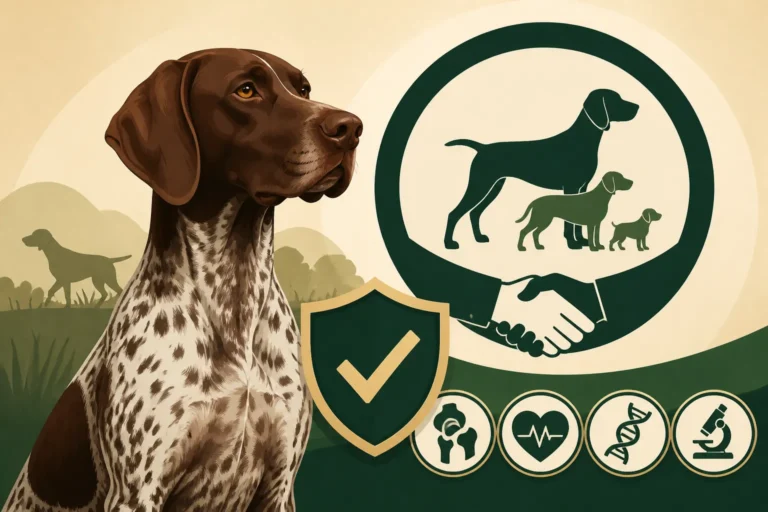
If hunting is a central goal, look for a breeder who can talk clearly about working ability and show you relevant evidence from the parents or close relatives. Ask how the breeder evaluates temperament and health as well as performance. A dog selected for field work still needs appropriate socialization, training, rest, and care; working ancestry does not make those responsibilities disappear.
If you already have a pet-bred Shorthair, you do not need to assume the door to hunting is closed. Explore the dog’s interests gradually, build foundational skills, and get knowledgeable help before adding birds or gunfire. Some dogs will show more aptitude than others, and a fair assessment leaves room for that variation without labeling the dog a failure.
Chewy may come up when you are gathering routine supplies for practice, but the most useful investment is often time spent understanding your dog and finding suitable guidance. A Shorthair’s hunting potential is not decided by one label in an advertisement. It becomes clearer through a combination of family history, observed behavior, patient training, and the kind of work the dog actually enjoys.
Disclaimer
This article is for general informational purposes only and does not constitute professional advice. Laws, prices and regulations vary by location and change over time. Consult a qualified professional for guidance on your specific situation.