Catching Bloat in a German Shorthaired Pointer After a Hunt
Coming home after a long, exhilarating hunt with your German Shorthaired Pointer is usually a time for shared satisfaction and well-earned rest. But for many GSP owners, there's always a nagging fear in the back of their minds: bloat. That dreaded, life-threatening condition can strike quickly, especially after intense physical activity, and recognizing it fast is absolutely critical. This comprehensive guide will walk you through understanding, identifying, and acting on the signs of bloat in your beloved hunting partner after a day in the field.
The Terrifying Reality of Bloat in German Shorthaired Pointers
The German Shorthaired Pointer, with its deep chest and athletic build, is unfortunately one of the breeds predisposed to a condition known as Gastric Dilatation-Volvulus, or GDV. It's a medical emergency that no dog owner ever wants to face, and the speed at which it can progress from subtle discomfort to a critical state is what makes it so terrifying. Understanding exactly what's happening inside your dog when bloat strikes is the first step in being prepared to respond.
What Happens During Gastric Dilatation-Volvulus GDV
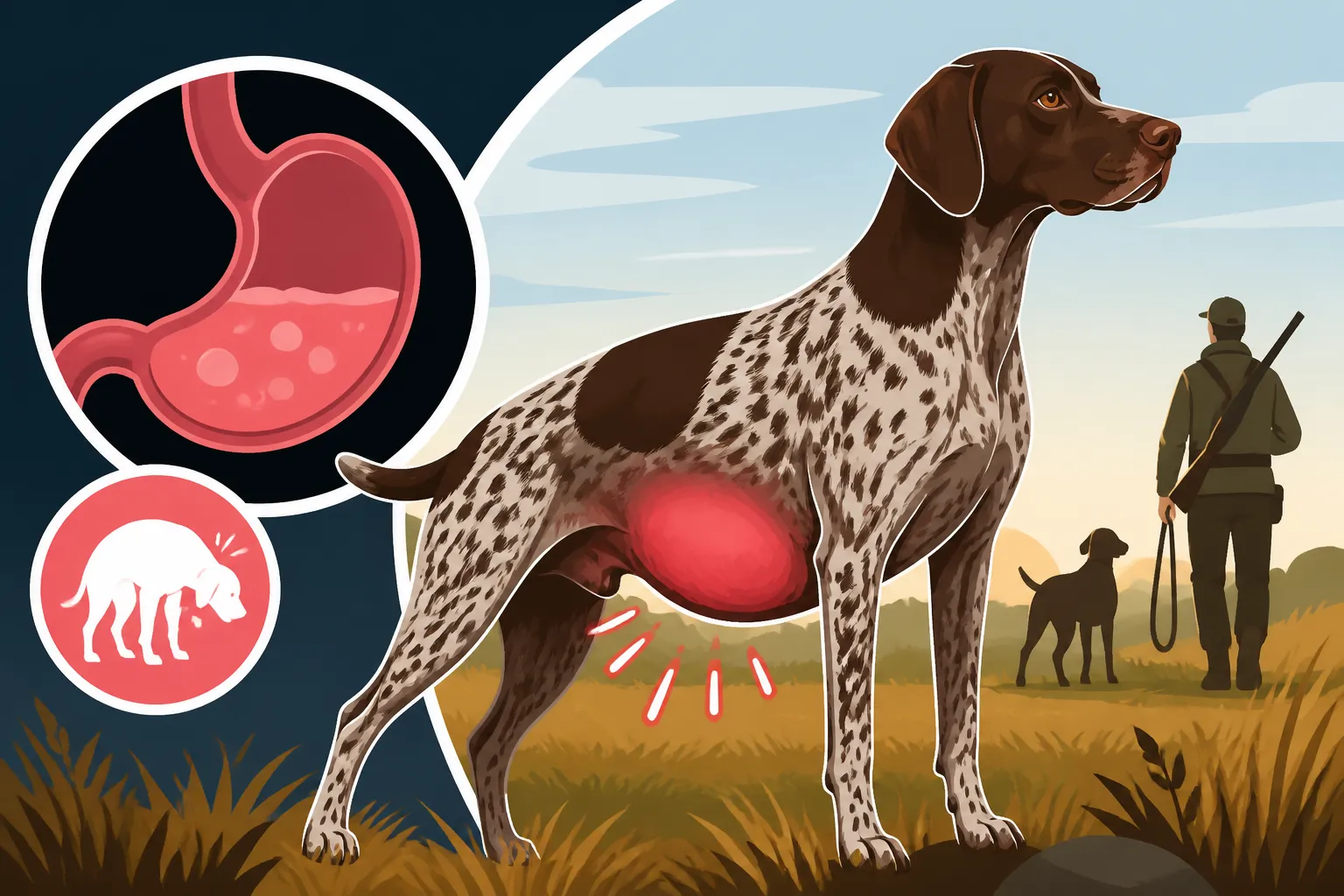
At its core, bloat involves two main components: dilatation and volvulus. Dilatation means the stomach fills with gas, food, or fluid, swelling to an enormous size. This distension is incredibly painful and puts immense pressure on surrounding organs and major blood vessels. Imagine your stomach inflating like a balloon, pressing against your diaphragm, making it hard to breathe, and compressing your aorta and vena cava, impeding blood flow back to the heart.
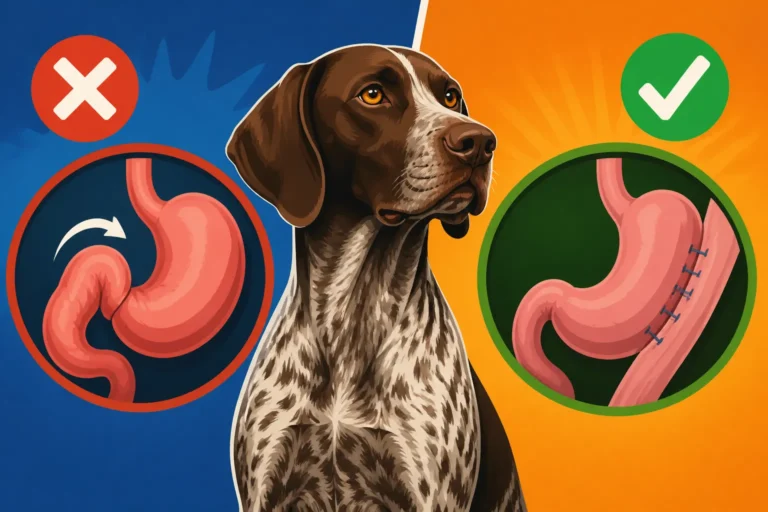
The second, and often more dangerous, component is volvulus, which means the distended stomach then twists on its axis. This twisting completely cuts off blood supply to the stomach and often the spleen, and prevents gas and food from leaving the stomach, trapping everything inside. Without blood flow, the stomach tissue begins to die, releasing toxins into the bloodstream. This twisting also obstructs the esophagus, making it impossible for your GSP to vomit or burp, which would otherwise relieve the pressure. It's a vicious cycle that rapidly leads to shock and can be fatal within hours if not treated.
Why are German Shorthaired Pointers particularly susceptible? Their deep, narrow chests, a hallmark of their athletic conformation, create a space where the stomach has more room to swing and twist when distended. This anatomical predisposition, combined with their high energy levels and intense feeding habits, significantly increases their risk compared to many other breeds.
Why Post-Hunt is a High-Risk Time for Your Shorthair
A day in the field for a German Shorthaired Pointer is a marathon, not a sprint. They're covering miles, quartering diligently, bursting into points, and retrieving birds. This intense physical exertion, coupled with the excitement and stress of the hunt, creates a perfect storm for bloat. During and after a hunt, several factors contribute to a heightened risk.
One major factor is the rapid intake of food and water. After hours of running and working, a GSP is often ravenously hungry and thirsty. They might gulp down a large amount of water, swallowing air in the process, or eat a big meal too quickly. All that air, combined with food and water, can quickly lead to stomach distension. If your dog is also stressed or anxious from the hunt, their digestion can be affected, further contributing to gas buildup. This is why understanding Why Bloat Follows a Shorthair's Hard Day Afield is so important for preventative care.
Another less obvious contributor is the repeated impact and jostling of their internal organs during vigorous activity. While the precise mechanism isn't fully understood, the combination of a full, gassy stomach and sudden movements could increase the likelihood of the stomach twisting. Think of it like a full water bottle being shaken violently—it creates turbulence. This isn't to say you shouldn't hunt your GSP; it just means you need to be acutely aware of the risks and take appropriate precautions immediately before and after.
The recovery period immediately after a hunt is often when owners let their guard down, thinking the danger has passed. However, the period right after strenuous activity and meal/water consumption is precisely when vigilance is most critical. Keep a close eye on your hunting partner during this vulnerable time, knowing that the combination of exhaustion, rapid intake, and inherent breed predisposition makes them prime candidates for this emergency.
Spotting the Early Warning Signs of Bloat
The key to successfully treating bloat is early recognition. Time is absolutely of the essence. While some signs are more obvious, others can be subtle, especially in a dog as tough and driven as a German Shorthaired Pointer. You need to become an expert observer of your dog's normal behavior so that you can quickly pick up on any deviations, no matter how small, that might indicate bloat.
Behavioral Changes to Watch For
One of the first things you might notice in a GSP developing bloat is a profound sense of restlessness and an inability to get comfortable. Your normally calm, resting dog might start pacing around, frequently changing positions, trying to lie down but then standing up again. They might seem agitated, whining softly, or panting excessively even if they've cooled down from the hunt. This is not the quiet, settled exhaustion you expect after a hard day. Instead, it's an anxious, almost frantic discomfort.
They might repeatedly look at their flanks, as if something is bothering them in their abdomen. You might also notice increased drooling, or an attempt to lick at their belly. While a GSP can be stoic, especially in discomfort, these overt signs of distress are often the first giveaway that something is seriously wrong. They might seek your attention more urgently than usual, or conversely, retreat and try to hide their pain. Any deviation from their typical post-hunt demeanor should raise a red flag.
Another subtle but important sign can be a change in their general posture. They might stand with an arched back or refuse to lie down altogether. Their usual enthusiasm for post-hunt treats or affection might be absent. Trust your gut if your dog just "seems off" after a hunt – that instinct can be incredibly valuable. These behavioral cues, especially when combined with other physical symptoms, are critical indicators that you need to act fast.
Physical Symptoms That Demand Immediate Attention
While behavioral changes can be subtle, certain physical symptoms of bloat are undeniable and demand immediate action. The most classic and often first physical sign owners notice is unproductive retching or dry heaving. Your German Shorthaired Pointer will try desperately to vomit, gagging and straining, but nothing will come up except perhaps a little foamy saliva. This is because the twisted stomach has completely blocked the exit to the esophagus. If you witness The Unproductive Retching That Means a Shorthair Is Bloating, do not delay—this is a true emergency.
Alongside the retching, you'll likely see abdominal distension. The abdomen, particularly on the left side, will appear swollen and feel hard and taut to the touch. It might even sound hollow when gently tapped. This isn't just a full belly; it's an unnaturally tight and painful distension. Over time, the distension can become quite dramatic, making your dog look "barrel-chested" or like their stomach has been pumped up with air. This can be very apparent in a lean, athletic GSP.
As the condition progresses, you might notice other signs of shock. Your dog's gums may become pale or even bluish. Their breathing will become rapid and shallow, and their heart rate might be elevated, but their pulse could feel weak. They might collapse, become weak, or show signs of disorientation. At this stage, your dog is in severe distress, and every second truly counts. These physical signs are direct indicators of a life-threatening crisis.
Distinguishing Bloat from Normal Post-Hunt Fatigue or a Full Belly
It’s easy to panic when your GSP isn’t acting quite right after an intense hunt. Are they just tired, or is it something more serious? Learning to differentiate the normal signs of exhaustion or a simply full stomach from the ominous symptoms of bloat can save precious time and prevent unnecessary trips to the emergency vet, while ensuring you don't overlook a critical situation.
The Difference Between Exhaustion and Distress
After a long day of running hard and working birds, it's completely normal for your German Shorthaired Pointer to be exhausted. They'll likely crash, sleep deeply, and perhaps be a bit stiff. They'll recover with good rest, proper nutrition, and hydration. An exhausted GSP is typically quiet, perhaps a bit lethargic, but generally able to settle down. They might be slow to respond, but they won't be restless, pacing, or exhibiting signs of intense, unresolvable discomfort.
Distress, on the other hand, is characterized by agitation, anxiety, and an inability to find comfort. A dog with bloat might try repeatedly to lie down, only to stand back up, pacing endlessly. They might whine, pant excessively, drool, or constantly look at their side. This isn't the relaxed panting of a dog cooling down; it's often more rapid and shallow, indicative of pain and difficulty breathing due to the pressure on their diaphragm. An exhausted dog wants to rest; a dog in distress cannot rest. Observing this crucial difference in behavior is vital for early detection.
If your GSP is simply tired, they will likely accept a comfortable bed, perhaps a gentle massage, and fall into a deep sleep. A dog with bloat, even if physically weary, will fight sleep due to the severe pain and discomfort. Their eyes might appear wide and anxious, rather than heavy-lidded with sleepiness. Paying close attention to how your dog tries, or fails, to settle will provide important clues.
When a Swollen Belly is Just Too Much Food or Water
Sometimes, after a big drink of water or a quick meal following a hunt, a German Shorthaired Pointer's belly might look a bit fuller or feel a little distended. This is especially true if they've guzzled water quickly, swallowing air, or consumed a large volume of food. However, there's a significant difference between a normally full belly and the rock-hard, painful distension associated with bloat. The blog post "Telling a Shorthair's Bloat From a Belly Full of Water" offers even more detailed insights into this distinction.
A belly that is full from normal eating or drinking will feel soft, or at most, firm, but not taut and hard like a drum. Your GSP might be a bit uncomfortable if they've overeaten, but they won't typically be in extreme pain, trying to vomit, or showing signs of shock. If you gently press on a normally full belly, it will have some give, and your dog won't react with sharp pain or distress. A bloated belly, however, will be unyielding, painful to touch, and your dog will likely flinch or cry out.
Consider the timing: if your dog just had a large drink of water, a slightly fuller belly might be expected. But if it's accompanied by unproductive retching, pacing, pale gums, and increasing hardness, then it's time for immediate action. A simple way to check is to try and walk them around gently for a few minutes. If it's just a full belly, the discomfort might subside or they might burp. If it's bloat, their distress will likely worsen, and the abdomen will remain hard and continue to expand. Always err on the side of caution.
| Symptom / Condition | Normal Post-Hunt Fatigue | Full Belly from Food/Water | Gastric Dilatation-Volvulus (Bloat) |
|---|---|---|---|
| Behavior | Quiet, sleeps deeply, slow to move | Content, possibly slightly uncomfortable, no significant anxiety | Restless, pacing, anxious, unable to settle, looking at flanks |
| Retching/Vomiting | None | Occasional regurgitation if overeats, productive | Frequent, unproductive retching/dry heaving |
| Abdomen | Normal | Slightly full/firm, not hard | Swollen, tight, hard like a drum, painful to touch |
| Pain Level | None (just tired/stiff) | Mild discomfort | Severe, rapidly worsening pain |
| Breathing | Normal, deep sleeping breaths | Normal | Rapid, shallow, labored breathing, panting |
| Gums | Pink and moist | Pink and moist | Pale, white, or bluish; sometimes brick red in early stages |
| Pulse | Normal | Normal | Rapid, weak, thready |
| Progression | Improves with rest | Improves with digestion | Rapidly worsens, life-threatening |
What to Do the Moment You Suspect Bloat
Once you've made the terrifying realization that your German Shorthaired Pointer might be experiencing bloat, panic is a natural reaction. However, this is precisely when you need to act with a clear head and extreme urgency. Every minute that passes increases the risk of irreversible damage and significantly lowers the chances of a positive outcome. Your immediate actions are critical.
Emergency Assessment and Communication
The first step, after a quick visual assessment, is to immediately call your veterinarian. Do not waste time trying home remedies, giving medications, or searching online for advice. Bloat is not something you can treat at home. When you call, clearly state that you suspect GDV in your German Shorthaired Pointer. Describe the symptoms you are seeing—the unproductive retching, the distended abdomen, the restlessness, the pale gums. The more information you can give them, the better prepared they will be for your arrival.
If your regular vet clinic is closed, or if you're out hunting in an unfamiliar area, immediately locate the nearest 24-hour emergency veterinary hospital. Have their number saved in your phone or know where it is. Time is literally tissue: the longer the stomach is twisted, the more damage occurs to the stomach lining and other organs. The staff at the emergency clinic will likely advise you to come in immediately, often without an appointment, because they understand the critical nature of this condition.
While you're on the phone, keep a close eye on your dog's condition. Note any changes in their breathing, gum color, or level of consciousness. This information will be vital for the vet when you arrive. Do not attempt to give them food or water, as this can worsen the distension. Just focus on getting them ready for transport.
Safe Transport to Veterinary Care
Moving a German Shorthaired Pointer who is in severe pain and distress requires care. They might be anxious, disoriented, or even try to bite due to pain, though this is rare for most GSPs. If possible, have someone help you get your dog into the car. Use a stretcher or a sturdy blanket as a sling to support their body, especially their distended abdomen, if they are large or struggling to walk. Avoid any movements that might exacerbate the twisting or cause them more pain. Gently guide them, but avoid forceful handling.
The speed of transport is paramount. Do not stop for anything. Drive directly to the veterinary clinic or emergency hospital. This is not the time for leisurely driving. Get there as quickly and safely as possible. Remember, in these critical moments, pet insurance can be an absolute lifesaver. Companies like Healthy Paws offer comprehensive coverage that can help mitigate the enormous financial burden of emergency bloat surgery and subsequent care, allowing you to focus solely on your dog's well-being without crippling financial stress. This financial safety net can make the difference between accepting life-saving treatment and making difficult decisions based on cost. The article "Emergency Care for a Bloating German Shorthaired Pointer" provides even more detail on the immediate steps and critical nature of veterinary intervention.
Once you arrive at the clinic, be prepared for immediate action. The veterinary team will likely whisk your GSP away for assessment and stabilization without delay. Providing them with accurate information on your dog's symptoms and when they started will aid in their rapid diagnosis and treatment plan.
Proactive Strategies to Reduce Bloat Risk
While bloat can strike suddenly and without obvious cause, there are many proactive measures you can take to significantly reduce your German Shorthaired Pointer's risk, especially if they are an active hunting dog. It's about smart management, informed choices, and understanding the specific needs of this energetic breed.
Smart Feeding Practices for Hunting Shorthairs
How and what your German Shorthaired Pointer eats plays a huge role in bloat prevention. First and foremost, avoid feeding one large meal a day. Instead, break their daily ration into two or even three smaller meals. This reduces the amount of food and gas that can accumulate in the stomach at any one time. Feeding from an elevated bowl is a common recommendation, though scientific evidence on its effectiveness for bloat prevention is mixed. However, for some dogs, it can encourage slower eating and reduce swallowed air. Using slow-feeder bowls or puzzle feeders can also drastically slow down their eating, which is a big plus for gulp-prone GSPs.
Crucially, never allow vigorous exercise immediately before or after eating. This is a golden rule for bloat prevention. Give your GSP at least an hour of quiet time before a meal and at least two hours afterward. A gentle potty break is fine, but no running, jumping, or intense training. This allows their stomach to properly digest food without the added risk of jostling and twisting. As highlighted in "The Rest a Shorthair Needs Between Eating and Running", proper rest is non-negotiable around meal times.
The type of food can also be a consideration. While research on kibble type and bloat is complex, studies have suggested that diets with larger kibble size may be associated with a lower risk. Some owners opt for moistening kibble to slow consumption and reduce air intake. Always ensure your GSP isn't ravenously hungry when they eat; if they are, consider offering a tiny, very light snack 30 minutes before their main meal to take the edge off their hunger and prevent frantic gulping.
Managing Hydration and Post-Hunt Recovery
Just as with food, how your German Shorthaired Pointer drinks water, especially after a hunt, can impact bloat risk. After intense exercise, dogs are often dehydrated and will gulp down large quantities of water very quickly, potentially swallowing a lot of air in the process. Instead of offering an unlimited, free-for-all water bowl, provide smaller, controlled amounts of water every 15-20 minutes during their cool-down period. This allows them to rehydrate gradually without excessive gulping.
A proper cool-down routine after a hunt isn't just for muscle recovery; it's also a bloat prevention strategy. Instead of immediately crating your dog or letting them gorge on food and water, walk them slowly on a leash for 10-15 minutes. This gentle activity helps them calm down, regulates their breathing, and allows their internal systems to gradually return to a resting state. It also provides an opportunity to observe them closely for any early signs of distress.
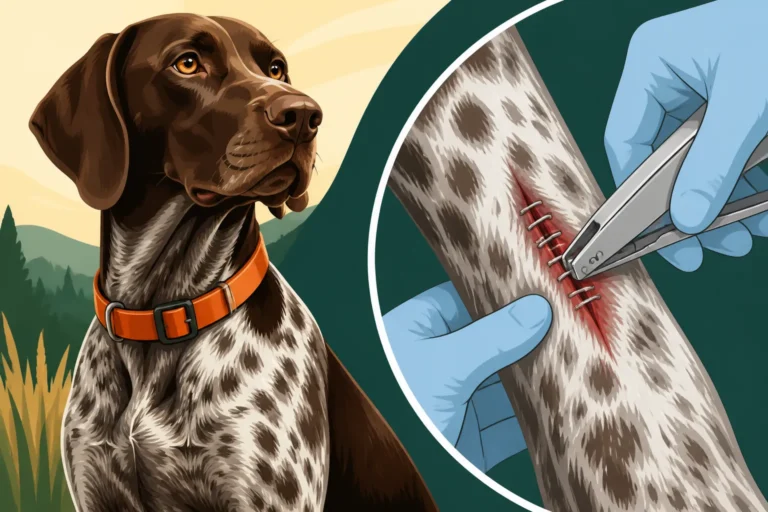
For German Shorthaired Pointers, particularly those actively hunting, many owners consider a prophylactic gastropexy. This is a surgical procedure where the stomach is permanently tacked to the abdominal wall, preventing it from twisting (volvulus) in the future, though it doesn't prevent it from dilating (bloating). This procedure can be performed during a spay or neuter surgery, or as a standalone procedure. The article "The Gastropexy Decision on a Hunting Shorthair" delves deeper into this preventative surgical option, which can offer immense peace of mind for owners of high-risk breeds. Discuss this option thoroughly with your veterinarian to see if it's the right choice for your GSP.
The Critical Role of Veterinary Intervention
When bloat is suspected, the immediate action taken by you, the owner, leads directly to the critical intervention provided by veterinary professionals. This is not a condition that can resolve on its own; it requires urgent, specialized medical and surgical care. Understanding what happens once your GSP reaches the clinic can help manage expectations and reinforce the need for speed.
Diagnosis and Initial Stabilization
Upon arrival at the emergency veterinary clinic, your German Shorthaired Pointer will be immediately assessed. The veterinary team will quickly perform a physical examination, checking vital signs, assessing the degree of abdominal distension, and looking at gum color and capillary refill time to determine the severity of shock. The definitive diagnosis of GDV is typically made with an X-ray of the abdomen, which will clearly show the distended, twisted stomach.
Once GDV is confirmed, the immediate priority is stabilization. Intravenous (IV) fluids will be administered rapidly to combat shock and improve blood pressure. Pain medication will be given to alleviate your GSP's severe discomfort. In some cases, the veterinary team may attempt to decompress the stomach by passing a tube down the esophagus into the stomach to release gas and fluid. If the stomach is twisted, the tube may not pass, or they might attempt to insert a large-bore needle (trocar) directly through the abdominal wall into the stomach to release pressure. These initial steps are crucial to stabilize your dog before surgery can begin.
During this stabilization period, the veterinary team will also run blood tests to assess your dog's overall health, look for signs of organ damage, and check for electrolyte imbalances. They'll also monitor for cardiac arrhythmias, which are common complications of GDV. This comprehensive approach ensures that your GSP is in the best possible condition for the life-saving surgery that must follow.
Surgical Correction and Post-Operative Care
Once your German Shorthaired Pointer is stabilized, they will be moved to surgery. The primary goal of the surgery is to untwist the stomach and return it to its normal anatomical position. The surgeon will then carefully inspect the stomach and spleen for any signs of tissue damage or necrosis (tissue death) due to the lack of blood flow. Any damaged or necrotic tissue may need to be removed.
Critically, a gastropexy will almost always be performed during the bloat surgery. This procedure involves permanently attaching the stomach wall to the abdominal wall, significantly reducing the risk of future volvulus (twisting). While it doesn't prevent the stomach from distending with gas, it prevents the life-threatening twist. This is a vital step because without it, the recurrence rate of bloat is extremely high. The surgery itself is complex and can be lengthy, with potential complications.
Post-operative care is just as critical as the surgery itself. Your GSP will require close monitoring in the intensive care unit for several days. This includes continued IV fluid therapy, pain management, monitoring for arrhythmias, and checking for complications like infection, further stomach necrosis, or other organ damage. Recovery involves a gradual reintroduction of food and water, starting with small, frequent meals. The financial cost of this emergency surgery and intensive post-operative care can be substantial, often ranging from several thousand dollars or more. This is where having pet insurance, like Healthy Paws, can provide an incredible buffer, covering a significant portion of these unexpected and high medical bills, allowing you to prioritize your dog's recovery without added financial strain. It allows you to make decisions based on what's best for your GSP, not your wallet.
Disclaimer
The information provided in this article is for educational and informational purposes only, and does not constitute veterinary advice. Always consult with a qualified veterinarian for any health concerns or before making any decisions about your pet's health or treatment. In case of a suspected emergency like bloat, seek immediate veterinary attention.