Cloudy Eyes in a Shorthair Past Ten
It’s a moment that can send a little pang through your heart: you look into your beloved German Shorthaired Pointer’s eyes, and instead of the clear, sparkling depths you remember from their younger days, you notice a subtle, milky haze. For those of us with senior GSPs, especially past the ten-year mark, cloudy eyes are a common, often worrying, sight. This guide is here to walk you through what those cloudy eyes might mean, whether it's a normal part of aging or something more serious, and how you can best support your loyal companion as they navigate their golden years.
Understanding Cloudy Eyes in Senior German Shorthaired Pointers
Seeing your athletic, sharp-eyed German Shorthaired Pointer start to show signs of age is never easy, and cloudy eyes can be particularly unsettling. You might immediately jump to conclusions about blindness, and it’s natural to feel a rush of concern. The good news is that not all cloudy eyes signal a severe problem, but understanding the possibilities is key to providing the best care for your furry friend.
Natural Aging Processes of the Eye
Just like us, dogs' bodies undergo changes as they age, and their eyes are no exception. One of the most common and often benign reasons for a cloudy appearance in an older GSP's eyes is a condition called lenticular sclerosis, sometimes referred to as nuclear sclerosis.
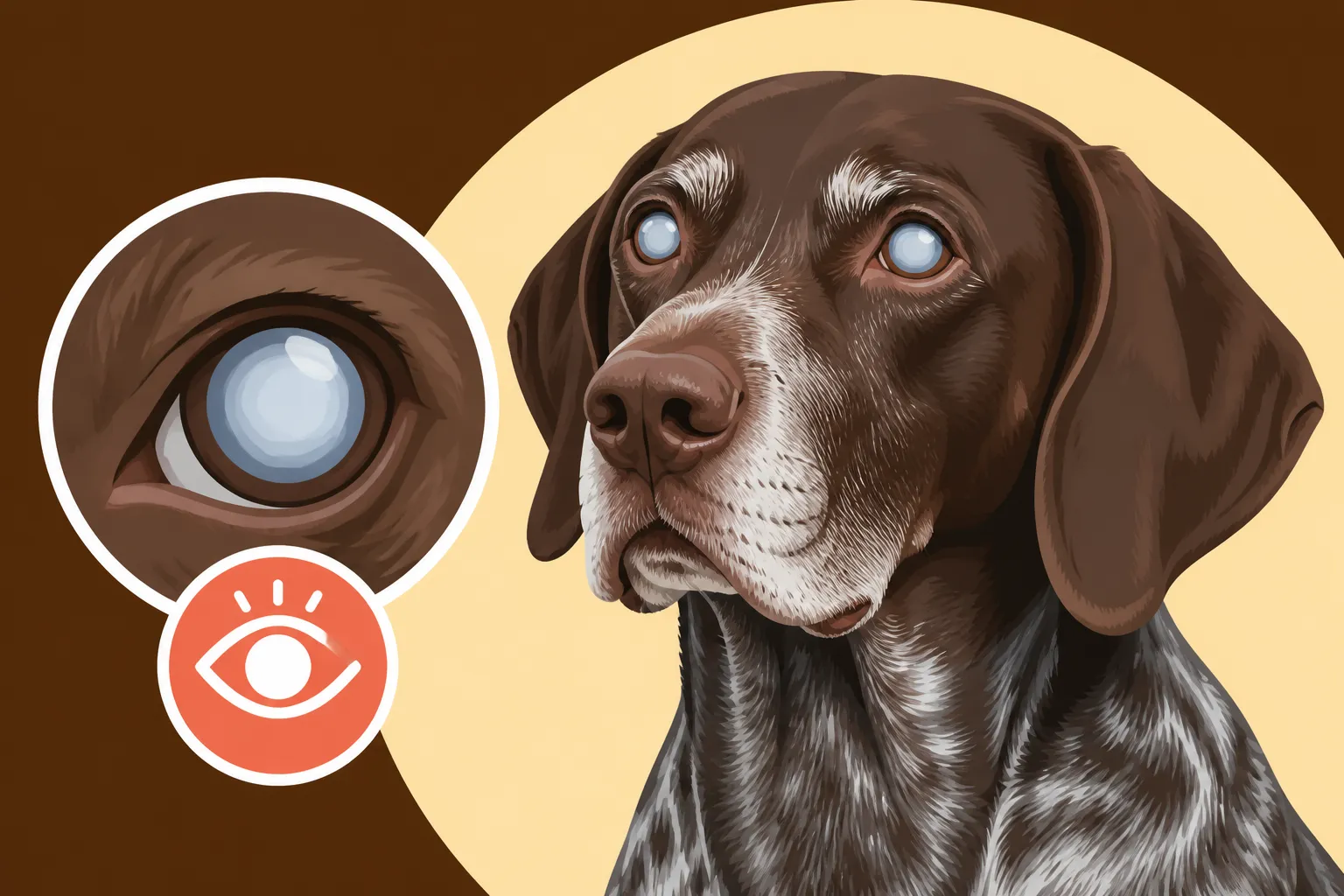
Think of it this way: the lens of your dog's eye is made of layers, much like an onion. As the dog gets older, these layers continue to grow, and the older fibers in the center of the lens become compressed and harder. This change in density and light refraction is what causes that characteristic bluish-gray haze you see. It usually affects both eyes fairly symmetrically. This isn't a sudden onset; it progresses gradually over years. It’s a very normal part of the aging process for many dogs, including our active GSPs who are living longer, often reaching their full potential over The Twelve to Fourteen Years a German Shorthaired Pointer Gets. While it might look concerning to you, the impact on their vision is typically minimal. They might have a slight reduction in their ability to focus on very close objects, but for the most part, their overall vision, especially for navigating their familiar environment and recognizing you, remains quite good. It’s quite different from looking through a truly opaque window.
Common Ocular Conditions in Older Shorthairs
While lenticular sclerosis is often nothing to lose sleep over, it's crucial not to dismiss all cloudy eye appearances as just "old age." Several other conditions can cause eye cloudiness, some of which require prompt veterinary attention to preserve vision or alleviate discomfort. For a German Shorthaired Pointer that's been your constant companion for over a decade, crossing into the territory of The Age a German Shorthaired Pointer Is Called Senior, these conditions become more prevalent.
Cataracts are probably the most well-known eye condition, and they are a different beast entirely from lenticular sclerosis. With cataracts, the lens itself becomes truly opaque, preventing light from reaching the retina. This opacity can range from small, localized spots to a complete white clouding over the entire lens. Unlike lenticular sclerosis, cataracts do significantly impair vision, eventually leading to blindness if severe. They can develop due to genetics, diabetes, inflammation, trauma, or simply old age. While some age-related cataracts progress slowly, others can develop quite rapidly. If you see a stark white, rather than a bluish haze, it's time to act.
Then there's glaucoma, a painful condition caused by increased pressure within the eye. This pressure damages the optic nerve and can lead to rapid, irreversible blindness. While not always immediately presenting as cloudy eyes, advanced glaucoma can cause the cornea (the clear outer layer of the eye) to appear bluish or hazy due to swelling. Other signs of glaucoma include a dilated pupil that doesn’t respond to light, redness in the eye, squinting, and visible discomfort. A dog with glaucoma might paw at its eye or seem withdrawn because of the pain. This is an emergency and needs immediate veterinary care.
Another condition to consider is Keratoconjunctivitis Sicca (KCS), commonly known as "dry eye." While not directly causing cloudiness within the lens, severe dry eye can lead to chronic irritation, corneal inflammation, and secondary infections, all of which can result in a hazy, dull, or cloudy appearance of the cornea. You might also notice thick, yellowish discharge, excessive blinking, or redness around the conjunctiva. This condition reduces the eye's ability to produce tears, leaving it vulnerable.
It's clear that while the casual cloudiness of lenticular sclerosis might be nothing, other forms of cloudy eyes are serious. This is why vigilance and professional evaluation are so vital.
Diagnosing Eye Issues in Your Senior Shorthair
When you notice any changes in your German Shorthaired Pointer's eyes, especially as they get older, a trip to the vet isn't just a good idea, it's essential. Early diagnosis can make a world of difference in managing conditions and preserving your dog's quality of life. Don't wait until things get really bad; even subtle changes warrant a professional look.
The Importance of Regular Vet Check-ups
Our GSPs are resilient creatures, often masking discomfort, especially when they've been used to powering through anything the field throws at them. That's why regular veterinary check-ups are the bedrock of senior dog care. Even if you don’t notice overt signs of vision loss, a general practitioner can spot subtle changes during a routine examination. These annual visits, which are a critical part of The Vet Schedule a Working Shorthair Should Keep, become even more important as your dog ages past ten.
During these visits, your vet will typically perform a basic ocular exam, which includes observing the eyes for symmetry, discharge, redness, or cloudiness. They might also check your dog's pupillary light reflexes to assess nerve function. If they notice anything suspicious, or if you report changes in vision like difficulty navigating familiar spaces or bumping into objects, they'll likely recommend further investigation or a referral to a veterinary ophthalmologist. Remember, early intervention, especially for conditions like glaucoma or rapidly progressing cataracts, can be critical. You don't want to miss a chance to help your dog simply because you thought it was "just old age."
Specialized Ophthalmic Examinations
When your regular vet identifies a concern, or if you're seeking a definitive diagnosis for those cloudy eyes, a board-certified veterinary ophthalmologist is the specialist to see. These experts have specialized equipment and training to delve deep into ocular health. They'll conduct a thorough examination, far beyond what your general vet can typically offer, and this is often where the real answers come in.
One of the first tests an ophthalmologist might perform is a Schirmer Tear Test, especially if dry eye is suspected. This involves placing a small strip of paper in the lower eyelid for a minute to measure tear production. Low tear production confirms KCS. Another crucial test is tonometry, which measures the intraocular pressure (IOP) inside the eye. This is a quick and painless test performed with a special instrument called a tonometer. High IOP is the hallmark of glaucoma, and monitoring this pressure is essential for diagnosis and management. When an ophthalmologist conducts The ACVO Eye Exam a Shorthair Needs Each Year, these tests are often included.
They'll also use specialized equipment like a slit-lamp biomicroscope to examine the cornea, iris, and lens in fine detail, allowing them to differentiate between lenticular sclerosis and various types of cataracts. An ophthalmoscope is used to look at the back of the eye, including the retina and optic nerve, which can reveal issues like retinal degeneration or optic nerve damage from glaucoma. Fluorescein staining can also be used to detect corneal abrasions or ulcers. These comprehensive exams provide a detailed picture of your GSP's eye health and are far more accurate than just a visual inspection.
Here's a quick overview of some common conditions and how they might present:
| Condition | Common Symptoms | Appearance of Cloudiness | Treatment Approach |
|---|---|---|---|
| Lenticular Sclerosis | Mild vision loss (close-up), no pain | Bluish-gray haze in pupil | None (normal aging) |
| Cataracts | Vision loss (mild to severe), clumsy, hesitant | White, opaque spots or entire lens | Surgery (phacoemulsification), eye drops |
| Glaucoma | Pain (squinting, pawing), redness, dilated pupil, vision loss | Corneal haze/bluish edema | Eye drops (pressure-reducing), surgery |
| Keratoconjunctivitis Sicca (KCS) | Dryness, thick discharge, redness, frequent blinking | Dull, hazy cornea | Tear stimulants, artificial tears |
| Corneal Dystrophy/Degeneration | Variable vision impact, can be asymptomatic | White/gray lipid deposits on cornea | Varies, often supportive |
Knowing what to look for can help you identify if your GSP is showing Signs a German Shorthaired Pointer's Day Vision Is Failing, or if they are experiencing Night Vision Loss in an Older Shorthair.
Managing and Treating Cloudy Eyes in GSPs Over Ten
Once you have a clear diagnosis from your veterinarian or a veterinary ophthalmologist, you can move forward with a tailored management or treatment plan. It’s a huge relief to know what you’re dealing with, and even if it’s a serious condition, there are often ways to help your senior German Shorthaired Pointer live comfortably and happily.
Treatment Options for Lenticular Sclerosis and Cataracts
Let's revisit lenticular sclerosis first. The good news here is that typically, no treatment is necessary. Since it causes only a minimal reduction in vision and doesn't usually progress to blindness or cause discomfort, your veterinarian will likely advise simply monitoring your dog. They might suggest keeping the environment consistent and well-lit to aid any minor visual adjustments your GSP might make, but beyond that, it’s about accepting it as a natural part of their journey. This is a huge relief for many owners, as it means less stress and fewer interventions for their aging companion.
For cataracts, the approach is very different, and it depends heavily on the severity and impact on your dog's vision. If the cataracts are small and don't significantly impair vision, your vet might recommend simply monitoring them over time. However, if the cataracts are mature and significantly affecting your GSP's ability to see, surgical removal is often the most effective treatment. This procedure, called phacoemulsification, is similar to cataract surgery in humans. It involves using ultrasound waves to break up and remove the cloudy lens, which is then often replaced with an artificial intraocular lens. The success rate for cataract surgery in dogs is generally very good, especially when performed by an experienced veterinary ophthalmologist. It can truly give a senior dog a new lease on life, restoring much of their vision. Post-operative care involves a regimen of eye drops and careful activity restrictions, but the reward of seeing your dog navigate the world with clearer sight can be immense. It's a significant financial investment, of course, but many pet insurance providers, like Healthy Paws, can help alleviate some of the burden of such specialized procedures, making these life-changing treatments more accessible.
Addressing Other Eye Conditions
When it comes to other conditions causing cloudy eyes, treatments are highly specific. For glaucoma, the primary goal is to reduce intraocular pressure and manage pain. This often starts with a combination of eye drops, some designed to decrease fluid production in the eye, and others to increase fluid drainage. Medications like dorzolamide or latanoprost are common prescriptions. In some cases, oral medications might also be used. If medical management isn't sufficient, surgical options, such as laser procedures to reduce fluid production or shunt implants to improve drainage, might be considered. Given the painful and sight-threatening nature of glaucoma, prompt and aggressive treatment is crucial. Regular monitoring of eye pressure is non-negotiable, and your GSP might need lifelong medication. The costs associated with lifelong medication and potential surgeries can be substantial, another area where a comprehensive pet insurance plan from a company like Healthy Paws could offer crucial support.
For Keratoconjunctivitis Sicca (KCS) or dry eye, the main treatment involves daily eye drops to stimulate tear production and provide lubrication. Cyclosporine or tacrolimus eye drops are frequently prescribed to help the tear glands function better. Artificial tears are also used to keep the eyes moist and comfortable. Consistency is key here; these drops often need to be administered for the rest of your GSP's life to prevent symptoms from recurring and to protect the cornea from damage. Untreated KCS can lead to chronic pain, corneal ulcers, and vision loss, so sticking to the treatment plan is incredibly important.
Lastly, for other less common conditions like corneal dystrophies or degenerations, treatment will vary. It might involve medicated eye drops to manage inflammation or prevent secondary infections, or in some rare cases, more specialized procedures. Your ophthalmologist will guide you through the best course of action based on the specific diagnosis. It's truly a testament to modern veterinary medicine that so many of these conditions can be effectively managed, allowing our senior German Shorthaired Pointers to enjoy their later years.
Supporting Your Senior Shorthair with Vision Impairment
Discovering that your German Shorthaired Pointer is experiencing vision loss, whether it’s a gradual decline or a more sudden onset, can be heartbreaking. These are dogs bred for keen eyesight and incredible field awareness, so seeing them struggle can be particularly tough. However, dogs are incredibly adaptable, and with your help, they can continue to live full, happy lives. It’s all about creating a safe and predictable world for them.
Adapting the Home Environment
When your GSP's vision starts to fail, consistency becomes their best friend. The most important thing you can do is avoid moving furniture or changing the layout of your home. They rely on their spatial memory to navigate, and a familiar environment is comforting and safe. Keep pathways clear of clutter, especially objects they might trip over. Consider putting down rugs or runners on slippery floors to give them better traction and prevent falls, which can be particularly concerning when considering how to handle Helping a Stiff Old German Shorthaired Pointer Get Up.
One helpful tip is to use sensory cues. For instance, place different textured mats near doorways or at the top and bottom of stairs to signal a change in elevation. You can also use scent markers – a spritz of a unique, dog-safe essential oil on a specific piece of furniture or near their water bowl can help them locate things more easily. Many owners find that gates are invaluable for blocking off unsafe areas, like staircases, or for confining their dog to a safe, familiar room when unsupervised. For outside, ensure your yard is securely fenced and free of hazards. When taking them out, always keep them on a leash, especially in unfamiliar areas, to prevent them from wandering into danger.
Maintaining Quality of Life and Mental Stimulation
Just because your GSP can't see as well doesn't mean they've lost their zest for life or their incredible sense of smell and hearing. These senses can become even more finely tuned as their eyesight diminishes. Engage them in activities that rely on their other senses. Scent work is fantastic for GSPs; hide treats around the house and encourage them to sniff them out. Use squeaky toys or toys with bells inside to engage their hearing during playtime. Talk to them often, using a cheerful and reassuring tone, and call their name frequently so they know where you are.
Maintain a regular schedule for feeding, potty breaks, and walks. Predictability reduces anxiety. Continue your walks, perhaps sticking to familiar, safe routes. Let them sniff and explore at their own pace. A harness is often better than a collar for a visually impaired dog, as it gives you more control and reduces pressure on their neck. Most importantly, continue to provide plenty of physical affection and reassurance. Your touch and voice are powerful anchors in their changing world. While their hunting days might be behind them, Knowing When an Old Shorthair Has Had Enough is key, and adapting activities to suit their new capabilities ensures they remain a cherished member of your family, full of joy and companionship.
Disclaimer
The information provided in this article is for general informational purposes only and is not intended as a substitute for professional veterinary advice. Always consult with a qualified veterinarian or veterinary ophthalmologist regarding any medical concerns or before making any decisions about your German Shorthaired Pointer's health or treatment.