What a Shorthair’s Knee Surgery Runs After a Field Injury
It's an unfortunate truth for many of us who share our lives with a German Shorthaired Pointer: these dogs live for action. Their boundless energy and fearless nature make them incredible field companions and family members, but it also means they’re susceptible to the kinds of high-impact injuries that can bring everything to a grinding halt. When your usually unstoppable Shorthair suddenly can’t put weight on a leg after a day of chasing pheasants or a vigorous play session, a knee injury is often the culprit, and the prospect of surgery can feel overwhelming and financially daunting. This guide is here to walk you through what to expect when a field injury leads to knee surgery for your beloved GSP, from diagnosis to recovery and the associated costs.
Understanding Common Knee Injuries in German Shorthaired Pointers
German Shorthaired Pointers are athletes, pure and simple. They run, jump, pivot, and launch themselves into cover with a zeal that's truly unmatched. This incredible athleticism, while a hallmark of the breed, also puts immense stress on their joints, especially their knees. When a GSP comes up lame after a hunt, a field trial, or even just a spirited romp in the backyard, a knee injury is often the first thing we worry about.
Cruciate Ligament Tears: The Most Common Culprit
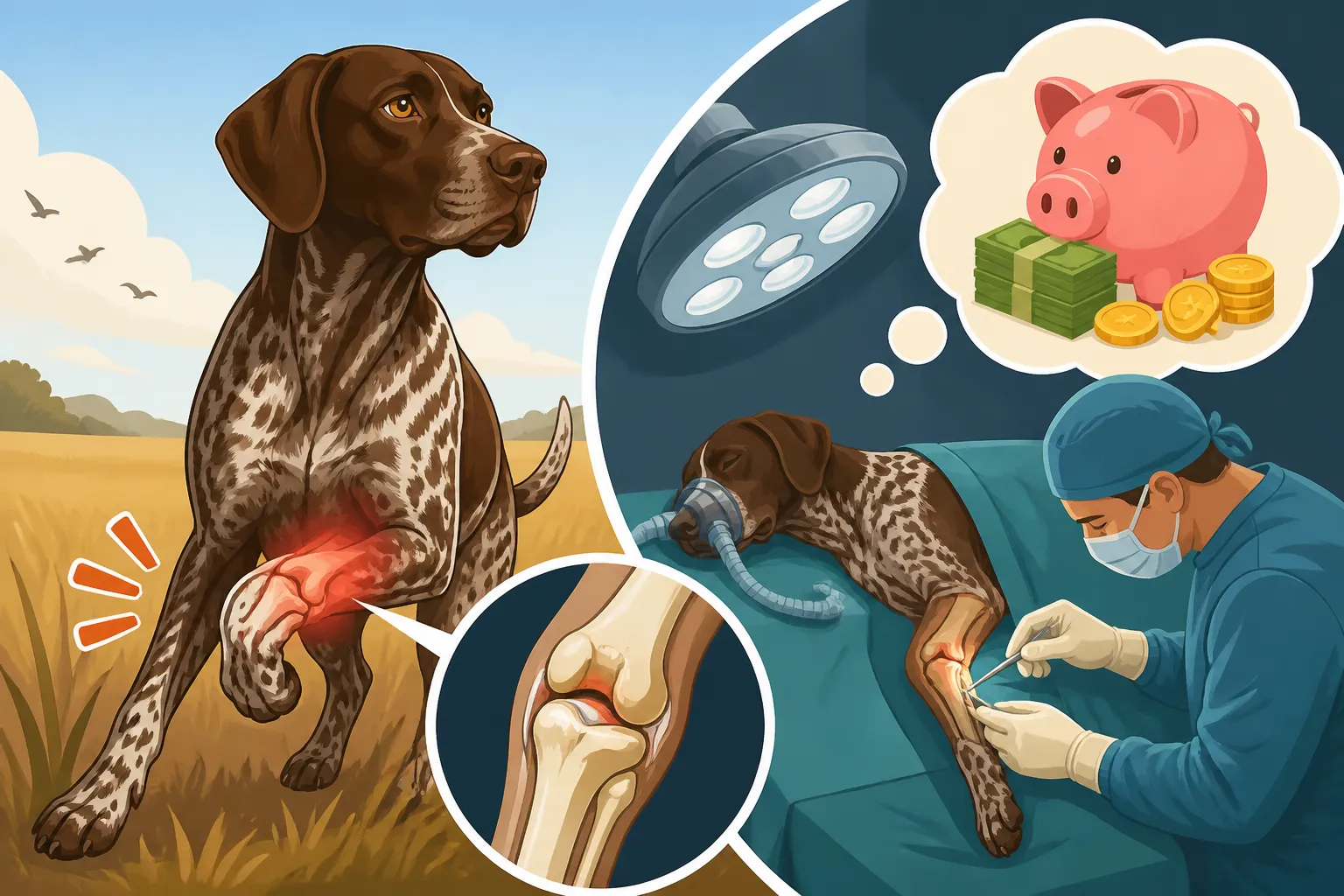
Without a doubt, the most frequent and feared knee injury in active breeds like the German Shorthaired Pointer is a torn cranial cruciate ligament (CCL), often simply called a torn ACL, similar to the injury human athletes face. This ligament is crucial for stabilizing the knee joint. When it tears, whether partially or completely, the knee becomes unstable, causing pain, lameness, and eventual arthritis if left untreated.
These tears often happen during sudden twists, pivots, or awkward landings that are par for the course in a GSP's active life. Imagine your Shorthair running full tilt after a bird, suddenly slamming on the brakes, and twisting its back leg to change direction—that’s a prime scenario for a CCL tear. Sometimes it's a gradual degeneration, and a smaller, seemingly innocuous movement is just the straw that breaks the camel's back. The initial pain can be severe, leading to a "three-legged lame" appearance, or it might be more subtle, a persistent limp that never quite resolves. Owners often describe a sudden yelp or a refusal to put weight on the leg after an otherwise normal activity. It's truly heartbreaking to see a dog that lives for movement suddenly unable to move freely.
Meniscus Tears and Other Joint Trauma
While CCL tears dominate, other knee injuries can occur alongside or independently. The meniscus, a C-shaped piece of cartilage that acts as a shock absorber within the knee, can also tear. A meniscal tear often exacerbates the instability caused by a torn CCL and can cause significant pain on its own. It's often diagnosed during the same surgery that repairs a torn CCL, as the surgeon can visually inspect the meniscus at that time.
Other traumas might include patellar luxation (where the kneecap slips out of place), although this is often a congenital issue rather than purely a field injury, or even fractures from severe impact. For a hard-running German Shorthaired Pointer, the sheer forces involved in their movements mean that any trauma to the leg can have profound effects on the delicate structures of the knee. Recognizing that these high-energy activities are inherent to the breed helps us understand why these injuries are so prevalent and why early intervention is key. We want them to live their best, active lives, but we also have to be realistic about the risks involved.
Diagnosing a Knee Injury in Your German Shorthaired Pointer
When your energetic German Shorthaired Pointer suddenly favors a leg or refuses to put weight on it, your heart sinks. The first step, naturally, is a trip to the veterinarian. Diagnosing a knee injury, particularly a torn cruciate ligament, involves a combination of physical examination and diagnostic imaging. It’s a process that can be frustrating, especially when your dog is in pain and reluctant to cooperate fully.
The Initial Vet Exam and Lameness Assessment
Your veterinarian will start with a thorough physical examination. This isn't just a quick look; it's a careful assessment of your GSP's gait, posture, and reaction to touch. They'll observe how your dog walks, stands, and moves the affected leg. The vet will then gently palpate the knee joint, looking for swelling, pain, and any abnormal movement. For a torn CCL, the classic diagnostic test is the "cranial drawer sign" or the "tibial compression test." These tests involve manipulating the leg in specific ways to detect instability in the knee joint, indicating that the ligament is no longer providing stability.
However, performing these tests on a large, muscular, and potentially painful German Shorthaired Pointer can be challenging. Some dogs are simply too tense or too strong to relax enough for a definitive manual diagnosis, especially if they’re resisting due to pain or anxiety. In these cases, sedation might be necessary to get an accurate assessment. This initial exam is crucial, but often it's just the first piece of the puzzle, providing strong indications but rarely the full picture required for a surgical plan. It’s important to be patient and trust your vet’s process, even if it feels like a lot of poking and prodding for your already sore companion.
Imaging and Advanced Diagnostics
Once a knee injury is suspected, your vet will likely recommend diagnostic imaging to confirm the diagnosis and assess the extent of the damage. X-rays are usually the first step. While X-rays don't directly show ligaments or soft tissues, they can reveal signs of inflammation, fluid buildup in the joint, and secondary changes like early arthritis, which often accompany a torn CCL. They also help rule out other issues such as fractures or bone tumors, which can cause similar lameness.
For a clearer picture, particularly if the diagnosis is ambiguous or if other soft tissue injuries are suspected, your vet might recommend more advanced imaging techniques. Magnetic Resonance Imaging (MRI) or Computed Tomography (CT) scans can provide detailed images of soft tissues, including the cruciate ligaments and menisci. These are typically performed at a specialist veterinary hospital and offer the most comprehensive view of the joint's internal structures. In some cases, arthroscopy—a minimally invasive surgical procedure where a tiny camera is inserted into the joint—can be used for both diagnosis and sometimes even initial repair. These advanced diagnostics add to the overall cost, but they are often vital for guiding the most effective surgical approach and ensuring that no critical damage is overlooked, helping prevent future complications. Without a proper diagnosis, you risk a surgery that doesn't fully address the issue, leading to further pain and expense down the road.
Surgical Options for German Shorthaired Pointer Knee Repair
Once a knee injury, especially a torn cranial cruciate ligament (CCL), has been definitively diagnosed in your German Shorthaired Pointer, surgery is almost always recommended to restore stability to the joint and prevent the progression of debilitating arthritis. There are several surgical techniques, each with its own benefits and considerations, particularly for an active, athletic breed like a GSP. The choice of procedure often depends on the surgeon's preference, your dog's size and activity level, and the specific nature of the injury.
Extracapsular Repair (Lateral Suture)
The extracapsular repair, often referred to as the lateral suture technique, is one of the more traditional methods for stabilizing a knee with a torn CCL. This procedure involves placing a strong suture material outside the joint capsule, from the fabella bone behind the femur to a small hole drilled in the tibia. The goal is to mimic the function of the torn cruciate ligament, providing stability until the body can form scar tissue to permanently stabilize the joint.
This technique is often considered less invasive than some of the bone-cutting procedures, and it can be a good option for smaller, less active dogs, or sometimes for older dogs where a less aggressive approach is preferred. However, for a powerful, high-drive German Shorthaired Pointer that puts immense stress on its joints, the long-term success rate might be lower compared to techniques that permanently alter the biomechanics of the joint. The suture can stretch or break, and while it provides initial stability, the joint might still experience some degree of laxity over time. This can lead to persistent lameness or the need for revision surgery, which is a major concern for owners of working dogs. Still, for some GSPs and their owners, it represents a viable and often more accessible surgical path.
Tibial Plateau Leveling Osteotomy (TPLO)
The Tibial Plateau Leveling Osteotomy, or TPLO, is a widely recommended and highly effective surgical technique for repairing CCL tears in larger, active dogs like German Shorthaired Pointers. Unlike the extracapsular repair, TPLO doesn't try to replace the torn ligament. Instead, it changes the biomechanics of the knee joint entirely. The surgeon makes a curved cut in the tibia (shin bone), rotates the top section (the tibial plateau) to change its angle, and then stabilizes it with a bone plate and screws. This rotation essentially eliminates the "tibial thrust" – the forward movement of the tibia relative to the femur that occurs when the CCL is torn.
By neutralizing this thrust, the TPLO procedure makes the knee stable without relying on a ligament. Dogs typically recover good to excellent function, often returning to high levels of activity, including field work, much like they did before the injury. This makes it a very popular choice for GSP owners who want their dogs to maintain their athletic lifestyle. However, it is a more complex and invasive procedure, involving cutting bone, and typically requires a specialist veterinary surgeon. The recovery involves strict rest followed by a carefully managed rehabilitation program. Many owners feel the investment is worth it for their dog's long-term comfort and ability to return to the field, helping them avoid further complications such as Torn Cruciates in a Field Bred German Shorthaired Pointer.
Tibial Tuberosity Advancement (TTA)
Another popular bone-cutting procedure is the Tibial Tuberosity Advancement, or TTA. Similar to TPLO, TTA aims to neutralize the tibial thrust without replacing the damaged ligament. In this procedure, the front part of the tibia (the tibial tuberosity) is cut, moved forward, and secured with a plate and screws. This advancement changes the angle of the patellar ligament, which in turn reduces the shear forces that cause instability in the knee.
TTA is often considered slightly less invasive than TPLO by some surgeons, as it involves a different bone cut and might have a slightly shorter recovery period in some cases. Like TPLO, it provides excellent long-term stability for active dogs and allows many German Shorthaired Pointers to return to their full athletic potential. Both TPLO and TTA are highly effective techniques for addressing CCL tears, and the choice between them often comes down to the surgeon's expertise and assessment of the individual dog's anatomy. For a working GSP, either of these advanced procedures offers a much higher chance of a full and lasting recovery compared to older, less robust methods. The goal is always to get them back to their joyful, energetic selves.
The Financial Reality of German Shorthaired Pointer Knee Surgery
Let's be blunt: knee surgery for a German Shorthaired Pointer, especially the advanced procedures, is a significant financial undertaking. It's not just the surgery itself, but all the associated costs that can truly add up, often catching owners by surprise. Understanding these different components can help you prepare for the financial commitment involved in getting your GSP back on its feet.
Breakdown of Pre-Surgery Costs
Before your GSP even sets paw in the operating room, there are a series of diagnostic tests and consultations that incur costs. This begins with the initial veterinary visit, where a physical exam and lameness assessment are performed. If sedation is required for a more accurate manual test, that’s another expense. Then come the X-rays, which are standard to rule out other issues and get a general idea of the joint's condition.
Should your vet recommend advanced imaging like an MRI or CT scan, these can be substantial. These specialized scans are often performed at referral centers and require general anesthesia, further adding to the bill. Blood work, necessary to ensure your GSP is healthy enough for anesthesia, is also a mandatory pre-surgical expense. All these diagnostic steps are vital for a successful outcome, but they can quickly accumulate, sometimes reaching hundreds to a few thousand dollars before a single incision is made. It’s important to remember that these aren't optional extras; they're critical for developing the right surgical plan.
Surgical Procedure Fees
The surgery itself is typically the largest component of the total cost. This fee usually encompasses several elements: the surgeon's fee, the anesthesiologist's fee (if a specialist is involved), the cost of the surgical facility, and the materials used (such as plates, screws, and suture materials). For advanced procedures like TPLO or TTA, which require specialized equipment and expertise, these costs will naturally be higher than a simpler extracapsular repair.
The range can be quite broad depending on your geographic location, the specific veterinary hospital (general practice vs. specialist referral center), and the complexity of your dog's case. It's not uncommon for these procedures to fall into a substantial financial bracket. When you factor in the extensive training and experience required for these orthopedic surgeries, the costs start to make more sense, but it doesn't make them any easier to swallow. It truly underscores why many GSP owners consider the long-term planning for such eventualities. Knowing What a Shorthair's Knee Surgery Runs After a Field Injury is vital for proper preparation.
Post-Operative Care and Medication Costs
The expenses don't stop once your GSP is out of surgery. The immediate post-operative care includes hospitalization for a few days, pain management medication, anti-inflammatories, and potentially antibiotics. Your dog will need a recovery collar (e-collar) to prevent licking or chewing at the incision site, which can also be an additional purchase. Many GSPs, being high-energy dogs, find these collars incredibly frustrating, so you might need to try a few different types to find one that works without driving them, or you, completely mad.
Once home, the medication regimen will continue for several weeks. Follow-up vet visits are also crucial to monitor healing, check the incision site, and eventually remove staples or sutures. These post-op appointments ensure the recovery is progressing as it should and catch any potential complications early. While individually smaller than the surgery itself, these ongoing care costs can still add up considerably over the weeks and months following the procedure, and are a non-negotiable part of a successful recovery.
The Role of Pet Insurance
Given the potential for substantial vet bills, especially for an active breed prone to injuries, pet insurance can be an absolute lifesaver. Policies vary, but many cover a significant percentage of accident and illness costs, including diagnostics, surgery, and rehabilitation. Companies like Healthy Paws offer comprehensive plans that could reimburse you for a large portion of the expenses related to a torn CCL, provided the injury isn't considered pre-existing before you enrolled.
It’s truly something to consider for any GSP owner. While you still pay the vet upfront, getting reimbursed for 70%, 80%, or even 90% of a multi-thousand-dollar bill makes a massive difference. Remember to read the fine print, understand deductibles and reimbursement percentages, and enroll your Shorthair when they are young and healthy to avoid pre-existing condition exclusions. Pet insurance doesn't eliminate the cost, but it dramatically changes the financial impact, turning a catastrophic bill into a manageable one. It's a proactive step that can save a world of stress when injuries like this inevitably happen. For a deeper dive into financial planning, consider looking at Monthly Insurance Premiums on a German Shorthaired Pointer and What Insurers Charge for a Torn Cruciate on a Shorthair for a better understanding of the coverage and costs.
Post-Surgery Recovery and Rehabilitation
The surgery itself is only half the battle. For a German Shorthaired Pointer, a breed that thrives on movement, the post-operative recovery and rehabilitation period are critical—and often the most challenging part for both dog and owner. This phase demands patience, strict adherence to veterinary instructions, and often, additional financial commitment to ensure a full and lasting recovery.
The Phases of Recovery: Strict Rest to Controlled Exercise
Immediately following surgery, your GSP will need a period of very strict rest. This usually means confinement to a crate or a small, puppy-proofed room, with leash walks only for bathroom breaks. For a GSP accustomed to running miles a day, this can feel like torture, both for them and for you trying to manage their energy. The duration of this strict rest varies by procedure, but it's typically several weeks. During this time, it’s crucial to prevent jumping, running, or any uncontrolled movements that could jeopardize the healing surgical site. You'll be monitoring the incision for any signs of infection or swelling, and administering pain medication regularly.
As healing progresses, controlled exercise is gradually introduced. This might start with short, slow leash walks on flat ground, gradually increasing in duration and intensity. The goal is to rebuild muscle mass that atrophies rapidly during inactivity and to slowly reintroduce weight-bearing without stressing the knee. This entire process can take many months, with full recovery often extending to six months or even a year for complex cases. It's a long road, but consistent, gentle progression is key to preventing re-injury and ensuring the best possible outcome. Many owners find creative ways to keep their high-energy GSPs mentally stimulated during this period, using puzzle toys or gentle training sessions. For more on this, you might find insight in Rehabbing a Shorthair After Cruciate Surgery.
Rehabilitation Therapy and Its Costs
For a truly optimal recovery, especially for an athletic German Shorthaired Pointer, formal rehabilitation therapy is highly recommended. This isn't just a suggestion; it can make a profound difference in muscle recovery, range of motion, and overall return to function. Rehabilitation can include a variety of modalities:
- Therapeutic Exercises: Specific movements to strengthen muscles, improve balance, and increase flexibility.
- Hydrotherapy: Underwater treadmill sessions or swimming can be incredibly beneficial, as the buoyancy of water supports the body, reducing stress on the healing joint while allowing for muscle strengthening.
- Laser Therapy: Used to reduce inflammation and promote tissue healing.
- Manual Therapy: Techniques like massage and passive range of motion exercises performed by a certified veterinary physical therapist.
These sessions are often conducted several times a week initially, gradually tapering off as your dog improves. Each session incurs a cost, and while some pet insurance policies (like Healthy Paws mentioned earlier) might cover rehab, it’s essential to check your specific plan. The cumulative cost of rehabilitation can be substantial, easily adding hundreds to thousands of dollars to the total bill. However, skipping rehab often means a less complete recovery, increased risk of re-injury, or the development of more severe arthritis in the long run. For a GSP, whose quality of life is so tied to their ability to run and play, this investment is often seen as invaluable.
Long-Term Management and Potential Complications
Even after successful surgery and rehabilitation, vigilance is required for the rest of your GSP's life. The operated knee will likely be more prone to arthritis than it was before the injury. Joint supplements containing ingredients like glucosamine, chondroitin, and MSM can help support joint health, and your vet might recommend these long-term. Products you can find through retailers like Chewy often provide these beneficial supplements, helping to manage comfort and joint integrity.
One significant concern for dogs that have torn one CCL is that they have a higher risk of tearing the CCL in the other knee. This is often due to genetic predisposition, compensatory lameness putting extra strain on the good leg, or a combination of factors. Understanding Whether a Shorthair Tears Both Knees is a crucial aspect of managing a GSP with a history of CCL injury. If this occurs, you’re looking at repeating the entire surgical and recovery process again, doubling the financial and emotional toll. This potential for bilateral injury underscores the importance of maintaining ideal body weight, consistent conditioning, and proactive joint care throughout your GSP's life. It's an ongoing commitment, but one that ensures your loyal companion can continue to enjoy their active life for as long as possible.
Prevention and Preparedness for Future Field Injuries
While we can't completely prevent all accidents, especially with a high-octane breed like the German Shorthaired Pointer, we can certainly take proactive steps to minimize the risk of knee injuries and be better prepared if one does occur. Thinking ahead can save a lot of heartache and financial strain down the road.
Proper Conditioning and Warm-Up Routines
One of the best defenses against injury is a well-conditioned dog. A GSP that is a "weekend warrior" – meaning they go from relative inactivity to intense hunting or running sessions – is at a much higher risk of injury than one that maintains consistent fitness. Regular, appropriate exercise throughout the year helps build strong muscles that support the joints. Roading, swimming, and consistent long-distance runs are excellent ways to build and maintain the cardiovascular and muscular fitness that helps protect those crucial ligaments.
Equally important are proper warm-up and cool-down routines before and after intense activity. Just like human athletes, a GSP's muscles and joints need to be prepared for exertion. A brisk 10-15 minute walk or trot before hitting the field can significantly reduce the risk of strains and tears. Afterward, a slow walk and gentle stretches can aid in muscle recovery. Neglecting these basics means putting your GSP's body under unnecessary stress, which can lead to injuries like a torn cruciate. Consistent physical activity not only keeps their bodies sound but also helps in keeping their minds sharp, making them more enjoyable companions both in and out of the field. Consider reading Conditioning a Shorthair's Pads Before Opening Day for more tips on preparing your dog for the season.
Nutrition and Joint Health
A balanced, high-quality diet is fundamental to overall health, including joint health. For an active German Shorthaired Pointer, especially one prone to orthopedic issues, feeding a diet formulated for highly active dogs can be beneficial. These diets often have appropriate protein and fat levels to support muscle mass and energy demands without promoting excessive weight gain. Brands like Ollie, known for fresh, human-grade ingredients, can provide excellent nutrition tailored to your dog's specific needs, which can contribute to overall joint health and resilience.
Beyond the basic diet, many owners consider joint supplements. Ingredients such as glucosamine, chondroitin, MSM, and Omega-3 fatty acids are commonly used to support cartilage health, reduce inflammation, and improve joint lubrication. While these supplements can't cure a torn ligament, they can play a supportive role in overall joint health and may help manage the inevitable arthritis that often follows a major knee injury. Always discuss any supplements with your veterinarian to ensure they are appropriate for your individual dog and won't interact negatively with any medications. Proper nutrition isn't a quick fix, but it's a long-term investment in your GSP's physical well-being. Looking into Joint Supplements for a Hunting German Shorthaired Pointer can give you more specific product ideas.
Building an Emergency Fund and Proactive Planning
Let’s face it, veterinary emergencies, especially orthopedic surgeries, can be incredibly expensive. One of the most practical steps you can take as a GSP owner is to establish an emergency fund specifically for vet bills. Setting aside a certain amount each month, even a small one, into a dedicated savings account can provide a crucial buffer when an unexpected injury strikes. Knowing you have resources available can ease a tremendous amount of stress when faced with a diagnosis requiring immediate and costly surgery.
Beyond the financial aspect, it's wise to have a plan for when (not if, for an active GSP!) your dog needs veterinary attention. Research local veterinary orthopedic specialists and emergency clinics before you need them. Understand their hours, capabilities, and how to reach them. Keep a first-aid kit stocked and know basic first aid for common field injuries. Having a relationship with your regular vet, and communicating openly about your GSP’s activity level, can also lead to proactive advice tailored to your dog's specific needs. For more details on budgeting for these incidents, you can explore topics like The Vet Bills a Hunting German Shorthaired Pointer Earns and Emergency Fees for a Shorthair Cut Open in the Field. Being prepared, both financially and logistically, is the best way to ensure your GSP receives the prompt and excellent care they deserve, allowing them to return to the active, joyful life they were bred for.
Key Considerations for German Shorthaired Pointer Knee Surgery Costs
To provide a clear overview of the financial landscape for GSP knee surgery, here's a table summarizing the different cost components and what they typically include. Remember, these are general estimates, and actual prices will vary significantly based on location, veterinary clinic, surgeon's expertise, and the specific details of your dog's case.
| Cost Category | Typical Components | General Cost Shape |
|---|---|---|
| Pre-Surgical Diagnostics | Initial vet exam, lameness assessment, sedation (if needed), X-rays, bloodwork, specialist consultation, MRI/CT scan | Can range from several hundred dollars for basic diagnostics to a few thousand for advanced imaging. |
| Surgical Procedure | Surgeon's fee, anesthesiologist's fee, facility use, surgical supplies (plates, screws), post-op pain meds for clinic stay | Often the largest component, typically in the multi-thousand dollar range, varying by procedure (Extracapsular vs. TPLO/TTA). |
| Post-Operative Medications | Pain relievers, anti-inflammatories, antibiotics, recovery collar (e-collar) | A few hundred dollars over several weeks. |
| Rehabilitation Therapy | Physical therapy sessions, hydrotherapy, laser therapy, home exercise plan instruction | Each session has a fee; cumulative cost can add hundreds to thousands of dollars over months. |
| Long-Term Management | Joint supplements, ongoing vet check-ups, potential arthritis medication | Ongoing monthly costs for supplements and occasional vet visits. |
| Pet Insurance (Pre-paid) | Monthly or annual premiums | Varies by policy and dog's age/breed, helps offset larger bills post-deductible. |
This table illustrates that knee surgery is not a single cost but a cascade of expenses. Each stage is crucial for your German Shorthaired Pointer's recovery, and budgeting for the entirety of the process, rather than just the surgical fee, is essential for responsible pet ownership.
Disclaimer
This article is for general informational purposes only and does not constitute professional advice. Laws, prices and regulations vary by location and change over time. Consult a qualified professional for guidance on your specific situation.