Checking a Shorthair Pedigree for Field Titles
It's incredibly exciting when you're looking for a German Shorthaired Pointer, especially if your heart is set on a true hunting partner. But it can be bewildering trying to figure out if that cute puppy or promising adult dog actually comes from a line that can perform in the field. This guide will walk you through the often-confusing world of GSP pedigrees and field titles, helping you understand what those letters mean and how to ensure you're getting a dog bred for the work you love.
Why Field Titles Matter for a Hunting German Shorthaired Pointer
When you're bringing a German Shorthaired Pointer into your life, especially with the intention of hunting, you're not just looking for a companion; you're looking for a partner. And just like you'd check the resume of any potential partner, you want to know if your GSP has the right genetic background for the job. That's where field titles become incredibly important.
Beyond Just "Pointing" – Understanding Versatility
Many dogs can point; it's an instinct that often appears naturally in various breeds. But a German Shorthaired Pointer isn't just a pointer. They were specifically bred in the German kennels to be a "versatile" hunting dog – a true all-rounder that could point upland game, retrieve shot birds (both on land and from water), and even track wounded game. This means they were developed to replace four specialist dogs, a testament to their comprehensive skill set. A field title on a GSP's pedigree isn't just about showing off; it's proof that the dog, or its ancestors, demonstrated these versatile abilities under test conditions.
Think about it: a dog that merely points might be great for some situations, but what happens when that bird falls into a cattail marsh or scurries away wounded? A truly versatile GSP will handle those situations with confidence, bringing the bird to hand. A pedigree rich in field titles gives you a much higher degree of confidence that your puppy will inherit not just the desire to hunt, but the aptitude for all aspects of the hunt. It suggests that the breeders were actively selecting for these traits, preserving the working heritage of the breed.
Predicting Temperament and Trainability for the Field
It's not just about inherited skills; field titles often speak volumes about a dog's inherent temperament and trainability. Dogs that achieve titles in various hunting organizations typically possess a strong desire to please, intense focus, intelligence, and the biddability necessary to learn complex commands and situations. These are the dogs that are not only driven to hunt but also eager to work with their handler.
When you see multiple field titles in a pedigree, it suggests a line of dogs that are not only physically capable but also mentally prepared for the rigors of training and hunting. This can make your own training journey significantly smoother. Instead of trying to instill basic hunting instincts from scratch, you'll be building upon a solid genetic foundation. This doesn't mean you won't have to put in the work—all GSPs require consistent training and the right structure a German Shorthaired Pointer needs daily—but it means the dog is likely to be a willing and eager student. Contrast this with a dog from a solely pet-focused or show-focused line, which might look the part but lack the inherent drive, focus, or "bird sense" that makes a GSP such an exceptional hunting partner. They might still be wonderful companions, but their journey to becoming a finished gun dog could be a much steeper uphill climb.
Decoding the Alphabet Soup: Common Field Titles and What They Mean
When you look at a GSP pedigree, you'll often see a string of letters before or after a dog's name. It can feel like a secret code if you're not familiar with it. These are field titles, awarded by various organizations, and each one tells a story about a dog's abilities and accomplishments.
NAVHDA Titles – A Deep Dive into Natural Ability and Utility
The North American Versatile Hunting Dog Association (NAVHDA) is an organization dedicated to testing and improving the versatile hunting dog breeds, and the German Shorthaired Pointer is right at home here. NAVHDA tests are designed to evaluate a dog's natural abilities and trained skills as a versatile hunter, and they are incredibly comprehensive.
- Natural Ability (NA): This is often the first title a young GSP earns, typically before they're 16 months old. The NA test assesses a puppy's inherent qualities: desire to hunt, use of nose, search patterns, water work, pointing instinct, and temperament. A dog that passes this test receives a rating (Prize I, II, or III) which indicates a strong genetic foundation for hunting. Seeing "NA" in a pedigree means that at a young age, the dog showed the core traits you want in a hunting GSP.
- Utility Preparatory Test (UPT): This is an intermediate test, designed for dogs that have passed their NA test and are moving on to more advanced training. The UPT evaluates more developed skills like steadiness, retrieving, and more advanced water work. It's a stepping stone, showing progress in training and refinement of natural abilities.
- Utility Test (UT): This is a much more demanding test, evaluating a truly "finished" hunting dog. Dogs are tested on their pointing, retrieving from land and water (including blind retrieves), advanced obedience, and tracking. Passing the UT (again, with a Prize I, II, or III rating) signifies a highly trained, reliable, and versatile hunting companion. Many breeders aim for their breeding stock to achieve a UT title, as it's a strong indicator of genetic excellence.
- Versatile Champion (VC): This is the highest honor in NAVHDA. A dog earns a VC title by achieving a Prize I in both the Utility Test and the Invitational Test (a very challenging, invitation-only event that showcases the best of the best). A VC title in a pedigree is like striking gold – it means that dog is truly exceptional. You can learn more about What NA, UPT and UT Mean on a Shorthair Pedigree.
AKC Hunt Test Titles – From Junior Hunter to Master Hunter
The American Kennel Club (AKC) also offers a popular system of hunt tests for pointing breeds. While slightly different in their focus and structure than NAVHDA tests, AKC titles still confirm a dog's hunting ability and trainability.
- Junior Hunter (JH): This is the entry-level title. Dogs are tested on their basic pointing ability and retrieving. It demonstrates a fundamental understanding of bird work and willingness to cooperate with the handler. It's a great start for a young dog learning Introducing a German Shorthaired Pointer to Birds.
- Senior Hunter (SH): This title requires more advanced skills. Dogs must demonstrate consistent pointing, steadiness to wing and shot (meaning they remain in place after the bird flushes and the gun is fired), and reliable retrieving. It signifies a more polished and controllable hunting partner.
- Master Hunter (MH): This is the highest AKC hunt test title. Dogs must perform consistently and demonstrate advanced handling skills, impeccable manners in the field, and solid retrieving. An MH title is a testament to both the dog's natural talent and the handler's dedicated training.
- Field Champion (FC) and Amateur Field Champion (AFC): These titles are awarded in AKC field trials, which are competitive events where dogs are judged against each other for speed, style, and range. While they certainly indicate exceptional hunting prowess, field trial lines often emphasize extreme speed and range that might not be suitable for every hunter's style or every type of terrain. Knowing Whether an Invitational Shorthair in the Pedigree Matters can help you determine if this type of high-octane dog fits your lifestyle.
German (DK) Titles – VJP, HZP, VGP and Their Rigor
Given the German Shorthaired Pointer's origins as a Deutsch Kurzhaar, some pedigrees will feature German titles. These titles are notoriously rigorous and comprehensive, designed to select breeding stock that truly embodies the versatile hunting dog ideal. The German system often operates on a pass/fail basis, with very high standards.
- VJP (Verbands-Jugendsuche): This "Spring Young Dog Search" test is for young dogs, usually under 18 months. It focuses on evaluating natural abilities, similar to the NAVHDA NA test, but often with a stronger emphasis on nose work (especially hare track) and independent search. It confirms a dog's potential.
- HZP (Herbstzuchtprüfung): The "Fall Breeding Test" is for slightly older dogs. It expands on the VJP, adding components like retrieving from water, retrieving small game, and gun sensitivity. It's a comprehensive evaluation of a dog's readiness to be considered for breeding.
- VGP (Verbands-Gebrauchsprüfung): This is the "Utility Test" and is the ultimate test in the German system, often referred to as the "Master Test." It's incredibly demanding, taking place over two days and covering every aspect of versatile hunting, including complex land and water retrieves, drag tracks for wounded game, advanced obedience, and temperament evaluations. A VGP title (often with a "Prize" rating) means the dog is a thoroughly trained, proven, and versatile hunting dog. Understanding The German Kennels the Shorthair Was Built In provides context for why these tests are so important for the breed's heritage.
How to Read a German Shorthaired Pointer Pedigree for Hunting Prowess
Looking at a piece of paper filled with names and letters can be daunting. But once you understand the structure and what those titles mean, a GSP pedigree becomes a powerful tool for predicting a puppy's potential.
Locating and Interpreting Titles on a Pedigree Chart
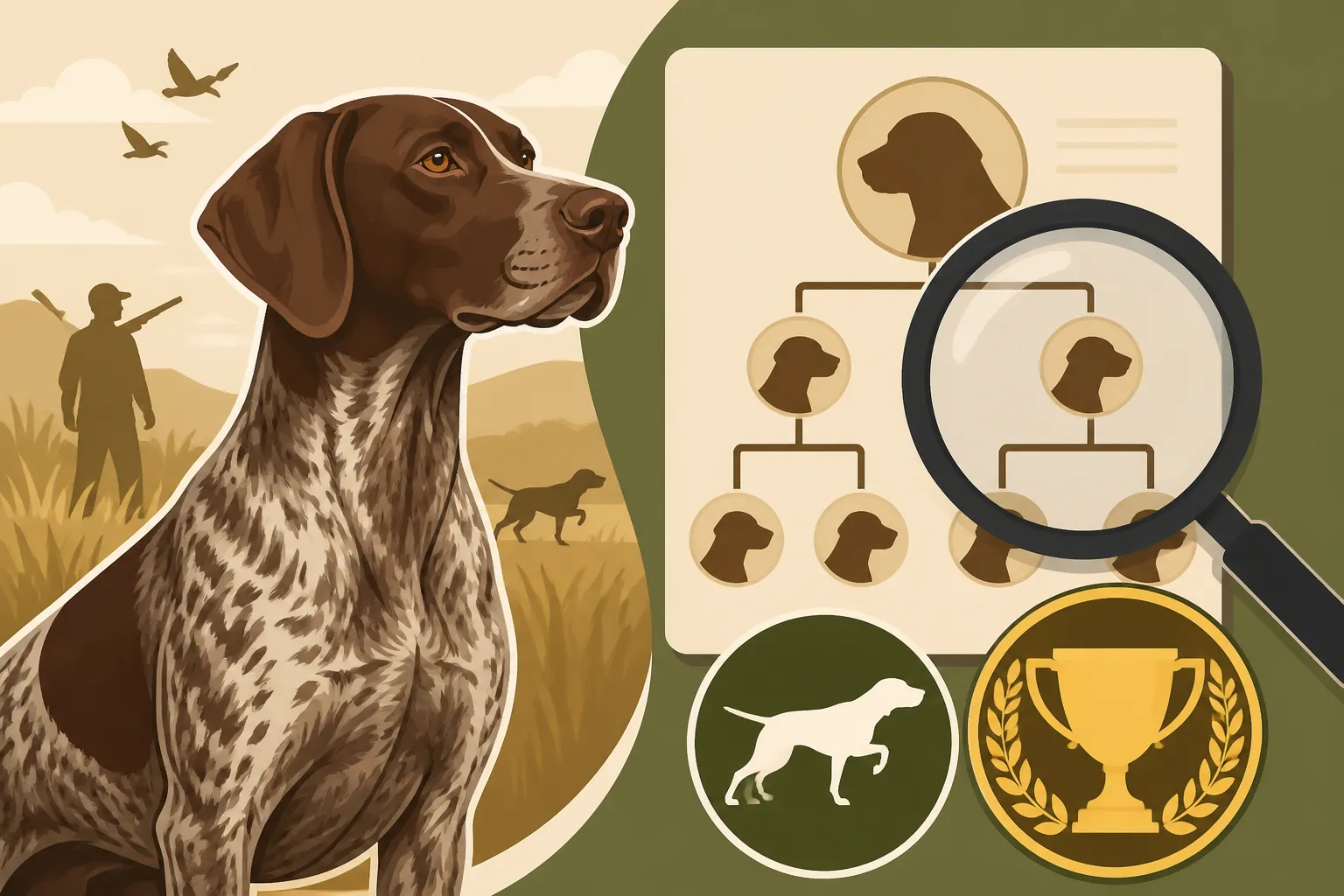
A typical pedigree chart will show at least three generations: the dog in question, its parents, and its grandparents. Many will go back five or more generations. Each dog's name will usually be listed, and before or after that name, you'll see any titles they've earned.
For example, you might see something like:VC MH FC AFC CH'R's Grand Master Hunter
This tells you that "CH'R's Grand Master Hunter" is a Versatile Champion (VC), Master Hunter (MH), Field Champion (FC), Amateur Field Champion (AFC), and a Conformation Champion (CH). That's a dog with an impressive resume!
Look for the titles we just discussed:
- NAVHDA: NA, UPT, UT, VC
- AKC: JH, SH, MH, FC, AFC
- German (DK): VJP, HZP, VGP
Sometimes, specific breeders will also list other certifications like health clearances (OFA, CERF), but the field titles are what indicate hunting ability. When you're looking at a pedigree, make sure you can clearly identify these letters for each dog in the lineage. Breeders worth their salt will have this information readily available, often with links to public databases for verification. It's a good idea to cross-reference with information like Reading a Shorthair's OFA and Eye Results Before Paying to ensure you're looking at a complete picture.
Here's a quick reference table for common field titles you might encounter:
| Organization | Title | Abbreviation | Significance |
|---|---|---|---|
| NAVHDA | Natural Ability | NA | Demonstrates core hunting instincts in young dogs. |
| NAVHDA | Utility Preparatory Test | UPT | Intermediate training skills, readiness for advanced work. |
| NAVHDA | Utility Test | UT | Proven versatile hunting dog, advanced skills. |
| NAVHDA | Versatile Champion | VC | Pinnacle achievement, master of all versatile skills. |
| AKC | Junior Hunter | JH | Basic pointing and retrieving abilities. |
| AKC | Senior Hunter | SH | Consistent pointing, steady to wing and shot, reliable retrieve. |
| AKC | Master Hunter | MH | High level of training, consistency, and handling. |
| AKC | Field Champion | FC | Winner of competitive field trials, extreme drive. |
| AKC | Amateur Field Champion | AFC | Field Champion handled by an amateur. |
| German | Verbands-Jugendsuche | VJP | Spring Young Dog Test, natural abilities (tracking, nose). |
| German | Herbstzuchtprüfung | HZP | Fall Breeding Test, adds retrieving, water work, gun sensitivity. |
| German | Verbands-Gebrauchsprüfung | VGP | Comprehensive Utility Test, highest German hunting title. |
Beyond the Letters: Assessing Consistency and Depth
It's one thing to see a single titled dog a few generations back, but it's another to see a pedigree absolutely stacked with titles. When you're assessing a pedigree, look for consistency and depth. Does every dog in the first two or three generations have multiple field titles? That's a strong indicator of a truly "proven" line. A single titled dog might be an anomaly, but a long line of accomplished ancestors tells you that the genetics for hunting ability are deeply ingrained and consistently passed down.
Consider the types of titles as well. If you're primarily a duck hunter, seeing a lot of NAVHDA Utility Test titles or VGP titles, which involve extensive water work and retrieving, would be very encouraging. If you focus on upland birds, AKC Senior or Master Hunter titles are excellent indicators. The goal is to find a pedigree that aligns with your specific hunting ambitions.
Don't be afraid to ask a breeder for more information than what's just printed on a basic pedigree. Many responsible breeders will have extensive online databases or binders of information on their dogs' accomplishments, often including videos or detailed test reports. This kind of transparency is a great sign that they are proud of their breeding program and dedicated to producing high-quality working dogs.
Asking the Right Questions to a Breeder
Once you've done your initial pedigree review, it's time to engage with the breeder. This is where you can fill in the gaps and get a clearer picture of what you're buying. Ask specific questions about the titles you see:
- "Can you tell me more about the sire's (or dam's) Utility Test performance?"
- "What kind of game were the parents primarily hunted on?"
- "How often do you breed for specific traits like water retrieving or tracking?"
- "Do you have any videos of the parents working in the field?"
A good breeder will be enthusiastic about discussing their dogs' abilities and should be able to articulate why they chose a particular pairing based on their hunting credentials. They should also be upfront about any health clearances, as a healthy dog is essential for a working dog. Remember to ask about Hips and the CHIC Panel a German Shorthaired Pointer Needs and other important health checks. A breeder who focuses solely on show titles or just on selling puppies without concern for working ability might not be the right fit if your primary goal is a hunting partner. Many active hunters order their performance dog food through a service like Chewy or look into options like Ollie for nutrient-dense food, so discussing feeding regimens for active dogs is also a good indicator of a breeder's experience.
What if the Pedigree is Light on Field Titles?
It's a common scenario: you fall in love with a German Shorthaired Pointer puppy, but when you look at the pedigree, it's not bristling with field titles. Does this mean your dreams of a hunting partner are dashed? Not necessarily, but it does mean you need to adjust your expectations and understand the implications.
Understanding the "Pet Line" vs. "Field Line" Distinction
German Shorthaired Pointers, like many versatile breeds, have seen a divergence over the years between lines bred primarily for conformation (dog shows) or as family pets, and those specifically bred for hunting prowess. A "pet line" GSP might have a wonderful temperament and be a beautiful dog, but the selective breeding focus was likely on appearance, health, or general companionship rather than innate hunting ability. The German Shorthaired Pointer Against the English Pointer and other working breeds, has maintained a high level of natural instinct, but even within the breed, these instincts can be diluted without intentional selection.
This isn't to say a pet-bred GSP can't hunt. Some individuals will still possess strong natural instincts. However, without a consistent history of field titles in their pedigree, you're taking more of a chance. You might find yourself working harder to develop instincts that would be more inherent in a dog from a proven field line. This distinction goes back to The German Bird Dog Behind the Modern Shorthair and how it was carefully developed for specific tasks.
The Role of Natural Instinct and Individual Potential
Every dog is an individual. While genetics provide a blueprint, natural instinct can still surprise you. A GSP from a pedigree light on field titles might still have a fantastic nose, a strong point, and a natural retrieve. However, you'll need to be prepared for the possibility that these instincts might be weaker or less consistent than in a dog from a heavily titled line.
This means your training commitment will likely be higher. You'll need to be exceptionally patient, consistent, and perhaps even seek professional help from a bird dog trainer earlier than you might with a more genetically predisposed dog. You might spend more time building desire, encouraging bold water retrieves, or refining a steady point. It's not impossible to turn such a dog into a capable hunter, but it requires a dedicated owner willing to put in the extra hours and effort. You might even find yourself looking for resources on What a Started Shorthair Costs at Twelve Months to get a jump start if you choose this path.
Where to Find a Pedigree with Proven Field Ability
If you're truly committed to finding a German Shorthaired Pointer with the best possible genetic predisposition for hunting, you'll want to seek out breeders who are actively involved in field events.
- Active Participants: Look for breeders who regularly compete in NAVHDA tests, AKC Hunt Tests, or the rigorous German DK tests. Their websites, social media, and breed club listings will often highlight their dogs' accomplishments.
- Breed Clubs: The German Shorthaired Pointer Club of America, as well as regional GSP clubs, are excellent resources. They often have breeder directories and post litter announcements that include pedigree and title information. These clubs are dedicated to preserving the breed's working characteristics.
- Attending Events: Go to a NAVHDA test, an AKC hunt test, or a field trial in your area. This is a fantastic way to see GSPs work, meet breeders, and observe the different styles and temperaments of working dogs. You can ask breeders directly about their lines and see the parent dogs in action. It’s a great way to understand if Whether a Field Line Shorthair Is Harder to Live With is true for your lifestyle.
- Ask for Recommendations: Network with other hunters and GSP owners. Word-of-mouth recommendations can be incredibly valuable in finding reputable breeders who prioritize working ability.
- Vet the Breeder: Regardless of where you find your potential puppy, always thoroughly vet the breeder. Ask for references, visit their facility if possible, and ensure they are prioritizing health clearances alongside field titles. While you might be focused on titles, don't forget the importance of things like What a German Shorthaired Pointer Puppy's First Shots Cost and other basic health protocols. Ensuring a healthy, well-socialized puppy sets the stage for a great hunting partner and companion for years to come. Investing in good pet insurance like Healthy Paws for a hunting dog can also provide peace of mind for those inevitable field bumps and scrapes.
In the end, checking a German Shorthaired Pointer's pedigree for field titles is about managing expectations and making an informed decision. It's about stacking the odds in your favor for the type of hunting partner you envision sharing many seasons with.
Disclaimer
This article is for general informational purposes only and does not constitute professional advice. Laws, prices and regulations vary by location and change over time. Consult a qualified professional for guidance on your specific situation.