AKC Hunt Tests Versus NAVHDA for a Shorthair
When you bring a German Shorthaired Pointer into your life, especially one with a strong hunting pedigree, you'll inevitably hear about "field tests" or "hunt tests." It can feel like a whole new language, and many owners feel overwhelmed trying to understand the different organizations and what they aim to achieve. This guide is here to demystify the two major players for GSP owners in North America: the North American Versatile Hunting Dog Association (NAVHDA) and the American Kennel Club (AKC) Hunt Tests. We'll break down their philosophies, test structures, and what each might mean for you and your shorthair.
Understanding NAVHDA: The Versatile Dog Approach
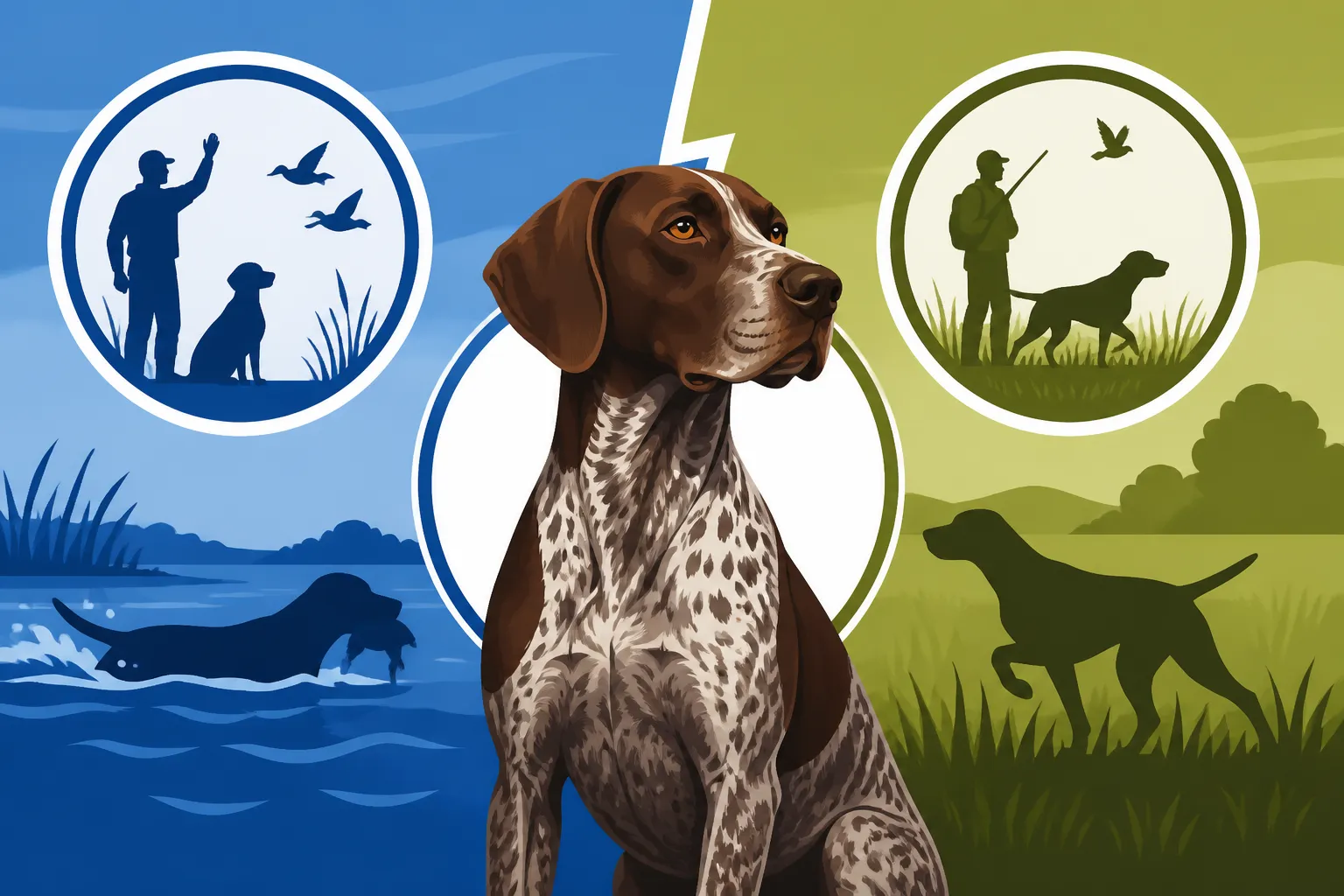
NAVHDA is all about the "versatile" hunting dog, which is precisely what the German Shorthaired Pointer was bred to be. This organization values a dog that can point upland birds, track game, and retrieve from both land and water. The emphasis is on natural talent and developing those instincts into a well-rounded hunting companion rather than a highly polished, competitive field trial machine.
What NAVHDA Tests Aim to Achieve
The core philosophy of NAVHDA is to evaluate and foster the inherent abilities of versatile hunting breeds. They want to see dogs that instinctively point, search, track, and retrieve, and then to ensure those natural talents can be honed through training. It’s less about a strict, stylized performance and more about demonstrating a dog's inherent drive and intelligence in a simulated hunting environment. Breeders often use NAVHDA test results to assess their breeding stock, looking for consistent natural abilities that they can pass on to future generations. For many GSP owners, this focus on raw talent and a practical hunting partner is incredibly appealing. It’s about building a competent hunting dog from the ground up, not just a flashy performer.
The Structure of NAVHDA Tests
NAVHDA offers a progression of tests, each designed to evaluate a different stage of a dog's development and training.
Natural Ability (NA) Test
This is typically where most GSP puppies begin their NAVHDA journey, often between six months and one year of age. The Age a Shorthair Is Ready for the Natural Ability Test is a common question, and generally, earlier is better to capture those raw instincts. The NA test assesses a puppy's fundamental hunting instincts: nose, search, pointing, desire to work, use of natural cover, and water work. There's no expectation of formal training; judges are looking for potential. For instance, in the search portion, a young shorthair might bounce through the field with boundless energy, naturally using the wind and terrain to find birds. They aren't expected to quarter perfectly or hold a rock-solid point, but rather to show an innate interest and ability to locate game. The water portion might involve simply entering the water and showing an interest in retrieving, even if it's just a bumper. The scores awarded, as described in What the Natural Ability Test Scores on a Shorthair, reflect how strongly these natural instincts are present. Many owners find preparing for the NA test a fun, low-pressure way to introduce their GSP to hunting concepts.
Utility Preparatory Test (UPT)
The UPT is the next step, typically taken by dogs around one to two years old, after they've had more formal training. This test builds on the natural abilities but now requires a higher level of learned skills and control. Dogs are expected to demonstrate basic obedience, quartering patterns, controlled retrieves on land and water, and steadiness to wing and shot. This means the dog should hold its point when a bird flushes and stay put when a blank gun is fired, showcasing discipline. It's truly a "preparatory" test, designed to show if the dog is on track for the more advanced Utility Test. You can find more specific details on Preparing a Shorthair for the Utility Preparatory Test if you're considering this level. The UPT is a fantastic benchmark for ensuring your GSP is developing into a reliable hunting partner that can handle more complex scenarios in the field.
Utility Test (UT)
The Utility Test is the pinnacle of NAVHDA testing, usually for dogs two years or older. This is where the fully trained, versatile hunting dog shines. The UT evaluates advanced obedience, complex land and water retrieves, steadiness, duck search, and tracking. The duck search, for example, requires the dog to independently search a body of water for a downed duck, demonstrating tenacity and strong water skills. Retrieving a downed pheasant from heavy cover, showing marking ability and perseverance, is another key component. A dog passing the UT is truly a testament to its natural abilities and extensive training, proving it's a capable hunting companion for a wide range of game and conditions.
Benefits and Drawbacks for the GSP Owner
NAVHDA offers a unique journey for GSP owners. On the benefit side, it aligns perfectly with the GSP's heritage as a versatile hunter. The focus on developing natural instincts makes it very rewarding for owners who want to understand and enhance their dog's innate talents. The community is generally supportive and educational, with many training days focused on helping owners prepare. For those whose primary goal is a skilled hunting companion, NAVHDA is an excellent choice. It encourages a deep bond and understanding between handler and dog, as you work together to bring out those natural abilities.
However, some might find the emphasis on raw natural ability less appealing if they are looking for a highly competitive venue. The tests can be less about speed and flash and more about thoroughness and efficiency, which might not suit every owner's competitive drive. Additionally, the limited number of test dates and locations compared to AKC might be a drawback for some, requiring more travel or planning.
Deciphering AKC Hunt Tests: Field Trial Simulation
The American Kennel Club (AKC) Hunt Tests operate with a slightly different philosophy, focusing more on a simulated hunt scenario where the dog demonstrates polished performance and adherence to specific commands. While still celebrating the hunting dog's abilities, AKC tests tend to be more formal in their evaluation of handler-dog teamwork and learned responses.
The AKC Philosophy for Gun Dogs
AKC Hunt Tests aim to showcase a dog's abilities in a controlled, simulated hunting environment. Unlike field trials which are races to find and point birds, hunt tests are evaluations of a dog's performance against a standard. The emphasis is on a dog that is under control, responsive to its handler, and capable of performing the tasks required in a typical upland hunt: finding and pointing birds, being steady to wing and shot, and retrieving. It's about demonstrating a reliable, efficient, and well-behaved hunting partner. The titles earned in AKC hunt tests reflect a dog's progression through these levels of training and proficiency, from basic manners to advanced field skills.
Navigating AKC Test Levels
AKC offers three main levels for pointing breeds, each increasing in difficulty and requiring more refined skills and obedience. The journey from Junior Hunter to Master Hunter is a significant commitment to training and teamwork. The specific differences are highlighted in discussions like AKC Hunt Tests Versus NAVHDA for a Shorthair, but let's dive into what each level demands.
Junior Hunter (JH)
The Junior Hunter title is the entry-level test and focuses on basic bird-finding ability, pointing, and appropriate gun response. A GSP earning its JH title needs to show enthusiasm for the hunt, a decent nose, and a willingness to point birds. They are not required to be steady to wing and shot, meaning they can chase the bird after it flushes and the shot is fired. The dog should also be able to retrieve reasonably well, though it doesn't have to be a perfect "to hand" retrieve. For a young shorthair, passing the JH is a great way to introduce them to the hunt test environment and confirm their natural instincts are present. It's a stepping stone, proving the dog has the foundational desire and ability to become a hunting companion.
Senior Hunter (SH)
Stepping up to Senior Hunter requires a higher degree of control and polish. At this level, dogs are expected to demonstrate reliable pointing, steadiness to wing and shot (meaning they hold their point until sent to retrieve), and controlled retrieves on both land and from water. The dog must quarter the field effectively, respond to handler commands, and honor another dog's point – a skill often covered in articles such as Training a Shorthair to Back Another Dog's Point. This means if another dog points a bird, your GSP should stop and "back" that point, respecting its brace mate. The SH title signifies a well-trained hunting dog that can perform reliably in a variety of hunting situations. It’s where your GSP really starts to show off its learned manners in the field.
Master Hunter (MH)
The Master Hunter title is the highest level of achievement in AKC Hunt Tests. It demands exceptional performance, consistency, and a high level of teamwork between dog and handler. Master Hunters must exhibit superb bird finding, rock-solid steadiness to wing and shot, impeccable retrieves (including blind retrieves where the dog is directed to a hidden bird), and demonstrate advanced handling skills. The dog should quarter a field with precision, respond instantly to whistle commands (like those discussed in Whistle Commands a Shorthair Should Know) and hand signals, and be unflappable under pressure. A Master Hunter GSP is truly an elite hunting dog, capable of handling almost any scenario a real hunting trip might throw its way, all while performing with grace and control.
Pros and Cons for the GSP Handler
AKC Hunt Tests offer several advantages for GSP owners. They provide a structured path to demonstrating your dog's training and ability in a competitive, yet accessible, format. The titles are recognized and can add value to a breeding program. For handlers who enjoy the precision of training and the thrill of competition, AKC tests are very rewarding. The emphasis on polished performance can also translate into a highly disciplined and effective hunting dog in the field.
However, the more formal structure can feel less "natural" to some. The strict requirements for steadiness and retrieve often necessitate intensive training methods, which may not appeal to all owners. Some might find the focus on precise patterns and formal obedience less aligned with the free-ranging spirit of a versatile hunter, preferring a dog that hunts more intuitively. Furthermore, achieving an MH title is a significant time and financial investment, often involving professional training or extensive self-training, and potentially travel to various test locations.
Key Differences and How to Choose
Deciding between NAVHDA and AKC for your German Shorthaired Pointer's field career can be tough, as both offer valuable experiences. Understanding their fundamental differences is key to making an informed choice that suits both you and your dog.
Core Principles and Evaluation Styles
The most significant distinction lies in their core philosophies. NAVHDA champions versatility and inherent natural talent. Their tests are designed to evaluate a dog's raw instincts – how well it uses its nose, its desire to find birds, its pointing style, and its water retrieve instincts. Training is certainly part of the process for higher levels, but the foundation is always on the dog's innate abilities. The judging style tends to be more developmental, looking for potential and encouraging a well-rounded hunting companion.
AKC Hunt Tests, on the other hand, focus on a polished performance within a simulated hunting environment. Here, the emphasis is heavily on the trained response, handler control, and adherence to specific hunting scenarios. A dog's steadiness to wing and shot, precise quartering, and controlled retrieves are paramount. Judges are looking for a consistent, reliable performance that mirrors a disciplined dog in a real-world hunting situation. It’s about the team working seamlessly, with the dog responding promptly and correctly to its handler's cues.
Training Approaches and Equipment
Given these differing philosophies, the training methodologies often diverge as well. For NAVHDA, early puppy exposure to birds and water is crucial to develop those natural abilities. While formal obedience is important for higher levels, the initial focus is on fostering the dog's instincts without stifling them. Simple tools like check cords, readily available on platforms like Amazon, are invaluable for building foundational control and teaching "whoa." Building Whoa on a Shorthair With a Check Cord is a fundamental exercise. The goal is to guide the dog's natural talent rather than impose strict rules from the outset. Many owners find success using positive reinforcement and gentle correction methods.
AKC hunt tests, particularly at the Senior and Master Hunter levels, often require a more rigorous and precise training regimen. Dogs need to be "force fetched" to ensure reliable retrieving to hand, and steadiness means the dog must remain absolutely still until released, even with birds flushing and shots firing. E-collars, used correctly and humanely, become common tools for refining control and ensuring immediate responses, especially for concepts like "whoa" at a distance. For more on this, consider reading When an E-Collar Belongs on a German Shorthaired Pointer. Many handlers opt for professional trainers for specific skills needed for AKC titles, or invest in comprehensive online programs from reputable sources like BAXTER & Bella, which can help lay a strong foundation of obedience before tackling advanced field work. The training is often more systematic and aimed at perfecting specific behaviors under pressure.
Which Path is Right for Your Shorthair?
Choosing between NAVHDA and AKC really comes down to your personal goals and your GSP's temperament.
Consider NAVHDA if:
- You prioritize versatility: You want a dog that can do it all – point upland birds, track, and retrieve from land and water.
- You appreciate natural ability: You want to foster and develop your dog's inherent hunting instincts.
- You're a new owner or want a less formal environment: The community is often very supportive for beginners, and the initial tests are less about perfect performance. Whether a Pet Shorthair Should Be NAVHDA Tested is a great question to ask, and the answer is often yes, for the sheer joy of seeing your dog thrive.
- Your primary goal is a competent, enjoyable hunting companion: NAVHDA helps you build a dog that is effective and intuitive in the field.
Consider AKC Hunt Tests if:
- You enjoy structured training and competition: You like the challenge of perfecting specific skills and competing against a standard.
- You want a highly polished, disciplined field dog: The emphasis on control and steadiness translates to a very reliable partner in the field.
- You value recognized titles for breeding or prestige: AKC titles are widely recognized and can enhance a dog's pedigree.
- You're comfortable with more intensive training methods: Achieving higher AKC titles often requires significant dedication to precise, sometimes challenging, training.
Ultimately, both organizations celebrate the incredible abilities of the German Shorthaired Pointer. Many owners even dabble in both, or transition from one to the other as their interests and their dog's development evolve. The most important thing is to enjoy the journey with your remarkable GSP, whether that journey leads to a NAVHDA title, an AKC title, or simply a fantastic day out in the field together. For further guidance on getting your dog started, you might look into What a Pro Trainer Charges to Start a Shorthair on Birds or explore how to keep your GSP happy even if hunting isn't your main goal with Whether a German Shorthaired Pointer Needs to Hunt to Be Happy.
Here's a quick comparison of key aspects:
| Feature | NAVHDA (North American Versatile Hunting Dog Association) | AKC Hunt Tests (American Kennel Club) |
|---|---|---|
| Primary Focus | Versatility, natural instincts, well-rounded hunter | Polished performance, handler control, simulated hunt |
| Levels | Natural Ability (NA), Utility Preparatory (UPT), Utility Test (UT) | Junior Hunter (JH), Senior Hunter (SH), Master Hunter (MH) |
| Key Evaluation | Nose, search, point, desire, water work, tracking, retrieve | Bird finding, point, steadiness to wing/shot, retrieve, quartering, honoring |
| Steadiness | Expected at UPT/UT (dog remains put on point) | Required at SH/MH (dog remains put until sent for retrieve) |
| Retrieving | Evaluates desire and ability from land/water | Evaluates disciplined, controlled retrieve to hand, often with blind retrieves |
| Training Style | Fosters natural ability, progressive development | Often more formal, precise, focus on learned responses |
| Community | Highly educational, hands-on, supportive for all levels | Competitive, focused on performance standards |
| Titles | VC (Versatile Champion), UT, UPT, NA designations | JH, SH, MH |
Disclaimer
This article is for general informational purposes only and does not constitute professional advice. Laws, prices and regulations vary by location and change over time. Consult a qualified professional for guidance on your specific situation.