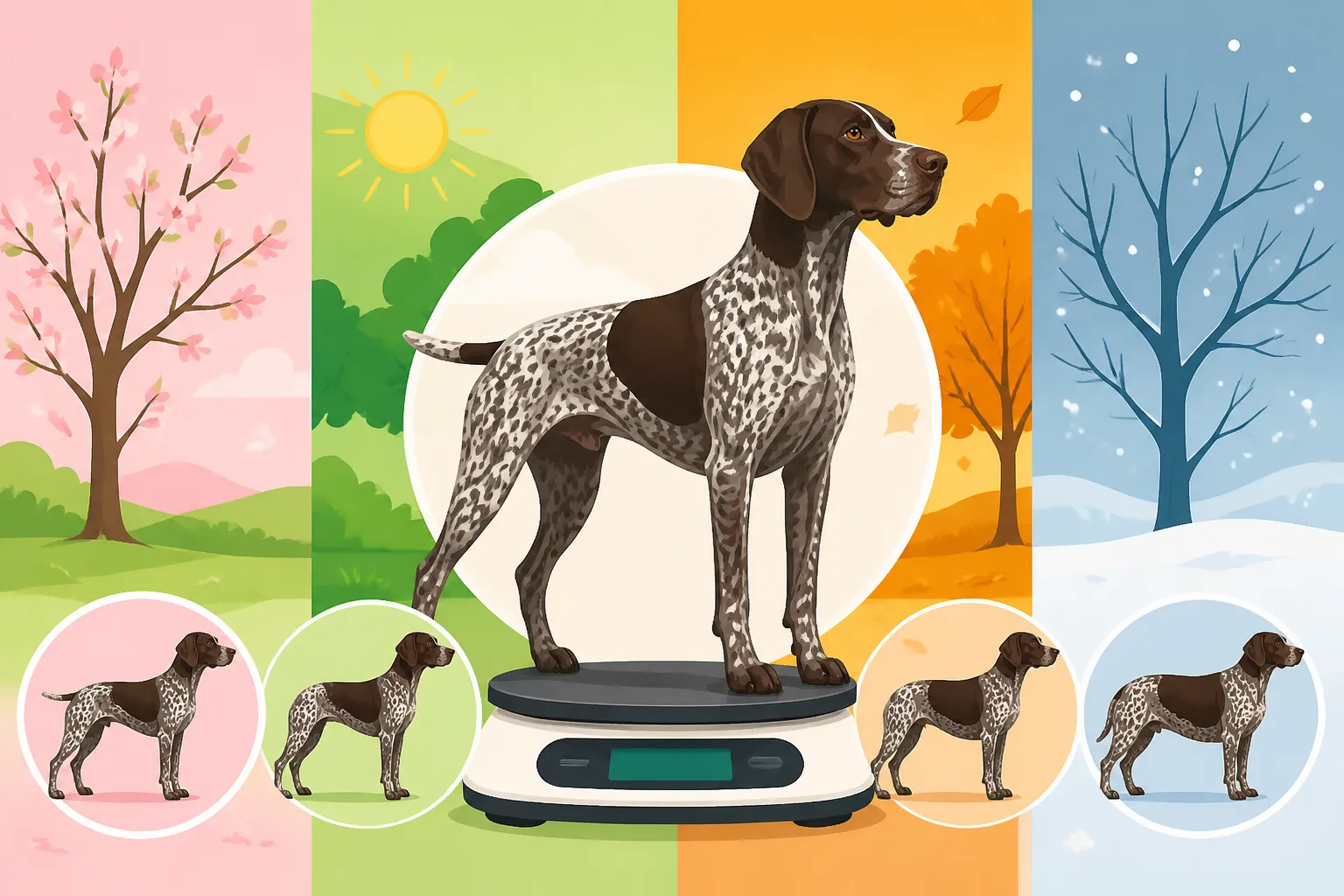
Weighing a German Shorthaired Pointer Through the Season
One of the biggest concerns for any German Shorthaired Pointer owner, especially if your dog is an active hunter or an athlete, is keeping their weight just right. It's a fine line, isn't it? You don't want them looking like a skinny rail, but a chunky Shorthair is an unhealthy one, prone to injuries and lacking stamina. This guide will walk you through how to properly monitor your GSP's weight throughout the demanding hunting season and beyond, ensuring they stay in peak condition.
The German Shorthaired Pointer's Unique Energetic Demands
Let's face it, German Shorthaired Pointers aren't just pets; they're finely tuned athletes built for intense activity. Their boundless energy and incredible drive mean their bodies operate on a different fuel economy compared to many other breeds. Understanding this fundamental difference is the first step in managing their weight effectively, particularly when they're out in the field doing what they love.
Why Their Metabolism is Different
A German Shorthaired Pointer's metabolism is, in a word, fast. These dogs were bred for endurance and explosive bursts of speed, covering vast amounts of ground in pursuit of game. This high-octane lifestyle means their bodies are incredibly efficient at burning calories. Think of them as high-performance sports cars – they require premium fuel and consistent monitoring to stay in top shape. It's not uncommon for a GSP to burn through an astonishing amount of calories in a single day of hunting, far more than a sedentary house pet.
This isn't just about how much they eat; it's about how quickly their body converts that food into usable energy and how rapidly it depletes its reserves. When you see your GSP effortlessly leaping over fences or quartering a field with relentless precision, you're watching a metabolic marvel in action. This high metabolic rate is fantastic for their work ethic but can make weight management a real balancing act, especially when their activity levels fluctuate. They can drop weight surprisingly quickly if their caloric intake doesn't match their output.
The Seasonal Impact on Calorie Burn
The hunting season, with its long days afield and varied terrain, dramatically increases a German Shorthaired Pointer's caloric needs. Picture this: a crisp autumn morning, your Shorthair is casting wide, nose to the ground, bursting through thick cover, then locking on point, holding steady, and finally retrieving. Repeat that for six to eight hours, and you can imagine the energy expenditure. The demands of waterfowl retrieving in icy water or tracking wounded game through dense brush only add to the metabolic burn. Calorie Needs of a German Shorthaired Pointer in Season are incredibly high.
Beyond the sheer duration and intensity of work, environmental factors also play a huge role. Hunting in cold weather requires extra calories to maintain body temperature. Navigating deep snow or slogging through mud adds resistance, demanding more from their muscles. Even the stress and excitement of the hunt itself can contribute to calorie burn. This is why a GSP can look perfectly robust in the off-season, only to appear gaunt and drawn after just a few weeks of consistent hunting, if their diet isn't adjusted to meet these elevated demands. It's a constant adjustment, much like a competitive human athlete fine-tuning their nutrition based on their training schedule.
Establishing Your Shorthair's Optimal Pre-Season Weight
Before the rigorous demands of hunting season kick in, it’s absolutely crucial to know what your German Shorthaired Pointer’s ideal weight and body condition actually look like. This isn’t a one-size-fits-all number from a breed standard, but rather a personalized assessment for your dog. Establishing this baseline allows you to recognize subtle changes once the season begins and intervene early if needed.
Visual Cues for a Healthy German Shorthaired Pointer
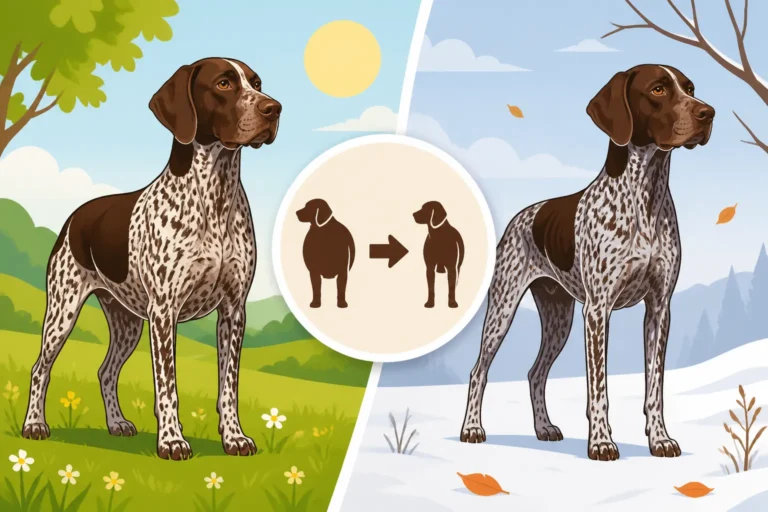
When you look at a well-conditioned German Shorthaired Pointer, you should see a picture of athletic grace. From a visual standpoint, you want to easily see their waistline tucking up from their ribcage when viewed from above, like an hourglass shape. When viewed from the side, their abdomen should also tuck up, not sag down. Their musculature should be well-defined, not soft or bulky. You should be able to faintly see the last two or three ribs, especially when they turn or stretch. If you can see all their ribs clearly without effort, they are likely too thin. If you can’t see any ribs, even when they move, and they lack that distinct waistline, they’re probably carrying too much weight.
Beyond the ribs, pay attention to the definition over their hips and shoulders. These areas should have a lean, muscular appearance. A slight prominence of the hip bones is normal for a very lean, active GSP, but they shouldn’t appear bony or sharply angular. Remember, we're aiming for "lean and athletic," not "emaciated" or "chubby." Think of a marathon runner, not a sumo wrestler. This visual assessment is your first, most immediate tool for gauging their condition, and it’s something you should practice regularly. The Body Condition a Field Shorthair Should Carry is paramount.
The Importance of a Physical Examination (and Vet Consult)
While your eyes are a great start, nothing replaces a hands-on examination, both by you and, importantly, by your veterinarian. You should be able to feel your Shorthair’s ribs easily under a thin layer of fat, without having to press hard. If you have to dig your fingers in to locate them, they're likely overweight. If the ribs feel prominent and sharp with no padding, they're too thin. Similarly, feel along their spine and hip bones; they should be palpable but not jutting out. There should be a smooth transition from their ribs to their abdomen, not an abrupt drop-off or a bulging belly.
Before the season begins, a visit to your vet for a pre-season check-up is invaluable. They can give your GSP a thorough physical, assess their current body condition score, and discuss any potential health concerns that might impact their ability to perform or maintain weight. Your vet can provide an objective assessment of whether your GSP is starting the season at an optimal weight and can offer guidance on dietary adjustments or supplements. This professional input, combined with your daily observations, forms the most comprehensive approach to establishing and maintaining their ideal weight. It's also a good time to discuss The Vet Schedule a Working Shorthair Should Keep through the year.
Practical Methods for Tracking Weight During Hunting Season
Once hunting season is in full swing, you can't just set it and forget it when it comes to your German Shorthaired Pointer's weight. Their activity levels are probably at an all-time high, and their body is burning through calories like wildfire. Consistent, practical methods for monitoring their condition become absolutely vital to ensure they stay healthy and perform at their best.
Regular Weigh-Ins and Their Frequency
The most straightforward way to track your GSP's weight is, of course, with a scale. For smaller puppies, a simple bathroom scale can work if you weigh yourself, then weigh yourself holding the puppy, and subtract the difference. For adult German Shorthaired Pointers, this can be a bit trickier since they're large dogs. Many vets have large animal scales, and if you have a strong relationship with your clinic, they might allow you to pop in for a quick weigh-in periodically. Some feed stores that cater to livestock or large dogs also have scales you can use.
During the hunting season, aim for weekly weigh-ins if possible. If weekly is too much, then bi-weekly is a good compromise. Record the weight in a journal or on your phone. Look for trends, not just individual numbers. A gradual, consistent drop is a red flag, while minor fluctuations are usually normal. If you notice a significant drop of more than 5% of their body weight over a short period (a week or two), that's definitely a sign to reassess their diet or consult your vet. Don't wait until your dog looks visibly thin; by then, they might have lost a substantial amount of condition. How Much Weight a Shorthair Loses Over a Season can be surprising.
Body Condition Scoring in the Field
While weighing is precise, it's not always practical when you're deep in the field. That's where body condition scoring (BCS) comes in as an invaluable tool. BCS is a subjective, hands-on assessment that you can do anywhere, anytime. It involves feeling your dog's ribs, spine, and hip bones and observing their waistline and abdominal tuck. Most systems use a 1-to-9 scale, where 1 is emaciated, 9 is obese, and 4-5 is ideal for a lean, athletic working dog.
To perform a BCS:
- Ribs: Run your fingers along their sides. You should be able to feel the ribs easily without pressing, but they shouldn't feel sharply defined or visibly obvious without much effort.
- Spine: Feel along the top of their back. You should feel the bumps of the vertebrae, but they shouldn't protrude sharply.
- Hip Bones: Palpate over their hips. They should be palpable but not stick out.
- Waistline & Abdominal Tuck: Look from above and the side for that distinct tuck.
Practice this regularly in the off-season when your dog is at their ideal weight. This way, you'll have a mental and tactile benchmark. When you're in the field, a quick check can tell you if your dog is starting to drop condition before it becomes a problem. If they're feeling a bit sharper or you're seeing a more pronounced tuck, it's time to increase their food intake.
Leveraging Technology for Consistent Monitoring
In today's world, there are also technological aids that can help you keep tabs on your German Shorthaired Pointer's health and activity, which indirectly relates to their weight. While no tech tool can directly tell you their precise weight, many GPS trackers and activity monitors (like those you can find on Amazon or Chewy) can track their daily mileage, duration of activity, and even intensity.
Knowing exactly how many miles your GSP is logging each day, or how many hours they spend actively working, gives you a much clearer picture of their energy expenditure. This data can help you justify increasing their food ration, or it might explain why they're maintaining weight even with a seemingly smaller portion if their activity isn't as high as you thought. For example, if you track their activity and see they're doing 10-15 miles a day on average during a tough week, you know they need a significant caloric boost. Conversely, if a dog is sidelined with a minor injury, tracking their reduced activity can help you pull back on food to prevent unwanted weight gain, even without a scale. These tools, while not directly weighing devices, offer valuable insights into the energy balance equation for your active GSP.
| Body Condition Score (BCS) | Visual Assessment | Palpation (Feeling) |
|---|---|---|
| 1: Emaciated | Ribs, spine, pelvic bones prominent from a distance. No body fat. Obvious muscle loss. | Ribs, spine, pelvic bones easily felt, no fat cover. Muscle loss very evident. |
| 2: Very Thin | Ribs, spine, pelvic bones easily seen. Minimal body fat. Obvious waist and abdominal tuck. | Ribs, spine, pelvic bones easily felt with minimal fat. Slight muscle loss. |
| 3: Thin | Ribs easily visible. Top of lumbar vertebrae visible. Prominent waist. | Ribs easily felt, slight fat cover. Top of lumbar vertebrae may be felt. Good waist and tuck. |
| 4: Underweight (Lean) | Ribs visible but not prominent. Obvious waist and abdominal tuck. | Ribs easily felt with minimal fat cover. Waist easily noted. Ideal for a working GSP. |
| 5: Ideal | Ribs palpable with slight fat cover. Waist observed behind ribs. Abdominal tuck evident. | Ribs easily felt, thin fat cover. Waist visible. Abdominal tuck present. Good pet condition. |
| 6: Overweight | Ribs palpable with difficulty. Waist indiscernible. Abdominal tuck mostly gone. | Ribs palpable with slightly more fat cover. Waist less obvious. |
| 7: Moderate Obese | Ribs not palpable without firm pressure. Fat deposits over lumbar area and tail base. No waist or tuck. | Ribs difficult to feel due to moderate fat cover. Obvious fat deposits. |
| 8: Heavy Obese | Significant fat deposits over ribs, spine, tail base, and neck. Abdomen distended. | Ribs very difficult to feel due to thick fat cover. Massive fat deposits. |
| 9: Grossly Obese | Massive fat deposits everywhere. Abdomen extremely distended. Breathing difficulty. | Ribs impossible to feel. Huge fat deposits. |
Note: For an active, working German Shorthaired Pointer, a BCS of 4 is often considered optimal, emphasizing leanness for performance and injury prevention.
Troubleshooting Weight Fluctuations Mid-Season
Despite your best efforts, it's common for a German Shorthaired Pointer's weight to fluctuate throughout the hunting season. Their energy demands are so variable, swinging from a quiet day at home to an intense weekend afield. Recognizing when a fluctuation is normal and when it signals a problem is key to keeping your dog healthy and performing.
When Your Shorthair is Losing Too Much Weight
Seeing your Shorthair drop too much weight mid-season can be alarming. It’s often a sign that their caloric intake isn't keeping pace with their extreme energy output. A visible reduction in muscle mass, ribs becoming too prominent, or a dulling of their coat can all indicate insufficient nutrition. This isn't just about appearance; being underweight can lead to decreased stamina, a compromised immune system, and increased risk of injury.
The first step is usually to increase their food. But simply adding more volume isn't always the most effective strategy, especially if they're already eating a large amount and struggling to digest it all. Consider a higher-calorie, higher-fat performance kibble. Whether a Shorthair Needs More Fat When Hunting is a common question, and for a dog losing weight, the answer is often yes. Look for diets specifically designed for active or working dogs, which typically have a higher fat content (around 20-30%) and a good protein level. You might need to add an extra meal, breaking their daily ration into three servings rather than two, to aid digestion and absorption. High-quality wet food or fresh food options like those from Ollie can also be calorie-dense and highly palatable, tempting a dog that might be slightly off their food due to exertion. Sometimes, a dog might lose weight due to underlying health issues, even if they're eating well. If increasing food doesn't halt the weight loss, or if your dog shows other symptoms like lethargy, diarrhea, or a complete loss of appetite, it’s time for an immediate vet visit. They can rule out parasites, dental problems, or more serious conditions that might be impacting nutrient absorption or overall health.
When Your Shorthair is Gaining Unwanted Pounds (Off-Season or Injured)
On the flip side, you might find your GSP packing on a few extra pounds, particularly as the hunting season winds down, or if they're sidelined with an injury. An overweight Shorthair is a less efficient hunter, more prone to overheating, joint issues, and a host of other health problems. It's a cruel irony that the same metabolism that makes them burn through calories during the season can slow down dramatically when their activity drops, making weight gain surprisingly easy. Feeding a German Shorthaired Pointer That Has Stopped Hunting requires careful thought.
If your GSP is gaining weight, the solution often involves adjusting both their diet and exercise. First, re-evaluate their food. Are you still feeding a high-performance kibble designed for peak activity when they're now lounging on the couch most of the day? Switching to a maintenance formula with lower calorie and fat content is usually the first step. Carefully measure their portions – eyeball measurements can easily lead to overfeeding. You might need to reduce their The Daily Ration a Working Shorthair Actually Eats by 10-20% and monitor the change over a few weeks. If exercise is the problem, look for ways to boost their activity even if they can't hunt. Long walks, swimming, or even structured play sessions can help. For an injured dog, this is especially challenging; consult your vet about safe ways to keep them active while they heal and how to appropriately reduce their food intake. It's a delicate balance to avoid muscle loss while preventing fat gain. Remember, it's always easier to prevent weight gain than to take it off once it's accumulated.
Post-Season Recovery: Rebalancing Weight and Condition
The end of hunting season doesn't mean the end of careful weight management for your German Shorthaired Pointer. In fact, the post-season period is a critical time for recovery, rebalancing their condition, and preparing them for the next cycle of activity. Neglecting this phase can lead to either an unhealthy weight gain or a lingering deficit in condition that makes the next season harder.
Gradual Adjustment of Diet and Exercise
As the demands of hunting season wane, your GSP's caloric needs will naturally decrease. This isn't a sudden drop-off, but rather a gradual transition. If you immediately cut their high-performance food back too severely, you risk them feeling hungry, and potentially losing vital muscle mass they worked so hard to build. Conversely, maintaining their in-season diet when their activity has plummeted will inevitably lead to unwanted weight gain. Off Season Feeding for a German Shorthaired Pointer needs to be managed carefully.
Start by gradually reducing the amount of their high-performance food or slowly transitioning them to a maintenance formula over a couple of weeks. Monitor their body condition closely during this time. A good rule of thumb is to reduce their caloric intake by about 10-15% initially, then adjust further based on their body condition score and actual activity levels. Don't forget their exercise routine. While the intensity of hunting might be gone, your GSP still needs a significant amount of daily activity. Long walks, runs, swimming, or active play sessions are still essential for maintaining muscle tone and mental well-being. Keeping them active helps burn off residual calories and prevents them from becoming soft. Think of it as a controlled cool-down period for their metabolism.
Supporting Joint and Muscle Recovery
Beyond caloric adjustments, the post-season is also an ideal time to focus on supporting your German Shorthaired Pointer's physical recovery from the rigors of hunting. Their joints, muscles, and soft tissues have been under immense stress, often covering dozens of miles over challenging terrain. While weight management is central to overall health, direct support for their musculoskeletal system is also vital.
Consider incorporating Joint Supplements Worth Giving a Working Shorthair into their diet. Ingredients like glucosamine, chondroitin, and MSM can help support cartilage health and reduce inflammation. Omega-3 fatty acids, often found in fish oil supplements (available on platforms like Chewy or Amazon), also offer anti-inflammatory benefits that can aid in joint recovery and maintain a healthy coat. Ensure they have comfortable, supportive bedding to rest on, especially if they’re sleeping on hard surfaces. Light massage after exercise can also help soothe tired muscles and improve circulation. Regular, gentle exercise like swimming can be particularly beneficial as it provides a low-impact workout that strengthens muscles without stressing joints. By proactively addressing these recovery needs, you're not just rebalancing their weight; you're investing in their long-term soundness and ensuring they're physically ready for many more seasons to come.
Disclaimer
This article is for general informational purposes only and does not constitute professional advice. Laws, prices and regulations vary by location and change over time. Consult a qualified professional for guidance on your specific situation.