The Gene Behind Cone Degeneration in Shorthairs
Cone degeneration in German Shorthaired Pointers is an inherited disease caused by CNGA3 gene mutations, appearing at eight weeks.
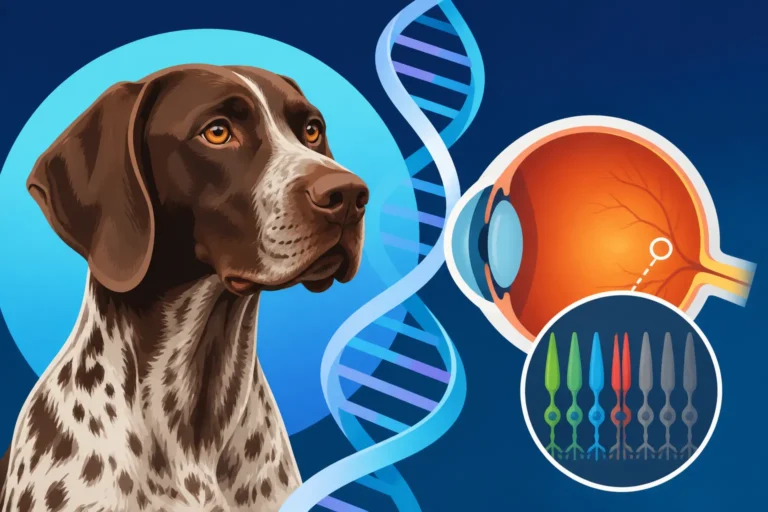
Cone degeneration in German Shorthaired Pointers is an inherited disease caused by CNGA3 gene mutations, appearing at eight weeks.

Cone degeneration in German Shorthaired Pointers impacts vision, but affected dogs still possess night vision and can hunt.

Cone Degeneration causes German Shorthaired Pointer puppies to become anxious and clumsy in bright sunlight by six months of age.

German Shorthaired Pointer day vision loss signs, Cone Degeneration inheritance, and puppy onset between eight and twelve weeks of age.
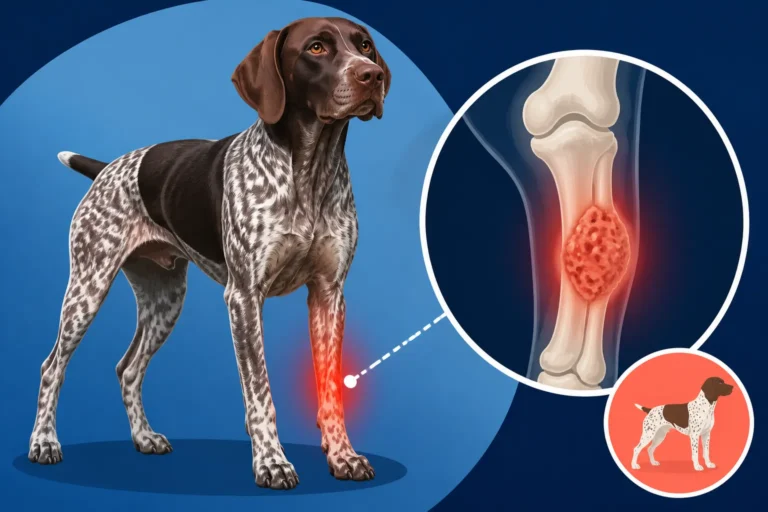
Osteosarcoma in German Shorthaired Pointers causes painful leg tumors, bringing signs, diagnosis methods, and treatment options.
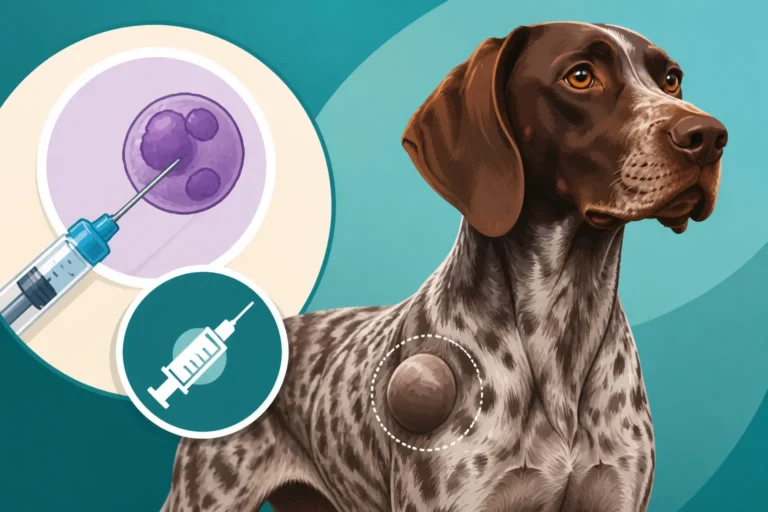
German Shorthaired Pointer lumps require veterinary examination and fine needle aspirates to determine if growths are benign lipomas.
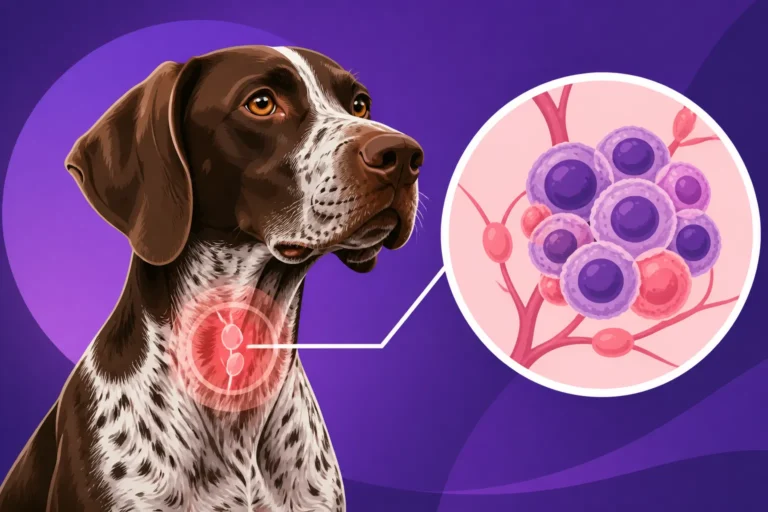
Lymphoma in young German Shorthaired Pointers involves early warning signs, diagnosis, and treatment for this aggressive cancer.
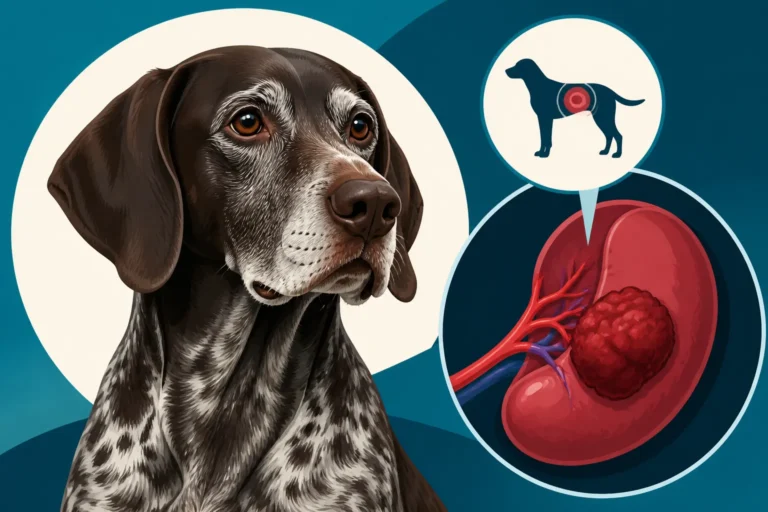
Hemangiosarcoma in senior German Shorthaired Pointers explains hidden symptoms, tumor risks, and management steps for this aggressive cancer.
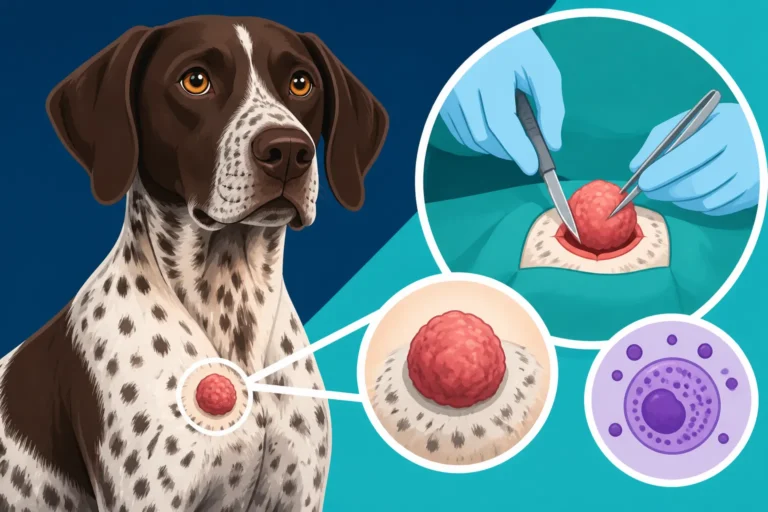
Mast cell tumor removal for German Shorthaired Pointers involves veterinary diagnosis of skin cancer and surgical treatment of canine growths.
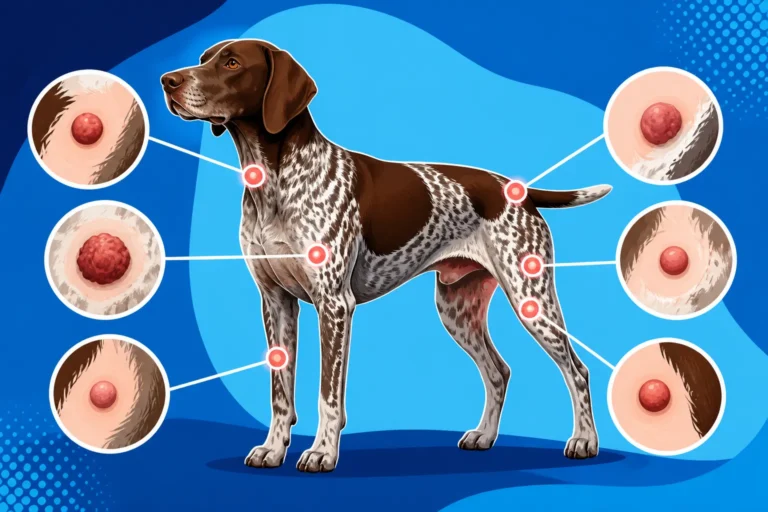
Mast cell tumors in German Shorthaired Pointers, including unpredictable appearances, genetic risks, and tumor grades, are explained for owners.