The Colors Two Liver Shorthairs Can Produce
German Shorthaired Pointer coat genetics explain what puppies two liver parents can produce based on the recessive b allele.
Is this the right one for you?
Origins and temperament, size and coat, what living with one is actually like, and how it compares to the breeds people weigh against it.
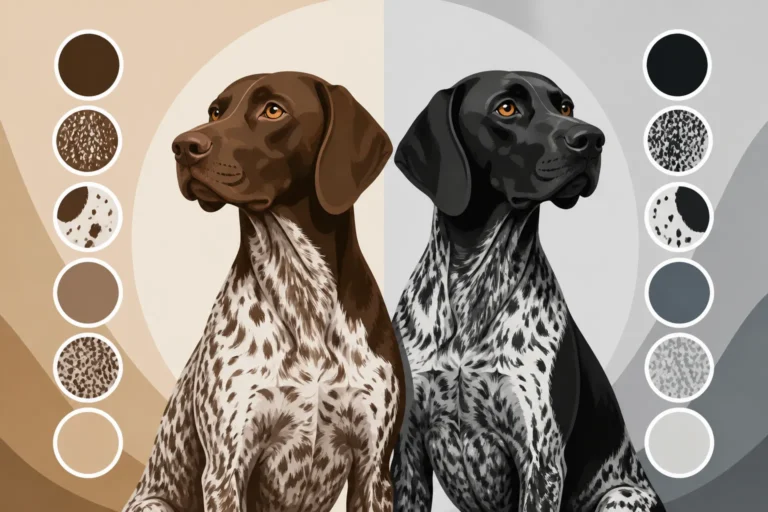
German Shorthaired Pointer coat genetics explain what puppies two liver parents can produce based on the recessive b allele.
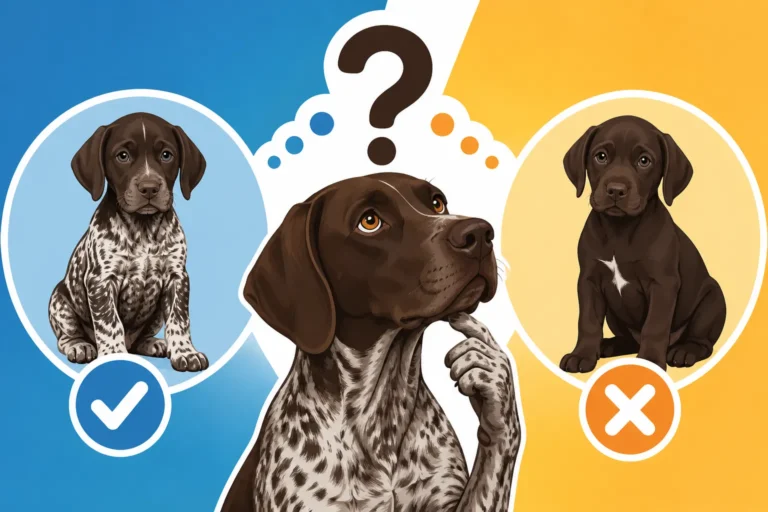
German Shorthaired Pointer coat genetics explain whether puppies can be born without ticking or roan markings.
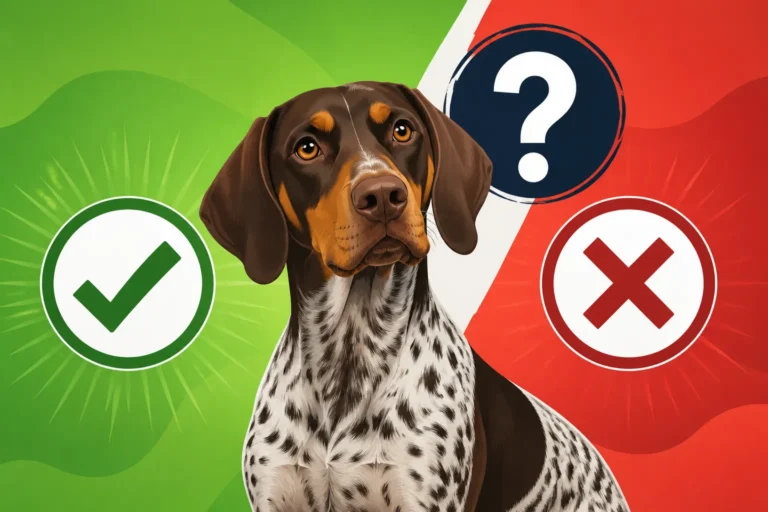
Official breed standards and genetics explain why tricolor German Shorthaired Pointer coats do not actually exist.

The official breed standard for the German Shorthaired Pointer in Germany disqualifies solid black or black and white coats.

Black German Shorthaired Pointers faced historical refusal because breeders mistakenly linked black coats to impure lineage.
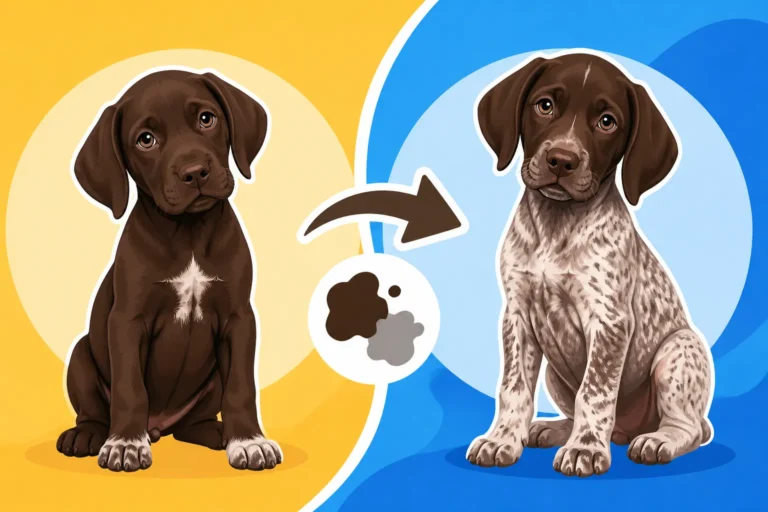
German Shorthaired Pointer coat colors and patterns change during puppyhood as ticking and roan markings develop.
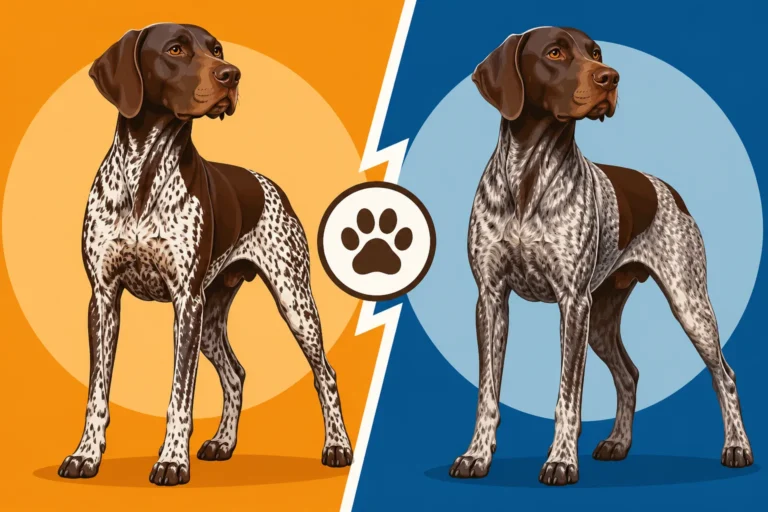
German Shorthaired Pointer coat patterns include ticked and roan markings on liver and black bases with white areas on the chest and feet.

Liver roan German Shorthaired Pointer coat colors, genetics, and prevalence compared to solid liver or ticked patterns.
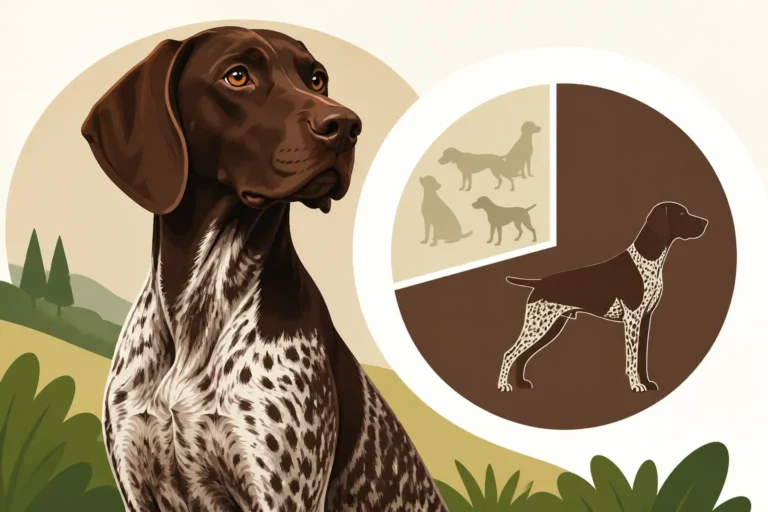
Solid liver German Shorthaired Pointers feature a uniform reddish-brown coat without white markings, ticking, or roan patterns.
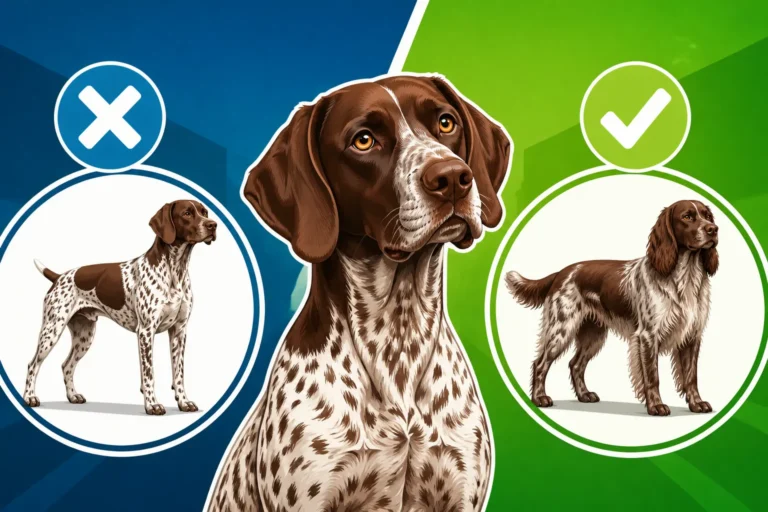
A longhaired German Shorthaired Pointer can be purebred if both parents are recognized German Shorthaired Pointers.