Elbow Scores on a German Shorthaired Pointer
One of the most concerning things for any German Shorthaired Pointer owner, especially those involved in breeding or rigorous field work, is the health of their dog's joints. It’s absolutely heartbreaking to see a powerful, athletic dog like a GSP struggle with lameness or pain, and elbow issues can be a silent saboteur of their quality of life. This guide is here to unravel the complexities of elbow scores, helping you understand what they mean for your beloved companion, how they're obtained, and what steps you can take to ensure your GSP lives a long, comfortable, and active life.
What Are Elbow Scores and Why Do They Matter for Your GSP?
When we talk about elbow scores, we're really diving into the world of canine orthopedic health, specifically looking for a condition called elbow dysplasia. This isn't just a simple ache; it's a complicated developmental condition that affects the elbow joint in growing dogs, and it’s a big deal for active breeds like our German Shorthaired Pointers. The elbow joint is crucial for their powerful stride, their ability to leap over obstacles, and their tireless pursuit of game. If that joint isn't sound, their entire world can shrink.
Elbow dysplasia encompasses several different conditions that can cause abnormal development of the elbow joint, leading to pain, lameness, and eventually, crippling arthritis. These conditions include fragmented coronoid process (FCP), ununited anconeal process (UAP), osteochondrosis dissecans (OCD) of the humeral condyle, and elbow incongruity. All of these contribute to instability and damage within the joint, resulting in discomfort and reduced mobility. For a breed known for its boundless energy and incredible athletic ability, the thought of them being limited by something like this is truly upsetting, and it’s why breeders and conscientious owners pay such close attention to these scores.
Understanding the Genetic Predisposition
The reality is, elbow dysplasia has a strong genetic component, meaning it can be passed down from parents to their puppies. This is precisely why elbow scoring has become a critical tool for responsible German Shorthaired Pointer breeders. By screening breeding dogs, they can make informed decisions to minimize the risk of passing on these debilitating conditions to future generations. Without this screening, you’re essentially rolling the dice, and that's a risk no caring breeder or owner wants to take with a GSP’s health and future well-being.
However, genetics aren't the only factor. While a dog might inherit a predisposition, environmental factors also play a role in how severe the condition becomes, or even if it manifests clinically. Things like rapid growth from overfeeding, excessive or inappropriate exercise in puppies, and even trauma can exacerbate genetic predispositions. It's a complex puzzle, which makes early detection and careful management even more important for a young, growing German Shorthaired Pointer.
The Impact on a Working or Active Shorthair
Imagine your German Shorthaired Pointer, bred for the field, suddenly struggling to perform tasks that come naturally to them. That’s the harsh reality of elbow dysplasia. For a hunting dog, or even a highly active family companion, compromised elbow joints can mean an end to their working career or a significant reduction in their daily joy. Pain can lead to reluctance to run, jump, or play, transforming a vibrant dog into a subdued one.
The long-term consequences are equally grim. Even mild cases of elbow dysplasia can progress to severe osteoarthritis over time, making even simple movements painful. This isn't just about athletic performance; it's about the dog's overall comfort and happiness throughout The Twelve to Fourteen Years a German Shorthaired Pointer Gets. Ignoring these scores, or hoping for the best, can lead to a lifetime of managing chronic pain, expensive veterinary treatments, and a diminished quality of life for a dog that deserves to be out exploring and running free.
Understanding the Different Scoring Systems
When you start looking into elbow scores, you'll likely encounter two main systems: the Orthopedic Foundation for Animals (OFA) system primarily used in North America, and the British Veterinary Association (BVA) system, widely adopted in the UK and parts of Europe. While both aim to assess elbow health, they have different methodologies and reporting standards. It’s important to understand the nuances of each, especially if you’re looking at pedigrees with international lineage or trying to compare different sources of health information.
Each system is designed to provide a standardized, objective assessment of the elbow joints, allowing breeders and owners to make informed decisions about breeding and care. However, because they differ, it's not always a straightforward comparison, and knowing which system was used is key to properly interpreting the results.
The OFA Elbow Dysplasia Grading
The OFA system is probably the most familiar to German Shorthaired Pointer owners in the United States. For elbow evaluations, a dog's elbows are X-rayed, and these radiographs are then submitted to the OFA. Three independent, board-certified veterinary radiologists review the images. They're looking for signs of elbow dysplasia, such as bone spurs (osteophytes), joint incongruity, or fragments within the joint.
The OFA assigns a grade to each elbow. Unlike hip scores, where you want a "Excellent" or "Good," for elbows, "Normal" is the goal. A dog receives one of the following grades:
- Normal: No evidence of elbow dysplasia. This is what you want to see!
- Grade I (Mild ED): Minimal bone change, usually less than 2mm.
- Grade II (Moderate ED): More significant bone change (2-5mm) and/or primary bone lesions present.
- Grade III (Severe ED): Extensive bone changes (over 5mm), well-developed degenerative joint disease, and/or clear primary bone lesions.
The final OFA elbow grade is determined by the most severely affected elbow. So, if one elbow is normal and the other is Grade I, the dog receives an overall Grade I. The OFA recommends that only dogs with "Normal" elbow grades be bred, to reduce the incidence of elbow dysplasia in the breed. This strict protocol is a cornerstone of responsible breeding practices and is often part of The Five Tests Behind a German Shorthaired Pointer CHIC Number.
The BVA/KC Elbow Grading Scheme
The BVA/KC (British Veterinary Association/Kennel Club) scheme is prevalent across the pond and uses a slightly different numerical scoring method. Again, radiographs of both elbows are taken and sent to a panel of veterinary radiologists. Each elbow is assessed and given a score between 0 and 3, with 0 being completely clear of elbow dysplasia and 3 indicating severe changes.
The critical difference here is that the scores for each elbow are then added together to give a total score for the dog, ranging from 0 to 6. For example, a dog with scores of 0 on both elbows would have a total score of 0. A dog with a 1 on one elbow and a 2 on the other would have a total score of 3. The BVA/KC scheme generally recommends that breeders only use dogs with a total score of 0 for breeding, though some might consider dogs with a total score of 1 if the breed average is higher. The goal remains the same: to reduce the prevalence of elbow dysplasia within the German Shorthaired Pointer population.
Here's a quick comparison of the two main systems:
| Feature | OFA (Orthopedic Foundation for Animals) | BVA/KC (British Veterinary Association/Kennel Club) |
|---|---|---|
| Region | Primarily North America | Primarily UK & Europe |
| Grading Scale | Qualitative: Normal, Grade I, Grade II, Grade III | Numerical: 0-3 per elbow, summed for total 0-6 |
| Radiograph Views | Standard specific views required | Standard specific views required |
| Interpretation | Three independent radiologists; final grade based on worst elbow | Panel of radiologists; total score is sum of both elbows |
| Breeding Rec. | Only "Normal" elbows recommended | Total score of 0 recommended (sometimes 1 if breed average allows) |
| Focus | Identifies presence and severity of dysplasia | Identifies presence and severity of dysplasia |
Understanding these distinctions is crucial, especially if you're researching potential breeding stock or looking at results from different countries.
How Elbow Dysplasia Develops in German Shorthaired Pointers
Elbow dysplasia isn't a single condition but rather a collective term for several developmental abnormalities that can affect the elbow joint. It's frustrating because it’s not always obvious in a young, energetic German Shorthaired Pointer puppy, often only becoming apparent as they grow or begin more strenuous activity. The conditions collectively known as elbow dysplasia typically start in the first few months of a puppy's life, during the critical growth phase, even if clinical signs don't show up until later.
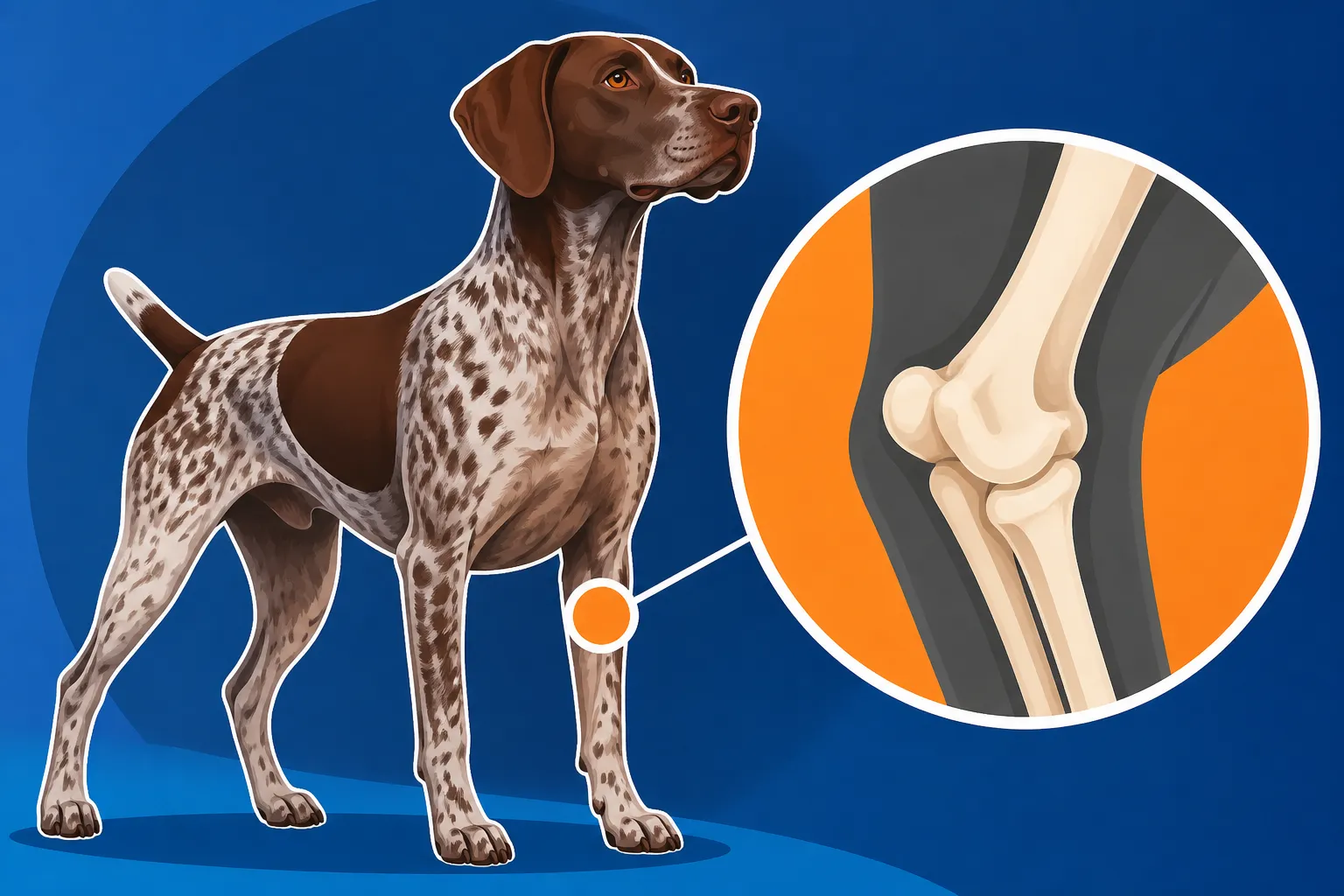
The elbow joint itself is a complex structure involving three bones: the humerus (upper arm bone), the radius, and the ulna (forearm bones). For a healthy joint, these three bones need to fit together perfectly, allowing smooth movement. When one or more components don't develop correctly, it leads to instability, abnormal stress on the cartilage, and ultimately, degenerative joint disease. This can be particularly impactful for a GSP, whose active lifestyle puts significant strain on their joints from an early age.
Common Components of Elbow Dysplasia
There are four primary components that veterinary orthopedists look for when diagnosing elbow dysplasia:
-
Fragmented Coronoid Process (FCP): This is probably the most common form of elbow dysplasia in many breeds, including GSPs. The coronoid process is a small projection of bone on the ulna. In FCP, a piece of this bone breaks off or fragments, irritating the joint cartilage and causing pain and inflammation. Imagine a tiny shard of glass moving around inside a perfectly smooth hinge – it's going to cause problems. This condition often results in a subtle lameness that might worsen after exercise, which can be hard to differentiate in a high-drive GSP puppy that always seems to be 'playing through the pain'.
-
Ununited Anconeal Process (UAP): The anconeal process is another bony projection on the ulna that normally fuses with the main part of the ulna by about five months of age. In UAP, this fusion doesn't happen, leaving the anconeal process unattached. This loose piece of bone causes instability and pain, leading to significant lameness, often at a younger age than FCP. While less common in GSPs than FCP, it's still a concern and can be particularly debilitating.
-
Osteochondrosis Dissecans (OCD) of the Humeral Condyle: OCD occurs when the cartilage lining the joint doesn't mature properly. A flap of cartilage, sometimes with underlying bone, detaches from the surface of the humerus within the elbow joint. This flap can cause pain, inflammation, and further joint damage. Dogs with OCD often exhibit lameness and swelling in the affected joint. It’s a bit like having a loose floorboard in a high-traffic area; eventually, it’s going to cause issues.
-
Elbow Incongruity: This refers to a mismatch in the length or shape of the bones that make up the elbow joint (humerus, radius, and ulna). If the radius and ulna aren't exactly the right length relative to each other, or if the trochlear notch of the ulna doesn't perfectly fit the humeral condyle, it can lead to abnormal weight bearing and stress within the joint. This uneven distribution of forces can accelerate cartilage wear and the development of arthritis.
Environmental Factors and Their Role
While genetics lay the groundwork, environmental factors can significantly influence the development and severity of elbow dysplasia. This is where responsible puppy rearing comes into play. For a growing German Shorthaired Pointer, everything from their diet to their exercise regimen needs careful consideration.
One major factor is nutrition. Rapid growth, often encouraged by overfeeding high-calorie, calcium-rich diets to puppies, can put undue stress on developing joints. It's a common misconception that more food equals a bigger, stronger dog faster, but in reality, it can lead to skeletal problems. Instead, feeding a high-quality, large-breed puppy food that supports steady, controlled growth is essential. Always follow feeding guidelines for appropriate weight gain, and if you have any questions, consult your veterinarian.
Exercise is another critical element. While GSPs need plenty of activity, intense, high-impact exercise in young puppies (before their growth plates close, usually around 12-18 months) can be detrimental. Activities like excessive forced running, jumping from heights, or prolonged strenuous fetching can put immense strain on immature joints, potentially worsening any underlying genetic predisposition to elbow dysplasia. Free play on soft surfaces is generally preferred over structured, high-impact activities for young puppies. This ties into the general advice of not running a Whether Running a Shorthair Puppy Damages Its Joints.
The Elbow Scoring Process: What to Expect
Getting your German Shorthaired Pointer’s elbows scored can feel like a big step, but it’s a relatively straightforward veterinary procedure aimed at gathering crucial information about their joint health. The process is standardized to ensure consistent and accurate results, which is vital for both individual dog owners and for breeders trying to improve the health of the breed. It’s usually done after a certain age to ensure skeletal maturity, so you won’t be getting elbow scores on a tiny puppy.
Typically, German Shorthaired Pointers are eligible for elbow scoring once they reach 12 months of age. This age ensures that the growth plates have closed and any developmental abnormalities are visible on radiographs. Submitting X-rays too early can lead to inaccurate results and a need for re-evaluation. Your veterinarian will be able to advise you on the best timing for your individual dog.
Preparing for Radiographs
The actual process involves taking specific radiographic (X-ray) views of your dog's elbows. To ensure the highest quality images, your German Shorthaired Pointer will need to be sedated or given general anesthesia. This isn't just for their comfort; it's essential for proper positioning. Trying to get an active, wiggly GSP to hold perfectly still in the precise positions required for good X-rays is nearly impossible, and even slight movements can blur the images and make interpretation difficult, potentially leading to a rejected submission or inaccurate scoring.
Before the procedure, your vet will perform a pre-anesthetic check, which might include bloodwork, especially if your dog is older or has any underlying health concerns. This is a standard safety protocol for any procedure requiring sedation. You’ll typically be asked to withhold food for several hours before the appointment, just as you would for any other anesthetic procedure. It's always a bit nerve-wracking to put your dog under, but it’s a routine procedure that your vet handles frequently.
The Radiography and Submission Process
Once your GSP is sedated and comfortable, the veterinary technician and veterinarian will carefully position their elbows. Specific angles and views are required by organizations like OFA and BVA to ensure comprehensive evaluation of the joint. These views allow the radiologists to see all the critical structures of the elbow joint and identify any signs of dysplasia. The X-rays are usually digital now, making the process quicker and often allowing for immediate review by your vet to ensure the images are diagnostic before your dog fully recovers from sedation.
After the radiographs are taken, your veterinarian will digitally submit them, along with the necessary paperwork and fees, to the chosen registry (OFA, BVA, etc.). The images are then reviewed by a panel of board-certified veterinary radiologists. These experts, often three for the OFA, independently evaluate the images for signs of elbow dysplasia. They don’t know your dog’s name, breed, or owner—it’s a blind review to minimize bias. This rigorous process ensures that the scoring is as objective and accurate as possible. It might take a few weeks to receive the official results back from the registry, which can feel like an eternity when you're waiting on such important health information.
Interpreting Your German Shorthaired Pointer's Elbow Scores
Receiving your GSP’s elbow scores can be a moment of anxiety and relief, or sometimes, disappointment. Regardless of the outcome, understanding what the scores truly mean is paramount, both for your individual dog's health and for future breeding decisions if that's part of your plan. Remember, these scores are a snapshot in time, offering valuable insight into the genetic and developmental health of your German Shorthaired Pointer.
A low score (OFA Normal, BVA 0-0) is certainly the ideal, indicating healthy elbows free from radiographic signs of dysplasia. This is the goal for all breeding animals and offers peace of mind for pet owners. However, higher scores don't necessarily spell disaster, but they do indicate a need for a more proactive approach to your dog's care.
What the Scores Mean for Your Dog
If your German Shorthaired Pointer receives an OFA score of "Normal" or a BVA score of 0-0, congratulations! This means that, at the time of the radiographs, there was no evidence of elbow dysplasia. This is fantastic news, especially if you plan to involve your GSP in strenuous activities or if they are part of a breeding program. It greatly reduces the genetic risk factor for their offspring. Still, even with perfect scores, it's wise to continue supporting joint health with appropriate exercise and diet throughout their life, particularly for a high-energy breed like a GSP.
However, if your dog receives an OFA Grade I, II, or III, or a BVA total score of 1 or higher, it means some degree of elbow dysplasia has been identified.
- Mild Dysplasia (OFA Grade I, BVA 1-2 total): Even mild changes can predispose your dog to early onset arthritis. While they might not be showing clinical signs now, it's crucial to be vigilant. This often means careful monitoring of their activity levels, considering joint supplements, and maintaining a lean body condition.
- Moderate to Severe Dysplasia (OFA Grade II/III, BVA 3-6 total): These scores indicate more significant structural changes. Your GSP is more likely to experience pain, lameness, and the progressive development of debilitating arthritis. In such cases, more intensive management, potentially including medication, physical therapy, or even surgical intervention, might be necessary to maintain their comfort and mobility. This is where pet insurance from providers like Healthy Paws can be incredibly valuable, as managing chronic joint conditions can lead to significant veterinary costs over your dog's lifetime.
It's important to differentiate between radiographic signs of dysplasia and clinical signs. Some dogs with radiographic evidence of dysplasia may never show obvious lameness or pain, while others with seemingly mild changes can be quite affected. Always discuss the implications of your dog’s specific scores with your veterinarian to develop a tailored management plan.
Implications for Breeding Programs
For breeders, elbow scores are a non-negotiable part of responsible breeding. The primary goal is to improve the overall health of the breed by reducing the incidence of hereditary conditions like elbow dysplasia.
- OFA "Normal" / BVA "0-0": These dogs are considered suitable for breeding from an elbow perspective. They contribute positively to the gene pool.
- OFA Grade I / BVA 1-2 Total: Most ethical breeders would consider these dogs unsuitable for breeding, even if the condition is mild. The risk of passing on the predisposition is still present, and the long-term goal is to eliminate these genes from the breeding pool.
- OFA Grade II/III / BVA 3-6 Total: These dogs should definitely not be bred. They are highly likely to pass on severe elbow dysplasia to their offspring.
It's worth noting that elbow and Hip Dysplasia in a Hard Running German Shorthaired Pointer often go hand-in-hand, so responsible breeders typically screen for both, aiming for clear results in both areas before considering a dog for their breeding program. This commitment to health testing helps ensure that puppies grow up to be healthy, active members of their families.
Living with Elbow Dysplasia and Management Strategies
Discovering your German Shorthaired Pointer has elbow dysplasia can be disheartening, but it's not a death sentence. Many dogs with elbow dysplasia, even those with moderate forms, can live full, happy lives with proper management. The key is to be proactive, work closely with your veterinarian, and commit to a lifelong care plan that focuses on pain management, joint support, and maintaining optimal body condition. The goal is always to maximize their comfort and mobility for as long as possible.
Early diagnosis through responsible screening, like the elbow scoring process, allows for intervention before severe, irreversible damage occurs. This proactive approach can make a world of difference in the trajectory of the disease and your dog's overall well-being.
Non-Surgical Management and Lifestyle Adjustments
For many German Shorthaired Pointers with mild to moderate elbow dysplasia, non-surgical management is the first line of defense. This typically involves a multi-modal approach to control pain, reduce inflammation, and slow the progression of arthritis.
- Weight Management: This is perhaps the single most important factor. Every extra pound your GSP carries puts additional stress on their already compromised joints. Keeping them lean and fit is crucial. Work with your vet to determine an ideal body weight and a feeding plan to achieve it.
- Controlled Exercise: While exercise is vital for a GSP, it needs to be managed carefully. Short, frequent walks on soft surfaces (like grass or dirt) are often better than long, strenuous runs on hard pavement. Swimming is an excellent, low-impact exercise that helps build muscle without stressing the joints. Avoid high-impact activities like jumping, excessive fetching, or sudden stops and starts.
- Joint Supplements: Many veterinarians recommend Joint Supplements for a Hunting German Shorthaired Pointer containing ingredients like glucosamine, chondroitin sulfate, MSM, and omega-3 fatty acids. While these won't cure dysplasia, they can help support cartilage health, reduce inflammation, and improve joint lubrication. Start these early and consistently.
- Pain Management: Non-steroidal anti-inflammatory drugs (NSAIDs) prescribed by your vet can effectively manage pain and inflammation during flare-ups or for chronic discomfort. Other medications, like gabapentin or amantadine, might be used in conjunction with NSAIDs for more severe pain. Always follow your vet's instructions carefully, as long-term use requires monitoring.
- Physical Rehabilitation: Just like in humans, physical therapy can be incredibly beneficial. Techniques such as therapeutic exercises, hydrotherapy, massage, and laser therapy can strengthen supporting muscles, improve range of motion, reduce pain, and enhance overall mobility. Find a certified canine rehabilitation therapist in your area.
- Supportive Environment: Ensure your GSP has comfortable, orthopedic bedding that supports their joints. Ramps or steps can help them get onto furniture or into vehicles without jumping. Anti-slip mats on hard floors can prevent painful falls.
Surgical Interventions and Advanced Treatments
When non-surgical management isn't enough, or for severe cases of elbow dysplasia, surgical options may be considered. These procedures aim to address the underlying structural abnormalities and alleviate pain.
- Arthroscopy: This minimally invasive procedure involves inserting a small camera into the joint to visualize and remove fragmented pieces of bone or cartilage (like in FCP or OCD). Recovery is typically faster than traditional open surgery.
- Osteotomy Procedures: For conditions like elbow incongruity, procedures such as ulna osteotomy (cutting and realigning the ulna) may be performed to improve joint congruence and reduce abnormal stress.
- Total Elbow Replacement (TER): In very severe cases, particularly when arthritis is advanced and pain is unmanageable, a total elbow replacement might be an option. This is a complex and specialized surgery, often considered a last resort, but it can significantly improve a dog's quality of life.
- Stem Cell Therapy and PRP (Platelet-Rich Plasma): These regenerative medicine therapies are newer options that may help reduce inflammation and promote tissue healing within the joint. While not a cure, they can be part of a comprehensive pain management strategy.
Choosing the right treatment path involves careful discussion with your veterinary orthopedist, considering your dog’s age, severity of dysplasia, overall health, and your family's lifestyle and financial capabilities. Managing elbow dysplasia can be a long and sometimes costly journey, but with dedicated care, many German Shorthaired Pointers can continue to enjoy an active and comfortable life. Comprehensive pet insurance plans, such as those offered by Healthy Paws, can certainly ease the financial burden of these specialized treatments and long-term medications, allowing you to focus on what's best for your GSP without added stress about the vet bills. Just like with Physical Therapy for a Shorthair After Knee Surgery, rehab after elbow surgery is often a critical component of successful recovery.
The Long-Term Outlook for GSPs with Elbow Dysplasia
Living with a German Shorthaired Pointer diagnosed with elbow dysplasia requires commitment and vigilance, but it doesn't mean a life of misery for your dog. With careful management, many GSPs can continue to be beloved family members and even participate in modified activities. The long-term outlook largely depends on the severity of the condition, how early it was diagnosed, and the consistency of the management plan put in place. It's a journey, not a sprint, and your dedication will make all the difference in your dog's comfort and happiness.
The progression of arthritis, which is an inevitable consequence of elbow dysplasia, is the main long-term concern. However, proactive steps can significantly slow this progression and manage the associated pain. Regular veterinary check-ups, often part of The Vet Schedule a Working Shorthair Should Keep, are crucial for monitoring your dog’s condition, adjusting medications, and evaluating the effectiveness of their management plan. This ongoing partnership with your vet is key to adapting to your GSP's changing needs as they age.
Maintaining Quality of Life and Comfort
The ultimate goal for any German Shorthaired Pointer with elbow dysplasia is to maintain their quality of life and keep them as comfortable as possible. This means being attuned to their subtle cues of pain or discomfort. A GSP might not always limp overtly, but a reluctance to jump, a decreased interest in play, stiffness after rest, or even a change in their usual enthusiastic greeting could be signs they’re hurting.
Creating a comfortable home environment is essential. Ensure they have soft, supportive beds, especially as they get older and may experience Arthritis in a German Shorthaired Pointer at Eight. Ramps can help them navigate stairs or get into cars without painful impacts. Keeping them warm in colder weather can also help alleviate joint stiffness. Mental stimulation through puzzle toys and scent games can be a wonderful alternative to high-impact physical exercise, keeping their keen GSP minds engaged and happy.
Breeding Responsibly for Healthier Futures
For those involved in breeding German Shorthaired Pointers, the data collected from elbow scores is invaluable. By consistently screening breeding stock and making responsible choices, breeders contribute to a healthier future for the entire breed. This is about more than just individual dogs; it's about safeguarding the genetic health of German Shorthaired Pointers for generations to come.
The commitment to health testing, including elbow scores and Hips and the CHIC Panel a German Shorthaired Pointer Needs, is a hallmark of an ethical breeder. While no one can guarantee a puppy will never develop any health issues, following established health protocols significantly reduces the risk of hereditary conditions. These efforts ensure that the vibrant, athletic qualities we love in GSPs can be enjoyed by families for many years without the burden of preventable genetic diseases. It reflects a deep care and passion for the breed's well-being beyond just conformation or field titles, understanding that The First Year Bills on a German Shorthaired Pointer can be substantially impacted by unforeseen health issues.
Disclaimer
The information provided in this article is for general informational purposes only and is not intended as a substitute for professional veterinary advice. Always consult with a qualified veterinarian regarding any medical concerns or before making any decisions about your German Shorthaired Pointer's health or treatment plan.