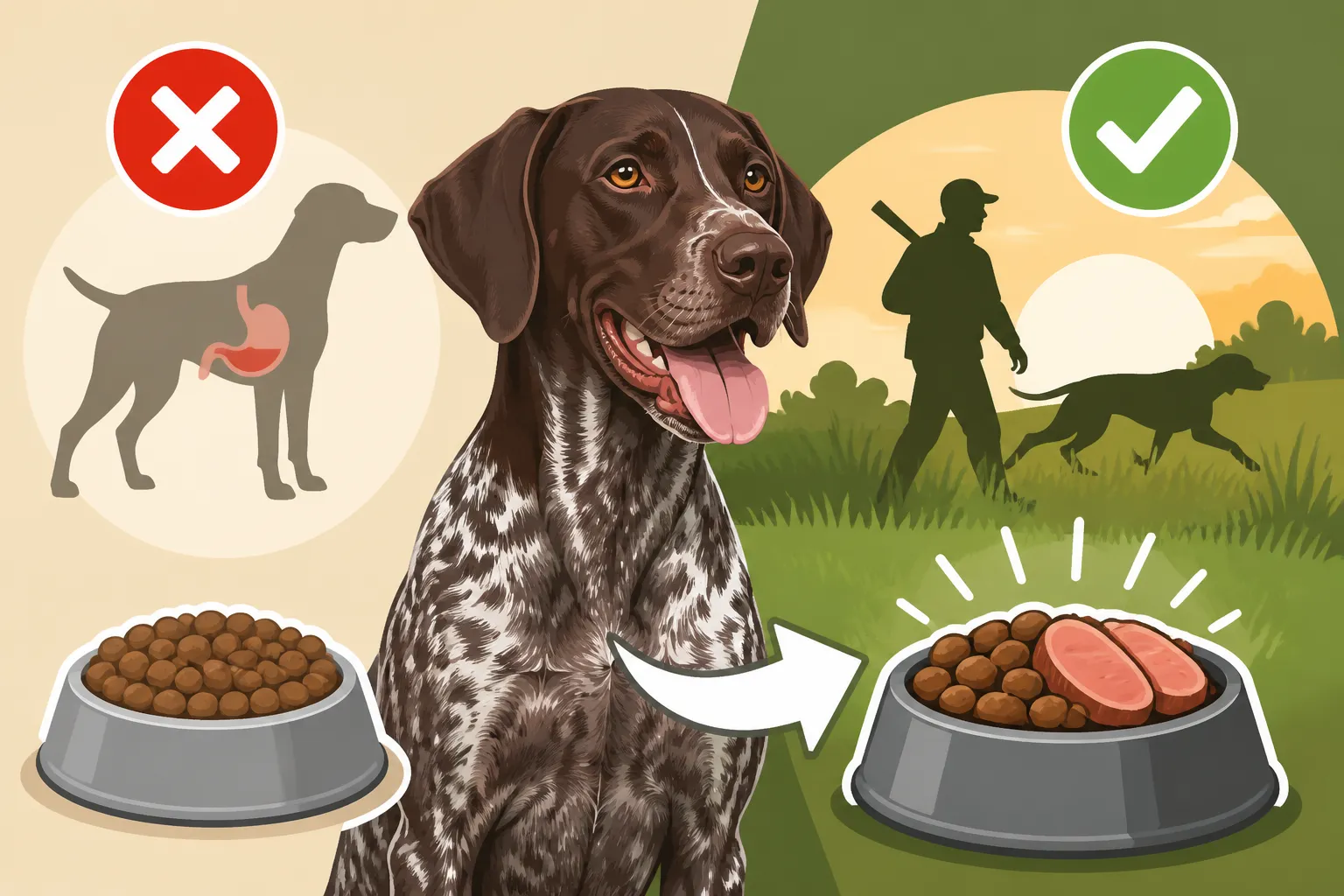
Feeding a German Shorthaired Pointer After a Hunt Instead of Before
It's a common dilemma for German Shorthaired Pointer owners, especially those of us who hunt: do you feed your dog before a big day in the field, or wait until they've put in all that incredible work? This question often sparks a lot of debate and even worry, particularly when you're trying to balance peak performance with your dog's long-term health. This guide will walk you through why feeding your GSP after a hunt, rather than before, is almost always the safer and more beneficial approach for their well-being and recovery.
The Immense Energy Demands of a Hunting Day
Let's be real, a German Shorthaired Pointer isn't just "going for a walk" when they're hunting. They are athletes, pure and simple, and their bodies are pushed to incredible limits. Understanding this intense physical exertion is the first step to figuring out the best feeding strategy.
What a Hunting Day Demands from Your GSP
Imagine yourself hiking for hours, sprinting intermittently, navigating challenging terrain, and using every ounce of your focus and stamina – all while wearing a fur coat! That's a typical day for your GSP. They're covering miles upon miles, often at a ground-covering trot or full-on gallop, bursting into points, and making retrieves. This isn't a casual stroll; it's an endurance event. Every point, every retrieve, every decision to follow scent requires explosive energy and intense mental concentration. They are burning through calories at an astronomical rate, depleting glycogen stores in their muscles and pushing their cardiovascular system to its max. This sustained, high-level activity means their body is prioritizing immediate energy use, not digestion. When you consider the How Far a German Shorthaired Pointer Runs in an Hour, it's clear these dogs are in a league of their own.
Environmental Stressors Beyond the Physical
It's not just the running; it's everything else that comes with being in the field. Your GSP is constantly exposed to changing temperatures, from crisp mornings to warmer midday sun, and often pushing through dense cover, wet marsh, or even icy water. They're dodging thorns, burrs, and potential encounters with wildlife. Stress, even the "good" kind of stress from doing what they love, impacts their system. Their core body temperature rises, and they're working hard to regulate it. All these environmental factors add to the overall physiological demand, making digestion a secondary, and sometimes risky, process if food is introduced too soon before or during activity. Dehydration is another huge concern, which is why Watering a German Shorthaired Pointer Through a Long Day is so critical.
Why Post-Hunt Feeding is the Smarter Strategy
When it comes to feeding your GSP around a hunt, the timing really does make all the difference. Shifting their main meal to after the hunt offers significant advantages for their health and recovery.
Optimizing Digestion and Nutrient Absorption
After a strenuous hunt, your GSP's body needs to recover and replenish. Their digestive system, which was likely shunted during intense activity, can now focus on processing food efficiently. Feeding after allows their metabolism to slow down, blood flow to return to the digestive organs, and their body to absorb the vital nutrients needed for muscle repair and energy restoration. Think of it like this: if you eat a huge meal and then immediately go for a strenuous run, you're probably going to get cramps or feel sluggish. Dogs are similar, but with higher stakes, especially for a deep-chested breed like a GSP. By waiting, you're giving their system the best chance to properly break down food, extract proteins, fats, and carbohydrates, and put them to work rebuilding and refueling. This is crucial for their long-term soundness and ability to keep hunting season after season.
Reducing the Risk of Gastric Dilatation-Volvulus Bloat
This is arguably the most critical reason to avoid feeding a German Shorthaired Pointer a large meal directly before a hunt: the risk of bloat, or Gastric Dilatation-Volvulus (GDV). GSPs, like many deep-chested breeds, are unfortunately predisposed to this life-threatening condition. Bloat occurs when the stomach fills with gas and/or food and then twists, cutting off blood supply and trapping everything inside. It's an emergency, requiring immediate veterinary intervention, and it can be fatal very quickly. Feeding a large meal, then having the dog engage in vigorous exercise, is a classic recipe for increasing this risk. The bouncing, jarring motion of running and jumping, combined with a full, gassy stomach, can contribute to the stomach twisting. By waiting until after the activity, when their system has calmed down, you significantly reduce the chances of this terrifying event. Understanding The Bloat Risk a Shorthair Carries Into Every Season is essential for any GSP owner.
Aiding in Muscle Recovery and Replenishment
A hunting day isn't just about burning energy; it's about taxing muscles. Intense exercise causes microscopic tears in muscle fibers, and these need protein and other nutrients to repair and rebuild. When you feed your GSP after the hunt, you're providing those essential building blocks when their body is most ready to utilize them. This timely replenishment aids in faster recovery, reduces muscle soreness, and prepares them for the next day's activity. Without proper post-hunt nutrition, recovery is slower, and the dog may feel more fatigued or even be more prone to injury. Consider adding specific Electrolytes for a German Shorthaired Pointer in the Field to their water during the hunt, but save the solid food for afterwards.
Crafting the Ideal Post-Hunt Meal for Your GSP
So, if feeding after is the way to go, what exactly should that meal look like? It's not just about dumping a bowl of kibble; it's about thoughtful nutrition designed for recovery.
Balanced Nutrition for Peak Recovery
A post-hunt meal needs to be a powerhouse of recovery. It should be rich in high-quality protein to repair muscles, complex carbohydrates to replenish glycogen stores, and healthy fats for sustained energy and overall health. Don't skimp on quality; a performance-grade kibble is often a good base. Many brands formulate foods specifically for highly active dogs. For example, if you're looking for high-quality kibble options, you can often find a wide selection from brands that cater to active dogs, available through retailers like Chewy. You might even consider supplementing with a bit of cooked, lean meat or an egg for an extra protein boost. The goal is to provide a complete and easily digestible meal that gets those depleted stores back up. The Calorie Needs of a German Shorthaired Pointer in Season are substantial, so ensure the portion size is adequate for their expenditure.
Temperature and Hydration Considerations
Believe it or not, the temperature of their food can matter. After a long day, especially in colder weather, a slightly warmed meal can be more appealing and gentler on their stomach. You can achieve this by adding a bit of warm water to their kibble, which also has the added benefit of increasing their hydration. Many GSPs will scarf down cold kibble without a second thought, but a warm, moist meal can encourage them to eat more slowly and comfortably. Always ensure plenty of fresh, clean water is available immediately after the hunt and before their meal. Dehydration is a major concern, and getting fluids back into them is paramount.
Supplementing for Optimal Joint and Gut Health
Beyond the main meal, consider supplements that can aid recovery and support overall health in a working dog. Joint supplements, for instance, can be beneficial for those hard-working hips and elbows that take a pounding in the field. Joint Supplements Worth Giving a Working Shorthair can help cushion and support cartilage. Probiotics can also be a great addition to support gut health, especially if your GSP is prone to digestive upset or has been stressed by travel and new environments. Some owners even add a bit of bone broth or a digestive enzyme to their post-hunt meals for an extra boost. For specialized supplements, online retailers like Amazon offer a vast selection, allowing you to compare products and find what best suits your dog's needs.
Here's a quick look at ideal post-hunt meal components:
| Component | Benefit | Example (Mix & Match) |
|---|---|---|
| High-Quality Protein | Muscle repair, rebuilding, satiety | Performance kibble, cooked chicken, lean beef, eggs |
| Complex Carbohydrates | Glycogen replenishment, sustained energy | Performance kibble, cooked sweet potato, brown rice |
| Healthy Fats | Energy density, skin & coat health | Performance kibble, salmon oil, small amount of coconut oil |
| Fiber (moderate) | Digestive health, satiety | Performance kibble, canned pumpkin (plain) |
| Hydration | Rehydration, aids digestion | Warm water added to kibble, bone broth |
| Optional Supplements | Joint support, gut health, electrolytes | Glucosamine/chondroitin, probiotics, electrolytes (post-water) |
The Dangers of Pre-Hunt Feeding
Now that we've covered the benefits of post-hunt feeding, let's circle back to why feeding before is generally discouraged and can even be dangerous for your GSP.
Increased Bloat Risk and Digestive Distress
As mentioned, a full stomach, especially with a dry, kibble-based meal that might expand, combined with vigorous activity, dramatically increases the risk of bloat. This isn't just a slight risk; it's a serious, life-threatening concern for German Shorthaired Pointers. Even if bloat doesn't occur, a heavy meal before activity can lead to digestive distress. Your dog might experience cramps, nausea, or simply feel sluggish and uncomfortable. Their body is trying to divert blood flow to their working muscles, not their stomach, leading to inefficient digestion and potential problems. The last thing you want is your dog feeling unwell or in pain while they should be enjoying and performing in the field. If you notice The Unproductive Retching That Means a Shorthair Is Bloating, seek emergency vet care immediately.
Compromised Performance and Stamina
Even without the threat of bloat, feeding right before a hunt can actively hinder your GSP's performance. A dog with a full stomach will naturally feel heavier and less agile. Their body is expending energy on digestion when it should be focused on sustained physical output. This can lead to decreased stamina, slower recovery, and a general lack of zest in the field. They might tire out faster, or their natural enthusiasm for covering ground and finding birds could be diminished. We all want our dogs to perform their best and enjoy the hunt, and a heavy pre-hunt meal works against that goal. The general rule of The Rest a Shorthair Needs Between Eating and Running is typically several hours.
The Exception: Small, Easily Digestible Snacks (Not Meals!)
While a full meal before a hunt is a no-go, a very small, easily digestible snack, given hours before the hunt begins, might be permissible for some dogs, especially if it's a very long day. This would be something like a few bites of cooked chicken, a small handful of highly digestible dry food, or even a specialized energy bar for dogs. The key here is small, easily digestible, and several hours in advance. We're talking about a tiny fuel top-off, not a substantial meal. Even then, you need to know your dog well and observe how they react. Some dogs are better off with nothing at all until after the work is done. It's often safer to stick to water and perhaps a few drops of an electrolyte solution in their water bottle to maintain hydration and electrolyte balance.
Practical Feeding Schedule Adjustments for Hunting Season
Implementing a post-hunt feeding strategy takes a little planning, especially during the demanding hunting season. Here’s how to make it work for you and your GSP.
Morning Hunts and Day Trips
For a typical morning hunt or a day trip, the simplest approach is to feed your GSP their main meal in the evening, after they've had a chance to cool down and rest. In the morning, before heading out, offer only water. You can even add a hydration supplement or a small amount of bone broth to their water to encourage drinking. Pack plenty of water for the field and offer it frequently. Once you're done hunting and your GSP has had a chance to relax for an hour or two, then offer their full, recovery-focused meal. This allows their body ample time to settle before eating and then fully recover afterward. If your GSP is particularly active, you might consider Whether a Shorthair Needs a High Fat Diet in Season to ensure they have enough energy stores.
Multi-Day Hunts and Extended Trips
Multi-day hunts present a slightly different challenge, as your dog needs consistent fueling. The principle of post-hunt feeding still applies. Each evening, after the day's hunt is complete and your dog has had time to rest, offer their full, balanced meal. In the mornings, before heading out, ensure they have access to water, but skip the solid food. If you're really concerned about them being too empty, a very small, high-energy snack four to six hours before the start of the hunt could be considered, but again, proceed with extreme caution and only if you know your dog handles it well. For these extended trips, consider specialized performance kibbles that are nutrient-dense and highly digestible. Many brands, including those found on Chewy, offer formulations tailored for sporting and working dogs. Some owners even use fresh food delivery services like Ollie which can be convenient for providing high-quality, easily digestible meals when on the road, though you'll need to plan for storage.
The Importance of a Routine
Dogs thrive on routine, and your GSP is no different. Establishing a consistent feeding schedule around your hunting activities will help their digestive system adapt. If they know food comes after the hunt, they'll be less anxious about being hungry before. This also means being consistent with when you offer water, and providing quiet, calm periods for digestion after they eat. Sudden changes in diet or feeding times can also upset their stomach, so if you're introducing a new high-performance food for the season, do it gradually over a week or two. Remember that Feeding a German Shorthaired Pointer Around a Hunt is a year-round consideration, not just during open season.
Disclaimer
This article is for general informational purposes only and does not constitute professional advice. Laws, prices and regulations vary by location and change over time. Consult a qualified professional for guidance on your specific situation.