Rinsing a German Shorthaired Pointer After Pond Water
There's nothing quite like watching your German Shorthaired Pointer bound into a pond, eager for a retrieve or just a refreshing dip on a warm day. Their love for water is undeniable, but the reality is, many ponds aren't exactly pristine swimming pools. Dirty, murky pond water can be a breeding ground for all sorts of unseen nasties that can lead to skin irritations, ear infections, and other health issues for your active companion. This guide will walk you through exactly why and how to properly rinse your German Shorthaired Pointer after they’ve enjoyed a splash in natural pond water, keeping them healthy and happy for their next adventure.
The Hidden Dangers in Pond Water for Your German Shorthaired Pointer
It’s easy to think of a pond as just… water. But for a dog like a German Shorthaired Pointer, who loves to dive in and get every inch of their short coat wet, pond water can be a veritable soup of potential problems. Unlike a controlled environment like a pool, ponds are ecosystems, and that means they come with their own unique set of risks that can impact your dog's health.
Understanding the Contaminants Your GSP Might Encounter
Ponds, especially those in rural areas or frequented by wildlife, are far from sterile. They can contain a surprising array of microorganisms and debris. Think about what washes into a pond: agricultural runoff, animal waste, decaying plant matter, and even just plain old dirt and mud. All of these contribute to a cocktail that, while natural, isn't always dog-friendly. Bacteria like leptospirosis, giardia, and even certain strains of E. coli can lurk in stagnant or slow-moving water. These pathogens can cause gastrointestinal upset, kidney damage, or other serious illnesses if ingested. Beyond bacteria, chemical residues from pesticides or fertilizers, if present in runoff, could irritate sensitive skin or be harmful if consumed. It's not about being alarmist, but about being informed of the potential risks lurking beneath the surface.
The Risk of Skin and Ear Irritations from Pond Water
German Shorthaired Pointers have a sleek, short coat that, while somewhat water-resistant, isn't impervious to the irritants found in pond water. When your GSP plunges into muddy, algae-laden water, these particles can get trapped against their skin. If not thoroughly rinsed off, this can lead to itching, redness, and even skin infections. We've all seen those nasty red patches, often called "hot spots," erupt almost overnight, and they can be incredibly uncomfortable for your dog. A good example might be after a long day retrieving ducks from a cattail-lined slough; the combination of organic matter and prolonged dampness can set the stage for these problems. Check out Hot Spots on a Shorthair After Swimming for more on this common issue.
Furthermore, those beautiful, floppy ears that are so characteristic of the breed? They're like little warm, moist incubators for bacteria and yeast, especially after a swim. Pond water, with its abundance of microscopic life, can easily enter the ear canal. If the ears aren't dried out properly, the moisture creates an ideal environment for these opportunistic organisms to multiply, leading to painful ear infections. It’s a recurring frustration for many GSP owners, and learning to manage it is key. You can find more targeted advice on this in A Shorthair's Ear Infection That Returns Every Duck Season.
The Threat of Blue-Green Algae
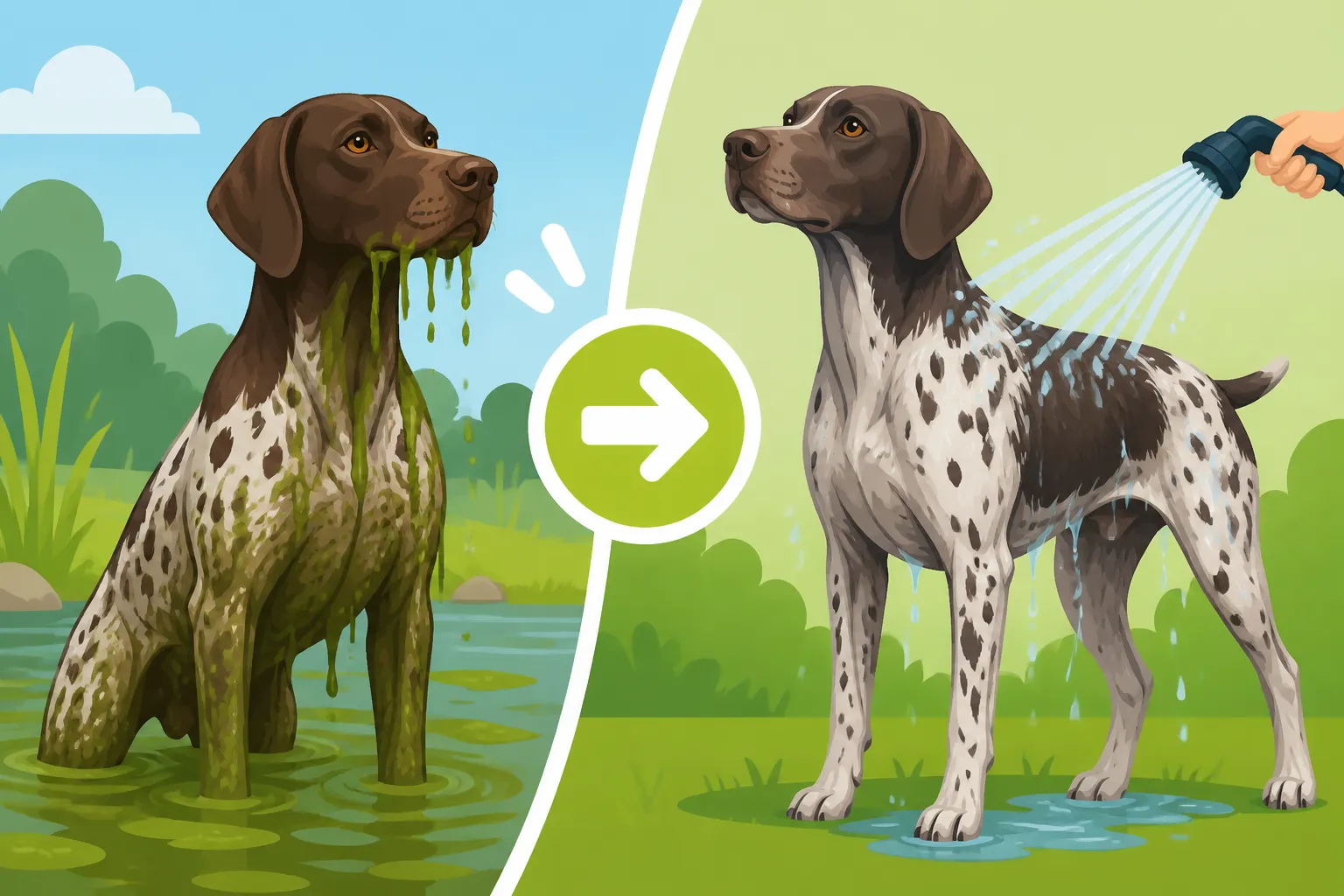
Perhaps one of the most serious and immediate dangers in pond water is blue-green algae, also known as cyanobacteria. This isn't just regular pond scum; it can produce potent toxins that are incredibly dangerous, often lethal, to dogs. It thrives in warm, still, nutrient-rich water and often appears as a thick, pea-green or blue-green scum on the surface. Sometimes it looks like paint, other times like small, scattered green blobs. The issue is, you might not always recognize it until it's too late. If your German Shorthaired Pointer ingests even a small amount of water contaminated with toxic blue-green algae, or even just licks it off their fur, it can cause severe liver damage, neurological problems, or rapid death. This is why immediate and thorough rinsing after any suspicious water contact is absolutely critical. For more on this, read Blue Green Algae and a Swimming Shorthair.
Your Step-by-Step Guide to a Post-Pond Rinse
So, your German Shorthaired Pointer has had a grand old time splashing in the pond. Now what? The key is to act quickly and thoroughly. A simple towel-off isn't enough to remove all the microscopic threats that pond water can leave behind.
Timing and Location for the Best Rinse
Ideally, you want to rinse your GSP as soon as possible after they emerge from the pond. Don't wait until you get home if you can help it. If you're out hunting or hiking and your dog takes a dip, have a plan for immediate rinsing. A large jug of clean water in the truck or even a portable dog shower can be a lifesaver. This prevents any contaminants from drying onto their skin or becoming absorbed. If you must wait until you get home, keep them contained, perhaps in a crate with an absorbent towel, to minimize them tracking mud and contaminants through your car or house. The goal is to interrupt the drying process and wash everything away before it settles.
When you do get to the rinsing station, whether it’s your backyard, a utility sink, or a dedicated dog wash station, make sure you have everything you need within reach. Trying to grab shampoo with a wet, wiggly GSP is a recipe for a soggy mess and a frustrated dog.
Essential Supplies for an Effective Rinse
Before you even turn on the water, gather your arsenal. You don't need fancy equipment, but a few key items will make the process much smoother and more effective:
- Plenty of clean, fresh water: A hose with adjustable spray, a large pitcher, or a portable shower. Make sure the water isn't too cold or too hot – lukewarm is best.
- Mild dog shampoo: Choose one specifically formulated for dogs. Avoid human shampoos, as they can be too harsh for a dog’s skin and strip essential oils. If your dog has sensitive skin, look for a hypoallergenic or oatmeal-based formula. Many good options are available from retailers like Chewy or Amazon.
- Large, absorbent towels: Several of them! German Shorthaired Pointers have short coats, but they can still hold a surprising amount of water.
- Ear cleaner: A gentle, vet-approved ear cleaning solution to help dry out and clean the ear canals.
- Cotton balls or gauze: For applying ear cleaner and gently drying the outer ear.
- Optional: Dog conditioner: If your GSP has particularly dry or sensitive skin, a light conditioner can help replenish moisture after shampooing.
- Treats: Always a good idea to make the experience positive!
The Full Rinsing and Washing Procedure
Once you have your supplies, it's time to get down to business.
-
Initial Rinse: Start by thoroughly rinsing your GSP's entire coat with clean water. The goal here is to remove as much loose dirt, mud, and pond debris as possible. Work from head to tail, ensuring the water penetrates right down to the skin. Pay special attention to their legs, belly, and undercarriage, which often get the dirtiest.
-
Shampoo Application: Apply a generous amount of dog shampoo. Work it into a good lather, massaging it thoroughly into their coat and down to their skin. Again, ensure you cover every inch of their body. Really get in there and scrub gently, especially in areas where dirt tends to accumulate, like their armpits and groin. For a GSP that has been wading in stagnant water, this deep cleansing is vital.
-
Dwell Time (if applicable): Some medicated shampoos require a few minutes of dwell time. Read the label of your chosen shampoo carefully. If not, proceed to the next step.
-
Thorough Second Rinse: This is arguably the most important step. Rinse, rinse, and rinse again! Any shampoo residue left on the skin can cause irritation, dryness, or flaking, creating problems even after you've washed away the pond gunk. Continue rinsing until the water runs completely clear and you can no longer feel any slickness from the shampoo on their coat. Imagine you're rinsing a thick head of hair – you want it squeaky clean.
-
Towel Dry: Once rinsed, gently squeeze excess water from their coat. Then, use your absorbent towels to thoroughly dry your dog. Don't just dab; rub vigorously to remove as much moisture as possible. The aim is to get them as dry as you can, especially before moving on to ear cleaning.
Paying Attention to Key Areas: Ears, Paws, and Eyes
While a full body rinse is crucial, some areas on your German Shorthaired Pointer need extra special attention after a dip in pond water. These are the places most vulnerable to infection or irritation.
Thorough Ear Cleaning to Prevent Infections
As mentioned earlier, those lovely floppy ears are a hotspot for trouble. After every pond swim, a thorough ear cleaning is non-negotiable.
Steps for Ear Care:
- External Dry: First, use a soft, dry cotton ball or the corner of a towel to gently dry the visible parts of their ear flaps and the opening of the ear canal. Don't stick anything deep into the ear, just remove surface moisture.
- Apply Cleaner: Apply a vet-approved ear cleaning solution into the ear canal. Follow the product instructions carefully regarding the amount.
- Massage: Gently massage the base of the ear for 20-30 seconds. You should hear a squishing sound as the cleaner moves around in the canal. This helps break up wax and debris.
- Allow Shaking: Let your dog shake their head. This will help dislodge debris and bring the cleaning solution, along with any gunk, to the outside. Stand back unless you want a shower!
- Wipe Clean: Use fresh cotton balls or soft gauze to gently wipe away any visible debris or discharge from the outer ear canal. Again, do not push anything deep into the ear.
Doing this consistently after water exposure can dramatically reduce the risk of painful ear infections. For more in-depth advice on keeping those ears healthy, take a look at Drying a Shorthair's Ears After Every Swim.
Inspecting and Cleaning Paws and Pads
Your GSP's paws are their connection to the ground, and they take a beating. Pond bottoms can be silty, muddy, or even contain sharp objects. After a swim, their pads might be softened by the water, making them more susceptible to injury or irritation from trapped debris.
What to look for and how to clean:
- Between the Toes: Mud, sand, and tiny plant matter (like foxtails or grass awns) can get lodged deep between their paw pads and toes. These can cause intense irritation, cysts, or even migrate deeper into the paw. Carefully spread their toes and inspect thoroughly.
- Pad Condition: Check the pads themselves for any cuts, scrapes, or punctures. The softened state after prolonged water exposure makes them vulnerable.
- Nails: Ensure their nails aren't too long, which can affect their gait and comfort.
Use clean water and a soft cloth to gently wipe between each toe and around the pads. If you find any burrs or small pieces of debris, carefully remove them. If you suspect a deeper injury or lodged foreign object, a vet visit is in order. Regularly conditioning their pads can also help in the long run; consider products like paw balms available from Chewy or Amazon to keep them supple and resilient. This ties into topics like Pad Toughener Products for a Hunting Shorthair.
Gently Cleaning Around the Eyes
While German Shorthaired Pointers typically don't have issues with hair around their eyes, pond water can splash into them, potentially introducing irritants or bacteria.
Steps for eye care:
- Gentle Wipe: Use a clean, damp cloth or a fresh cotton ball moistened with plain water to gently wipe away any discharge or debris from the corners of their eyes. Always wipe away from the eye, towards the nose.
- Observe: Look for any signs of redness, excessive tearing, squinting, or pawing at the eyes. If you notice any of these symptoms, it could indicate an irritation or infection, and a veterinary check-up would be wise.
It’s often these small, consistent actions that prevent bigger problems down the line.
Beyond the Rinse: Ongoing Care and Prevention
A thorough rinse after pond water exposure is a fantastic preventative measure, but holistic care for your German Shorthaired Pointer goes beyond just immediate post-swim attention. Thinking about their overall health and how to minimize risks will ensure they stay ready for any adventure.
Maintaining Coat and Skin Health Year-Round
Even when your GSP isn't taking a dip, maintaining their skin and coat health is vital. A healthy coat and skin barrier are naturally more resilient to environmental challenges.
- Regular Brushing: While GSPs have short coats, regular brushing helps distribute natural oils, remove loose hair, and allows you to routinely inspect their skin for any issues. This can also help you spot ticks more easily. Checking a German Shorthaired Pointer for Ticks Nightly is always a good practice.
- Appropriate Diet: A high-quality diet plays a huge role in skin and coat health. Look for foods rich in omega fatty acids, which are crucial for a healthy skin barrier. Brands like Ollie often emphasize fresh, quality ingredients that can contribute to overall skin health.
- Minimal Bathing: Unless your GSP is truly dirty from pond water or rolling in something unspeakable, avoid over-bathing them. Frequent bathing with harsh shampoos can strip natural oils, leading to dry, irritated skin. For routine cleaning, see How Often a Shorthair Needs Washing. When you do bathe, always use a gentle, moisturizing dog shampoo. If your GSP has known skin sensitivities or Skin Infections Under a Shorthair's Short Coat, your vet might recommend a specific medicated shampoo.
- Addressing Allergies: German Shorthaired Pointers, like many breeds, can develop environmental allergies, which manifest as skin irritation. If your GSP frequently gets hot spots or itchy skin even without pond exposure, it's worth discussing Environmental Allergies in a Shorthair That Works Cover with your veterinarian.
When to Seek Veterinary Advice
While preventative care and a good rinse can go a long way, sometimes professional intervention is necessary. Don't hesitate to contact your vet if you notice any of the following after pond exposure, or any time:
- Persistent Itching or Licking: If your GSP is constantly scratching, licking, or chewing at their skin, especially in specific areas, after a swim.
- Redness, Rash, or Bumps: Any unusual skin lesions, red patches, or a widespread rash.
- Unusual Odor: A foul or yeasty smell emanating from their skin or ears, which can indicate a bacterial or fungal infection.
- Ear Discharge or Pain: Shaking of the head, pawing at the ears, sensitivity when their ears are touched, or any dark, smelly discharge from the ear canal.
- Lethargy or Vomiting: These are general signs of illness but, especially after ingesting pond water, could indicate a serious problem like leptospirosis or blue-green algae poisoning.
- Lameness or Swelling in Paws: If they are limping, favoring a paw, or if a paw appears swollen or painful.
It's always better to be safe than sorry. Your vet can accurately diagnose the problem and prescribe appropriate treatment, whether it's antibiotics for an infection, ear medication, or something more serious.
Choosing Safe Swimming Spots
The best prevention is always avoidance. While it's tough to deny a GSP a good swim, being mindful of where they jump in can save a lot of heartache.
- Observe the Water: Before letting your dog in, take a good look at the water. Is it stagnant? Does it have a greenish tint or any visible scum (potential blue-green algae)? Is there a strong foul odor? If anything looks or smells off, it's best to keep your dog out.
- Consider the Source: Ponds surrounded by agricultural fields or areas with heavy wildlife traffic might be riskier due to runoff and waste.
- Flowing Water: Rivers or streams with good current are generally safer than still ponds, as the moving water helps to disperse contaminants.
- Check Local Advisories: In some areas, local authorities might issue warnings about unsafe water conditions, especially regarding blue-green algae blooms. Pay attention to these alerts.
By being diligent with rinsing, attentive to their health, and smart about their swimming choices, you can ensure your German Shorthaired Pointer can enjoy their aquatic adventures without unnecessary risk. Remember, a healthy GSP is a happy GSP, and a happy GSP means more adventures for both of you.
Disclaimer
This article is for general informational purposes only and does not constitute professional advice. Laws, prices and regulations vary by location and change over time. Consult a qualified professional for guidance on your specific situation.