Tartar on a German Shorthaired Pointer’s Molars
Finding that gritty, yellowish-brown crud building up on your German Shorthaired Pointer's molars can be a real moment of panic for any devoted owner. You look into their mouth, see those pearly whites becoming less than, well, pearly, and suddenly you're picturing painful extractions and expensive vet bills. It’s a common frustration, especially with active breeds like our GSPs who often try to hide discomfort. This guide is here to walk you through everything you need to know about tartar on your German Shorthaired Pointer's molars, from prevention to professional care, so you can keep their smile healthy and their breath a little sweeter.
Understanding Tartar: What It Is and Why It Matters for Your GSP
It's easy to dismiss a little yellow on the back teeth, but tartar isn't just a cosmetic issue. It’s a sign of underlying dental disease that can have far-reaching consequences for your active companion. Understanding how it forms and what it means is the first step toward keeping your GSP healthy.
The Formation of Tartar in Your Dog's Mouth
Every time your German Shorthaired Pointer eats, tiny food particles and bacteria stick to their teeth. This forms a soft, sticky film called plaque. Think of it like the fuzzy feeling on your teeth when you haven't brushed in a while. If this plaque isn't removed regularly through brushing or chewing, it mixes with minerals in your dog's saliva. Over a short amount of time, sometimes as little as 24-48 hours, this plaque hardens into tartar, also known as calculus.
Molars, being at the back of the mouth, often bear the brunt of this accumulation. They're heavily involved in grinding food, and their complex surfaces can be harder to clean naturally or with a quick brush. Plus, they might not get as much abrasion from toys or chews as the front teeth. Once tartar forms, it's cemented to the tooth surface and cannot be easily brushed away by you at home. It creates a rough surface that attracts even more plaque, becoming a vicious cycle. For a breed known for its robust health and drive, it's crucial not to let something as seemingly small as tartar undermine their overall well-being.
The Health Risks Associated with Dental Disease
When tartar builds up, it doesn't just sit there innocently. It creates a perfect environment for more bacteria to thrive, irritating the gum line and leading to inflammation known as gingivitis. You might notice red, swollen gums that bleed easily – a clear sign your GSP is uncomfortable. If left untreated, gingivitis progresses to periodontal disease, a more serious condition where the inflammation spreads beneath the gum line, affecting the supporting structures of the teeth.
Periodontal disease can lead to painful infections, bone loss around the teeth, and eventually, tooth loss. Imagine trying to eat or retrieve a bird with a throbbing toothache; it would be agonizing for your GSP. But the problems don't stop in the mouth. The bacteria from severe dental disease can enter your dog's bloodstream, traveling to major organs like the heart, kidneys, and liver, potentially causing serious systemic infections or worsening existing conditions. It's a silent killer that many owners overlook. This is why regular check-ups and addressing Dental Disease in a Middle Aged German Shorthaired Pointer are so incredibly important, even if your dog seems fine on the surface. Don't wait until your spirited companion is showing obvious signs of pain; by then, the damage might already be extensive.
Spotting Tartar on Your German Shorthaired Pointer's Molars
Our GSPs are masters at masking discomfort, especially when it comes to something like a sore mouth. That incredible prey drive and desire to please can make them push through pain that would send another dog to the couch. This means it's up to us to be diligent in checking their teeth and recognizing the subtle cues that indicate a problem.
Visual Cues and Early Warning Signs
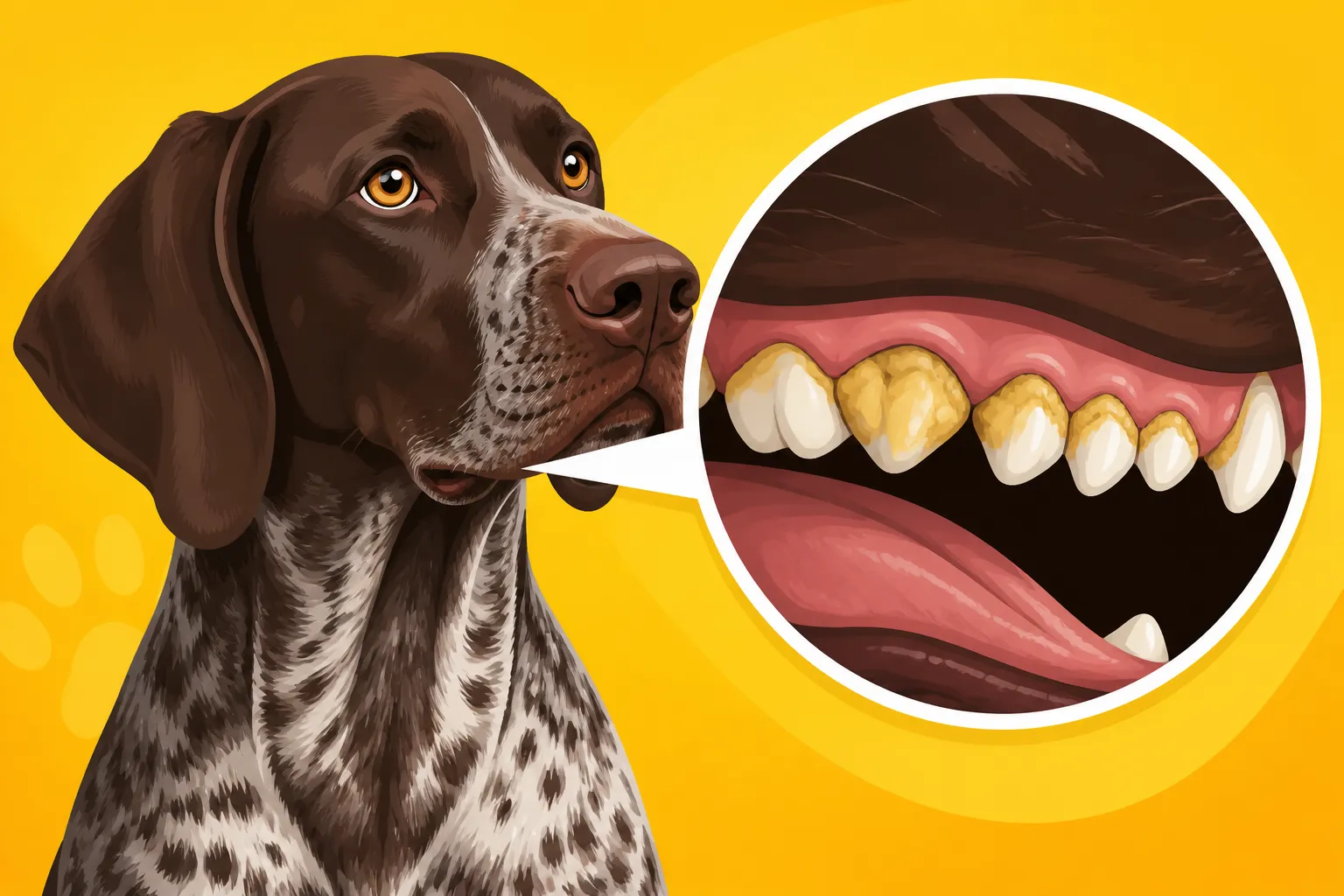
The most obvious sign of tartar is, of course, seeing it. Lift your GSP's lips, especially around the back of their mouth, and examine those molars. You'll often see a yellowish-brown or even dark brown, crusty buildup along the gum line, particularly on the outside surfaces of the upper molars. It can look like a hardened, chalky layer clinging to the tooth. Don't forget to check the insides if your dog will allow, although the outer surfaces tend to accumulate more.
Beyond direct visual evidence, there are other tell-tale signs. Is your GSP's breath getting noticeably worse? "Dog breath" isn't normal; it's a strong indicator of bacterial overgrowth from plaque and tartar. You might also observe them pawing at their mouth, dropping food while eating, or showing a preference for softer foods. Sometimes, a GSP might become less enthusiastic about their favorite chew toys, or you might notice a subtle change in their chewing patterns. If you see any redness or swelling along the gum line, or if the gums bleed when you gently touch them, it's time to take action. Catching these signs early can save your dog a lot of discomfort and you a significant amount in vet bills down the road.
Differentiating Between Plaque and Established Tartar
Understanding the difference between plaque and tartar is key to effective home care. Plaque is that soft, white, or yellowish film you can actually scrape off with your fingernail if you try hard enough. It's relatively easy to remove with regular brushing, and that's precisely why daily dental care is so vital. If you're consistently brushing, you're targeting plaque before it has a chance to harden.
Tartar, on the other hand, is hardened, mineralized plaque. It's tough, often discolored, and firmly adhered to the tooth enamel. You cannot simply brush tartar away, no matter how vigorously you try. Trying to scrape it off with an unsterilized tool at home can cause more harm than good, potentially scratching the enamel or damaging the gums. If you see significant tartar buildup, particularly on the molars, it indicates that the issue has moved beyond basic home maintenance and requires professional intervention. At this point, no amount of brushing or special dental chews will completely resolve the problem; it needs a veterinarian's care to safely remove the hardened deposits. Getting ahead of this with consistent Daily Tooth Care for a Shorthair That Carries Birds is always the best approach.
Effective Home Care Strategies to Prevent and Manage Tartar
The good news is that you have a significant role to play in preventing and managing tartar buildup on your German Shorthaired Pointer's teeth. While some dogs are genetically predisposed to more dental issues, consistent home care can make a world of difference.
The Golden Standard: Daily Brushing
If there's one thing you can do to combat tartar, it's daily tooth brushing. Yes, daily! I know, it sounds like a chore, and many GSP owners might balk at the idea of wrestling their high-energy dog to brush their teeth. But trust me, with patience and positive reinforcement, most dogs can learn to tolerate, and even enjoy, tooth brushing.
Start slowly. Introduce the toothbrush and dog-specific toothpaste (never human toothpaste, as it contains ingredients toxic to dogs, like xylitol). Let your GSP lick the toothpaste off your finger first, making it a positive experience. Then, gently introduce the brush. For the molars, focus on the outer surfaces against the cheek, as this is where most tartar accumulates. You don't need to scrub vigorously; a gentle circular motion is usually sufficient to disrupt plaque. There are special dog toothbrushes with angled heads or even finger brushes that can make it easier to reach those back teeth. Remember, consistency is more important than perfection. Even brushing a few times a week is better than nothing, but daily is truly the gold standard for preventing plaque from hardening into tartar.
Dental Chews and Supplements as Part of a Routine
Beyond brushing, dental chews can be a helpful addition to your home care routine. Not all dental chews are created equal, so look for products that have been scientifically proven to reduce plaque and tartar. These often have a unique shape, texture, or contain active ingredients that help clean teeth as your dog chews. Products designed for mechanical abrasion, meaning they physically scrape the tooth surface, can be particularly beneficial for molars.
When you're shopping for these, whether it's on Chewy or Amazon, pay attention to the reviews and look for veterinary dental health organization seals of approval if available. Some popular options are enzymatic chews that release active ingredients as your dog chews, or textured dental treats that physically abrade the tooth surface. Remember, chews are a supplement to brushing, not a replacement. Always supervise your GSP when they're enjoying a chew to ensure they don't choke or break off large pieces. Additionally, certain supplements, like those containing specific seaweeds or probiotics, are marketed to reduce plaque formation. While not a magic bullet, they can offer an extra layer of protection.
Diet Choices and Their Impact on Dental Health
The food your German Shorthaired Pointer eats can also play a role in their dental health. While it's a common misconception that hard kibble "cleans" teeth, most standard kibbles shatter too easily to provide much mechanical cleaning action. However, there are specially formulated "dental diets" available from your veterinarian or pet supply stores. These diets often feature larger, uniquely shaped kibble that encourages deeper chewing and a mechanical scrubbing action on the tooth surface before it breaks apart. They might also contain ingredients that prevent plaque mineralization.
For GSPs on raw or fresh food diets, such as those from services like Ollie, the dental considerations shift slightly. While advocates suggest raw bones can clean teeth, it's crucial to offer appropriate raw bones (raw, recreational bones – never cooked, and never weight-bearing bones that can fracture teeth) under supervision. For dogs on softer fresh food, regular brushing becomes even more critical, as there's less mechanical action from their diet itself. Ultimately, whether your GSP is on a traditional kibble, a specialized dental diet, or a fresh food plan, dietary choices should complement, not replace, diligent home brushing and regular vet checks. Good nutrition, combined with proactive dental care, is key to preventing The Bloat Risk a Shorthair Carries Into Every Season and many other health issues.
When to Consult Your Veterinarian for Professional Dental Care
Despite our best efforts at home, there comes a point where professional veterinary intervention becomes necessary. Recognizing these signs and understanding the process can help you feel more prepared and ensure your GSP receives the care they need. Our GSPs are tough, but they aren't immune to serious dental issues.
Signs That Warrant a Vet Visit Beyond Home Care
It’s important to know when to escalate from home care to professional help. If you notice any of the following, it’s definitely time to schedule a visit with your veterinarian:
- Heavy Tartar Buildup: If the tartar on your GSP's molars (or any other teeth) is thick, dark brown, or green, and covers a significant portion of the tooth, it’s beyond what you can manage with a toothbrush.
- Red, Swollen, or Bleeding Gums: These are clear signs of gingivitis or more advanced periodontal disease. Healthy gums should be a pale pink (though pigmentation can vary).
- Persistent Bad Breath: While some "dog breath" is normal, truly foul breath that you can smell from across the room is a strong indicator of infection and extensive bacterial buildup.
- Oral Pain or Sensitivity: Your GSP might wince when you touch their mouth, drop food, eat slowly, or prefer to chew on one side of their mouth. They might even become unusually head shy.
- Loose or Missing Teeth: This is a late-stage sign of severe periodontal disease and requires immediate veterinary attention.
- Receding Gums: If the gums appear to be pulling away from the teeth, exposing more of the tooth root, it's a sign of advanced disease.
- Pus or Discharge: Any pus or discharge around the gum line or teeth is a definite sign of infection.
These signs indicate that the problem has likely progressed beyond plaque and gingivitis to something more serious, requiring a comprehensive assessment and cleaning under anesthesia. Proactive veterinary care is just as important as knowing The Vet Schedule a Working Shorthair Should Keep for vaccinations and routine physicals.
The Professional Dental Cleaning Process
When your veterinarian recommends a professional dental cleaning, it's usually called a COHAT – a Comprehensive Oral Health Assessment and Treatment. This procedure always takes place under general anesthesia, and for good reason. Imagine trying to perform detailed scaling, probing, and X-rays on a conscious, active German Shorthaired Pointer! It wouldn't be safe or effective.
Here's what a typical COHAT involves:
- Pre-anesthetic Bloodwork: Before anesthesia, your vet will run blood tests to ensure your GSP is healthy enough for the procedure. This is especially important for active dogs, and your vet might discuss the Anesthesia Risk in a Lean German Shorthaired Pointer.
- Anesthesia and Monitoring: Your dog will be carefully anesthetized and monitored throughout the procedure by a dedicated veterinary technician, tracking heart rate, respiration, blood pressure, and oxygen levels.
- Oral Examination and X-rays: Once anesthetized, the vet can thoroughly examine every tooth, including looking for issues below the gum line. Dental X-rays are crucial, as roughly 60% of dental disease exists beneath the gum line, hidden from plain view.
- Scaling and Polishing: Specialized ultrasonic scalers are used to remove tartar from above and below the gum line, similar to what your own hygienist does. Then, the teeth are polished to smooth the enamel, making it harder for plaque to adhere.
- Extractions (if necessary): If teeth are severely diseased, painful, or non-viable, they will be carefully extracted. This eliminates a source of pain and infection, and your vet will ensure appropriate pain management is in place.
- Pain Management: Your GSP will receive pain medication before, during, and after the procedure to ensure they are comfortable.
It's natural to have concerns about anesthesia, but modern veterinary anesthesia is very safe, with protocols tailored to each individual dog. The benefits of a healthy, pain-free mouth far outweigh the minimal risks for most GSPs.
Post-Procedure Care and Ongoing Prevention
After a professional dental cleaning, your GSP might be a little groggy, but should quickly recover. Your vet will provide specific instructions for post-procedure care, which might include antibiotics if extractions were performed or significant infection was present, and additional pain medication. You might need to feed a softer diet for a few days to allow gums to heal.
The period immediately following a professional cleaning is the perfect time to recommit to your home dental care routine. With a clean slate, your efforts to brush daily, offer appropriate dental chews, and consider dental-friendly foods will be much more effective in preventing tartar from building up again. Think of it like this: the professional cleaning gets rid of the existing problem, and your home care prevents it from coming back. This long-term commitment to oral hygiene is a vital part of your GSP's overall health strategy, much like understanding The Five Tests Behind a German Shorthaired Pointer CHIC Number for breeding. Stay diligent, and your German Shorthaired Pointer will enjoy a healthier, happier life, free from the pain of dental disease.
Home Dental Care Methods Comparison
To help you decide which home dental care methods are best for your German Shorthaired Pointer, here's a quick comparison of their effectiveness and ease of use. Remember, combining methods often yields the best results.
| Method | Description | Effectiveness Against Plaque | Effectiveness Against Tartar | Ease of Use (for owner) | GSP Tolerance | Key Considerations |
|---|---|---|---|---|---|---|
| Daily Brushing | Using a dog-specific toothbrush and toothpaste | High | Low (prevents, doesn't remove) | Medium | Varies | Requires training & consistency; gold standard for prevention |
| Dental Chews | Specially formulated chews for cleaning teeth | Medium-High (if approved) | Low-Medium (if approved) | High | High | Not all chews are equally effective; supervise to prevent choking |
| Dental Water Additives | Added to drinking water to reduce bacteria/plaque | Low-Medium | Low | High | High | Supplements, does not replace brushing; check ingredients |
| Dental Sprays/Gels | Applied directly to teeth/gums to reduce bacteria | Medium | Low | Medium | Varies | Can be easier than brushing for some dogs; consistency needed |
| Specialized Dental Diets | Kibble designed to mechanically scrub teeth | Medium-High | Low-Medium | High (part of meal) | High | Vet recommended; can be a bit pricier than standard kibble |
| Raw Recreational Bones | Non-weight bearing raw bones for chewing | Medium (mechanical abrasion) | Low | Medium | High | Must be raw, appropriate size; supervise closely for safety |
Disclaimer
This article is for general informational purposes only and does not constitute professional advice. Laws, prices and regulations vary by location and change over time. Consult a qualified professional for guidance on your specific situation.