Daily Tooth Care for a Shorthair That Carries Birds
You pour your heart and soul into training your German Shorthaired Pointer, watching them quarter fields with boundless energy and deliver birds with pride. It's easy to focus on their powerful stride, keen nose, and unwavering point, but what about the silent work their mouth does, especially when retrieving game? Many of us overlook the daily wear and tear that carrying birds puts on our Shorthair's teeth, leading to preventable problems down the line. This guide isn't just about fresh breath; it's about safeguarding your bird dog's oral health so they can enjoy a long, comfortable, and pain-free career in the field and a happy life at home.
Why Dental Care is Non-Negotiable for Your Bird Dog
It's tempting to think that a dog's mouth is naturally resilient, especially a tough, working breed like a German Shorthaired Pointer. After all, they’re designed to retrieve! But the reality is, their mouth, just like ours, is a gateway to their overall health. For a bird dog, the stakes are even higher, as their activities can introduce unique challenges and accelerate dental issues. Ignoring their pearly whites can lead to more than just a smelly greeting; it can impact their ability to work, their enjoyment of food, and their general well-being.
The Unique Challenges of a Bird-Carrying Mouth
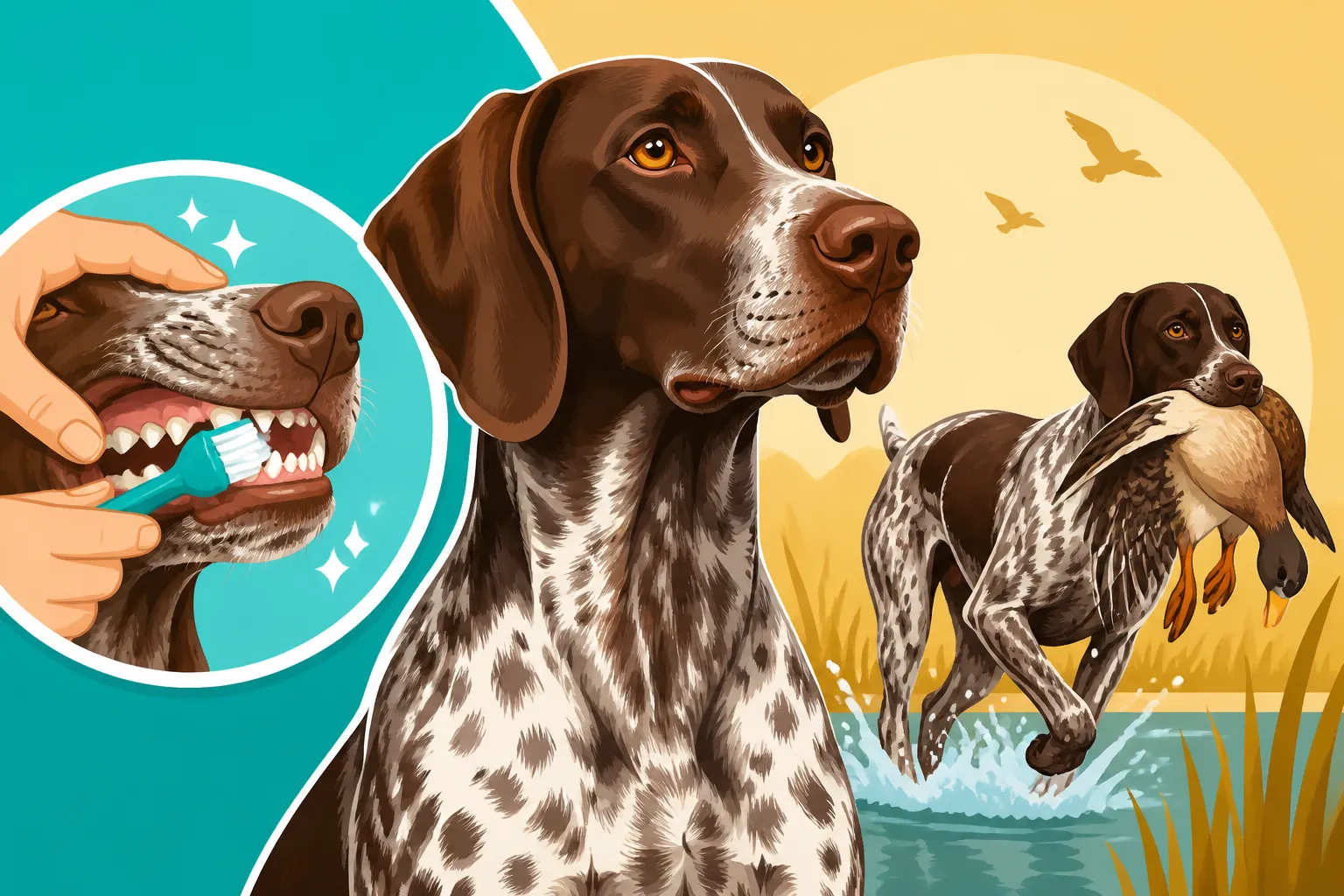
Think about it: your German Shorthaired Pointer retrieves all sorts of things, from training dummies to doves, pheasants, and ducks. Each retrieve, particularly with wild game, can introduce bacteria, feathers, small twigs, and grit into their mouth. Over time, these foreign materials can contribute to plaque buildup, cause minor abrasions to gums, or even lead to tiny nicks on tooth surfaces. If these small injuries aren't addressed, they can become entry points for infection or exacerbate existing dental issues.
Beyond the foreign objects, the sheer act of gripping and carrying birds exerts pressure on their teeth and gums. While their jaws are powerful, repeated clenching can lead to subtle wear and tear. Over a long season, or multiple seasons, this constant action can contribute to enamel erosion or weaken teeth that already have underlying issues. You might not see it immediately, but without regular care, these cumulative effects build up, making your dog more susceptible to significant dental problems.
Beyond Bad Breath: Systemic Health Risks
Many owners notice bad breath and assume it's just "dog breath," or maybe they link it to their dog eating something unsavory in the field. But persistent bad breath, often a sign of periodontal disease, is actually a red flag indicating a deeper problem. The bacteria that thrive in an unhealthy mouth don't just stay there. They can enter the bloodstream through inflamed or bleeding gums and travel to major organs, posing a serious threat to your Shorthair's overall health.
Think about the long-term implications for a working dog. Chronic dental infection can contribute to issues with the heart, kidneys, and liver. For an active German Shorthaired Pointer, maintaining peak physical condition is paramount. An underlying systemic infection, even a low-grade one stemming from dental disease, can slowly erode their stamina, make them feel generally unwell, and ultimately shorten their active years. It’s not just about comfort; it's about their longevity and quality of life. This is why addressing issues like Dental Disease in a Middle Aged German Shorthaired Pointer is so critical.
Your Daily Routine: Brushing Techniques and Tools
Establishing a consistent dental care routine for your German Shorthaired Pointer might seem daunting at first, especially if you’ve never done it before. Many owners get discouraged quickly, assuming their dog will hate it. However, with patience, positive reinforcement, and the right approach, daily tooth care can become a regular, stress-free part of your dog’s day, much like mealtime or a walk. The key is to start slow and make it a pleasant experience for both of you.
Getting Started: Desensitization and Positive Reinforcement
The first step is to desensitize your Shorthair to having their mouth handled. Don't just dive in with a toothbrush. Start by gently touching their muzzle, then gradually lifting their lips. Do this for a few seconds, praise them profusely, and give a high-value treat. Repeat this several times a day for a few days. Once they’re comfortable with that, introduce a finger wrapped in gauze, gently rubbing it along their gums and teeth. Again, keep it short, positive, and reward heavily. This teaches them that mouth handling equals good things.
Next, introduce a pea-sized amount of dog-specific enzymatic toothpaste – never human toothpaste, as it can contain xylitol, which is toxic to dogs. Let them lick it off your finger. The taste should be appealing, making them associate the paste with a treat. Once they happily accept the paste, you can begin to introduce the brush. Remember, this isn't a race. Some dogs might take days, others weeks, to become fully comfortable. The goal is to build a positive association, not to force the issue and create an aversion. Consistent, calm repetition is your best friend here.
The Right Tools for a Shorthair's Mouth
Choosing the right toothbrush and toothpaste is crucial. For toothbrushes, you have a few options. A finger brush, which fits over your fingertip, can be great for beginners as it gives you more control and tactile feedback. As your Shorthair becomes more accustomed, you might move to a long-handled brush specifically designed for dogs, often with angled heads to reach back molars. Some owners even use electric toothbrushes designed for pets, which can be very effective but require a higher level of desensitization. You can find a great selection of these tools on online pet supply retailers like Chewy or Amazon.
When it comes to toothpaste, always opt for an enzymatic dog toothpaste. These don't require rinsing and actively break down plaque and bacteria, even if your brushing technique isn't perfect. They come in appealing flavors like poultry or beef, which helps make the experience more enjoyable for your dog. Avoid any human dental products, as they are not formulated for dogs and can be harmful if swallowed. Using the right tools will not only make the process easier for you but also more effective in cleaning those hard-working teeth.
Beyond the Brush: Supplemental Dental Care Strategies
While daily brushing is the gold standard for maintaining your German Shorthaired Pointer's oral health, it's perfectly understandable that life sometimes gets in the way. Perhaps you're on a multi-day hunting trip, or your dog is having a particularly sensitive day. That's where supplemental dental care strategies come into play. These methods aren't replacements for brushing but excellent additions to your routine, providing extra layers of protection and keeping those teeth and gums in top condition.
Dental Chews and Toys
Dental chews can be a fantastic way to help scrape plaque off teeth, stimulate gums, and satisfy your Shorthair's natural urge to chew. However, not all dental chews are created equal. It's vital to choose products that are specifically designed for dental health and, ideally, carry the Veterinary Oral Health Council (VOHC) seal of acceptance. This seal indicates that the product meets certain standards for plaque and/or tartar reduction. Brands offer a variety of sizes and textures, so you can find one that suits your Shorthair's chewing style without being too hard and risking a fractured tooth – an important consideration, as Whether a Shorthair Cracks Teeth on Bones can be a real concern.
Beyond chews, certain toys are also designed with dental benefits in mind. Rubber toys with nubs or grooves can help massage gums and clean teeth as your dog chews on them. Always supervise your Shorthair with any new chew or toy to ensure they don't ingest large pieces or get it stuck. Remember, these are supplements, not substitutes for actual brushing, but they can definitely help maintain oral hygiene between brushing sessions.
Water Additives and Food Considerations
Dental water additives are another convenient option. These are typically tasteless and odorless solutions that you add to your dog's drinking water, releasing ingredients that help reduce bacteria and plaque formation in the mouth. They work continuously throughout the day as your dog drinks, offering a passive layer of dental protection. It's a simple, hands-off approach that can complement your more active dental care efforts.
When it comes to food, diet plays a role too. Some kibble designs are specifically formulated to help clean teeth as your dog crunches them. These larger, more abrasive kibbles mechanically scrape the tooth surface. If you're considering a fresh food diet, some companies like Ollie offer options that might inherently be less prone to sticking to teeth than some traditional kibbles, though this doesn't replace brushing. Always discuss dietary changes and dental food options with your veterinarian to ensure they meet your German Shorthaired Pointer's specific nutritional needs and support their dental health effectively. Ensuring good nutrition is also key to maintaining their weight and preventing Weight Gain That Points at a Shorthair's Thyroid.
Regular Vet Check-ups and Professional Cleanings
Even with diligent home care, professional veterinary dental care is indispensable. Your veterinarian can identify issues that might be invisible to the untrained eye, such as gum pockets, resorptive lesions, or early signs of periodontal disease. Regular wellness exams should always include an oral health assessment.
At some point, your Shorthair will likely need a professional dental cleaning under anesthesia. This allows your vet to thoroughly examine every tooth, including those below the gumline, where most serious dental disease lurks. They can scale off tartar, polish teeth, and address any extractions or other dental procedures needed. It might seem like a big step, but a professional cleaning can dramatically improve your dog's oral health, prevent pain, and safeguard their overall well-being. Think of it as preventative maintenance that helps avoid more severe problems and costly treatments down the road. Maintaining a consistent The Vet Schedule a Working Shorthair Should Keep ensures these crucial check-ups happen.
Tackling Specific Dental Issues in Hard-Working Shorthairs
Despite our best efforts, German Shorthaired Pointers, especially those actively involved in field work, can encounter specific dental problems. Their active lifestyle and the demands of their job can unfortunately contribute to injuries and accelerated wear. Knowing what to look for and how to respond can make a huge difference in managing these issues and keeping your dog comfortable and healthy.
Trauma from Field Work: Cracked or Broken Teeth
Imagine your Shorthair crashing through dense cover or enthusiastically retrieving a heavy bird. The sheer force and impact can, unfortunately, lead to dental trauma. A cracked tooth might not always be immediately obvious, but it can cause significant pain and become a highway for bacteria straight to the tooth's root. Broken teeth, especially molars, are a common issue for dogs that are hard chewers or engage in vigorous activities. A small chip might just be aesthetic, but a deeper fracture exposing the pulp can lead to infection and abscess.
Signs of a cracked or broken tooth can include sudden reluctance to chew on one side, pawing at the mouth, sensitivity to cold water, or even subtle changes in their retrieve – perhaps they're not holding the bird as firmly. If you suspect a tooth injury, it's crucial to get your Shorthair to the vet quickly. Timely intervention, which might include a root canal or extraction, can prevent pain and widespread infection. For instance, removing a compromised tooth can often involve What a Vet Charges to Close a Shorthair's Field Cut, making prompt attention essential.
Tartar on a German Shorthaired Pointer's Molars
Those powerful back molars are essential for crushing kibble and, of course, for holding onto birds. Unfortunately, their position and rough surfaces also make them prime real estate for tartar buildup. Tartar is essentially hardened plaque, and once it forms, it's much more difficult to remove with just brushing. It creates a rough surface where more bacteria can cling, leading to further plaque accumulation and eventually irritating the gums.
Over time, tartar buildup below the gumline can push the gums away from the teeth, creating pockets where bacteria flourish unchecked. This is the start of periodontal disease. You might notice yellow or brown deposits on the molars, especially along the gumline, as well as red, swollen, or bleeding gums. Regular brushing, especially focusing on those molars, can help prevent significant tartar buildup. However, once significant tartar has formed, a professional dental cleaning under anesthesia is usually required to safely and effectively remove it.
Gingivitis and Periodontal Disease
Gingivitis is the inflammation of the gums, often the first stage of periodontal disease. You'll see red, swollen gums that might bleed easily, especially if you try to brush them. This is typically caused by plaque buildup along the gumline. If caught early, gingivitis is reversible with good oral hygiene, including consistent brushing and possibly a professional cleaning.
However, if left untreated, gingivitis progresses to periodontal disease, which is irreversible and can lead to significant pain, tooth loss, and systemic health problems. Periodontal disease involves the destruction of the structures supporting the teeth, including the bone. Your Shorthair might start dropping food, showing difficulty eating, or exhibit a noticeable change in temperament due to chronic pain. They might also develop Loose Stools in a German Shorthaired Pointer if they are swallowing a lot of bacteria. Recognizing the signs early and implementing a robust dental care routine is the best way to prevent your agile German Shorthaired Pointer from suffering from this widespread and painful condition.
Comparing Dental Care Methods
To help you visualize the different approaches to dental care for your German Shorthaired Pointer, here's a quick comparison of various methods. Remember, the most effective strategy often involves a combination of these, tailored to your individual dog's needs and your lifestyle.
| Method | Description | Benefits | Drawbacks | Frequency |
|---|---|---|---|---|
| Daily Tooth Brushing | Manual cleaning with dog-specific brush and enzymatic toothpaste. | Most effective for plaque removal above the gumline; freshens breath. | Requires daily commitment; some dogs resist initially; can miss sub-gingival areas. | Daily |
| Dental Chews/Toys | Edible chews or chew toys designed to scrape teeth and massage gums. | Satisfies chewing instinct; helps reduce plaque/tartar; often enjoyable. | Not a substitute for brushing; some can be too hard (risk fracture); calorie intake. | Daily to Weekly |
| Water Additives | Liquid added to drinking water to reduce bacteria and plaque. | Easy to administer; continuous action; hands-off approach. | Less effective than brushing; doesn't remove existing tartar; might be refused. | Daily |
| Specialized Diets | Kibble designed with specific texture/size to mechanically clean teeth. | Convenient; helps clean teeth with every meal. | Less effective than brushing; doesn't address severe issues; diet dependent. | With Meals |
| Professional Cleaning | Full dental exam, scaling, and polishing under anesthesia by a vet. | Removes all plaque/tartar (above & below gumline); addresses underlying issues. | Requires anesthesia; cost involved; not a preventative daily measure. | Annually/Bi-annually |
Caring for your German Shorthaired Pointer's teeth might seem like an extra chore in an already busy life, especially with a high-energy hunting companion. But just like regular training, proper nutrition, and yearly vet check-ups, dental care is a cornerstone of their overall health and happiness. For a dog that uses its mouth so extensively in the field, a healthy mouth means a comfortable, effective, and enduring partner. By incorporating daily brushing, using beneficial supplements, and staying on top of professional cleanings, you're not just preventing bad breath; you're investing in years of joyful retrieves and a vibrant life for your beloved Shorthair.
Disclaimer
This article is for general informational purposes only and does not constitute professional advice. Laws, prices and regulations vary by location and change over time. Consult a qualified professional for guidance on your specific situation.