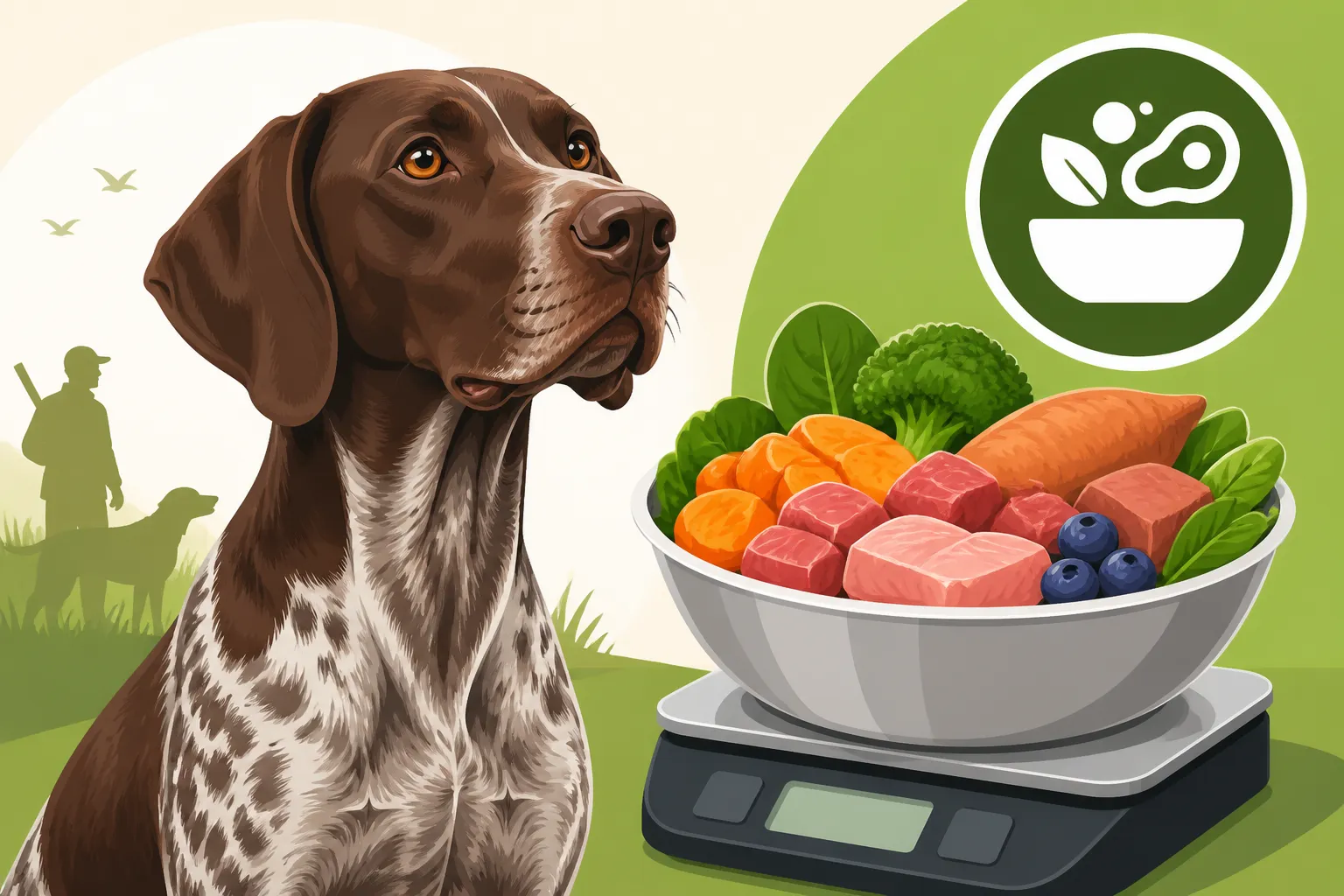
Weighing Out Fresh Food for a Working Shorthair
Getting your German Shorthaired Pointer's nutrition just right, especially when you're preparing fresh food, can feel like you're trying to hit a moving target. These dogs burn an incredible amount of energy, and providing them with precisely what they need, not too much and not too little, is critical for their performance and long-term health. This guide will walk you through the practicalities of accurately weighing out fresh food portions, ensuring your working shorthair is fueled perfectly for every season and every run.
The Imperative of Precise Nutrition for a Working Shorthair
Anyone who shares their life with a German Shorthaired Pointer knows they aren't just pets; they're athletes. Their bodies are finely tuned machines, and just like any high-performance vehicle, they need the right fuel in the right amounts. When we talk about fresh food, whether it's a raw diet or a home-cooked one, precision becomes even more paramount than with commercial kibble.
Why "Eyeballing It" Just Doesn't Cut It
It's tempting, after a long day in the field or a busy morning of training, to just scoop what looks like enough food into your shorthair's bowl. But that habit, however well-intentioned, can lead to serious issues. German Shorthaired Pointers, especially those actively hunting or competing, have very specific caloric and nutrient demands. Underfeeding means they won't have the stamina to perform, leading to early fatigue, poor recovery, and even muscle loss over time. Imagine running a marathon on half a breakfast – that's how your shorthair feels. On the flip side, overfeeding, even by a small amount each day, can lead to unwanted weight gain, which puts undue stress on their joints and organs, shortening their active career and overall lifespan. Keeping a German Shorthaired Pointer Lean and Hard is about more than just aesthetics; it's about health and longevity.
The consistency that comes with weighing food isn't just about total calories. It's about ensuring a balanced intake of protein, fat, carbohydrates, and micronutrients day in and day out. When you're dealing with fresh ingredients, their density can vary wildly. A cup of raw ground beef is vastly different in caloric content and weight from a cup of cooked chicken or a cup of steamed vegetables. Without a scale, you're essentially guessing, and that guesswork can subtly undermine your shorthair's health and performance over weeks and months. We owe it to these tireless companions to be more diligent.
Understanding Your Shorthair's Unique Energy Demands
A German Shorthaired Pointer's energy needs aren't static. They fluctuate based on a multitude of factors, making a "one-size-fits-all" approach to feeding utterly ineffective. Consider a young, exuberant shorthair in the peak of hunting season, covering miles of varied terrain daily, compared to an older, retired companion enjoying leisurely walks in the off-season. Their caloric requirements will be dramatically different.
Beyond the obvious activity level, individual metabolism plays a huge role. Some shorthairs are furnaces, burning through calories at an astonishing rate, while others are more efficient. The weather also impacts energy expenditure; a dog working in cold, snowy conditions will need more fuel to maintain body temperature than one working on a mild fall day. Even stress levels, like those experienced during intense competition, can slightly alter metabolic rate. Understanding these nuances helps you appreciate why precise measurement isn't overkill, but a necessity. The article Calorie Needs of a German Shorthaired Pointer in Season dives deeper into how these needs change.
When you're preparing fresh food, you're often dealing with individual ingredients that have specific nutrient profiles. If you're using a commercial fresh food service, like Ollie, they might provide general guidelines, but those are still averages. To truly customize your dog's diet, you need to measure out the individual components – the meat, the organs, the bone, the vegetables – to meet your specific dog's needs. This exactness ensures they receive everything they require for optimal function, from a glossy coat to boundless energy in the field.
Navigating the Challenges of Fresh Food Portioning
Transitioning from kibble to fresh food is a fantastic step for many German Shorthaired Pointers, but it brings its own set of measurement puzzles. It's not as simple as scooping dry pellets, and understanding these differences is key to getting it right.
The Density Dilemma: Kibble vs. Fresh Ingredients
One of the biggest hurdles when moving to fresh feeding is getting past the idea that a "cup" of food is a universal measurement. With kibble, a cup is relatively consistent in terms of weight and caloric density because the ingredients are processed, dried, and formed into uniform pieces. When you move to fresh food, that consistency vanishes. A cup of raw beef might weigh significantly more than a cup of cooked turkey, and each will have drastically different calorie counts and nutritional compositions.
Fresh ingredients also contain a much higher water content than kibble. This means that a seemingly large volume of fresh food might actually contain fewer calories and less dry matter than a smaller volume of kibble. This can be deceiving. If you measure fresh food by volume (cups) rather than by weight (grams or ounces), you risk either underfeeding your working shorthair, leaving them without enough fuel for their demanding lifestyle, or overfeeding them, leading to unnecessary weight gain and wasted expensive food. The difference in texture and moisture also means that different fresh ingredients pack down differently in a measuring cup, further throwing off any attempt at consistency.
Consistency is Key: Minimizing Waste and Maximizing Health
Beyond just the daily calorie count, consistent portioning of fresh food is vital for your shorthair's long-term health and your budget. Fresh diets, especially those you prepare yourself, involve a balance of various components: muscle meat, organs, bone, and sometimes vegetables or fruits. If you're inconsistent with your measurements, your dog could be getting too much of one nutrient and not enough of another over time. This isn't just about feeling full; it's about providing the building blocks for strong muscles, healthy joints, a robust immune system, and peak cognitive function. An imbalanced diet, even if the ingredients are high quality, can lead to subtle deficiencies or excesses that manifest as health problems down the road.
Moreover, fresh food can be a significant investment, and precise portioning helps you manage that cost effectively. No one wants to waste premium ingredients by overfeeding, nor do you want to run out of food prematurely because you've been too generous with your scoops. When you consistently weigh each component, you gain better control over your inventory and can budget more accurately. It also allows you to make informed adjustments. If you notice your shorthair is looking a bit too lean after a particularly intense week of Roading a German Shorthaired Pointer for Fitness, you can precisely increase their intake, knowing exactly how much extra fuel you're providing.
Your Toolkit for Accurate Fresh Food Measurement
The good news is that achieving precision in your shorthair's fresh food diet doesn't require a laboratory. It just requires the right tool and a bit of a routine. A good digital kitchen scale will be your best friend here, transforming meal prep from a guessing game into a scientific, yet simple, process.
Choosing the Right Digital Scale
Forget those old spring-loaded scales; for accurate fresh food weighing, a digital kitchen scale is non-negotiable. What should you look for? First, precision. You want a scale that measures in small increments, ideally grams, as this provides the most granular control. Many good scales will also offer ounces, which can be useful. Second, capacity. Make sure the scale can handle the weight of your shorthair's entire meal, plus the bowl you're putting it in. A scale that tops out at just a few pounds might not be enough for a large, working German Shorthaired Pointer's daily ration.
Third, a tare function is an absolute must-have. This allows you to place your empty dog bowl on the scale, press the tare button to zero it out, and then add your food, measuring only the food itself. This means no math errors or messy transfers. Fourth, ease of cleaning. You'll be dealing with raw meat and other fresh ingredients, so a scale with a smooth, wipeable surface is much preferred over one with lots of nooks and crannies where bacteria can hide. Stainless steel platforms or easily removable trays are excellent features. You can find excellent, affordable options on sites like Amazon or Chewy that fit these criteria. A scale specifically designed for kitchen use will usually be durable enough for daily dog food duties.
Step-by-Step: Weighing Out a Meal
Once you have your digital scale, the process is straightforward and quickly becomes second nature.
- Gather Your Ingredients and Your Scale: Have all your fresh food components ready – the muscle meat, the organs, the bone (if applicable), and any vegetables or supplements. Place your digital scale on a flat, stable surface.
- Turn On and Tare: Turn on your digital scale. Place your shorthair's clean eating bowl directly onto the scale. Press the "tare" button (sometimes labeled "zero"). The display should now read 0 grams (or ounces). This effectively "removes" the weight of the bowl from your measurement.
- Add the First Ingredient: Begin adding your first ingredient, typically the muscle meat, into the bowl. Watch the display as you add it. Slowly add or remove small amounts until you reach your target weight for that specific component. For instance, if your recipe calls for 400 grams of muscle meat, add it until the scale reads 400g.
- Tare for Subsequent Ingredients: After adding the first ingredient and hitting your target weight, press the "tare" button again. The scale will once more reset to 0, allowing you to add the next ingredient without having to calculate cumulative weights. Repeat this process for each component of your meal (e.g., organs, then bone, then vegetables).
- Record (Optional but Recommended): Especially when you're starting out, or if you're experimenting with slight adjustments, it's a good idea to quickly jot down the exact weights you've used. This helps you replicate meals and track any changes more effectively.
This method ensures that each component of your shorthair's fresh meal is accurately portioned according to their specific dietary plan. It removes the guesswork and provides peace of mind that your dog is receiving a balanced and consistent diet, tailored precisely to their needs as a working companion. You can even weigh out several days' worth of meals, portion them into individual containers, and store them in the fridge or freezer for easy grab-and-go feeding.
Tailoring Fresh Food Portions to a German Shorthaired Pointer's Workload
The beauty of a fresh food diet, especially when you're weighing it out precisely, is the ability to adapt it to your German Shorthaired Pointer's dynamic lifestyle. Their needs aren't static, and neither should their diet be.
Adjusting for High-Intensity Days and Off-Season Lulls
A working German Shorthaired Pointer's caloric demands can fluctuate wildly depending on their activity level. On a high-intensity hunting day, where they might cover 15-20 miles in varied terrain, their energy expenditure will be significantly higher than on a leisurely off-season day spent lounging around the house. This is where your digital scale becomes invaluable. For those long days afield, your shorthair might need a substantial increase in calories, often focused on healthy fats to provide sustained energy. Feeding a German Shorthaired Pointer Around a Hunt provides more insight into this crucial timing and quantity.
Conversely, during the off-season, or on rest days after heavy work, their needs will decrease. Continuing to feed the same high-calorie portion from a hunting day could quickly lead to unwanted weight gain. By weighing their food, you can precisely dial back the quantities, maintaining their ideal body condition. This isn't just about reducing overall volume; it might involve adjusting the ratios of protein to fat to carbohydrates depending on the type of work they are doing and their recovery needs. This granular control is nearly impossible to achieve without accurate weighing.
Monitoring Body Condition and Fine-Tuning Intake
No matter how perfectly you plan their diet, every German Shorthaired Pointer is an individual, and their actual caloric needs can shift. This is why regular monitoring of their body condition is critical. You should be able to easily feel your shorthair's ribs without seeing them prominently, and they should have a discernible waist when viewed from above. Their tummy tuck should also be visible when viewed from the side. The Body Condition a Field Shorthair Should Carry explains these indicators in more detail.
If your shorthair is starting to look a little too lean, especially after a period of intense activity, you can make precise, weighed adjustments to their food intake. Rather than guessing and potentially overcompensating, you can add an extra 50 or 100 grams of their protein source, or a healthy fat, and monitor the results over a few days. Similarly, if they're starting to carry a little extra weight, you can confidently trim a precise amount from their daily ration. This iterative process of weighing, observing, and adjusting, based on real feedback from your dog's body, is the most effective way to ensure their diet is perfectly tailored.
The Role of Supplements in a Fresh Food Diet
While a well-balanced fresh food diet provides many essential nutrients, there might still be specific supplements that complement your working shorthair's needs, particularly for joint health or to ensure complete nutritional balance in a home-prepared diet. When you're feeding a German Shorthaired Pointer that's constantly running and jumping, supporting their joints is paramount. Supplements like glucosamine, chondroitin, and MSM are often considered. Joint Supplements Worth Giving a Working Shorthair delves into this topic.
Even with fresh food, it's wise to consult with a veterinary nutritionist to ensure your home-prepared diet is complete and balanced, as certain vitamins and minerals might be challenging to provide in adequate amounts without specific knowledge. They might recommend a powdered supplement blend to be added to your weighed meals. When adding these, precise measurement (often with a tiny kitchen scale for powders, or dedicated measuring spoons) is just as important as it is for the food itself. Over-supplementation can be just as problematic as under-supplementation. For readily available options, look at trusted pet supply retailers like Chewy for a wide range of reputable brands.
Ensuring your working German Shorthaired Pointer receives optimal nutrition through fresh food doesn't have to be complicated. By investing in a reliable digital kitchen scale and committing to a routine of accurate weighing, you provide your athletic companion with the precise fuel they need. This diligence ensures they maintain peak performance, health, and a long, active life by your side in the field and at home.
Disclaimer
This article is for general informational purposes only and does not constitute professional advice. Laws, prices and regulations vary by location and change over time. Consult a qualified professional for guidance on your specific situation.