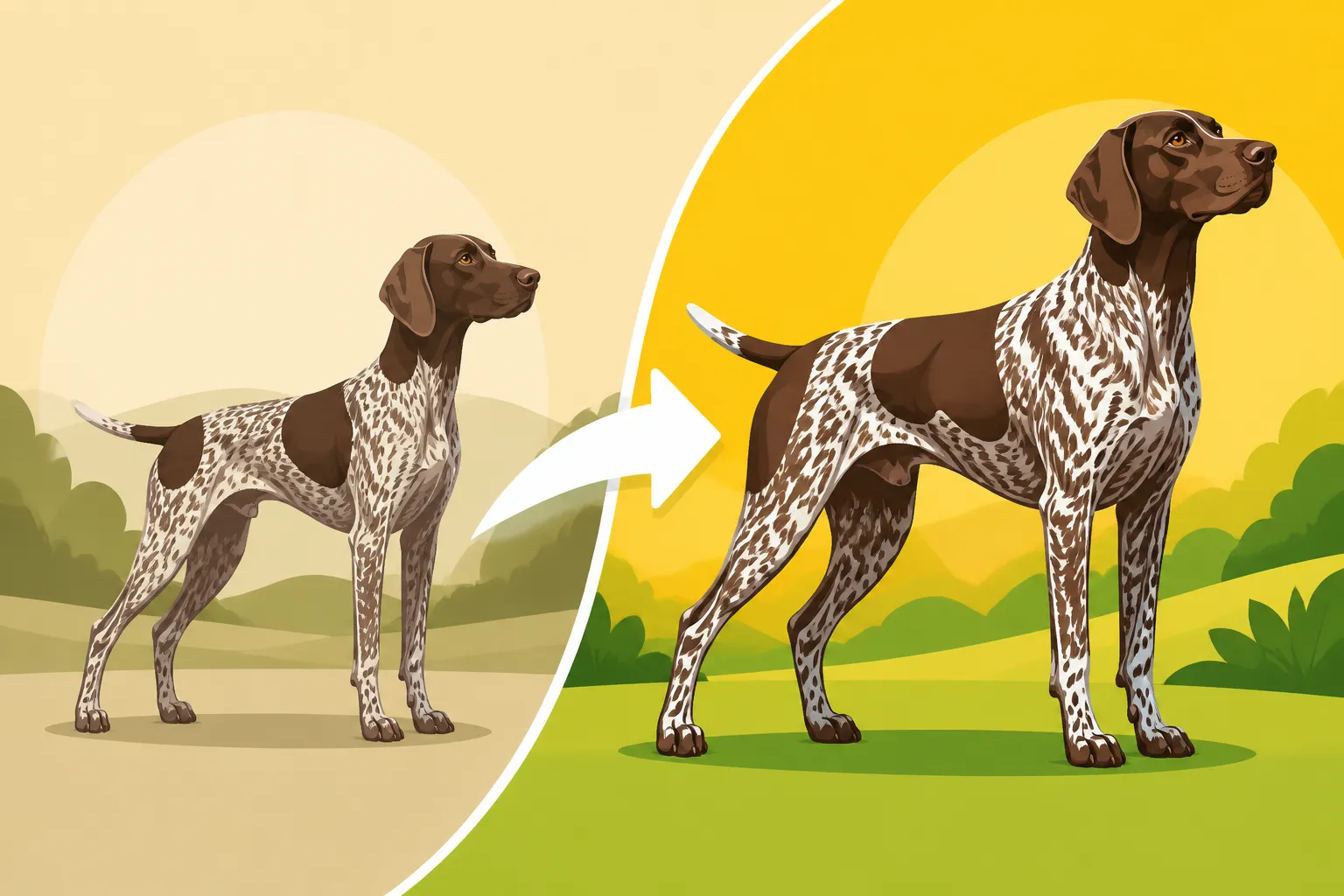
When a Shorthair Finishes Growing and Starts Filling Out
It’s a question every German Shorthaired Pointer owner asks, often with a mix of excitement and exasperation: When will this energizer bunny puppy finally settle into their adult shape and mind? You watch them shoot up, all gangly legs and boundless energy, and it feels like they’re constantly changing. Understanding your GSP's growth timeline, from their initial rapid expansion to the slower, more substantial 'filling out' phase, is key to nurturing a healthy, well-adjusted companion.
The Initial Growth Spurt: Rapid Development in Puppyhood
Watching a German Shorthaired Pointer puppy grow is like watching a time-lapse video in fast forward. One day they're a tiny bundle, the next they're a small horse with boundless enthusiasm. This initial period is characterized by incredibly rapid growth, primarily in height and length, as their skeletal structure develops at an astonishing pace. It's a critical time for their future health and soundness, requiring careful management of diet and exercise.
Early Weeks to Six Months: All Legs and Energy
From the moment you bring that little liver-and-white or solid liver bundle home, usually around 8-10 weeks, the changes are almost daily. In these early weeks, GSP puppies are quite compact, but they quickly start to "stretch out." By three to four months, they often hit an awkward, endearing stage where they seem to be nothing but long legs and oversized paws, with a chest that hasn't quite caught up. They look a bit like a cartoon dog, all out of proportion, tripping over their own feet in their eagerness. Their energy levels are already soaring, and they need appropriate, safe outlets for that drive.
This period is all about foundational development. Their bones are growing rapidly, their joints are forming, and their internal organs are maturing. What you feed them during this time, and how you manage their physical activity, directly impacts their long-term health. Over-exercising a young puppy, especially on hard surfaces, can put undue stress on their developing joints, potentially leading to issues later on. Think short bursts of play, exploring new environments, and gentle walks, rather than long runs or intense training sessions. This is also when you're laying the groundwork for basic manners and socialization, which are just as important as physical growth. For more on ensuring a healthy start, you might want to read The Growth Year of a German Shorthaired Pointer Puppy.
Six Months to Twelve Months: The Adolescent Lanky Phase
As your German Shorthaired Pointer moves past six months, they enter what many owners affectionately call the "teenager" phase. They've gained a good amount of height and length by now, often reaching close to their full adult height, but they still look incredibly lean, even skinny. Their chest might not be fully sprung, and they'll likely still have that somewhat gangly, "all elbows and knees" appearance. It's a bit like a human teenager who's shot up in height but hasn't yet filled out with muscle. This lanky stage can be frustrating for owners who worry their dog isn't getting enough food, but for a GSP, it's a perfectly normal part of their development.
During these months, their energy levels usually remain sky-high, and their curiosity about the world around them is intense. They're testing boundaries, pushing limits, and sometimes seemingly forgetting every bit of training you thought you'd instilled. This is also a critical period for joint health, as their growth plates are still open. While they can handle more sustained exercise than before, it’s still wise to avoid high-impact activities like aggressive jumping or intense, repetitive roadwork until they're closer to full maturity. Many owners at this stage look for quality, high-protein puppy foods to support their demanding metabolism, often browsing options available on Chewy or similar specialized pet food retailers to ensure they get the right balance of nutrients for their rapidly growing GSP.
Reaching Skeletal Maturity: When the Bones Stop Growing
Skeletal maturity is a significant milestone in your German Shorthaired Pointer's development. This is the point when their growth plates, the soft areas at the ends of their long bones, close and harden. Once these plates are closed, the bones can no longer lengthen, and your GSP has officially reached their maximum height. While they might still put on muscle and gain substance after this, their vertical growth is complete.
The General Timeline for Bone Growth
For most German Shorthaired Pointers, skeletal maturity is reached between 12 to 18 months of age. Smaller dogs tend to mature faster, while larger breeds or individual dogs within a breed might take a bit longer. GSPs are a medium-large breed, so they typically fall right in that range. You'll notice that while their height might not change much after a year, they still look like they have a bit of growing left to do. That's because the "filling out" process, which involves muscle development and chest widening, continues for quite some time after the bones have stopped lengthening.
It's difficult to pinpoint the exact week or month your individual dog's growth plates close without veterinary imaging, but generally, by 18 months, most GSPs are skeletally mature. This is often the point when breeders and veterinarians feel comfortable recommending more strenuous, high-impact activities if the dog is destined for demanding work. Until then, the emphasis should be on controlled, moderate exercise to protect those vulnerable joints. This gradual approach helps prevent injuries and sets the stage for a long, active life.
Factors Influencing Skeletal Development
Several factors play a crucial role in how and when a German Shorthaired Pointer reaches skeletal maturity. Genetics, of course, are paramount; a dog's inherited predisposition for size and growth rate is the primary driver. However, diet and exercise are also incredibly important and within the owner's control. Over-feeding a puppy, especially with high-calorie diets that lead to rapid weight gain, can put excessive stress on developing joints and bones, potentially contributing to conditions like hip or elbow dysplasia. This is why paying attention to Calcium Levels in a Shorthair Puppy's Diet is so crucial.
Conversely, under-feeding or providing an unbalanced diet can also hinder proper development. It's a delicate balance. High-quality puppy food specifically formulated for large breeds or all life stages can provide the necessary nutrients without promoting overly rapid growth. Regular, appropriate exercise, as discussed earlier, strengthens muscles that support joints, but too much impact too soon can be detrimental. Furthermore, the timing of spay/neuter can also impact bone growth. Some studies suggest that altering a dog before growth plates have closed might subtly affect their skeletal development, though this is a complex topic with varying opinions among veterinarians and breeders.
The "Filling Out" Phase: Muscle Development and Chest Widening
Even after their bones have reached their full length, German Shorthaired Pointers aren't quite done. The transition from a lanky adolescent to a powerful, robust adult is marked by the "filling out" phase, where they gain muscle mass, their chest deepens, and their overall physique becomes more substantial and defined. This stage often takes longer than many new GSP owners anticipate.
Beyond Twelve Months: Gaining Substance and Definition
While many GSPs reach their full height around 12-14 months, their body condition continues to change significantly over the next year, and sometimes even into their third year. During this time, you'll notice their ribcage expanding, their chest becoming deeper and broader, and their muscles developing more definition. That "skinny teenager" look slowly gives way to the sleek, powerful, athletic build that is characteristic of the breed. They're still lean, mind you, but it's a lean strength rather than a youthful lankiness. This is when they start to look less like a "puppy" and more like the finely tuned athlete they were bred to be.
This filling out is crucial for their performance in the field, as it contributes to their stamina, power, and resilience. A well-muscled GSP can run for hours, quarter fields with grace, and retrieve with strength. It's during this phase that their body truly becomes an engine, ready for the demands of hunting or other high-energy activities. Don't be surprised if your dog's weight slowly increases during this time, even if their height remains static. It's not necessarily fat gain, but muscle and bone density improving. Owners often find themselves adjusting food portions and types to support this continued development, perhaps looking at options from brands like Ollie that offer nutrient-dense, fresh food subscriptions tailored to active dogs.
Nutrition and Exercise for Optimal Muscle Development
To support healthy muscle development and ensure your GSP fills out properly, both nutrition and exercise are paramount. A diet rich in high-quality protein is essential for building and repairing muscle tissue. Look for dog foods that list a named meat source (like chicken, beef, or lamb) as the first ingredient. Balanced fats provide concentrated energy for their active lifestyle, and carbohydrates fuel their endurance. As they transition from a puppy food, consider a performance kibble, especially if your GSP is starting to engage in more strenuous training or actual hunting activities. Ensuring The Body Condition a Field Shorthair Should Carry is vital; you should be able to feel their ribs easily, but not see them sharply defined.
Exercise at this stage can gradually become more intense and sustained. Once skeletal maturity is confirmed (or you're past 18 months), you can introduce longer runs, more challenging hikes, and focused conditioning work like roading or swimming. These activities will help build strong, lean muscle without putting undue strain on immature joints. Incorporating diverse types of exercise also works different muscle groups, contributing to a well-rounded physique. Remember, consistency is key – regular, appropriate exercise is far more beneficial than sporadic, intense bursts. You can find specialized gear like long lines or training dummies on Amazon that can aid in these more advanced training sessions.
Long-Term Maturation: When a Shorthair Truly Becomes an Adult
While skeletal growth and initial filling out happen relatively quickly, a German Shorthaired Pointer's full maturation is a longer process. It encompasses not just their physical peak but also their mental and emotional development, shaping them into the calm, confident, and reliable partners we adore in the field and at home. This final stage often extends well into their second and even third year.
Mental Maturity and Behavioral Changes
For many GSP owners, the mental maturity often feels like it takes longer than the physical. The adolescent "wild child" phase, characterized by boundless energy, short attention spans, and a tendency to test boundaries, can last well past their first birthday. It’s common for GSPs to remain somewhat puppyish in their exuberance and decision-making until they are two, or even three years old. You might find that while they can physically handle complex tasks, their mental focus or impulse control takes longer to fully develop. This is where consistent training, patience, and continued socialization really pay off.
As they mature mentally, you'll notice a shift. They might still be energetic, but their energy becomes more directed and less chaotic. They'll be more attentive during training, less easily distracted, and better able to self-regulate their excitement. A mature GSP understands expectations, responds reliably to commands, and often develops a deeper, more settled bond with their family. They transition from simply reacting to situations to making more thoughtful choices. This doesn't mean they lose their joyful spirit; rather, they learn how to channel it appropriately. This maturation allows them to excel in advanced field work or competitive sports, where a calm mind under pressure is just as important as physical prowess. Sometimes, an older, experienced GSP will even help a young one learn the ropes, like teaching a new dog Building Whoa on a Shorthair With a Check Cord.
Peak Physical Condition and Longevity Considerations
A German Shorthaired Pointer generally reaches its peak physical condition between two and five years of age. This is when they are typically at their strongest, fastest, and most enduring, with fully developed muscle mass, cardiovascular fitness, and coordination. For hunting dogs, this period represents their prime working years, where they can handle the demanding physical rigors of long days in varied terrain. Their bodies are robust, their minds are sharp, and their experience in the field makes them incredibly efficient.
Maintaining this peak condition involves continued dedication to a high-quality diet, appropriate exercise, and regular veterinary care. Just like human athletes, GSPs need consistent training to stay in top form. This includes a balance of aerobic activity, strength building, and flexibility. As they move towards their senior years (typically starting around age seven or eight), you’ll gradually start to adjust their routine to accommodate any natural slowing down or onset of age-related conditions. Understanding The Twelve to Fourteen Years a German Shorthaired Pointer Gets helps you plan for their entire lifespan, ensuring you support them through every stage. Proactive care, including joint supplements and regular check-ups, becomes even more important to extend their comfortable, active years.
Monitoring Growth and Health: What to Watch For
As involved GSP owners, it’s natural to constantly observe our dogs for signs of health and growth. Knowing what's normal and what might be a red flag can make all the difference in catching potential issues early. This vigilant approach ensures that any deviations from healthy development are addressed promptly, giving your dog the best chance at a long, sound life.
Recognizing Healthy Growth Versus Concerns
Healthy growth in a German Shorthaired Pointer is typically characterized by a steady, rather than explosive, increase in height and then a gradual filling out of muscle and chest depth. While they will have lanky phases, they shouldn't appear excessively bony or weak. Their energy levels should generally be high, but they should also be able to settle down for rest. A healthy GSP puppy will have clear eyes, a clean coat, and good appetite and eliminations.
However, there are signs that might indicate a growth or health concern. Excessive lameness, persistent limping, reluctance to play, or unusual stiffness could point to joint issues such as hip or elbow dysplasia, or even The Shifting Lameness in a Six Month Shorthair which can be concerning. Sudden or extreme weight loss, a dull coat, lethargy, or changes in appetite could indicate nutritional deficiencies or underlying health problems. Rapid, uncontrolled growth can also be problematic, putting stress on developing bones and joints. If you notice any significant deviations from what seems normal for your GSP's age and activity level, or if you're constantly worried your dog is too thin despite adequate feeding, it's always best to consult with your veterinarian. They can assess your dog's condition, recommend appropriate diagnostics, and ensure any issues are caught early. This is especially true when it comes to Checking a German Shorthaired Pointer Over After a Hunt.
Regular Vet Checks and Proactive Care
Throughout your German Shorthaired Pointer's growth and maturation, regular veterinary check-ups are indispensable. Your vet can monitor your dog's weight, assess their body condition score, and keep an eye on their skeletal development. During puppyhood, these visits will involve vaccinations and deworming, but they also provide an opportunity for your vet to palpate joints and discuss appropriate exercise levels. They can guide you on nutritional choices and help you understand your individual dog's growth trajectory.
As your GSP matures into adulthood, annual wellness exams become crucial. These appointments allow your vet to perform a thorough physical examination, check for any subtle signs of joint problems or other emerging health issues, and discuss preventative care like parasite control, dental health, and vaccine boosters. Proactive care might also include considering joint supplements as your dog approaches or enters their peak working years, especially if they are highly active or genetically predisposed to certain joint conditions. Early detection and intervention are always the best course of action. Your vet is your most valuable partner in ensuring your German Shorthaired Pointer grows into a robust, healthy, and happy companion. It's truly part of The Vet Schedule a Working Shorthair Should Keep.
Growth Milestones for a German Shorthaired Pointer
To help you visualize the typical progression, here's a general timeline for a German Shorthaired Pointer's growth and development:
| Age Range | Key Developmental Stage | Physical Characteristics | Behavioral Traits | Care Considerations |
|---|---|---|---|---|
| 8 weeks – 4 months | Rapid Puppy Growth | Fast weight gain, lengthening limbs, "chunky" puppy phase | High energy, eager to learn, intense socialization needs | Puppy food, frequent potty breaks, gentle play, early vet visits, basic obedience |
| 4 months – 8 months | Adolescent Growth Spurt | All legs, lanky appearance, reaching most adult height | Increased energy, testing boundaries, some destructive chewing | Continue puppy food, controlled exercise, ongoing training, socialization, prevent over-exertion |
| 8 months – 12 months | Near Full Height, continued lankiness | Close to adult height, still lean, chest not fully developed | "Teenager" phase, sometimes impulsive, strong prey drive developing | High-quality puppy/all life stage food, increased exercise, reinforce recall, protect joints |
| 12 months – 18 months | Skeletal Maturity | Reaches full height, growth plates closing, starting to broaden | More focus, still energetic, prime age for advanced training | Transition to adult/performance food, gradually increase strenuous exercise, monitor joint health |
| 18 months – 3 years | "Filling Out" Phase, Mental Maturation | Chest deepens, muscle definition, gains substance | Calmer, more settled, increased reliability, full mental maturity | Adult/performance food, consistent exercise, advanced training, consider joint supplements |
| 3 years – 7 years | Peak Physical and Mental Prime | Strong, athletic, fully developed body and mind | Confident, reliable, excellent working/companion dog | Maintain high-quality diet and exercise, annual vet checks, preventative care |
This table provides a general guide, but remember that every German Shorthaired Pointer is an individual, and their specific timeline might vary slightly. Enjoy every stage of their journey!
Disclaimer
This article is for general informational purposes only and does not constitute professional advice. Laws, prices and regulations vary by location and change over time. Consult a qualified professional for guidance on your specific situation.