Vests and Coats a German Shorthaired Pointer Actually Needs
For German Shorthaired Pointers, that short, sleek coat is a hallmark of the breed, a testament to their speed and agility in the field. But for owners, especially those living in colder climates or who hunt hard, it presents a real challenge: how do you keep your GSP warm, safe, and free from injury when they don't have a thick undercoat to rely on? This guide is all about cutting through the noise to figure out which vests and coats your German Shorthaired Pointer actually needs to thrive in every season and situation.
Why German Shorthaired Pointers Need Extra Protection
It's easy to look at a GSP and think they're tough as nails, and they are, don't get me wrong. But that incredible athleticism and drive often mask a vulnerability: their coat just isn't built for extreme conditions. Unlike breeds with thick double coats, German Shorthaired Pointers have a single layer of short, dense hair that offers limited insulation and protection.
Understanding the Shorthair's Coat
Let's be real, a German Shorthaired Pointer's coat is a thing of beauty – sleek, shiny, and practically maintenance-free when it comes to shedding. But that's where the beauty ends and the practical challenges begin. They have no insulating undercoat, which means once their outer layer is wet or the air gets truly biting, there's not much stopping the cold from reaching their skin. Think of it like wearing a t-shirt in winter; it looks fine, but it offers minimal protection. This lack of natural insulation is the primary reason why GSPs can get cold faster than many other sporting breeds, especially when they're wet or inactive.
Their short coat also offers little defense against environmental irritants. While it's great for shedding burrs easily, it doesn't do much to stop sharp thorns, abrasive stubble, or even sun exposure from impacting their skin. A quick run through heavy brush can leave a GSP with scrapes and minor cuts that a thicker-coated dog might shrug off.
Field Hazards and Injury Prevention
Hunting with a GSP means they are often diving into dense cover, crashing through icy water, and running across varied, sometimes unforgiving, terrain. These environments, while exhilarating for our dogs, are also rife with potential hazards that their thin coats simply can't guard against. Imagine your dog busting through a thick patch of multiflora rose – those thorns can easily puncture skin that isn't protected, leading to painful wounds or infections. Similarly, a fast retrieve through a beaver swamp can result in a gash from a submerged branch.
Beyond visible injuries, the cumulative effect of these minor abrasions can lead to chronic skin irritation or even infection, particularly if not promptly addressed. Field Injuries a Hunting German Shorthaired Pointer Comes Home With touches on some of these issues. A good vest can act as a crucial barrier, absorbing impacts and deflecting hazards that would otherwise directly affect your dog's skin.
Temperature Regulation Challenges
For a dog bred for relentless activity, efficient temperature regulation is critical. German Shorthaired Pointers are built to move, and that movement generates a lot of body heat. However, once that activity stops, or if they're exposed to cold, wet conditions, their core temperature can drop rapidly. This is particularly true if they've been swimming in chilly water, as the evaporative cooling effect is intense on their short coat.
Symptoms like shivering, hunching, and reluctance to move are clear signs they're struggling to stay warm. Prolonged exposure to cold without adequate protection can lead to hypothermia, a serious and potentially fatal condition. Even on days that feel mild to us, a GSP lying in the truck bed between hunts, or sitting waiting for a bird, can chill quickly. Recognizing The Temperature a German Shorthaired Pointer Should Not Hunt In is vital for their well-being.
Types of Vests and Coats for German Shorthaired Pointers
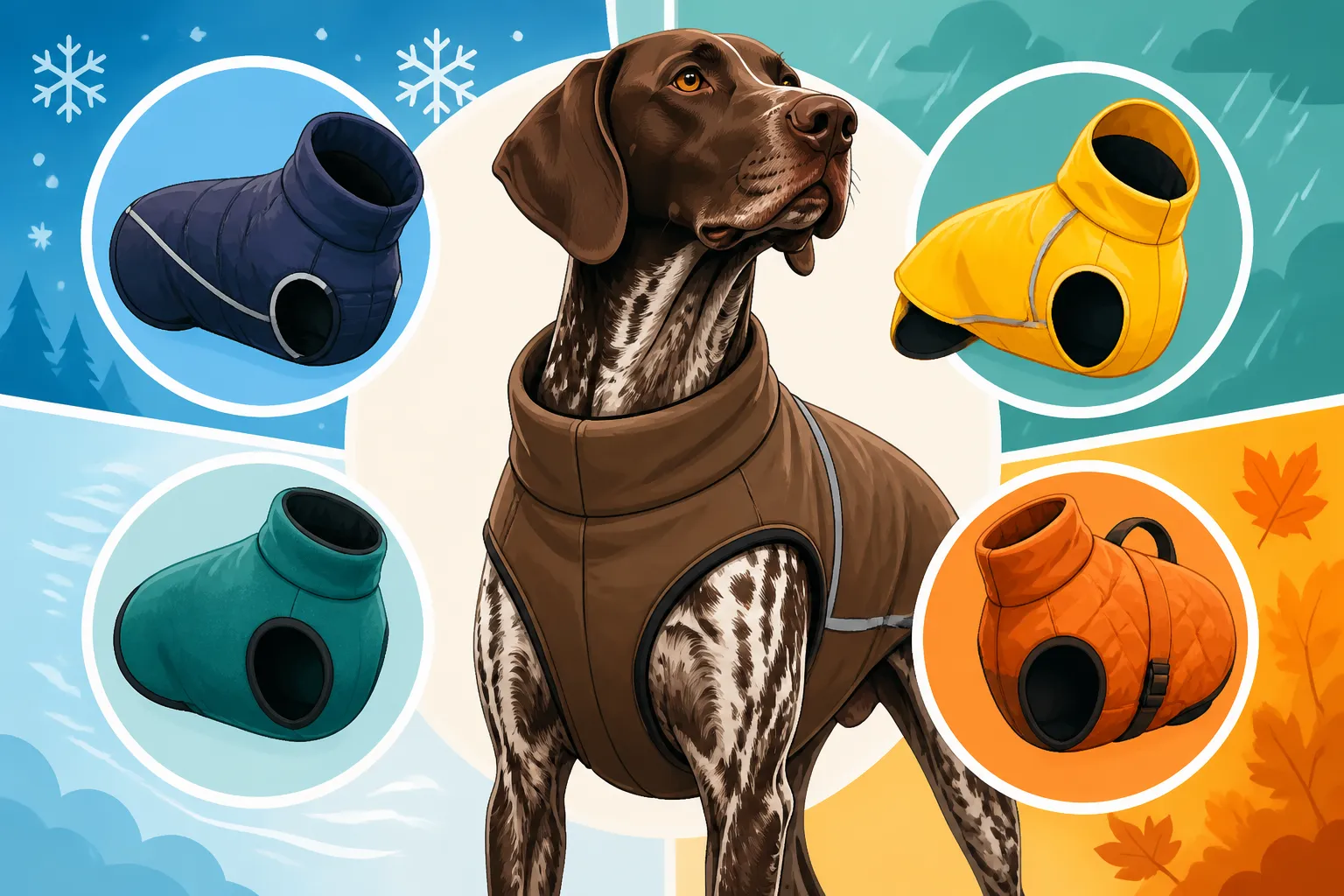
When you start looking, the options can feel overwhelming. It's not just about looking "cute"; it's about providing functional protection tailored to specific needs. Each type of vest or coat serves a distinct purpose, addressing either cold, visibility, impact, or a combination.
Neoprene Vests for Water and Cold
If your German Shorthaired Pointer loves the water, or if you hunt waterfowl, a neoprene vest is practically non-negotiable. Neoprene is the same material used in wetsuits, and it works by trapping a thin layer of water against the dog's body, which is then warmed by their body heat. This creates an insulating barrier that dramatically slows heat loss, especially in cold water. The Water Temperature a Shorthair Should Not Enter without protection is something every owner should know.
These vests are incredibly effective for dogs doing water retrieves in chilly lakes or rivers, or even just swimming in cooler temperatures. Beyond insulation, they offer a layer of impact protection from submerged debris and can help floatation, providing an extra measure of safety in strong currents. Many designs include a sturdy handle on the back, which is incredibly useful for lifting your dog in and out of boats or over obstacles. When looking for one, consider brands that focus on durable stitching and a snug, but not restrictive, fit around the chest and belly. You can find a good selection of these on sites like Amazon.
Blaze Orange Vests for Visibility and Safety
Safety, especially during hunting season, is paramount. Blaze orange vests are designed primarily for high visibility, making your German Shorthaired Pointer easily spotted by you and other hunters, particularly in dense cover or low light conditions. This isn't just about avoiding accidental shootings; it's also about keeping track of a wide-ranging GSP in thick woods or tall grass.
Many blaze orange vests also offer a good degree of protection against brush, thorns, and other abrasive vegetation. They act as a tough outer shell, preventing many of the minor scrapes and punctures that can bother a GSP's sensitive skin. Some models even incorporate reflective strips for enhanced visibility during twilight or nighttime activities. Even if your GSP isn't hunting, a blaze orange vest is a smart choice for walks in areas where hunters might be present, or simply for increasing visibility during walks near roads. They come in various weights, from lightweight mesh for warm days to more robust fabric for heavier cover.
Cooling Vests for Hot Weather
This might sound counterintuitive for a dog that needs protection from cold, but German Shorthaired Pointers can also struggle in the heat, especially when working hard. Their high metabolism and drive mean they generate a lot of internal heat, and their short coat, while not insulating, doesn't always provide sufficient shade. Heat Stroke in a September Shorthair is a real danger. Cooling vests work by using evaporative cooling – you soak the vest in cold water, wring it out, and then put it on your dog. As the water evaporates, it draws heat away from their body, helping to keep them cool.
These vests are invaluable for early season hunts, long training sessions on warm days, or even just walks during hot spells. They target the major blood vessels in the chest and back, which helps to cool the blood circulating through their body. While they won't prevent heat stroke in extreme conditions or with over-exertion, they can provide a crucial aid in managing body temperature and extending safe working times. Always pair a cooling vest with plenty of water and shade.
Rain Gear and Windbreakers
Rain and wind might seem less dramatic than extreme cold or heat, but they can significantly impact a GSP's comfort and health. A cold rain combined with a brisk wind can strip body heat surprisingly quickly from a short-coated dog, making them miserable and prone to chilling. A lightweight rain jacket or windbreaker provides a simple, yet effective, barrier against these elements.
These coats don't necessarily offer significant insulation, but by keeping your dog dry and blocking the wind, they prevent the rapid evaporative cooling and convective heat loss that can lead to discomfort or even hypothermia. They're perfect for rainy walks, waiting in the truck during a shower, or for cooler, blustery days where a full insulated vest isn't necessary. Look for options that are easy to put on and take off, and that allow for full range of motion.
Choosing the Right Fit and Material
Just like our own outdoor gear, a vest or coat is only as good as its fit and the materials it's made from. A poorly fitting garment can chafe, restrict movement, or simply fail to provide the intended protection.
Importance of a Proper Fit
An ill-fitting vest is more than just annoying; it can be detrimental to your German Shorthaired Pointer's performance and comfort. A vest that's too loose can shift and rub, causing chafing, especially under the armpits or around the chest and neck. This is particularly problematic for active dogs, where repeated rubbing can lead to raw spots and infections. On the flip side, a vest that's too tight will restrict movement, hindering their natural gait and potentially causing discomfort or even injury over time. It can also impede circulation, which defeats the purpose of insulation.
When fitting, you should be able to comfortably slide two fingers under any strap or opening. The vest should cover the core of their body without extending so far back that it interferes with their tail, or so far forward that it restricts their neck and shoulder movement. Many quality vests offer adjustable straps, allowing for a customized fit that accommodates their deep chest and lean build. Remember, a GSP is built for speed and agility, so their gear should never compromise that.
Material Matters: Durability, Insulation, Breathability
The material of a vest dictates its primary function and effectiveness. For a dog that busts through cover or dives into icy water, durability is paramount.
- Neoprene: As discussed, this is excellent for insulation in wet conditions. Look for thicker grades (3mm-5mm) for colder water, and ensure the outer layer is resistant to snags and tears.
- Cordura/Nylon Blends: These are common for blaze orange vests due to their extreme durability, resistance to punctures from thorns and brush, and ease of cleaning. They are not highly insulating but excel at protection.
- Waterproof/Breathable Fabrics: For rain jackets, materials like treated nylon or polyester are ideal. They keep water out while allowing some moisture vapor (sweat) to escape, preventing your dog from getting clammy.
- Mesh: Used in cooling vests, often combined with absorbent internal layers, to maximize airflow and evaporation.
The chosen material should align with the specific challenge you're trying to address. A heavy, insulated vest might be great for deep winter, but it's completely inappropriate for an early fall hunt, where breathability and brush protection are more important. Consider the conditions your GSP will face most often and select materials accordingly. Many well-regarded outdoor gear companies for dogs will list their material compositions explicitly.
Features to Look For
Beyond fit and material, several features can enhance the utility and safety of a German Shorthaired Pointer's vest or coat.
- D-rings: A secure D-ring on the back allows you to attach a leash, which is handy if you need to quickly secure your dog without switching to a collar.
- Handles: A sturdy handle on the back of a vest, especially neoprene ones, is invaluable. It allows you to assist your dog over obstacles, pull them into a boat, or quickly control them in a challenging situation. This is a must-have for any serious field work or water retrieves.
- Reflective Strips: For low-light conditions, reflective accents significantly increase your dog's visibility. This is a critical safety feature, whether you're hunting at dawn/dusk or simply walking near roads.
- Adjustability: Multiple points of adjustment (velcro straps, buckles) ensure a snug and comfortable fit that can be adapted as your dog's weight or activity levels change throughout the season.
- Snag Resistance: Given a GSP's active nature, look for smooth, snag-resistant fabrics and minimal external protrusions that could catch on branches or brush.
- Color: While blaze orange is standard for hunting, consider other bright colors like yellow or lime green for general visibility.
When to Use Protective Gear
Knowing what kind of gear to use is only half the battle; knowing when to use it is just as crucial. Over-dressing can be just as problematic as under-dressing, especially for a high-energy breed.
Cold Weather and Water Activities
This is where vests truly shine for German Shorthaired Pointers. If you're heading out for a hunt and the air temperature is dipping below 40-50°F, or if there's a strong wind, consider a lightweight insulated coat. For water work, if the water temperature is below 60°F, a neoprene vest is strongly recommended. Getting a Shorthair's Temperature Down After a Run is important, but preventing it from dropping too low is equally vital.
Think about the duration of exposure. A quick potty break in the snow might not warrant a coat, but an hour-long walk or a day of pheasant hunting will. Remember, a GSP's activity level plays a huge role. If they're actively running and working, their body will generate more heat, but as soon as they stop to point, retrieve, or wait, that heat production drops, and they can chill quickly. During breaks, especially in cold weather, it's wise to put a warm coat on them or even cover them with a blanket in the truck.
Hunting and Field Work
Beyond just cold, hunting and field work present unique challenges that specific gear can address.
- Brush Protection: In fields with heavy briars, thorns, or abrasive stubble, a durable blaze orange vest (like those found on Chewy or at your local sporting goods store) is essential. This protects against cuts, scrapes, and helps prevent burrs from matting in their short coat.
- Visibility: Any time you're hunting, particularly with other people, a blaze orange vest is a non-negotiable safety item. It ensures your dog is seen and helps differentiate them from game.
- Waterfowl Hunts: When retrieving ducks or geese from icy ponds or rivers, a neoprene vest is critical to prevent hypothermia. Some vests even come with features like dog blind loops or pockets for electronics.
- Early Season: Even if temperatures aren't freezing, early season hunts can still be cool, especially at dawn, and full of dense, damp cover. A lightweight, water-resistant vest can add comfort and protection without overheating your dog.
It's also worth thinking about how your GSP interacts with game. A dog that is constantly crashing through heavy cover needs more robust protection than one primarily working open fields.
Everyday Use in Inclement Weather
Vests and coats aren't just for the serious hunter; they can significantly improve a German Shorthaired Pointer's quality of life in everyday situations, too.
- Rainy Walks: A lightweight rain jacket makes walks in the rain much more pleasant and keeps your dog from getting soaked and tracking water all over the house.
- Cold Morning Potty Breaks: For older or less active GSPs, or simply on frosty mornings, a simple fleece or insulated coat can make those quick trips outside much more comfortable. Helping a Stiff Old German Shorthaired Pointer Get Up is easier when they haven't been chilled.
- Long Car Rides: If your GSP travels in a crate in an unheated vehicle, an insulating coat can help maintain their body temperature, especially on long drives to hunting grounds or trials.
- Snow Play: While some GSPs love romping in the snow, prolonged exposure, especially when wet, can lead to chilling. A waterproof, insulated coat can extend their playtime safely.
You'll notice your dog's behavior as a key indicator. If they're shivering, hunching, or reluctant to go outside, it's time for some extra layers.
Maintenance and Care of German Shorthaired Pointer Apparel
Just like your own gear, dog vests and coats need proper care to last. Neglecting them can lead to odors, mildew, and premature wear, meaning you'll be replacing them more often than necessary.
Cleaning and Drying Practices
A dirty, muddy, or bloody vest isn't just unsightly; it can harbor bacteria and become stiff or uncomfortable for your dog.
- Rinse Immediately: After every use, especially after a hunt or swim, rinse the vest thoroughly with clean water. This removes loose dirt, mud, and any chemical residues. For neoprene vests, a good rinse prevents odor buildup from pond water.
- Washing: Most vests can be hand-washed or machine-washed on a gentle cycle with a mild, scent-free detergent. Always check the manufacturer's care label. Avoid harsh chemicals, bleach, or fabric softeners, as these can degrade materials and irritate your dog's skin. Products designed for technical outdoor gear are often a good choice.
- Thorough Drying: This is crucial. Hang vests to air dry completely, ideally in a well-ventilated area, away from direct sunlight or extreme heat (which can damage materials like neoprene). Never put a wet vest directly into storage, as this will lead to mildew and a persistent sour smell that is incredibly difficult to remove.
Storage Tips for Longevity
Proper storage protects your investment and ensures your gear is ready when you need it.
- Clean and Dry: As mentioned, always ensure vests are thoroughly clean and bone-dry before storing.
- Hang or Fold Loosely: Store vests by hanging them on a sturdy hanger or folding them loosely. Avoid cramming them into tight spaces or under heavy objects, as this can compress insulation, create permanent creases, or damage buckles and straps.
- Ventilation: Store in a place with good airflow to prevent any residual moisture from turning into mildew. A gear closet or a corner of the garage works well.
- Pest Protection: If storing for the off-season, consider placing them in a breathable garment bag or container to protect against dust, insects, and rodents.
Inspecting for Wear and Tear
Regular inspection is vital for safety and functionality. A worn vest offers compromised protection.
- Before and After Each Use: Take a moment to visually inspect the vest. Look for:
- Tears or Holes: Even small tears can grow, especially in active use. Repair them promptly with appropriate patches or stitching.
- Loose Stitching: Check seams, especially around D-rings, handles, and adjustable straps. Re-stitch any areas that are coming undone.
- Damaged Buckles/Velcro: Ensure all buckles snap securely and velcro still has good grip. Faulty fasteners mean a vest won't stay on.
- Thinning Fabric: Areas of heavy wear, like the chest or belly, might show thinning fabric, indicating reduced protection.
- Broken Reflective Strips: If reflective material is peeling or cracked, its visibility is compromised.
- Address Issues Promptly: Don't wait for a small problem to become a big one. Many minor issues can be repaired at home, extending the life of the vest. If a vest is significantly compromised, it's time to replace it. A reliable place to source replacements is Amazon or Chewy, where you can often compare several options.
Common Misconceptions and Alternatives
It's easy to get caught up in buying every piece of gear, but sometimes less is more. Understanding the limitations and alternatives can help you make smarter choices for your GSP.
Over-dressing Risks
While protecting your GSP is important, there's such a thing as too much protection, especially when it comes to insulation. German Shorthaired Pointers are high-energy dogs, and when they're actively working, they generate a tremendous amount of body heat. If they're wearing a heavy, insulated coat in conditions that don't warrant it, they can quickly overheat.
- Hyperthermia: Overheating (hyperthermia) is a serious concern. Symptoms include excessive panting, lethargy, bright red gums, and can quickly escalate to heat stroke, which is life-threatening. Heat Exhaustion in an Early Season Shorthair can be exacerbated by over-dressing.
- Chafing and Discomfort: An overly thick or restrictive coat can cause discomfort, limit range of motion, and lead to chafing, especially if your dog is working hard and sweating.
- Reduced Performance: A dog that is too hot will not perform as well in the field. Their energy will be diverted to cooling down, rather than focusing on the hunt.
Always err on the side of slightly less insulation if your dog is highly active, and carry an extra layer you can add during breaks or when activity stops. Observe your dog closely for signs of overheating.
Building Natural Resilience
While gear is important, it's not the only answer. A healthy, well-conditioned German Shorthaired Pointer will naturally be more resilient to environmental challenges.
- Proper Nutrition: Feeding a high-quality, energy-dense diet, especially a performance formula during hunting season, provides the fuel needed to maintain body temperature and support physical exertion. Brands like Ollie often offer nutrient-rich options tailored to active dogs. Whether a Shorthair Needs a High Fat Diet in Season is a common question.
- Physical Conditioning: A dog that is fit, with good muscle mass and appropriate body fat, will handle temperature fluctuations better than an out-of-shape dog. Regular exercise helps build stamina and improves overall thermoregulation. Conditioning a Shorthair Before Opening Day should include acclimation to various temperatures.
- Acclimation: Gradually expose your GSP to cooler temperatures (within safe limits) to allow their body to acclimate. Don't go from a warm house straight to an icy pond without preparation.
- Maintaining Healthy Skin and Coat: A healthy coat, even if short, provides better natural protection. Regular grooming (though minimal for GSPs) and a diet rich in omega fatty acids can support skin and coat health. Fish Oil for a German Shorthaired Pointer's Skin can be beneficial.
These foundational elements contribute significantly to your dog's ability to cope with environmental stressors, reducing their reliance on protective gear in many situations.
DIY Solutions and Budget-Friendly Options
Not every owner needs or can afford top-of-the-line gear, and that's okay! There are plenty of effective, budget-friendly ways to provide protection.
- Old Clothes/Towels: For quick trips outside in the cold, an old fleece pullover (with armholes cut out) or a towel wrapped around their core can offer surprising warmth.
- Homemade Vests: With basic sewing skills, you can craft simple fleece or canvas vests for warmth or brush protection. There are many patterns available online. This allows for custom sizing, which can be great for a GSP's unique build.
- Layering: Sometimes, two thin layers are better than one thick one. A lightweight rain shell over a thin fleece can offer versatility.
- Strategic Use of Blankets: For dogs resting in crates or truck boxes, a warm blanket offers simple, effective insulation. If your GSP is prone to shredding, choose durable, washable kennel blankets. Bedding That Keeps a Shorthair Off Cold Concrete is crucial for comfort and warmth.
The most important thing is to be attentive to your GSP's needs and observe their behavior. With a little thought and observation, you can ensure your German Shorthaired Pointer is comfortable, safe, and ready for adventure, no matter the weather.
Comparing German Shorthaired Pointer Apparel
To help visualize the best uses for different types of vests and coats, here's a quick comparison:
| Type of Apparel | Primary Purpose | Key Benefits | Best For | Considerations |
|---|---|---|---|---|
| Neoprene Vest | Cold water insulation | Warmth, buoyancy, light impact protection, handle | Waterfowl hunting, cold water retrieves, extended swimming in cool temps | Can cause overheating on land, requires snug fit, heavier |
| Blaze Orange Vest | Visibility & Brush Guard | High visibility, thorn/brush protection | Upland hunting, walking in hunting areas, dense cover work | Limited thermal insulation, can be warm in hot weather, may not protect belly |
| Cooling Vest | Heat dissipation | Evaporative cooling, prevents overheating | Early season hunts, hot weather training, walks on warm days, summer travel | Needs to be wet to work, can add weight, not for extreme cold |
| Rain Jacket/Windbreaker | Rain & wind protection | Keeps dry, blocks wind chill, lightweight | Rainy walks, windy days, light drizzle, general inclement weather | No significant insulation, may be noisy, can feel clammy if not breathable |
| Insulated Coat (Fleece/Puffer) | General cold weather warmth | Thermal insulation, comfort, covers more body area | Cold walks, waiting in cold vehicles, older/less active dogs, snowy play | Can be bulky, may restrict movement for active work, can overheat if too warm |
Disclaimer
This article is for general informational purposes only and does not constitute professional advice. Laws, prices and regulations vary by location and change over time. Consult a qualified professional for guidance on your specific situation.