Why German Hunters Bred the Shorthair Instead of Four Dogs
It's a common thought for many modern dog owners, especially those new to the world of versatile hunting breeds: why would German hunters go through the immense effort of creating a new breed like the German Shorthaired Pointer when so many specialized dogs already existed? The frustration often stems from the overwhelming array of dog breeds, each with its own niche. But back in the 19th century, for the practical German hunter, the challenge wasn't a lack of specialized dogs; it was the burden of needing multiple, highly specialized dogs just to cover a typical hunting day. This guide will delve into the historical context and practical reasons behind the breeding of the German Shorthaired Pointer, explaining why one incredible dog proved to be better than four.
The Limitations of Specialized Hunting Breeds
Imagine being a hunter in 19th-century Germany. The landscapes were diverse, from dense forests to open fields, marshy wetlands, and mountainous terrain. The game was equally varied, ranging from upland birds like partridge and pheasant, to waterfowl, rabbits, foxes, and even deer, often requiring tracking of wounded animals. A single day's hunt might involve seeking out birds in a stubble field in the morning, moving to retrieve ducks from a pond in the afternoon, and then tracking a wounded wild boar deep into the woods before dusk.
The Fragmented Approach to Hunting
Before the advent of truly versatile breeds, a hunter needing to cover all these bases would theoretically need a small kennel of highly specialized dogs. You'd have your pointers, magnificent in their ability to lock up on upland game, holding staunchly until the flush. Then you'd need a separate retriever, perhaps a spaniel or an early retriever breed, specifically trained to fetch downed birds from land and water. For tracking larger game, a dedicated scent hound with a cold nose and persistent drive was essential. And if small furred game or vermin control was part of the daily routine, a terrier might be on hand.
This wasn't just hypothetical; it was the reality for many. Each of these dogs was bred over centuries to excel at one thing, and they did that one thing beautifully. But they often lacked proficiency in other areas. A pointer, for all its bird sense, might be a poor retriever, delivering a bird with a hard mouth or simply refusing water. A retriever, while excellent at bringing back game, wouldn't naturally point. And a scent hound, while a master tracker, had little interest in birds.
The Practical Hurdles of a Multi-Dog Kennel
Owning, training, and maintaining multiple specialized dogs presented enormous practical hurdles for the average hunter, who often wasn't a wealthy nobleman with vast kennels and a retinue of dog handlers. First, there was the sheer cost. Feeding, housing, and providing veterinary care for three or four working dogs quickly added up. Imagine the monthly food bill just for kibble, even if you found a great deal on a performance formula from Chewy. Then there's the initial investment in purchasing dogs from reputable lines, not to mention the ongoing expense of vaccines, health checks, and unexpected emergencies like Field Injuries a Hunting German Shorthaired Pointer Comes Home With.
Beyond the financial aspect, the time commitment was immense. Each dog required specific training tailored to its role. You couldn't simply train a pointer to retrieve waterfowl overnight; it went against generations of selective breeding. Coordinating training schedules, keeping each dog sharp in its respective skill, and ensuring they remained biddable when working alongside other breeds was a full-time job. For a hunter who might have other responsibilities, this fragmented approach was simply unsustainable and incredibly inefficient.
The Vision of the "Gebrauchshund": A Truly Versatile Dog
Faced with these challenges, German hunters, breeders, and sportsmen began to articulate a clear vision: a single dog that could perform all the necessary tasks, a true "Gebrauchshund" or utility dog. They didn't want a jack-of-all-trades and master of none; they wanted a master of all the trades relevant to their diverse hunting needs.
Defining the Ideal Multi-Purpose Hunter
The ideal versatile hunting dog had to possess a very specific set of attributes. It needed:
- A superb nose: To find and point upland birds, track wounded game, and follow subtle scent trails.
- A strong, natural point: To hold birds staunchly, allowing the hunter to get into position.
- A soft mouth and willingness to retrieve: To bring back downed birds, both on land and from water, without damaging the game. This was crucial for saving birds that might otherwise be lost.
- Water enthusiasm and proficiency: German game often involved waterfowling in marshes and rivers, so a dog that could brave cold water and dense cover was essential.
- Tracking prowess: To follow a blood trail of a wounded deer or boar, even hours later, to ensure no game was wasted.
- Biddability and intelligence: The dog needed to be trainable, willing to work cooperatively with its handler, and able to adapt to different situations.
- Stamina and endurance: To cover vast amounts of ground over long hunting days, through varied terrain, without tiring prematurely.
- Protective instincts: While primarily a hunting dog, it was also expected to be a loyal companion and protector of its handler and home, sometimes even defending against small predators.
- A suitable coat: Durable enough to withstand harsh weather and cover, yet easy to maintain.
This was a tall order, but the ambition was clear: one dog to replace four. It wasn't about replacing every single specialist, but covering the most common and essential tasks a hunter faced in a typical week or season. This concept of What Versatile Actually Means for a Shorthair became the guiding principle for a new breed.
The Drive for Efficiency and Sustainability
The pursuit of the versatile hunting dog was also rooted in a desire for greater efficiency and sustainability in hunting practices. Losing wounded game was not only ethically undesirable but also wasteful. A dog that could reliably track a wounded animal significantly reduced this loss. A dog that could retrieve from heavy cover or cold water meant fewer lost birds.
Moreover, the versatility meant a stronger bond between dog and handler. Instead of managing a team of dogs, the hunter could develop a deep working relationship with a single, highly capable partner. This single dog could live as a family companion during the off-season, transitioning seamlessly to a dedicated hunter when the season arrived. This integrated lifestyle was far more appealing and practical than maintaining separate working kennels.
Crafting the German Shorthaired Pointer: A Masterpiece of Breeding
With the clear vision of the "Gebrauchshund" in mind, German breeders embarked on a deliberate and thoughtful breeding program. This wasn't a haphazard mixing of breeds, but a highly selective process, carefully documented and managed.
The Ancestral Building Blocks
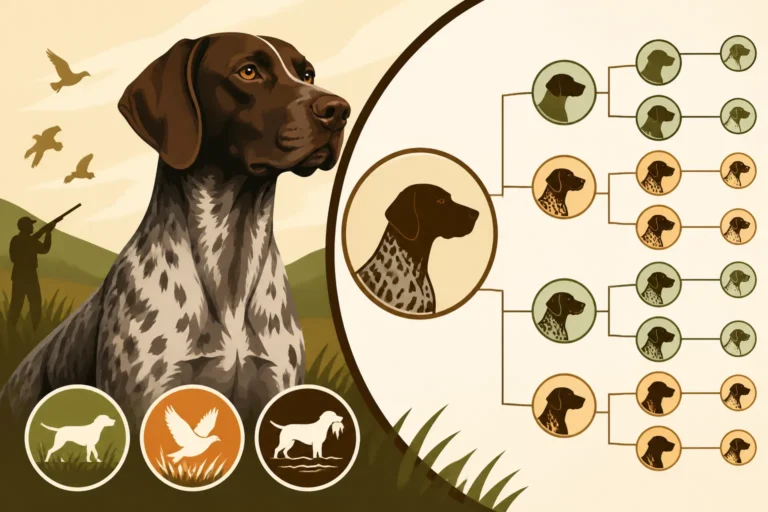
The foundation of the German Shorthaired Pointer (GSP) began with the Old Spanish Pointer, also known as the "Perro de Punta," which was brought to Germany and crossed with local German scent hounds and other indigenous hunting dogs. These early crosses provided the strong pointing instinct and scenting ability. However, these dogs were often slower and heavier than desired for covering large fields efficiently.
To inject more speed, refinement, and a higher, more energetic hunt, English Pointers were introduced into the lines. This infusion was critical for developing the GSP's characteristic powerful, ground-covering trot and their tireless drive. The process wasn't simple; it required meticulous selection, breeding individuals that demonstrated the desired blend of traits, and culling those that strayed too far from the versatile ideal. The goal was to maintain the keen nose and biddability of the German lines while gaining the athletic prowess of the English pointers. You can learn more about the early days in The German Kennels the Shorthair Was Built In.
Selective Breeding for All-Around Excellence
The German approach to breeding was rigorous, emphasizing utility and temperament above all else. Unlike some other countries where breeds might be developed with a primary focus on appearance or a single hunting trait, the GSP was intentionally bred for comprehensive performance. This meant evaluating dogs not just on how well they pointed, but also how consistently they retrieved, their courage in tracking, their willingness to enter cold water, and their overall trainability.
Breeders established strict criteria, often including field tests that assessed a dog's natural abilities and trained skills across multiple disciplines. This systematic evaluation ensured that only dogs demonstrating true versatility were allowed to reproduce, reinforcing the desired traits with each generation. This disciplined process resulted in a dog that was physically robust, mentally sharp, and inherently capable of performing a wide range of tasks. For example, a dog might be tested on its pointing ability, then immediately on its retrieve of a bird from a pond, followed by a blood-tracking exercise.
The Versatile Attributes of the German Shorthaired Pointer
The success of the German Shorthaired Pointer lies in its exceptional combination of physical and mental attributes, truly making it a one-dog solution for a diverse hunting landscape.
Seamless Transition Between Roles
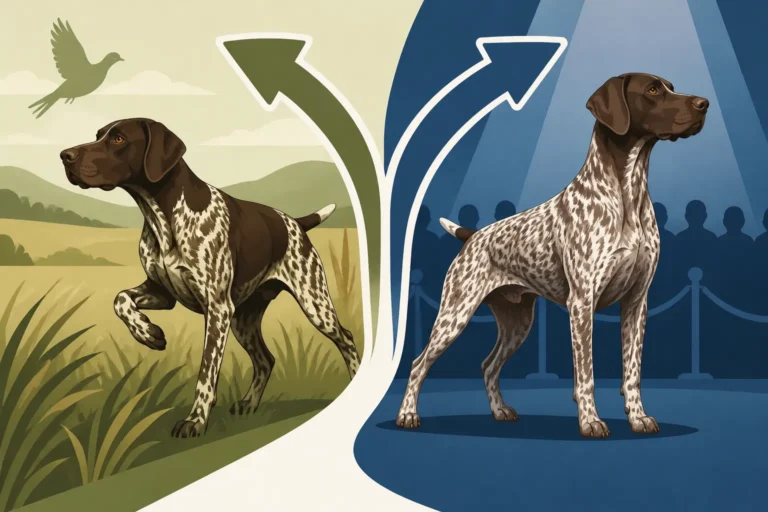
What sets the GSP apart is its ability to switch effortlessly between different hunting roles within a single outing. Consider a typical hunting day:
- Upland Game: The GSP will range out, covering ground with an energetic, methodical quartering pattern, nose to the wind. When it hits scent, it will lock up into a statuesque point, holding steadily, sometimes for minutes, until the hunter approaches and flushes the bird.
- Retrieving: After the shot, the same dog will instantly transition into a retriever, marking the fall, and swiftly bringing the bird back with a gentle, "soft" mouth, delivering it reliably to hand. This includes navigating dense cover or thorny bushes.
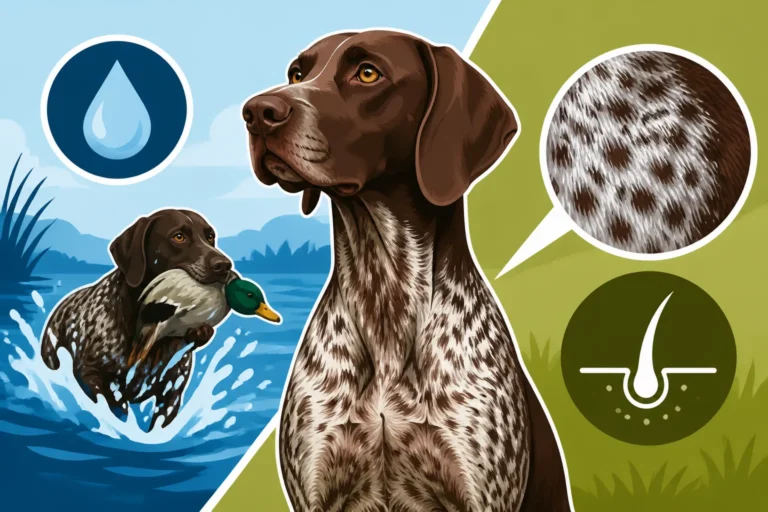
- Waterfowl: Without hesitation, the GSP will plunge into icy water to retrieve a duck or goose, thanks to its dense, water-resistant coat and strong swimming ability. The drive to retrieve is just as strong in water as on land. The Water Resistant Coat a Shorthair Carries is a testament to this design.
- Tracking: If a bird is wounded and runs, or a deer is hit, the GSP's exceptional nose and innate tracking instinct come into play. It will put its head down and follow the faint blood trail or disturbed scent, patiently working through obstacles until the game is found.
This seamless integration of skills is precisely why German hunters bred the Shorthair instead of needing one dog for pointing, another for land retrieving, another for water retrieving, and a fourth for tracking. Pointing, Retrieving and Tracking in One Shorthair became the standard, embodied by this single breed.
Physical and Mental Resilience for the Field
The German Shorthaired Pointer's build is a testament to its versatile purpose. They are lean, muscular, and athletic, designed for endurance and speed. Their deep chest provides ample lung capacity for sustained running, and their powerful legs propel them through varied terrain. Despite their working drive, they are known for their intelligence and biddability, making them highly trainable partners. They thrive on having a job to do and excel when their mental and physical needs are met.
This inherent drive, coupled with their intelligence, makes them adaptable not only to different hunting scenarios but also to different environments. A well-exercised GSP, for instance, can be a calm and loving family member indoors, but once the vest is on and the gun is out, they transform into an unstoppable hunting machine. Their desire to please their owner is a powerful motivator, making them eager learners in any discipline.
The German Shorthaired Pointer in the Modern Home
While originally bred for the demanding world of hunting, the qualities that made the German Shorthaired Pointer a supreme versatile gun dog have also made them incredibly popular companions in non-hunting homes today. Their biddability, intelligence, and affectionate nature mean they bond deeply with their families.
More Than Just a Hunting Machine
For many families, especially those who lead active lifestyles, the GSP's need for The Two Hours a Day a German Shorthaired Pointer Needs of exercise and mental stimulation aligns perfectly. They are enthusiastic partners for running, hiking, biking, and even dog sports like agility or dock diving. The same stamina that carries them through a long hunt makes them fantastic jogging partners.
Their protective instincts, originally useful for deterring predators from game, translate into a watchful eye over their family. They are known for being devoted, sometimes even "Velcro" dogs, wanting to be close to their people. This strong bond, combined with their trainability, makes them excellent family dogs, capable of being calm and respectful members of the household, provided their considerable energy needs are met. Many GSP owners often buy durable chew toys and stimulating puzzle feeders from Chewy to keep their dogs engaged when they aren't exercising outdoors.
Understanding Their Energy and Needs
It's crucial for prospective owners to understand that the GSP's versatility in the field translates to a high demand for activity in a domestic setting. An under-exercised German Shorthaired Pointer can quickly become a destructive, bored, and anxious dog, displaying behaviors like excessive chewing, barking, or digging. This isn't out of malice, but pure frustration at their unfulfilled natural drives.
However, with consistent exercise, training, and mental engagement, the German Shorthaired Pointer truly embodies the best of both worlds: a formidable hunting partner and a loving, devoted family member. They are often good with children, though their boisterous energy means early training and supervision are key to prevent accidental bumps and tumbles. Finding interactive toys and durable accessories on Chewy can go a long way in managing their boundless energy and intelligence, even if they aren't actively hunting. The Age a German Shorthaired Pointer Finally Settles is often later than other breeds, reflecting their sustained energy.
The Enduring Legacy of the Versatile Hunter
The success of the German Shorthaired Pointer in fulfilling the "Gebrauchshund" ideal is undeniable. This breed stands as a testament to thoughtful, purpose-driven breeding, solving a very real problem for hunters who sought efficiency, sustainability, and a deeper bond with a single, highly capable canine partner.
A Breed That Changed Hunting Practices
The development of the GSP fundamentally changed how many Germans hunted. It reduced the need for multiple dogs, making hunting more accessible and practical for a wider range of people. It also fostered a closer relationship between hunter and dog, as one dog became proficient in all stages of the hunt. This efficiency extended to the care of the dogs as well, simplifying logistics for feeding, training, and veterinary care.
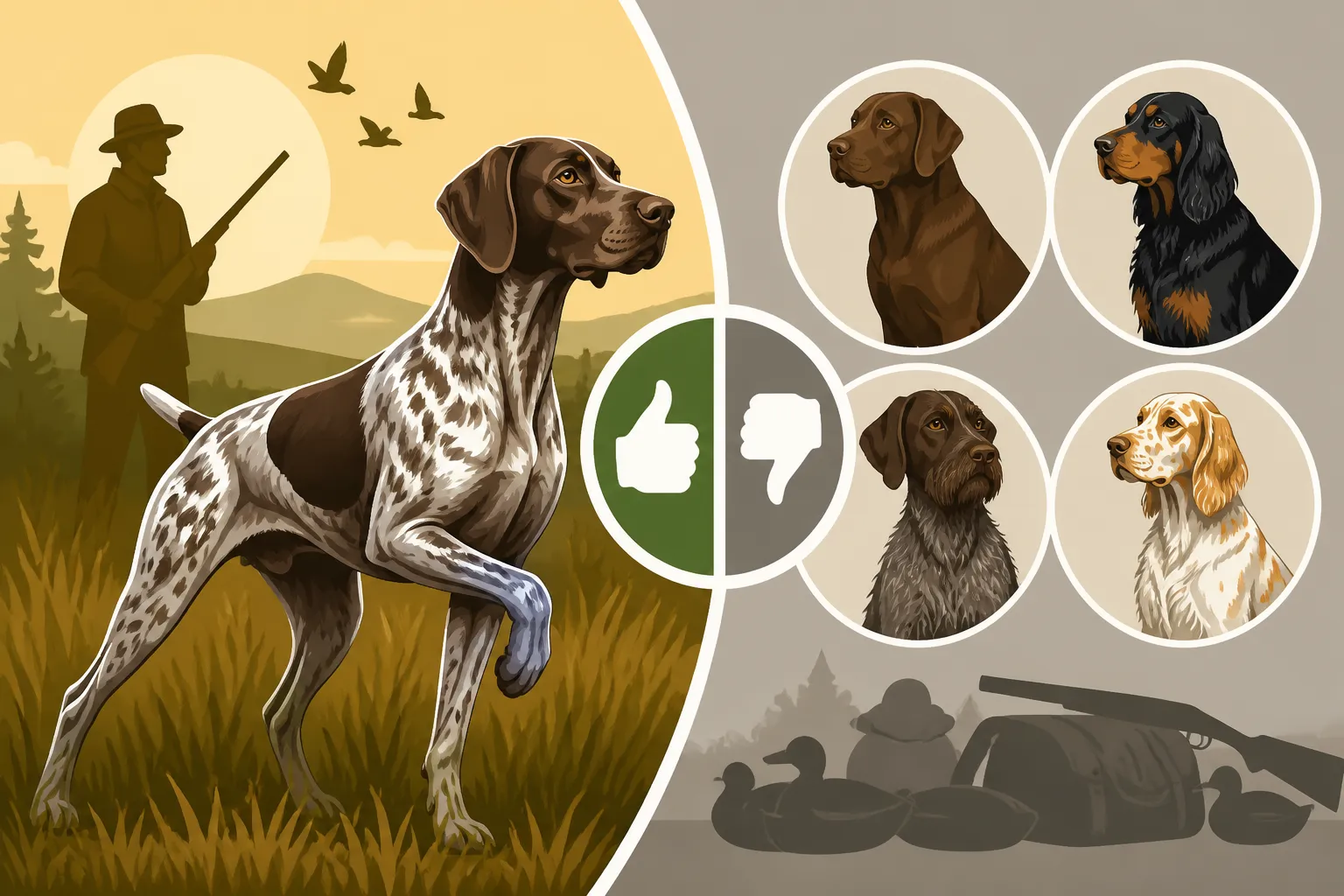
The impact of the GSP's versatility is perhaps best illustrated by simply comparing the requirements of specialist dogs versus the singular capabilities of the German Shorthaired Pointer:
| Trait / Role | English Pointer (Specialist) | Labrador Retriever (Specialist) | Bloodhound (Specialist) | German Shorthaired Pointer (Versatile) |
|---|---|---|---|---|
| Primary Focus | Upland Bird Pointing | Retrieving (Land & Water) | Scent Tracking | All-Around Hunting Companion |
| Pointing Instinct | Excellent | Low | Low | Excellent |
| Retrieving (Land) | Moderate | Excellent | Low | Excellent |
| Retrieving (Water) | Poor to Fair | Excellent | Low | Excellent (with enthusiasm) |
| Tracking (Blood) | Low | Fair | Excellent | Excellent |
| Stamina for Long Days | High | High | Moderate | Very High |
| Biddability/Trainability | Good | Excellent | Moderate | Excellent |
| Coat Adaptability | Short (less cold tolerant) | Dense, water-repellent | Short (less cold tolerant) | Short, dense, water-resistant |
| Overall Hunting Versatility | Low (single-purpose) | Low (retrieve-focused) | Low (tracking-focused) | Extremely High |
This table clearly demonstrates why German hunters pursued the GSP. They needed a dog that could consistently perform across all these vital categories, day in and day out, across varied conditions.
The Enduring Popularity
Today, the German Shorthaired Pointer remains one of the most popular versatile hunting breeds globally, cherished by hunters and active families alike. Their intelligence, energetic nature, and unwavering loyalty ensure they continue to be a beloved and integral part of many households. Whether they're pointing pheasants in a prairie, retrieving ducks from an icy pond, or simply being a devoted shadow around the house, the GSP lives up to its heritage as the ultimate "Gebrauchshund"—the single dog that does it all. And with a potential lifespan of The Twelve to Fourteen Years a German Shorthaired Pointer Gets, they offer many years of dedicated partnership and companionship.
Disclaimer
This article is for general informational purposes only and does not constitute professional advice. Laws, prices and regulations vary by location and change over time. Consult a qualified professional for guidance on your specific situation.