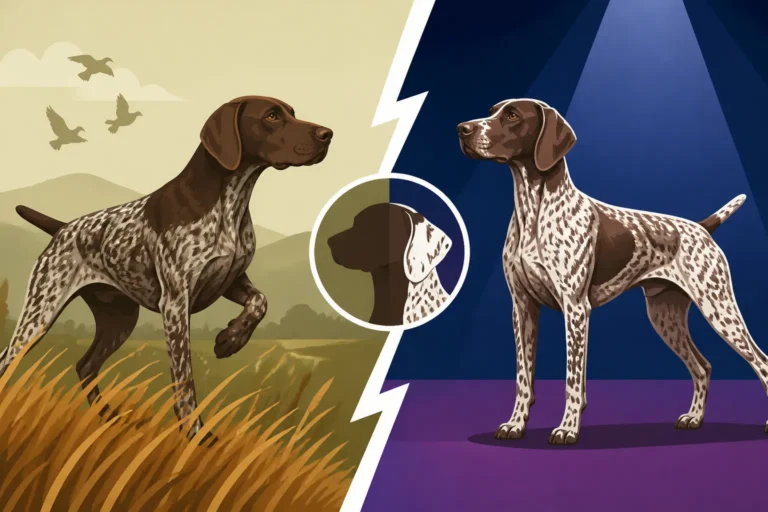
Whether the Deutsch Kurzhaar and the Shorthair Are One Breed
It's a question that can really stump prospective German Shorthaired Pointer owners and even seasoned enthusiasts: are the Deutsch Kurzhaar and the German Shorthaired Pointer the same breed? You see the terms used interchangeably, yet sometimes you hear whispers of subtle differences. This guide is here to untangle that knot, exploring their shared heritage and the distinct paths their development has taken, so you can understand exactly what you're looking at when you consider bringing one of these incredible dogs into your life.
The Shared Roots of a Versatile Hunter
To understand the relationship between the Deutsch Kurzhaar (DK) and the German Shorthaired Pointer (GSP), we have to go back to their very beginnings. They aren't just similar; they truly emerged from the same foundational stock in 19th-century Germany. Imagine a time when hunters weren't just looking for a specialist—a dog that pointed or retrieved or tracked—but a single, highly capable canine partner that could do it all. This ambition gave birth to the breed we now know.
The Vision for a "Universal" Gun Dog
The driving force behind the German Shorthaired Pointer's creation was the desire for a truly versatile hunting dog. German hunters needed a partner that could hunt all manner of game, in various terrains and weather conditions. This meant a dog that could point upland birds, track wounded game through dense cover, and retrieve fallen ducks from icy water. They weren't satisfied with dogs that excelled at just one task; they wanted a "universal" gun dog, a single companion that could handle everything their hunting day might throw at them. This concept of versatility, or "Vielseitigkeit," is deeply ingrained in the breed's DNA and continues to define the Deutsch Kurzhaar today.
Prince Albrecht and the Early Stud Books
A significant figure in the early development was Prince Albrecht zu Solms-Braunfels, who played a pivotal role in standardizing the breed and emphasizing performance. He championed a rigorous breeding program that focused on functionality and utility in the field above all else. His efforts led to the creation of the first breed standards and stud books, which meticulously recorded the lineage and working abilities of these early pointers. The goal was to consolidate the best traits from various German bird dogs, along with influences from Spanish Pointers and other breeds, into one cohesive, high-performing type. This historical commitment to performance is why a German Shorthaired Pointer often still exhibits such strong natural hunting instincts, even if raised primarily as a family pet. The German Kennels the Shorthair Was Built In are part of this rich history.
The Fork in the Road: Breeding Philosophy and Standards
While the Deutsch Kurzhaar and the German Shorthaired Pointer share common ancestry, their paths diverged due to different breeding philosophies and regulatory environments, primarily between Germany and North America. This divergence isn't about two entirely different breeds; it's about two different systems of breeding and registration applied to what is essentially the same genetic pool.
German Breeding: Rigor and "Vielseitigkeit" Above All
In Germany, the breed is known as the Deutsch Kurzhaar, and its development is overseen by organizations like the JGHV (Jagdgebrauchshundverband) and the Deutsch Kurzhaar Verband. The philosophy here is incredibly strict, centered around maintaining and proving the breed's inherent versatility and working ability. To be eligible for breeding in Germany, a Deutsch Kurzhaar must pass a series of demanding performance tests that evaluate natural ability, obedience, tracking, pointing, retrieving (on land and water), and temperament. This isn't just a suggestion; it's a mandatory requirement.
For instance, a dog must often pass a Natural Ability Test (VJP) as a young dog, and later a more advanced Utility Test (HZP or VGP) as an adult. These tests are comprehensive, mimicking real-world hunting scenarios. Breeders are heavily regulated, and dogs must also undergo extensive health clearances, often including temperament evaluations, before they can contribute to the gene pool. This ensures that only the most physically sound, mentally stable, and functionally capable dogs are bred, reinforcing the breed's working heritage with every generation. This commitment is why you often hear that Whether German Shorthair Breeding Rules Beat American Ones is a common topic of discussion.
American Breeding: AKC Recognition and Varied Focus
When the breed was introduced to the United States and recognized by the American Kennel Club (AKC) in 1930, it was given the name German Shorthaired Pointer. While the AKC also registers dogs based on pedigree and supports performance events like hunt tests and field trials, the mandatory breeding requirements are generally less stringent than in Germany. An AKC-registered GSP does not have to pass a performance test or even undergo specific health clearances to be bred, though responsible breeders certainly pursue these diligently.
This difference has led to a broader spectrum within the American GSP population. While many breeders still prioritize working ability and adhere to high standards of health testing, there's also been the development of "show lines" and "pet lines" that might place less emphasis on hunting prowess. This isn't to say American GSPs aren't capable—far from it! Many are phenomenal hunters and loyal companions. However, the system allows for more variation in how breeding decisions are made, potentially leading to a wider range of temperaments, drives, and even physical builds compared to the consistently field-proven Deutsch Kurzhaar. This is a key reason The German Shorthaired Pointer Against Its German Cousins is a relevant comparison for owners.
| Feature | Deutsch Kurzhaar (Germany) | German Shorthaired Pointer (USA) |
|---|---|---|
| Primary Registry | JGHV, Deutsch Kurzhaar Verband | American Kennel Club (AKC) |
| Breeding Mandate | Mandatory performance testing (VJP, HZP, VGP), health & temperament clearances. | Pedigree-based registration; performance testing and health clearances are encouraged but not universally mandatory for breeding. |
| Philosophy | Strict adherence to "Vielseitigkeit" (versatility) as a working dog. | Versatile working dog, but also show and companion lines exist with varying emphasis. |
| Temperament Focus | Proven stable, biddable, and tractable in rigorous field conditions. | Generally stable and biddable, but can vary more widely due to less strict testing mandates. |
| Physical Standard | Closely tied to working function, athleticism, and durability. | Standard emphasizes specific conformation, with field lines often leaner, show lines more substantial. |
Practical Implications for Owners
So, what does this distinction mean for you, whether you're searching for a hunting partner or a family companion? Understanding these nuances can help you make a more informed decision and set realistic expectations for your future dog.
Registration, Pedigrees, and the Paperwork Trail
When you're looking at a puppy, the pedigree and registration are your roadmap. A dog imported directly from Germany or from a breeding program strictly adhering to German standards will likely have JGHV or Deutsch Kurzhaar Verband papers. These papers often indicate the dog's success in various performance tests, a clear sign of proven working ability. You might also find that What Deutsch Kurzhaar Means is more than just a name; it signifies a deep commitment to function.
An American GSP will have AKC papers. While these also trace lineage, they might not automatically indicate performance titles or health clearances unless the breeder has actively pursued them and recorded them. It's crucial to ask to see health certifications like OFA (Orthopedic Foundation for Animals) and eye clearances for both parents, regardless of the kennel club. You want to make sure you understand Reading a Shorthair's OFA and Eye Results Before Paying.
Temperament and Drive: The Energy Equation
Both Deutsch Kurzhaars and German Shorthaired Pointers are high-energy, intelligent dogs with a strong prey drive. They are built to run and work for hours. However, the rigorous testing in Germany aims to ensure that DKs not only have the drive but also the biddability and mental stability to perform under pressure. This means they are often highly trainable and focused, even with their immense energy.
American GSPs from strong field lines will exhibit similar traits. However, some GSPs from lines less focused on field work might have slightly different energy levels or temperaments. They might still be incredibly active, but perhaps with less innate focus or biddability for complex tasks, making them more of a challenge for a first-time owner not prepared for The Two Hours a Day a German Shorthaired Pointer Needs. Regardless, any GSP or DK requires significant physical and mental exercise daily to be a happy, well-adjusted member of the family. If they don't get it, you might discover What an Under Exercised Shorthair Does to a House. Providing ample opportunities for them to burn off energy, even with engaging puzzle toys or durable chews from a retailer like Chewy, is essential for their well-being.
Health Testing: A Non-Negotiable Priority
All responsible breeders, whether producing Deutsch Kurzhaars or German Shorthaired Pointers, should prioritize health. Given the athletic demands placed on these dogs, conditions like hip and elbow dysplasia, eye issues, and cardiac concerns are important to screen for. In Germany, these tests are often mandated for breeding. In the US, while not always mandatory, the best GSP breeders will perform these and freely share the results.
Always look for dogs whose parents have passed relevant health clearances. For GSPs, this often means OFA certifications for hips and elbows, an eye exam by a board-certified veterinary ophthalmologist (ACVO), and sometimes cardiac clearances. These are crucial steps in trying to mitigate inherited conditions. Understanding The Five Tests Behind a German Shorthaired Pointer CHIC Number can help you discern a truly committed breeder.
Choosing Your Companion: DK, GSP, or Both?
Ultimately, whether you choose a Deutsch Kurzhaar or a German Shorthaired Pointer, you are bringing home an intelligent, energetic, and loyal companion. The "breed" is genetically the same; the differences lie more in the breeding philosophies and the systems that govern them.
Research, Research, Research
Your most important tool in finding the right dog is thorough research. Don't get caught up in the "DK vs. GSP" label as the sole deciding factor. Instead, focus on the individual breeder and their practices.
- Ask about health testing: Demand to see proof of hip, elbow, eye, and cardiac clearances for both parents. A reputable breeder will be transparent and proud to share this information.
- Inquire about temperament and working ability: Even if you don't plan to hunt, a well-bred GSP/DK should have a sound temperament and enough drive to engage in activities like hiking, running, or dog sports. Ask about the parents' working titles or achievements in performance events like NAVHDA (North American Versatile Hunting Dog Association) tests, even for a Whether a Pet Shorthair Should Be NAVHDA Tested.
- Visit the breeder: See the facilities, meet the parents if possible, and observe how the puppies are raised. A good breeder is an open book and will welcome your questions.
- Understand the commitment: Both types of dogs need a significant time commitment for exercise, training, and socialization. They are not content to be couch potatoes. Consider if Whether a Shorthair Fits a House With No Yard is truly possible for you.
What to Expect from a Truly Versatile Dog
Regardless of the specific registry, a well-bred German Shorthaired Pointer, whether referred to as a GSP or a Deutsch Kurzhaar, will be a dog that thrives on activity and mental engagement. You can expect:
- High Energy: They are tireless. Daily vigorous exercise is non-negotiable. Activities like running, biking, swimming, or long hikes are ideal. Products from Chewy that support active dogs, like high-energy kibble or durable training dummies, can be invaluable.
- Intelligence and Trainability: They are smart and eager to please, making them highly trainable, but they also need consistent guidance and early socialization.
- Strong Prey Drive: This is fundamental to their design. It means they might be inclined to chase squirrels, rabbits, or even the neighbor's cat. Early training and a solid recall are essential, perhaps aided by an E-Collars Built for a Running German Shorthaired Pointer.
- Loyalty and Affection: They are often described as "Velcro dogs" because of their desire to be close to their human families. They thrive on companionship and don't do well left alone for long periods. The Velcro Side of a German Shorthaired Pointer is a real thing!
- Health: From a responsible breeder, you can expect a healthy, robust dog, but be aware of breed-specific concerns and commit to regular veterinary care. For monitoring overall wellness and catching issues early, regular check-ups and supplies from trusted sources like Chewy can help maintain your GSP's health.
In conclusion, the Deutsch Kurzhaar and the German Shorthaired Pointer are fundamentally the same magnificent breed. The distinction lies in the differing national breeding programs and their regulations, which can result in subtle, yet important, differences in consistency of temperament, working ability, and health clearances within their respective populations. Focus on finding a reputable breeder who prioritizes the health, temperament, and working characteristics you desire, regardless of the specific nomenclature.
Disclaimer
This article is for general informational purposes only and does not constitute professional advice. Laws, prices and regulations vary by location and change over time. Consult a qualified professional for guidance on your specific situation.