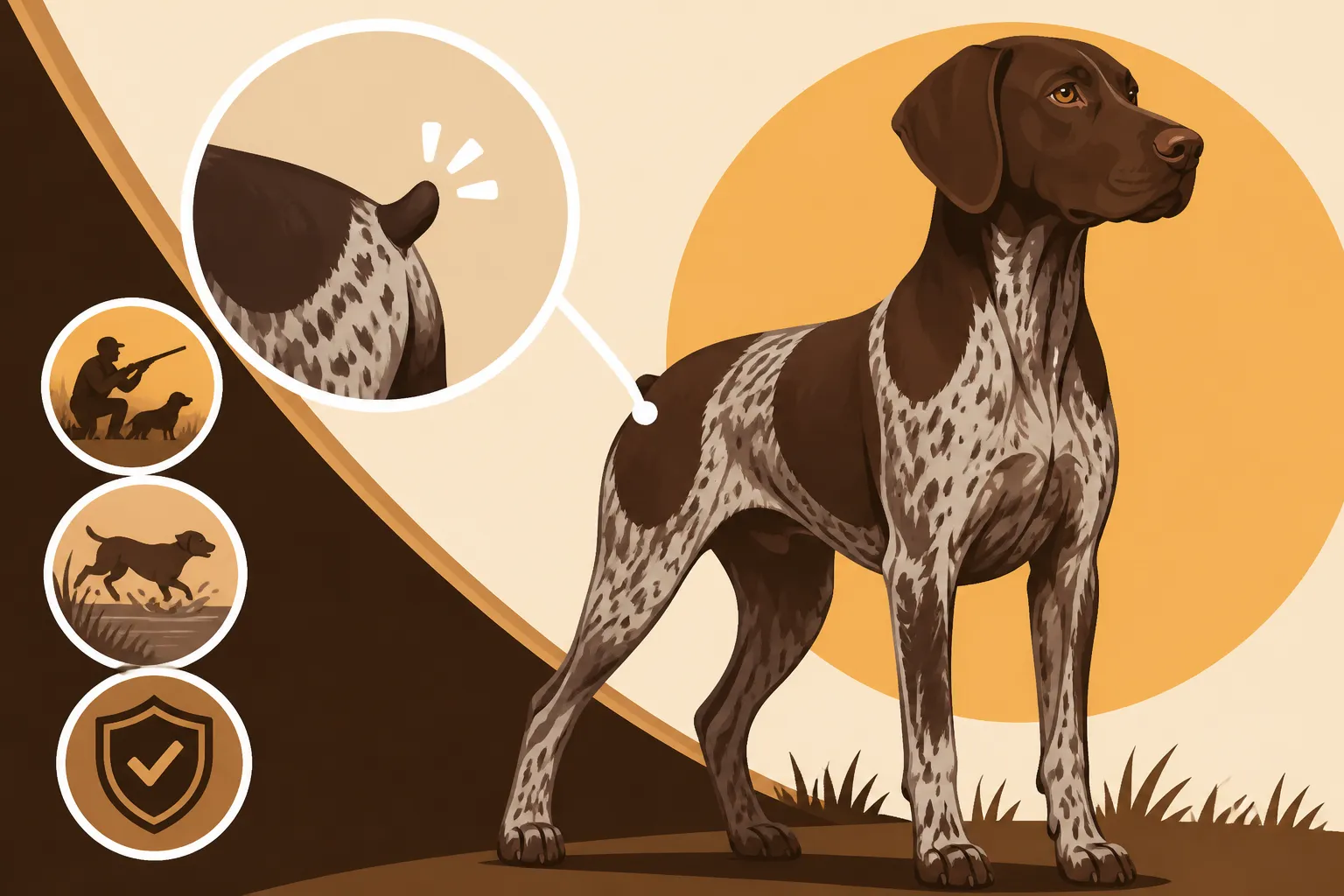
Why a Shorthair’s Tail Is Shortened at All
You've probably seen a German Shorthaired Pointer with that distinctive short tail and wondered, "Why is it like that?" It's a common question, especially for those new to the breed or just curious about their unique look. Many people assume it's purely cosmetic, or perhaps a relic of an old tradition that no longer serves a purpose. But for working GSPs, that shortened tail has a history rooted deeply in practicality and preventing serious injury. This guide will dive into the reasons behind tail docking in German Shorthaired Pointers, exploring its historical origins, the ongoing debate, and what it means for the breed today.
The Historical Purpose of Tail Docking in Working Breeds
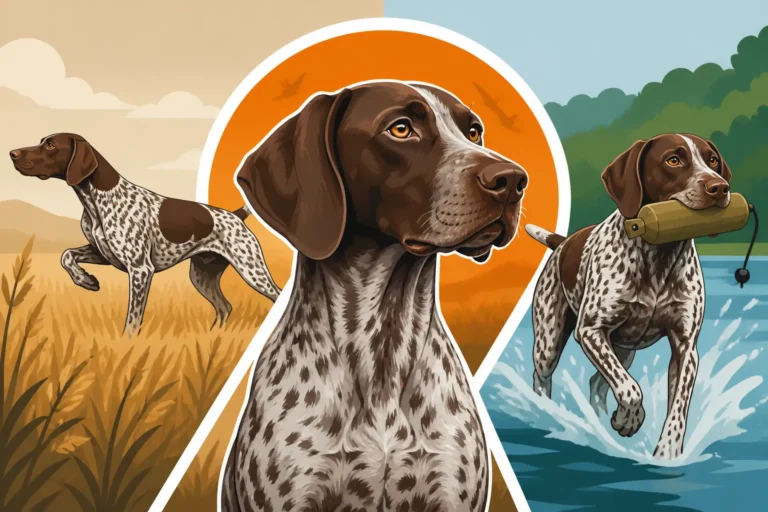
Long before German Shorthaired Pointers became beloved family companions, they were meticulously bred as versatile hunting dogs. Their job description included pointing, retrieving, and tracking, often through rugged, unforgiving terrain. Imagine a dog bursting through dense thickets of blackberry bushes, thorny underbrush, or thick cattails in a marsh – places where a long, whipping tail could quickly become a liability. This isn't just a concern for German Shorthaired Pointers; many working breeds developed traditions of tail docking for similar practical reasons.
Protection from Field Injuries
Picture a German Shorthaired Pointer, full of drive and determination, crashing through a dense cover of multiflora rose or thick switchgrass, its tail flagging wildly as it quarters the field. A long, undocked tail, with its delicate bones and blood vessels, is incredibly vulnerable in such an environment. It's not just a matter of a minor scrape; tails can be severely lacerated, fractured, or even degloved (where the skin is torn away from the bone). These aren't just painful injuries; they can be debilitating, sidelining a valuable working dog and requiring extensive, costly veterinary care. The belief was, and for many working dog enthusiasts still is, that a shorter tail presents less surface area and therefore less opportunity for such traumatic injuries.
Consider a scenario where a GSP is retrieving a heavy pheasant from a frozen marsh. Its tail is likely thrashing against icy reeds and sharp broken branches, acting like a whip. A long tail would be subjected to immense force and potential trauma, far more than a shorter, sturdier stump. This isn't about cruelty; it's about mitigating the risks of a dog fulfilling its inherent purpose. Owners want their dogs to be effective in the field, and a healthy, intact tail—even a shortened one—is crucial for balance and communication. Field Injuries a Hunting German Shorthaired Pointer Comes Home With often include severe tail damage if preventative measures aren't taken.
Preventing Infection and Pain
When a tail injury occurs, especially in a working environment, it's rarely a clean cut. These are often jagged wounds, exposed to mud, bacteria, and debris from the field. Such wounds are ripe for infection, which can quickly spread and become a serious health crisis. A deep laceration on the tail can be incredibly difficult to keep clean and bandaged in an active dog, leading to chronic issues and prolonged healing times. The pain alone would be excruciating for the dog, impacting its ability and willingness to work.
Furthermore, a severely injured tail, left untreated or poorly healed, can sometimes lead to what's known as "tail tip necrosis," where the tissue at the end of the tail dies due to lack of blood flow or persistent trauma. In extreme cases, this can necessitate a more complex and painful surgical amputation later in life, a procedure far more invasive than the quick, early docking done on puppies. The historical practice aimed to prevent this cascade of pain, infection, and potential loss of the tail in a much more difficult manner. It wasn't about making the dog look a certain way, but about ensuring its long-term health and functional capability in the field.
The Modern Perspective: Functionality vs. Aesthetics
In today's world, the role of many dog breeds has evolved. While German Shorthaired Pointers are still highly valued for their exceptional hunting abilities, a significant number of them are cherished family pets, companions, and agility stars who may never set foot in a thorny pheasant cover. This shift has naturally led to a re-evaluation of practices like tail docking, pushing the conversation beyond just functionality to include ethical and aesthetic considerations.
The Hunting Dog's Reality
For those GSPs actively engaged in hunting, the argument for a shortened tail remains strong among many owners and breeders. These dogs still navigate the same challenging environments that their ancestors did. Whether it's chukar hunting in arid, rocky scrubland, flushing grouse in dense timber, or retrieving ducks from frigid waters, a GSP's tail is constantly in motion, subjected to potential trauma. A long, undocked tail is often described as a "flag" that gets caught, scraped, and slammed against obstacles.
Experienced hunters can recount countless stories of undocked tails suffering severe injuries, sometimes requiring multiple vet visits, sutures, and even partial amputation later in life. These injuries are painful, often bleed profusely, and can be frustrating to manage in an active dog. While some owners opt for protective wraps or tape, these can be cumbersome, collect debris, and aren't always foolproof. Therefore, for a dedicated hunting German Shorthaired Pointer, a docked tail is still seen by many as a functional advantage, minimizing the risk of a career-ending or chronically painful injury. You can explore how some owners work to keep a Shorthair's pads from splitting halfway through the season by protecting their feet, and similar logic applies to tails in harsh environments.
The Debate: Necessity vs. Cosmetic Procedure
The debate surrounding tail docking is passionate, with strong arguments on both sides. Opponents often view it as a purely cosmetic procedure, an unnecessary alteration of a dog's natural anatomy. They highlight the dog's ability to communicate through tail posture and movement, arguing that a shortened tail diminishes this crucial form of expression. They also raise concerns about pain during the procedure, even when performed on young puppies, and question the ethics of performing a non-medical surgery. Many countries, particularly in Europe, have outright banned or heavily restricted tail docking, deeming it inhumane.
Conversely, proponents, especially within the working dog community, emphasize the welfare aspect of preventing severe injuries. They argue that the procedure, when performed on very young puppies (typically before five days of age), is quick, causes minimal discomfort, and significantly reduces the likelihood of future pain and suffering from tail trauma. They see it as a responsible preventative measure, much like removing dewclaws. The question often boils down to whether the potential for injury in working environments justifies a certain procedure early in life. For the owner of a pet GSP who will primarily live in a suburban home and go on leash walks, the "necessity" argument weakens considerably, leading many to forgo the practice.
How Tail Docking is Performed and What to Expect
Understanding the procedure itself is key to comprehending the discussions around tail docking. It's not a complex surgery when done correctly, but it does involve a specific process, typically performed on very young puppies.
The Procedure for Puppies
Tail docking is almost exclusively performed on German Shorthaired Pointer puppies when they are just a few days old, usually between 2 and 5 days of age. At this early stage, their nervous systems are not fully developed, and the procedure is often done without general anesthesia, though some veterinarians may use local anesthetic or cryosurgery (freezing). The method typically involves physically severing the tail at a predetermined length, usually around 40% of its natural length, leaving approximately two-fifths of the original tail. The Forty Percent Tail a Shorthair Is Left With is the standard set by breed clubs in the US.
A common technique involves placing a tight ligature (a rubber band or string) around the tail at the desired point. This cuts off the blood supply, and the tail essentially necroses and falls off within a few days. Alternatively, a veterinarian might use a sharp surgical instrument to cut the tail, and then the skin is usually closed with a stitch or two. The goal is to perform the procedure quickly and cleanly, minimizing trauma and the risk of infection. Breeders often have this done by their veterinarian during the first puppy check-up.
Aftercare and Healing
Immediately following the procedure, whether by ligature or surgical cut, the puppy might show some transient discomfort, such as crying for a short period. However, this usually subsides quickly, and the puppies typically return to nursing and playing within minutes or hours. The wound itself, if surgically cut, is usually small and heals rapidly. Breeders monitor the puppies closely for any signs of infection, swelling, or persistent pain.
For ligature docking, the small stump will dry up and fall off, much like an umbilical cord, leaving a small scab that heals over within a week or two. If stitches are used, they are often absorbable or removed by the veterinarian during a follow-up visit. The most important aspect of aftercare is keeping the area clean and ensuring the puppy's environment is hygienic to prevent any secondary infections. Good hygiene, provided by the mother dog and the breeder, is usually sufficient. In most cases, by the time puppies go to their new homes at 8-10 weeks, their docked tails are fully healed and look like a natural part of their anatomy.
Navigating the Controversy and Making Informed Decisions
The conversation around tail docking is complex, touching on tradition, animal welfare, and individual choice. For prospective German Shorthaired Pointer owners, understanding these nuances is essential for making an informed decision about their future companion.
Legal and Ethical Considerations
The legality and ethical standing of tail docking vary significantly across different regions. In many European countries, including the UK, most forms of tail docking are banned unless performed for genuine medical reasons by a veterinarian. These bans are often rooted in the belief that docking is an unnecessary cosmetic procedure that infringes on animal welfare. In these regions, a GSP with a natural, undocked tail is the norm, and they compete in conformation and hunt tests without issue. You might also encounter questions about Whether Docking a Shorthair Is Banned in Any State within the US.
In contrast, in the United States, tail docking for working breeds like the German Shorthaired Pointer is generally accepted by the American Kennel Club (AKC) and other breed organizations. While the American Veterinary Medical Association (AVMA) has expressed concerns about cosmetic docking, it acknowledges the historical context and purpose in working breeds. The ethical debate often centers on balancing the perceived benefits (injury prevention) against the potential drawbacks (pain during procedure, loss of natural anatomy). Owners must weigh these arguments, often considering their dog's intended lifestyle. A pet GSP in a city apartment may have very different needs than a hunting companion in rural Minnesota.
When an Undocked Tail is Preferred
There are several scenarios where an undocked tail might be preferred, either by choice or necessity. First, if you live in a region where docking is illegal, your GSP will naturally have a full tail. Second, many GSP owners who do not intend to hunt their dogs in dense cover see no functional need for docking. They value the natural appearance and the full range of tail-based communication. An undocked GSP's tail can be quite expressive, conveying a wide array of emotions from excitement to apprehension.
Some breeders are also starting to offer undocked puppies to pet homes, especially in areas where there's a higher demand for natural-tailed dogs. While an undocked tail might get "happy tail syndrome" (a persistent injury from enthusiastic tail wagging against hard surfaces), this is generally less severe than field injuries. It's also worth noting that an undocked GSP can still participate in various dog sports and activities, including obedience, agility, and even some hunt tests, where the tail length isn't a factor. Ultimately, the decision for an undocked tail often comes down to personal preference, regional regulations, and the specific lifestyle planned for the dog.
When considering a GSP puppy, it's wise to discuss tail docking with your prospective breeder early on. They can explain their practices and the rationale behind them, often showing you how it's done or even providing photos of past litters. Whether you opt for a docked or undocked tail, remember that the most crucial aspect is ensuring your German Shorthaired Pointer is healthy, happy, and well-cared for throughout its life. This often means being prepared for unexpected vet bills, and having supplies like quality food from places like Chewy readily available, no matter what length tail your dog has.
Here's a quick comparison to help visualize some aspects of the discussion:
| Feature | Docked Tail | Undocked Tail |
|---|---|---|
| Appearance | Short, uniform length, breed standard | Natural length, varies by individual |
| Injury Risk (Field) | Significantly reduced, less surface area | Higher risk of lacerations, fractures, degloving |
| Injury Risk (Home) | Minimal; "happy tail" less likely | Possible "happy tail" syndrome from wagging |
| Communication | Still effective, but range of motion is less | Full range of motion for expressive signaling |
| Procedure | Performed on young puppies, typically days old | No procedure needed |
| Pain during procedure | Minimal, transient discomfort for puppies | None (unless injury occurs later) |
| Legality | Legal in many regions (e.g., US), restricted/banned in others (e.g., Europe) | Legal everywhere |
| Breed Standard (US) | Required for conformation showing | Not permitted for conformation showing |
When preparing for your new GSP puppy, whether its tail is docked or not, you'll need to stock up on essentials. Platforms like Chewy offer a vast selection of appropriate puppy food, toys, and grooming supplies to help get your little one off to a great start. Their early training and socialization are far more impactful than the length of their tail. For instance, understanding The Age a Shorthair Puppy Starts Whoa is much more critical for future success than obsessing over its tail.
The choice about tail docking is a personal one, often influenced by geography, intended purpose for the dog, and individual ethical viewpoints. What's most important is that your GSP lives a full, healthy life, regardless of its tail length. Proper care, nutrition (like high-quality kibble from Chewy), training, and preventative veterinary visits are the cornerstones of responsible German Shorthaired Pointer ownership. Just as you'd learn about The Bloat Risk a Shorthair Carries Into Every Season, or how to prevent Ear Infections in a Shorthair That Swims, understanding the background of practices like tail docking helps you be a better advocate for your dog's well-being. Ultimately, a happy, healthy German Shorthaired Pointer, ready to work or play, is the goal.
Disclaimer
This article is for general informational purposes only and does not constitute professional advice. Laws, prices and regulations vary by location and change over time. Consult a qualified professional for guidance on your specific situation.