Whether a Shorthair Was Meant to Work Alone or in a Pack
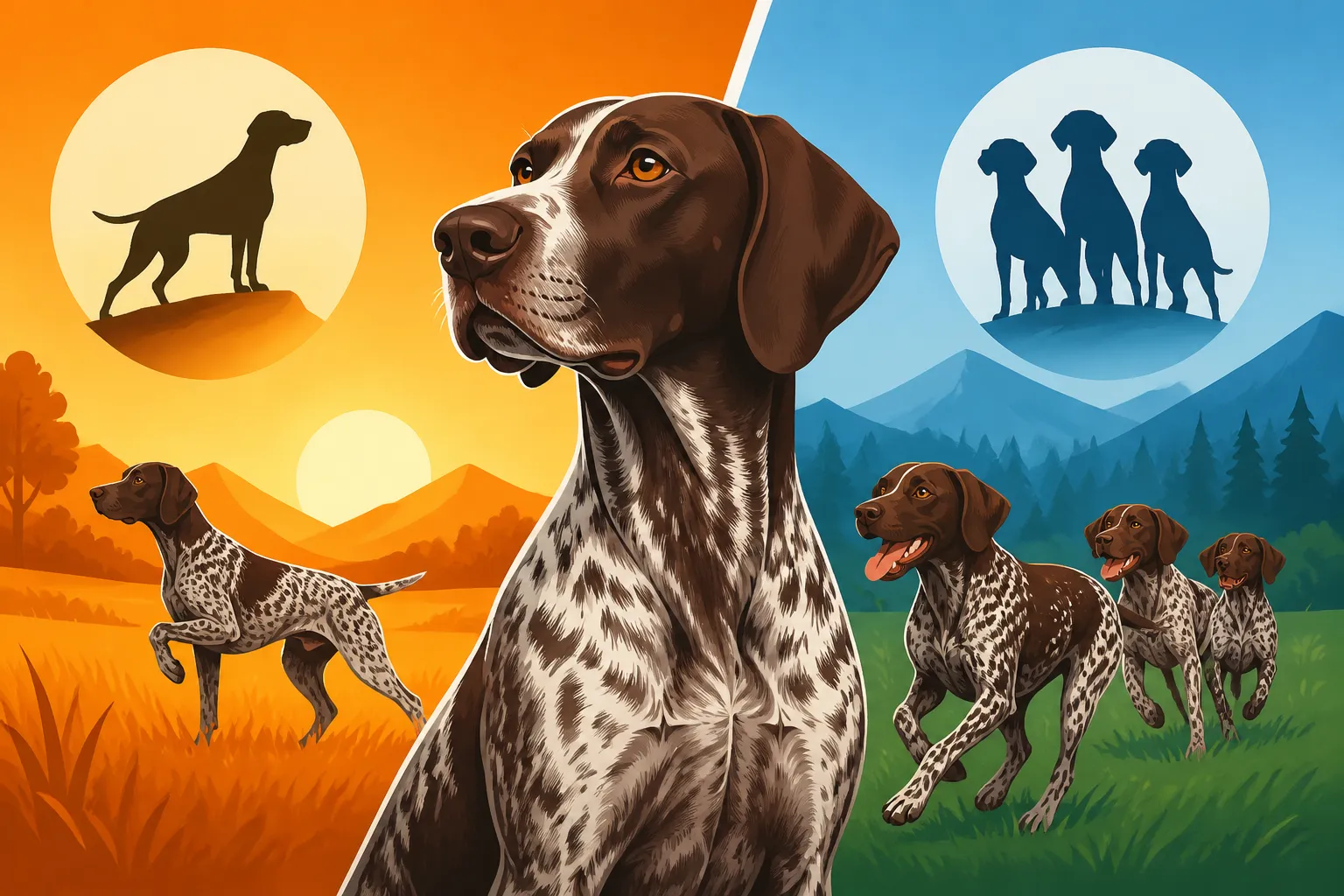
A German Shorthaired Pointer can hunt beside other dogs, but that does not mean the breed was developed to hunt as a tightly coordinated pack. Shorthairs were bred as versatile partners for people, able to point, retrieve, and track game. This guide explains what “alone or in a pack” means in the field, how a Shorthair typically works around other dogs, and what owners can do to manage group hunts safely.
What a German Shorthaired Pointer was bred to do
A versatile hunting partner, not a pack hound
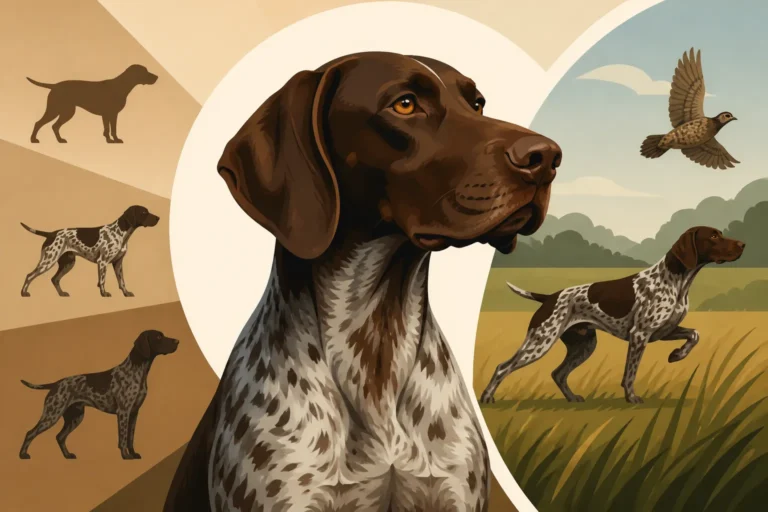
The German Shorthaired Pointer was developed as a versatile hunting dog: one dog that could help with several parts of a hunt rather than a specialist that performed just one task. That distinction matters. A Shorthair can search for game, point birds, retrieve, and track, but it is generally working in cooperation with a handler—not moving as one member of a coordinated hound pack.
In practical terms, a dog may range ahead, locate scent, and point while the hunter follows and decides how to approach. The dog’s work is individual, but not independent in the sense of being meant to ignore people. The handler supplies direction, reads the dog’s signals, and decides when to move in. For more historical context, Why German Hunters Bred the Shorthair Instead of Four Dogs explains the appeal of a single dog with several useful abilities.
That does not mean a Shorthair must hunt alone. Dogs can share a field, work in a brace, or take turns searching. But their roles are usually organized around human handling and safe spacing, rather than pack-style pursuit. The breed’s versatile background is also reflected in Pointing, Retrieving and Tracking in One Shorthair.
How independent searching fits with cooperation
A Shorthair’s search can look independent, especially when the dog covers ground quickly or gets absorbed in scent. In an open field, it may run out, cast across the wind, and investigate likely bird cover without checking in every few steps. That is not the same as being bred to work without a person. A useful hunting dog still needs to respond to its handler and remain part of the hunt.
The degree of independence varies with the dog, its breeding, its training, the terrain, and the game being hunted. A dog searching cattails in a Midwest marsh may naturally work differently from one moving through wooded cover in the East. Field-bred dogs may be selected for a more expansive search, while other lines or individual dogs may stay closer. Neither style alone tells you whether the dog is “pack bred.”
A practical way to frame the question is this: a Shorthair can work alone in the sense that it may search and point without another dog beside it, but it is not intended to be a self-directed hunter with no handler involvement. It can also work alongside other dogs, provided it has learned how to do so without crowding, chasing, or disrupting them.
How Shorthairs behave around other hunting dogs
Working beside another dog is not the same as hunting in a pack
When two pointing dogs hunt together, each dog may search for birds and point independently. They are sharing the same hunting area, but they are not necessarily moving in a unified group. The handler has to monitor both dogs, maintain a safe position, and know which dog is on point. The second dog may need to stop or “back” when it sees the first dog pointing.
That kind of cooperation is trained. A young dog may run toward its companion’s point, crowd the bird, or break in when the bird flushes. It may also become distracted by the other dog’s movement and spend less time searching effectively. These are common learning problems, not evidence that the breed cannot work with other dogs. Teaching a Shorthair to Back Another Dog's Point covers the specific skill of honoring another dog’s point.
The number of dogs is not the only factor. A calm, experienced partner can help a young dog understand the rhythm of a hunt, but an overexcited or poorly matched group can make training harder. Before hunting several dogs together, owners should consider each dog’s recall, steadiness, response to gunfire, and ability to remain under control around flushes and retrieves.
Why spacing and control matter
In a field, dogs need enough room to search without constantly crossing paths. If one dog cuts in front of another, charges into a point, or runs beyond the handler’s control, the group can become confusing quickly. In the worst case, poor control creates a safety risk for dogs and people, especially when firearms are present.
Handlers can make group work more manageable by starting with short sessions in a familiar, open area. Work one dog at a time on basic cues, then introduce the second dog when both can respond reliably. Keep the first sessions brief and predictable. If either dog becomes too excited to listen, separate them and return to simpler work rather than repeating a chaotic setup.
Learning to search in front of a handler also helps a dog work productively near other dogs. Teaching a Shorthair to Quarter in Front of You focuses on a pattern that can make the dog’s movement easier to follow. It does not require every Shorthair to hunt at exactly the same distance; the useful goal is a search that remains understandable and manageable for the person handling the dog.
| Hunting setup | What the Shorthair may do | What the handler should manage |
|---|---|---|
| One dog with one hunter | Search, point, retrieve, or track with the handler following | Recall, range, direction, and safe movement toward the point |
| Two dogs in a field | Search independently and encounter the same cover or bird | Spacing, backing, steadiness, and which dog is being handled |
| Several dogs in dense cover | Move through nearby cover with more chances to crowd or lose sight of one another | Close control, clear turns, visibility, and safe positioning |
| A dog working near non-hunting dogs | Become distracted, excited, or drawn toward the other animals | Separation, leashes or barriers, and a gradual introduction |
Training a Shorthair to work alone or with a companion
Build the solo skills first
A dog should have a dependable foundation before being asked to work around other hunting dogs. Start with recall, response to its name or whistle, walking calmly on leash, and settling when asked. These everyday skills make field handling safer and give the dog a way to reconnect with you when scent or excitement takes over.
Solo field sessions also let you learn your dog’s natural search pattern. Notice how far it tends to range, whether it checks in, what makes it speed up, and how it responds to a change in direction. If the dog is still learning to come when called or routinely disappears beyond your ability to manage it, adding another dog may increase the distraction rather than solve the problem. Recall on a German Shorthaired Pointer That Is Locked On is relevant when a dog is so focused on scent or game that ordinary calling stops working.
Keep early outings short enough that the dog can succeed. A long, exciting session may leave a young dog tired and less responsive, while a brief session with clear breaks gives you more chances to reward the behavior you want. A check cord can help in appropriate training situations, but it is not a substitute for supervision or a carefully taught recall.
Introduce a second dog gradually
Choose a steady, socially compatible dog for an early introduction. Begin in a controlled area where both dogs can see one another without immediately racing together. Walk them with enough space to stay calm, reward attention to their handlers, and end the session before excitement builds. If either dog stiffens, fixates, or becomes difficult to redirect, increase distance and slow the introduction.
When both dogs are comfortable, try a short field session with a simple plan. One dog can search while the other waits with its handler, then they can switch. This turn-taking approach makes it easier to see whether the dog is responding to you or simply following its partner. Later, you can allow more overlap if both dogs remain manageable.
Dogs should also be introduced outside the field. A hunting partnership does not automatically mean two dogs will share food, beds, crates, or household space comfortably. Use separate feeding areas and give each dog a place to rest. If you’re setting up separate bowls, bedding, or travel gear, compare products and sizing carefully; Chewy is one retailer owners may check when organizing a multi-dog setup. Products do not replace a gradual introduction, and no item can guarantee that dogs will get along.
Common misunderstandings about working alone or in a pack
A dog that ranges out is not necessarily a pack hunter
Owners sometimes see a Shorthair range far ahead and conclude that it was bred to hunt alone. A wide search can be part of the dog’s working style, but it does not prove that the dog is designed to operate without a handler. The important question is whether the dog can respond, be located, and be directed when needed.
Likewise, a dog that stays close is not necessarily a “pack” worker. It may have a naturally closer range, limited field experience, or a strong habit of checking in. Training and environment shape behavior alongside inherited tendencies. A well-managed dog can work at a useful distance while remaining connected to its person.
If you are selecting a puppy or adult dog, ask the breeder or trainer to describe how the individual dogs work, not just whether the line is “independent” or “close.” Ask what the parents do in the field, how they respond to other dogs, and what kind of handling they need. The broader breed history in The German Bird Dog Behind the Modern Shorthair can help put those descriptions in context.
A social dog is not automatically ready to hunt with others
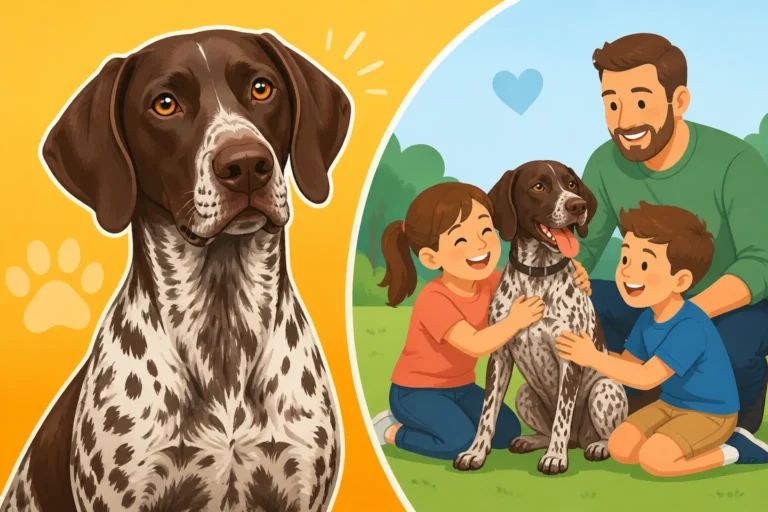
A Shorthair may enjoy other dogs at home and still struggle to hunt beside them. Field excitement changes the situation: scent, movement, birds, and the handler’s attention can all become competing rewards. A dog that plays politely in a yard may chase a bracemate, rush a point, or ignore a recall once the hunt begins.
Group hunting should also not be confused with leaving several dogs together and expecting them to work it out. Each dog needs supervision, training, and clear handling. If the dogs have not learned to remain steady around game or respond to their handlers, bringing them together can reinforce unwanted habits.
For owners weighing whether hunting is essential to a Shorthair’s quality of life, the answer is not simply “yes” or “no.” The breed has substantial exercise and mental engagement needs, but activities can vary by household. Whether a German Shorthaired Pointer Needs to Hunt to Be Happy discusses that question more directly. For formal field events, Whether a Shorthair Can Run Field Trials and Hunt Tests explains another way dogs may work around other handlers and dogs under structured rules.
A German Shorthaired Pointer can hunt alone with a handler or share a field with another dog. The breed was not developed as a pack hound; it was developed as a versatile, people-directed hunting partner. With a solid solo foundation, gradual introductions, and attention to each dog’s range and temperament, many Shorthairs can learn to work safely and productively alongside companions. Owners looking into the practical demands of training two dogs may also find Hunting Two German Shorthaired Pointers Together useful. For travel and home routines, Chewy may also be one place to compare separate crates or feeding supplies, while keeping in mind that gear alone cannot teach calm cooperation.
Disclaimer
This article is for general informational purposes only and does not constitute professional advice. Laws, prices and regulations vary by location and change over time. Consult a qualified professional for guidance on your specific situation.