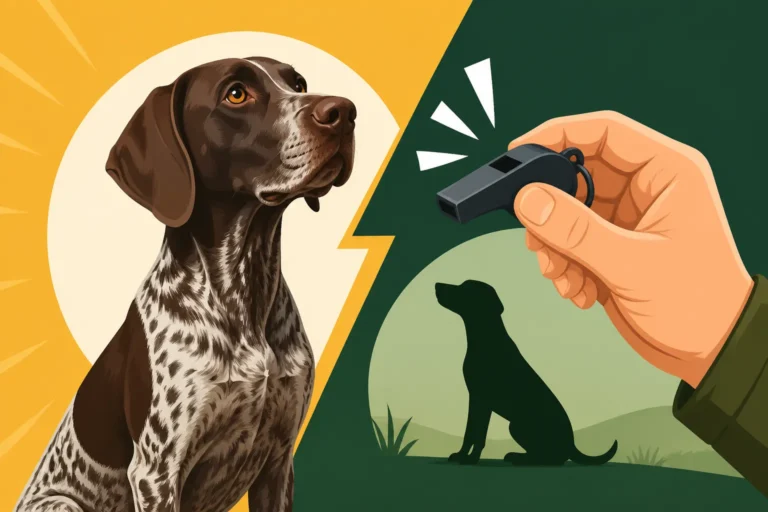
Steadying a Shorthair to Wing and Shot
It's a familiar sight for many German Shorthaired Pointer owners: your dog locks up on point, trembling with anticipation, only for that electric intensity to turn into a full-speed chase the moment a bird flushes. That urge to break at the sight or sound of game is deeply ingrained, but achieving genuine steadiness to wing and shot is not just possible—it's paramount for a safe and effective hunting companion. This guide will walk you through the patience and precise steps needed to transform your high-drive Shorthair into a disciplined and steady partner in the field.
Understanding the Goal What "Steady to Wing and Shot" Really Means
When we talk about a German Shorthaired Pointer being "steady to wing and shot," we're not just aiming for polite behavior; we're talking about a crucial safety and efficiency standard in the hunting world. This isn't just a fancy trick; it’s fundamental to working effectively and safely with a pointing dog.
Defining "Steady to Wing"
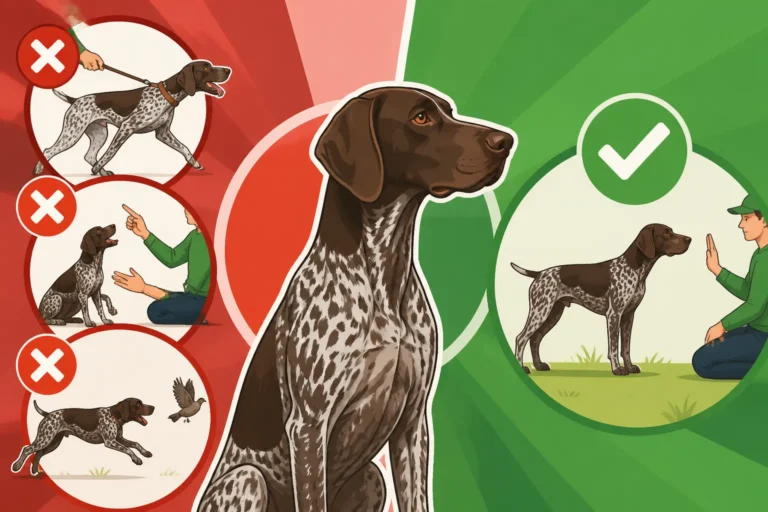
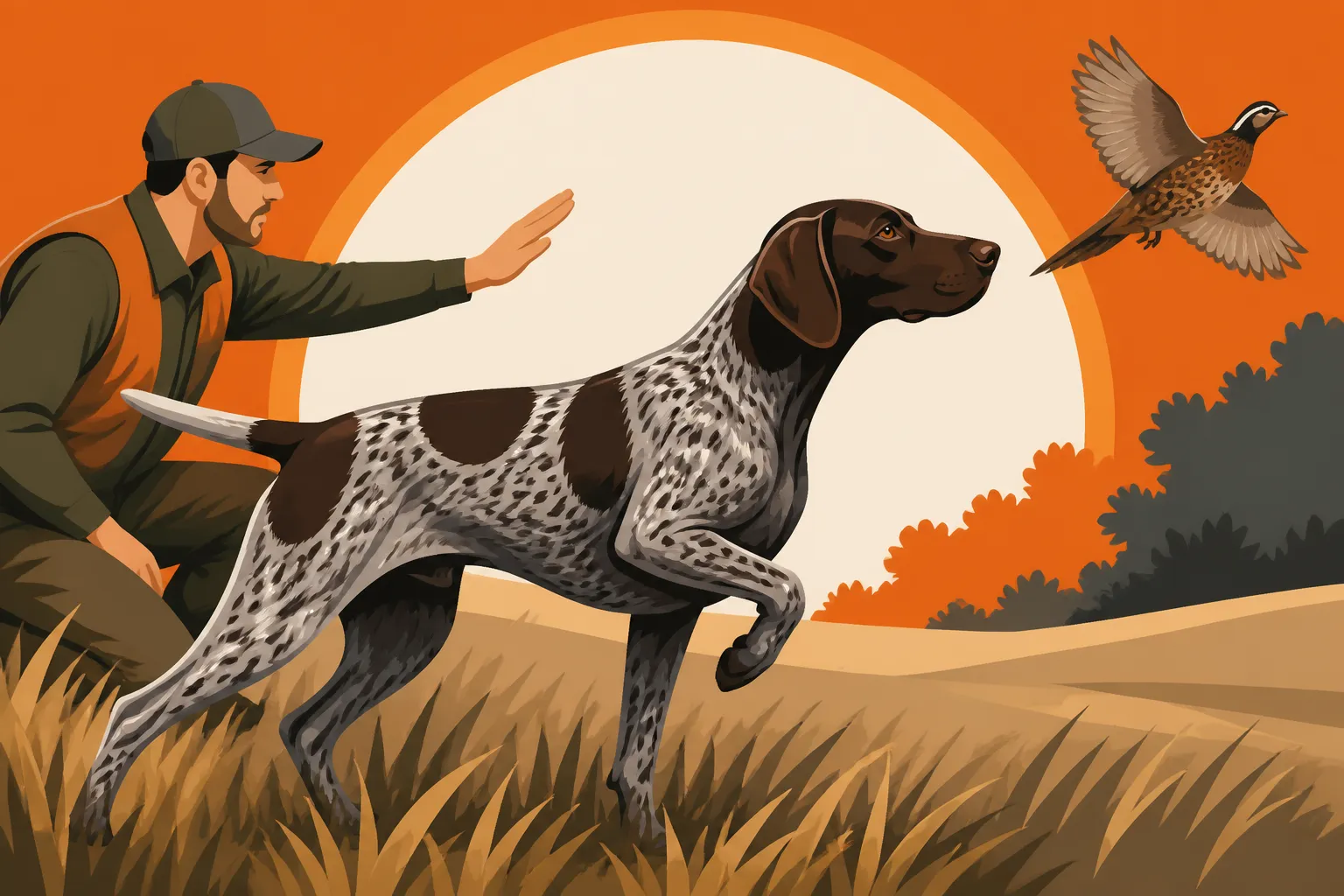
"Steady to wing" means your German Shorthaired Pointer remains absolutely motionless and on point when the bird flushes. Imagine a pheasant bursting from cover right in front of your dog's nose. Instead of lunging forward, your Shorthair should hold its statuesque point, eyes locked on the disappearing bird, without taking a single step or even twitching a muscle in pursuit. This requires immense self-control, especially for a breed bred with such explosive prey drive. It allows the hunter to move into position, potentially take a shot, and then send the dog for the retrieve on command. Without it, you risk a dog running directly into the line of fire, flushing other birds inadvertently, or simply making a retrieve nearly impossible due to continued chasing. It's about respecting the bird, the hunt, and the safety of everyone involved.
Defining "Steady to Shot"
Building on the concept of steady to wing, "steady to shot" means your German Shorthaired Pointer not only holds its point when the bird flushes but also remains stationary when the gun goes off. This is where many dogs falter, as the loud report can trigger an immediate dash, either out of excitement or a conditioned response to retrieve. The goal is for your Shorthair to remain perfectly still, watching the fallen bird (if there is one) without moving until given an explicit command to retrieve. This is critical for safety, preventing your dog from running into a shot, and also for effective game recovery. An uncontrolled dash can lead to your dog overrunning the fall, or worse, losing track of the bird altogether in thick cover. It allows you to mark the fall precisely and then send your dog, ensuring a clean retrieve.
Building the Foundation Essential Pre-requisite Skills
You wouldn't ask a child to run a marathon before they can walk, and the same principle applies to training a German Shorthaired Pointer for steadiness. Before you even think about introducing birds or guns, your dog needs to have a rock-solid understanding of basic obedience and, most importantly, the "whoa" command.
Mastering the Whoa Command
The "whoa" command is the absolute cornerstone of steadiness training for any pointing dog, especially a German Shorthaired Pointer. It essentially means "stop and freeze in position, no matter what." This isn't just a temporary stop; it's a command to stand still, like a statue, until released. Many trainers start this on a "whoa post" or "whoa barrel" to build muscle memory and remove the dog's ability to move forward, teaching them the feeling of being held stationary. You can also build it with a long check cord, walking alongside your dog and gently but firmly stopping them with the "whoa" command and a simultaneous check on the cord. Repetition in a distraction-free environment is key. Your dog must understand that "whoa" is non-negotiable, whether they're looking at a piece of kibble or their favorite toy. If your Shorthair hasn't nailed this, you're building on sand. A great resource for this foundational work is detailed in articles like Whoa and Why Every Shorthair Starts There.
Developing Rock-Solid Recall and General Obedience
Beyond "whoa," a reliable recall is paramount. Imagine your dog breaks point, and you need to get them back to you immediately for safety or to correct the behavior. If your "come" command isn't instant and foolproof, you'll be fighting an uphill battle. Work on recall in increasingly distracting environments, ensuring your Shorthair sees you as the most important thing, even when tempting distractions are present. This also ties into general obedience, such as "sit," "stay," and heeling. A dog that respects your commands in all situations is far more likely to maintain steadiness under pressure. These basic commands establish you as the leader and build the communication framework necessary for advanced field work. Investing time in these basics early on will save countless headaches later.
Introducing the Wing Element Gradually
Once your German Shorthaired Pointer is a master of "whoa" and general obedience, you can begin introducing the "wing" element—the sight and scent of birds. This phase requires immense patience and a meticulous step-by-step approach to avoid creating bad habits.
Using Controlled Bird Introductions
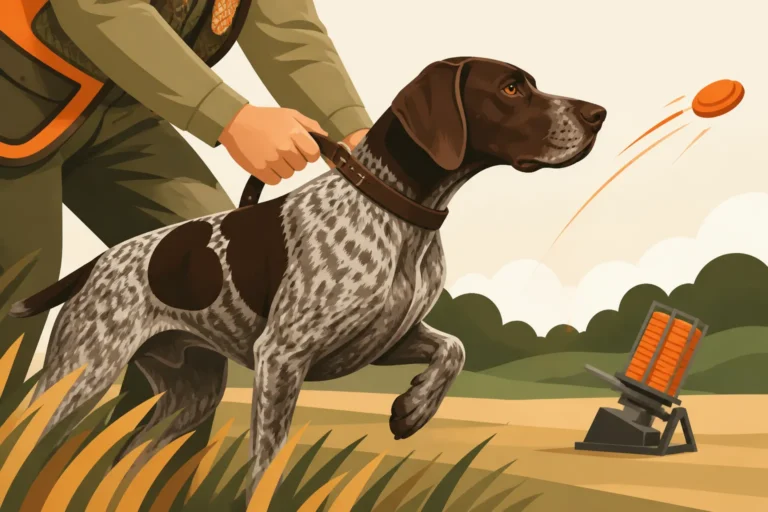
Start with controlled bird introductions in a low-distraction environment, like a fenced yard or a small training field. Don't just release a wild bird and expect magic. Begin with a bird (like a pigeon or quail, ideally with taped wings or in a bird launcher) that you can control. Your goal here is to allow your Shorthair to find the bird, go on point, and then for you to control the flush. Place the bird, put your dog on a check cord or lead, and walk them into the scent. As they lock on point, praise them calmly. When you decide to flush the bird (either by throwing it, using a launcher, or a helper flushing it), immediately reinforce the "whoa" command. If your dog tries to move, a firm, immediate correction with the check cord or an e-collar (if properly conditioned as discussed in Conditioning a Shorthair to the E-Collar Properly) is essential. The key is consistency: every time the bird flushes, the dog must remain still. Start with easier flushes and gradually increase the excitement, always maintaining control. You're teaching them that the flush is not their signal to move, but rather a test of their discipline.
Working Through "Breaking" and "Bumping" Behaviors
It's almost inevitable that your German Shorthaired Pointer will try to "break" (chase the flushing bird) or "bump" (run into the bird and flush it prematurely) at some point. These are natural instincts for a Shorthair! When this happens, it's not a failure; it's a training opportunity. Immediately correct the dog. If on a check cord, quickly pull them back to the point of the flush, say "whoa," and make them stand there for a few minutes. Repeat the scenario if possible, ensuring the dog understands the consequence of breaking. If you're using an e-collar, a consistent, fair correction at the moment of the break is crucial. The goal is to make the act of breaking uncomfortable, while holding point remains neutral or positive. Never let a break go uncorrected. This might mean shortening your training sessions, reducing distractions, or going back a step in your progression. Articles like A Shorthair That Bumps Birds Instead of Pointing offer more specific troubleshooting for these common issues. Patience is key; you might have to correct the same behavior many times before it sticks.
Adding the Bang Integrating the Shot Safely and Positively
Once your German Shorthaired Pointer is consistently steady to wing, the next critical step is to introduce the sound of the gun. This must be done with extreme care to avoid creating a gun-shy dog, which can be devastating for a hunting companion.
Gradual Gun Introduction From a Distance
The cardinal rule of gun introduction is never to associate the sound with anything negative or frightening for your dog. Start incredibly far away from your Shorthair, perhaps 50-100 yards, with a low-caliber gun or even a blank pistol. While your dog is doing something positive and enjoying themselves (like playing fetch, eating, or walking calmly), have a helper fire a single, distant shot. The goal is for your dog to barely notice it. If they show any signs of fear (cowering, bolting, shaking), you're too close or the sound is too loud. Immediately increase the distance or reduce the volume of the shot. Gradually, over many sessions and days, decrease the distance and increase the volume, always watching your dog's reaction. Never force it. The sound should become a normal, even boring, part of their environment. Think of it like background noise. A dedicated article on Introducing the Gun Without Ruining a Shorthair provides an in-depth look at this delicate process.
Combining Wing, Shot, and Steadiness
Once your Shorthair is completely comfortable with the gun's report at varying distances, it's time to combine all the elements: point, flush, shot, and steadiness. This is the ultimate test. Again, start in a controlled environment. Have your dog on a check cord and lead them into a bird. As they point, position yourself for the flush. When the bird flushes, immediately reinforce "whoa" if needed. As the bird flies away, have your helper fire a distant shot. If your dog remains steady, offer calm praise. If they break at the shot, issue an immediate correction and return them to the original point, making them stand still. The process is one of repetition and consistent correction. You want your dog to learn that the flush and the shot are cues for them to remain still, not to move. Over time, you can gradually reduce the need for the check cord, moving to a long line and eventually off-leash, increasing the realism of the scenario with wilder birds and varied cover. Many handlers find that a good e-collar, properly conditioned, becomes an invaluable tool during this advanced phase for precise, timely corrections when off-leash.
Common Challenges and Troubleshooting
Even with the best intentions and consistent training, German Shorthaired Pointers can present unique challenges when it comes to steadiness. Their intelligence and high drive, while assets, can also make them prone to certain issues.
Dealing with "Creeping" or "Bouncing" on Point
A common frustration for Shorthair owners is a dog that "creeps" or "bounces" on point. They might be steady initially, but as the anticipation builds, they slowly inch forward, or make small, nervous jumps, pushing closer to the bird. This isn't full-on breaking, but it’s still a breach of steadiness and can lead to a premature flush. The key to fixing this is immediate, firm correction the moment the dog makes a move. If you're using a check cord, a quick, sharp tug back to the original spot on the "whoa" command is necessary. If off-leash, a well-timed, low-level e-collar correction can be effective. The dog needs to understand that any movement from the static point is unacceptable. You might also want to review your "whoa" training from the beginning, focusing on duration and absolute immobility. Sometimes, increasing the frequency of flushing the bird before the dog has a chance to creep can help reinforce that the flush comes from you, not from their movement.
Addressing Gun Shyness or Over-Excitement
Gun shyness is a serious problem that, once developed, is incredibly difficult to fix. If your German Shorthaired Pointer shows any signs of fear—cowering, bolting, panting excessively, or refusing to go into areas where shots have been fired—stop immediately. You've progressed too quickly. Go back to basics: introduce the gun from an even greater distance, making the sound almost imperceptible, and associate it with highly positive experiences, like feeding time or a favorite game. Never punish a gun-shy dog. Instead, rebuild confidence slowly, patiently, and without pressure. For specific advice, consult Fixing a Gun Shy German Shorthaired Pointer. On the flip side, some Shorthairs become over-excited by the shot, associating it with the immediate prospect of retrieving. This can lead to breaking point and charging the fall. This is a steadiness issue, not gun shyness. The correction for this is the same as for breaking to wing: an immediate, firm reminder of the "whoa" command, reinforced with the check cord or e-collar, making them hold steady after the shot. They need to learn that the shot means "wait," not "go."
Proofing and Maintaining Field Steadiness
Achieving steadiness in a controlled environment is one thing; maintaining it in the chaos of a real hunt is another entirely. Proofing your training means testing and reinforcing it in increasingly realistic and distracting scenarios.
Training in Varied Environments and with Different Birds
Once your German Shorthaired Pointer is steady in your controlled training area, it's time to expand their horizons. Take your training to different types of cover: open fields, thick brush, marshy areas. Each new environment presents different challenges, scents, and distractions. Introduce different types of birds (pheasants, quail, chukar) if possible, as they can behave differently. Some birds hold tighter, others run, and some flush explosively. Each scenario is a learning opportunity for your dog to generalize the steadiness command. Continue to use your check cord or e-collar to reinforce steadiness whenever needed. The goal is for your Shorthair to understand that "steady to wing and shot" applies everywhere, not just in the backyard. This rigorous exposure helps build a truly consistent and reliable field dog.
Practical Application During Actual Hunts
The ultimate test of steadiness is, of course, during actual hunts. When you take your German Shorthaired Pointer into the field for a real hunt, start with a mindset of "training first, hunting second." Don't expect perfection immediately. Keep your check cord handy, or ensure your e-collar is charged and functioning. At first, you might choose to hunt in areas with fewer birds or with experienced hunting partners who understand you're still working on steadiness. Every time your dog goes on point and a bird flushes, consciously reinforce the "whoa" command. If a break occurs, don't let it slide. Call off the retrieve, correct the dog, and return to the scene if possible, making them stand steady. It might feel like you're sacrificing part of your hunt, but every uncorrected break undoes hours of training. Over time, as your Shorthair becomes consistently steady, you'll be able to relax and enjoy the fruits of your labor: a disciplined, safe, and truly effective hunting partner.
| Training Stage | Description | Key Skills Developed | Common Tools Used |
|---|---|---|---|
| Foundation | Building basic obedience and the "whoa" command in low-distraction environments. | Recall, Sit, Stay, Heel, Static "Whoa" | Leash, Collar, Whoa Post/Barrel, Treats, Praises |
| Wing Introduction | Introducing birds and controlled flushes while reinforcing "whoa." | Steady to Wing (holding point on flush) | Check Cord, Bird Launcher, Live/Winged Birds, E-collar (conditioned) |
| Shot Introduction | Gradually introducing gun sound from a distance, then closer. | Gun Familiarity (no fear/over-excitement) | Blank Pistol/Low Caliber Gun, Helper, Treats, Positive Association |
| Combined Steadiness | Integrating wing and shot with "whoa" in controlled scenarios. | Steady to Wing & Shot (holds point through flush and shot) | Check Cord/Long Line, Bird Launcher, Live Birds, E-collar (conditioned) |
| Proofing/Field Work | Applying and maintaining steadiness in realistic hunting conditions and varied environments. | Generalization of Steadiness, Reliability under pressure | E-collar, Whistle, Game Birds, Hunting Cover, Consistent Handling |
When seeking training tools, whether it's check cords, bird launchers, or reliable e-collars, many dedicated German Shorthaired Pointer owners find a wide selection of proven equipment on platforms like Amazon. For those who prefer a structured, online curriculum to guide them through these complex training phases, comprehensive programs, such as those offered by BAXTER & Bella, can provide invaluable step-by-step instructions and support, ensuring you're building a steady companion from the ground up.
Disclaimer
This article is for general informational purposes only and does not constitute professional advice. Laws, prices and regulations vary by location and change over time. Consult a qualified professional for guidance on your specific situation.