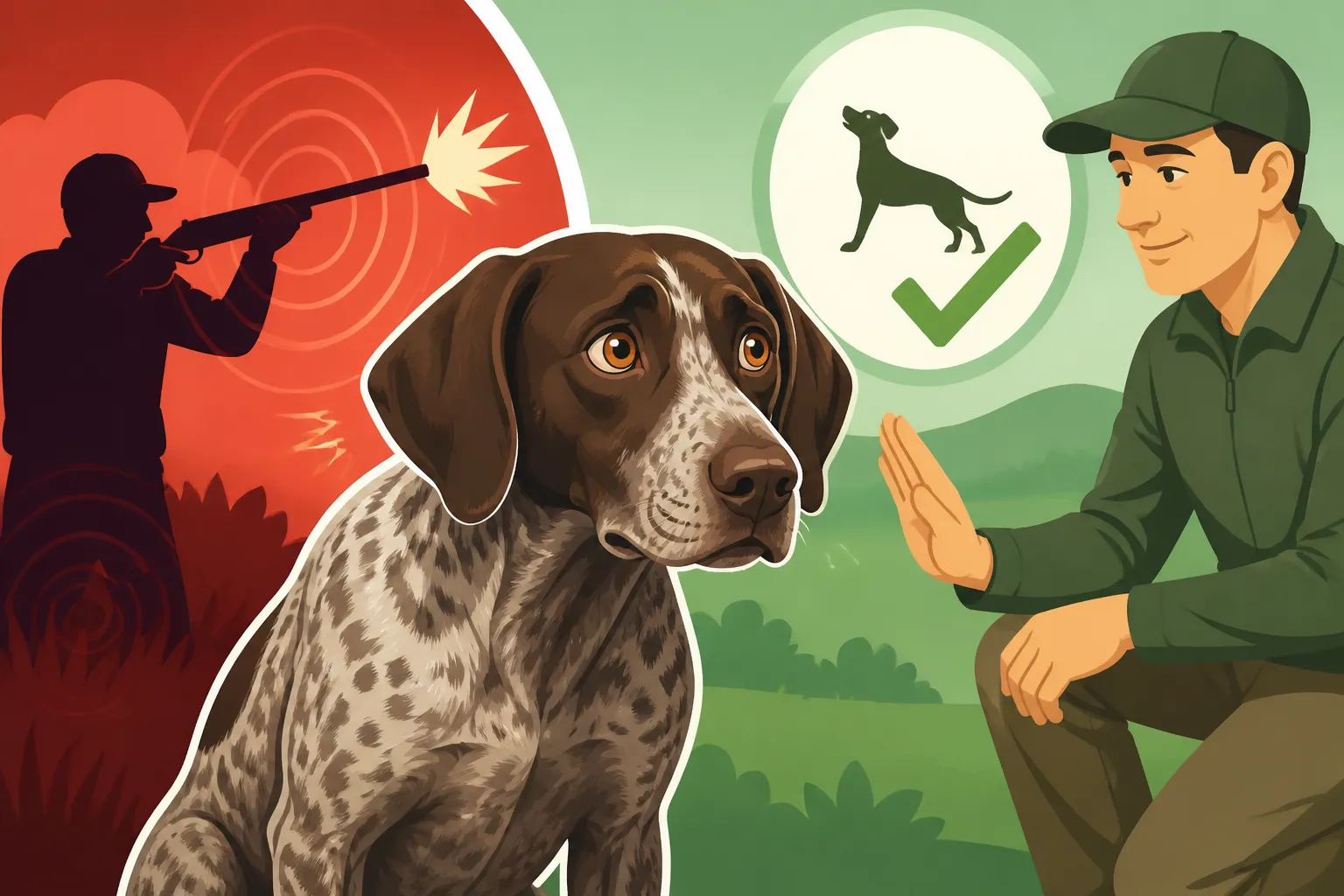
Fixing a Gun Shy German Shorthaired Pointer
It's absolutely heartbreaking when your German Shorthaired Pointer, a breed born and bred for the field, develops an intense fear of gunshots. You envision those perfect points and retrieves, only to find your dog trembling, trying to escape, or shutting down completely at the sound of a distant pop. This isn't just a minor training hiccup; it feels like a fundamental part of their purpose has been broken, and it can be incredibly frustrating and upsetting for dedicated owners. This guide will walk you through understanding gun shyness, identifying its signs, and most importantly, practical steps to help your GSP overcome this deep-seated fear, or at least manage it so they can live a happier, more confident life.
The Heartbreak of Gun Shyness: Understanding the Issue
When your German Shorthaired Pointer, a dog genetically predisposed to thrive in the presence of gunfire, suddenly becomes terrified by it, it feels like a betrayal of their very nature. This isn't just about a dog being startled; it's a profound fear response that can dismantle their confidence and shatter their working potential. For many GSP owners, especially those who hunt or participate in field trials, gun shyness feels like the ultimate training failure, though it's often far from the owner's fault.
What Exactly is Gun Shyness?
Gun shyness isn't merely an aversion or a brief moment of being startled by a loud noise. It's a deeply ingrained phobia where the sound of a gunshot triggers an intense panic or avoidance response. A truly gun-shy German Shorthaired Pointer isn't just a bit nervous; they are genuinely terrified. This fear can manifest in various ways, from mild anxiety to outright panic attacks, and it often generalizes to other loud, sudden noises like fireworks, thunderstorms, or even backfiring cars.
It’s crucial to differentiate this from a "soft" dog who simply needs a more careful and prolonged introduction to gunfire. A soft dog might be cautious, but with patient, positive exposure, they can usually overcome their initial hesitations. A gun-shy dog, however, has often experienced a traumatic event or has an underlying genetic predisposition that makes them highly susceptible to sound phobias. Their reaction isn't just a preference; it's a survival instinct kicking in, telling them to flee from a perceived danger.
Understanding this distinction is the first step toward effective intervention. You're not just dealing with a dog who needs more training; you're dealing with a deeply fearful animal whose trust in the environment, especially around loud noises, has been compromised. The goal isn't just to make them tolerate the sound, but to help them feel safe and even associate the sound with positive experiences once more.
Common Causes Behind the Fear
Pinpointing the exact cause of gun shyness can be tricky, but it often stems from a combination of genetics, poor early experiences, and environmental factors. For a German Shorthaired Pointer, bred for centuries to work alongside hunters and their firearms, this condition is particularly heartbreaking.
One of the most common culprits is traumatic early exposure. Imagine a young, impressionable German Shorthaired Pointer puppy, still developing its nervous system, being exposed to a very loud gunshot too close or without proper desensitization. That single event can "poison" the sound, embedding a fear response that's incredibly difficult to undo. This could happen accidentally in the field, or even during an enthusiastic but misguided first introduction by an inexperienced owner. Instead of a gradual, positive association, the dog's first experience is terrifying and overwhelming.
Another significant factor is genetics. Like many behavioral traits, sensitivity to sound can be inherited. Some lines of German Shorthaired Pointers may carry genes that predispose them to higher anxiety or phobias, including gun shyness. Even with the best socialization, a genetically predisposed dog might struggle where others wouldn't. This is why reputable breeders often screen their breeding stock for temperament and look for dogs that are bold and confident, ensuring they don't unwittingly pass on fearful tendencies. It's a sad truth that even with the best intentions, a dog can sometimes be wired for sensitivity.
Finally, a lack of proper early sound socialization can contribute. While GSPs are naturally robust, they still benefit from broad exposure to various noises during their critical puppy development period. If a puppy isn't introduced to a range of sounds in a controlled, positive manner, they can become more sensitive to sudden or loud noises later in life. Even unrelated traumatic events, like being startled by fireworks or a severe thunderstorm, can generalize and make them more reactive to gunshots. This can be particularly frustrating, as you might think your dog is fine with loud noises, only to discover their specific fear around actual gunfire.
Recognizing the Signs of Gun Shyness
Spotting gun shyness early can make a huge difference in how effectively you can address it. It's not always a dramatic full-blown panic attack; sometimes the signs are subtle, especially in stoic breeds like the German Shorthaired Pointer, who are often bred to push through discomfort. Knowing Reading a German Shorthaired Pointer's Stress Signals is absolutely vital here.
Physical indicators are often the first tell-tale signs. You might see your GSP start to tremble or shake uncontrollably. Their tail, instead of being held high with enthusiasm, might be tucked tightly between their legs. Their eyes might become wide, dilated, or dart around frantically, searching for an escape. Excessive panting, drooling, or lip licking, even when not hot or thirsty, are common signs of stress. They might flatten their ears back against their head or try to make themselves as small as possible. Some dogs might even urinate or defecate involuntarily out of sheer terror.
Behavioral changes are equally telling. A gun-shy German Shorthaired Pointer will often try desperately to escape the source of the noise. This could mean frantic running, bolting, or trying to hide in the nearest available cover or under you. They might refuse to move forward, "freezing" in place, or become completely unresponsive to commands they normally know perfectly. A dog that once loved retrieving might refuse to move towards the sound of a launcher or even retrieve a dummy if a cap gun has been fired. You might see them attempting to climb into your arms, which for a sixty-pound German Shorthaired Pointer, is a clear sign of intense distress. Signs a German Shorthaired Pointer is panicking rather than bored can often overlap with gun shyness, so understanding the nuance is key. If their usual bouncy, energetic self disappears, replaced by a timid, withdrawn posture, it's a huge red flag.
The severity of these reactions can vary. In some cases, a GSP might just show mild apprehension and need a moment to compose itself. In others, it's a full-blown panic that can put the dog in danger if they bolt into traffic or get lost. Being attentive to these signs, no matter how subtle, is your responsibility. Ignoring them or pushing the dog too hard will only worsen the phobia and deepen their fear, making recovery that much harder.
Preventing Gun Shyness: Laying the Right Foundation
Preventing gun shyness is always easier than fixing it, and it starts the moment you bring your German Shorthaired Pointer puppy home. For a breed so intertwined with the sounds of the hunt, early, positive experiences are paramount to building a confident, well-adjusted adult. This means being incredibly intentional and patient with their exposure to the world around them, especially sounds.
Early Sound Socialization for Puppies
The period between 3 and 16 weeks is often referred to as the critical socialization window for puppies. During this time, positive exposure to a wide variety of sights, sounds, and experiences helps shape a resilient and confident adult dog. For a German Shorthaired Pointer, this includes a careful introduction to sounds that mimic those they will encounter in their future lives.
It's not about blasting loud noises at your puppy; it's about controlled, positive experiences. Start with normal household sounds: the vacuum cleaner, the blender, TV noise, slamming doors (gently, at first). The key is to introduce these sounds at a low volume and always pair them with something your puppy loves, like a favorite treat, a cheerful play session, or gentle petting. The goal is to create a positive emotional association: "Oh, that strange sound? It means good things happen!"
As your puppy grows, you can gradually increase the intensity and variety of sounds. Consider playing sound desensitization tracks online—many platforms offer recordings of city noises, fireworks, and even distant gunshots. Again, start incredibly quiet, almost imperceptible, while your puppy is engaged in a fun activity like eating their meal or playing with you. Only increase the volume incrementally as long as your puppy remains relaxed and happy. Resources from platforms like BAXTER & Bella often have great modules on early puppy sound exposure, guiding new owners through these crucial first steps without overwhelming the puppy. Building this broad foundation of sound tolerance helps your GSP understand that most loud noises are not inherently threatening.
The Gentle Introduction to Gunfire
Introducing actual gunfire requires even more delicacy and planning. This is where many well-intentioned owners make crucial mistakes, often rushing the process or misjudging their puppy's readiness. Remember, the goal is to build positive associations, not just tolerance.
The journey should begin with extremely low-decibel sounds and at a significant distance. Start with something like a cap gun, a blank pistol, or even just two pieces of wood clapped together, far away from your puppy while they are actively engaged in something enjoyable. Starting a Shorthair's Gun Introduction With a Cap Pistol is an excellent first step. The sound should be barely noticeable, a subtle background element to their game or meal.
Consistency and positive reinforcement are your best friends here. Every time the sound occurs, immediately follow it with a high-value treat, a thrown retrieve, or enthusiastic praise. You want your German Shorthaired Pointer to think, "Oh, that little pop! That means fun stuff is coming!" Gradually, over days or even weeks, you can slowly decrease the distance between the sound source and your dog, or incrementally increase the volume of the sound. How Far From a Shorthair to Fire the First Shot is a critical consideration; always err on the side of too far rather than too close. Never force interaction, and if your GSP shows any signs of fear or apprehension, you've moved too quickly. Go back a step or two and slow down the process considerably.
Avoiding Common Training Mistakes
When it comes to introducing gunfire to a German Shorthaired Pointer, some mistakes are so common they warrant specific warnings. These missteps can quickly lead to gun shyness and undo weeks or months of careful training.
Firstly and most importantly, never, ever fire a gun close to an uninitiated puppy or dog. This is the cardinal sin of gun dog training. A sudden, jarringly loud noise can instantly create a lifelong phobia. This includes casual target shooting near your dog, firing off celebratory shots, or letting an excited friend blast a gun too close during a hunt. Even if you think your dog is confident, their first few exposures need to be meticulously controlled.
Secondly, resist the urge to rush the process. German Shorthaired Pointers are intelligent and eager, but their temperament varies, and some are more sensitive than others. What works for one dog might be too fast for another. Let your dog set the pace. If they seem hesitant or show subtle signs of stress (ear flicking, lip licking, averting gaze), you've pushed too far. Retreat, try again at a lower intensity, and extend the duration of each desensitization stage. There is no timeline for this; some dogs need weeks, others months. Patience is a virtue here, and rushing often leads to backtracking.
Finally, understand that every German Shorthaired Pointer is an individual. Just because their kennel mate or their sire was naturally bold with gunfire doesn't mean your current dog will be. Their genetics give them a predisposition for desire, but individual temperament and early experiences sculpt their reaction to stimuli. Punishing a dog for showing fear around loud noises will only exacerbate the problem, turning fear into terror and potentially breaking your dog's spirit and trust in you. The goal is to build confidence and positive associations, not to bully them into submission. Whether an E-Collar Damages a Soft Shorthair is an important consideration; for a gun-shy or sensitive dog, any harsh correction, especially when coupled with a frightening sound, can be devastating.
By avoiding these pitfalls and focusing on gradual, positive experiences, you significantly increase the chances of raising a gun-steady German Shorthaired Pointer who enjoys the sounds of the field.
Rebuilding Confidence: Step-by-Step Desensitization
When gun shyness has already set in, the path to recovery is challenging, but not impossible. It requires immense patience, consistency, and a systematic approach to re-shaping your German Shorthaired Pointer's emotional response to gunshots. This isn't about "curing" them in the traditional sense, but about counter-conditioning them to associate the sound with positive, safe experiences.
Creating a Safe and Controlled Environment
Before you can even begin with sound exposure, you need to establish a truly safe and predictable environment for your German Shorthaired Pointer. This means understanding their fear threshold. Where is your dog comfortable? How far away does the sound need to be for them to not react negatively?
Start by identifying a quiet, familiar location where your dog already feels secure. This could be your backyard, a secluded park, or even an empty field they know well. The absence of other distractions and sudden, unexpected noises is crucial. You want your GSP to feel as relaxed as possible before any sound is introduced.
Next, you'll need a helper. This person will be responsible for creating the sound, always at a distance that your dog can comfortably ignore or show only the slightest awareness of. This is the "threshold distance." For some dogs, this might mean the helper is a quarter-mile away, using a very quiet cap gun. For others, it might be a blank pistol barely audible from 200 yards. The sound should be so faint and far away that your dog notices it, but doesn't react with fear. If they tuck their tail, try to hide, or refuse to take a treat, the sound is too loud or too close. The helper is vital because you need to be focused entirely on your dog's reaction, offering praise and rewards, rather than worrying about the sound source.
Systematic Desensitization and Counter-Conditioning
This is the core of rehabilitating a gun-shy German Shorthaired Pointer. It's a slow, deliberate process of gradually exposing your dog to the feared sound while simultaneously pairing it with something highly positive.
- Start with the Absolute Minimum: Begin with a sound that is so quiet and distant, your GSP barely registers it. Perhaps it's a clap of hands, or the lightest pop of a cap gun from a long, long way off. Building a Shorthair's Gun Tolerance From a Distance is the principle here. Your helper should fire one single, quiet shot.
- Pair with High-Value Rewards: The instant the sound occurs, before your dog can even think about reacting negatively, offer them a high-value treat (cooked chicken, cheese, or their absolute favorite toy). Engage them in a brief, fun play session. The goal is to create a new association: "Sound = yummy treat/fun game." Repeat this many times, over many sessions, never increasing the intensity until your dog shows absolutely no fear and actively looks for the treat or toy after the sound.
- Gradual Increase: Only when your GSP is completely relaxed and happy at the current level of sound, can you very slowly increase the volume or decrease the distance. This could mean your helper takes ten steps closer, or they switch to a slightly louder cap gun. Whether a Shorthair Hears a Blank Pistol or a Shotgun First is part of this progression. This process might take weeks or even months for each tiny increment. If your dog shows any signs of anxiety, stop, go back to the previous, comfortable level, and spend more time there. This table illustrates the progression:
| Stage | Sound Source | Distance (Approx.) | Dog's Reaction Goal | Reward Strategy |
|---|---|---|---|---|
| 1. Baseline | Hand clap / Toy Pop | 300-500 yards | No reaction, slight awareness | High-value treat / favorite game |
| 2. Minor Pop | Cap gun | 200-300 yards | Calm, looks for reward | Immediate treat / quick fetch |
| 3. Blank Pistol | .22 Blank Pistol | 100-200 yards | Engaged in activity, takes treat | Continued high-value pairing |
| 4. Low Caliber | .22 Rifle / Shotshell | 50-100 yards | Remains focused on handler / task | Consistent positive reinforcement |
| 5. Full Gun | Shotgun | 100+ yards (start) | Comfortable, anticipating next step | Integrate into field work / retrieves |
Remember, consistency is key. Short, frequent sessions (5-10 minutes) are much more effective than long, infrequent ones. You are literally rewiring your dog's brain, and that takes time and repetition.
Incorporating Play and Work into the Process
Once your German Shorthaired Pointer starts to show comfort with very low-level sounds, you can begin to integrate the sound exposure into activities they absolutely love. For a GSP, this almost certainly means retrieving and field work.
Start with a simple retrieve. Throw a dummy, let your GSP go get it, and as they are returning with the dummy, have your helper fire a very quiet cap gun from a significant distance. The focus is on the retrieve and the joy of working, not the sound. Over time, as your dog remains comfortable, you can move the sound to just as they reach the dummy, or even as you throw it. Products like remote dummy launchers, easily found on Amazon, can be incredibly useful here. They allow you to control the timing of the retrieve and the sound, making it part of a fun, predictable sequence.
The critical element is to ensure the dog is having fun and is highly engaged in the activity when the sound occurs. The gun sound should become a non-event, a background noise associated with the thrill of the hunt. This is how you help your German Shorthaired Pointer reclaim their innate drive. Always end these sessions on a positive note, with your dog happy and successful. If at any point they show fear, retreat to an easier stage immediately. This gentle, consistent approach is how you rebuild trust and confidence, transforming a fearful reaction into a neutral or even positive expectation.
Advanced Techniques and Ongoing Management
Once your German Shorthaired Pointer has made significant strides in overcoming gun shyness through systematic desensitization, it’s time to carefully introduce more challenging scenarios. This phase is about generalization – ensuring your dog’s confidence holds up in various environments and with different types of sounds, mimicking real-world hunting conditions. However, it's vital to remain vigilant and sensitive to your dog's responses, as setbacks can occur.
Working with Different Gun Types and Environments
The initial desensitization often starts with a very specific, controlled sound source in a familiar location. For true recovery, your German Shorthaired Pointer needs to generalize this newfound confidence across different contexts.
- Varying the Sound Source: Once comfortable with a cap gun or blank pistol, you'll need to slowly introduce sounds from different caliber firearms. This means moving from a blank pistol to a .22 rifle, then perhaps a 20-gauge shotgun, and finally a 12-gauge shotgun. Each transition should be treated like a new desensitization process: start with the new, louder sound at a great distance, pair it with high-value rewards, and gradually reduce the distance as your dog shows comfort. Whether a Shorthair Hears a Blank Pistol or a Shotgun First is a good question to consider for this progression, and the answer is usually starting quieter and moving up.
- Changing Locations: Your GSP might be fine with gunfire in your open field, but how about in dense woods where the sound echoes differently? Or near water, where the acoustics are also unique? You need to expose them to gunfire in a variety of settings relevant to hunting: open fields, thick cover, near ponds or rivers, and different weather conditions (though always prioritize safety and comfort over challenging conditions). Again, always start with maximum distance and minimum volume in each new location, rebuilding their confidence incrementally.
- Simulating Real Hunting Scenarios: This is the ultimate test. Once your GSP is solid with different gun types and locations, you can begin to incorporate the sounds into mock hunting scenarios. This might involve having your helper fire a blank as you walk up on planted birds, or during a retrieve. The goal is for the sound to become an integrated, neutral, or even exciting part of the hunting experience. However, always exercise extreme caution; if your dog shows even a hint of fear, immediately stop the simulation and revert to simpler desensitization.
Equipment and Aids for Support
While the core of fixing gun shyness is behavioral modification, certain equipment can support the process, especially when you're starting to get into more realistic scenarios.
One often-used tool in controlled training environments is a remote dummy launcher. These devices propel a dummy or bumper into the air, often with a sound resembling a gunshot or a blank pistol shot, depending on the model and the blanks used. Using a launcher from Amazon allows you to precisely control when the "shot" occurs relative to the retrieve, helping to solidify the positive association. You can start with the launcher far away, simply letting your dog retrieve the dummy, then gradually incorporating the launch sound as your GSP gains confidence. This structured approach helps prevent accidental negative experiences.
For the handler, investing in good quality ear protection is non-negotiable. While the focus is on the dog's desensitization, your hearing is also important! For the dog itself, "dog ear protection" (like Mutt Muffs) is generally not used for desensitization itself, as the goal is to get them used to the sound. However, in situations where a gun-shy dog absolutely must be present around loud noises for a brief period (e.g., vet clinic near fireworks, not hunting), and direct desensitization is not the primary goal at that moment, such protection might be considered as a temporary anxiety reduction tool under vet guidance, but this is rare and not for training. It's more about preventing further trauma than fixing existing shyness.
Regarding other tools like e-collars, extreme caution is warranted. While e-collars can be effective for communication in other aspects of gun dog training, using them on a gun-shy dog can be incredibly detrimental. A negative stimulation, even a mild one, paired with the fearful sound of a gunshot, can amplify the fear and completely undo weeks or months of progress. Whether an E-Collar Damages a Soft Shorthair is a critical question here; for a dog prone to fear, it almost certainly will. Unless you are working with an incredibly experienced professional who uses very specific, positive-reinforcement based e-collar techniques away from the context of gun sound, it's best to avoid e-collars entirely when addressing gun shyness.
Understanding Setbacks and Long-Term Success
The journey to overcome gun shyness is rarely linear. Expect setbacks; they are a normal part of the process. Your German Shorthaired Pointer might have a great session, seeming completely comfortable, only to show apprehension or fear in the next. This doesn't mean you've failed; it simply means you need to go back a few steps, reinforce at a lower level, and then try to progress again. Whether a Gun Shy German Shorthaired Pointer Can Recover is a question many owners ask, and the answer is that many can, but it requires unwavering commitment.
Consistency is absolutely critical for long-term success. Short, frequent sessions (even just 5-10 minutes) every day or every other day are far more effective than infrequent, long sessions. It reinforces the positive association repeatedly and helps build a strong foundation of confidence. Continue to integrate positive gun sound experiences throughout your GSP's life, even after they seem "fixed."
It's also important to be realistic. While many German Shorthaired Pointers can make remarkable progress and even become competent hunting companions again, some may never achieve complete comfort with intense, close-range gunfire. For these dogs, the goal shifts from full recovery to management. This might mean avoiding certain hunting scenarios (e.g., duck blinds where shots are close and frequent), always hunting in open fields where sounds dissipate quickly, or simply enjoying their company as a beloved pet rather than a working gun dog. The Structure a German Shorthaired Pointer Needs Daily for mental and physical exercise remains important, even for a non-hunting dog.
The most important thing is your dog's well-being. A German Shorthaired Pointer who is comfortable and confident, even if not a "finished" gun dog, is a far happier dog than one constantly pushed into fearful situations. Celebrate every small victory, be patient with the setbacks, and remember that your bond and their trust are paramount.
When Professional Help is Needed
There are times when, despite your best efforts, gun shyness in your German Shorthaired Pointer feels insurmountable. This isn't a reflection of your failure as an owner; it simply means the problem is more complex than can be tackled with home-based methods alone. Knowing when to seek professional help is a sign of responsible and empathetic dog ownership.
Recognizing When You're Out of Your Depth
It can be hard to admit that you need help, especially when you're so invested in your dog's progress. However, there are clear indicators that the situation calls for professional intervention:
- Severe and Generalized Fear: If your German Shorthaired Pointer's fear is not only intense but has also generalized to other loud noises (thunder, fireworks, construction), indicating a deep-seated anxiety disorder, professional help is crucial.
- Unresponsive to Home Efforts: You've diligently followed systematic desensitization protocols for weeks or months, and your GSP shows little to no improvement, or worse, their fear seems to be escalating. This suggests the methods you're using, or the nuances of their application, aren't effective for your specific dog.
- Safety Concerns: A severely gun-shy dog can be a danger to themselves. If they're attempting to bolt, chew through crates, or injure themselves in frantic attempts to escape the noise, their safety is compromised, and you need expert guidance.
- Impact on Quality of Life: If the fear is so pervasive that your GSP is constantly anxious, withdrawn, or unable to enjoy normal activities, it's significantly impacting their overall quality of life. At this point, it's about more than just hunting ability; it's about their fundamental well-being.
- Aggression Triggered by Fear: In rare cases, extreme fear can manifest as fear-based aggression. If your GSP is snapping or lunging when startled by noises, a professional must step in to ensure safety for everyone.
It's natural to feel overwhelmed and frustrated when facing such a challenge with your German Shorthaired Pointer. Recognizing these signs means you're being realistic and prioritizing your dog's needs over your desire to fix it yourself.
Finding a Qualified Professional
Not all dog trainers are equipped to handle severe fear-based behaviors like gun shyness. It's vital to seek out professionals with specific expertise in behavioral modification for phobias and anxiety.
Look for a:
- Certified Professional Dog Trainer (CPDT-KA or KPA-CTP): These trainers have a strong foundation in modern, positive reinforcement training methods. Many specialize in behavior modification. Look for those with experience in gun dog training or working with anxious dogs.
- Certified Behavior Consultant Canine (CBCC-KA): These professionals have a deeper understanding of canine behavior and are specifically trained to address complex behavioral issues, including phobias and aggression.
- Veterinary Behaviorist (Dip ACVB): This is a veterinarian who has gone on to specialize in animal behavior, similar to how a human doctor specializes in cardiology or neurology. They are qualified to diagnose medical conditions contributing to behavior issues and can prescribe medication if necessary. They are often the best choice for severe or long-standing phobias.
When interviewing professionals, always ask about their methods. Ensure they primarily use positive reinforcement and force-free techniques. Anyone suggesting punitive measures, "breaking" the dog, or using harsh corrections for fear is not the right fit and will likely worsen the problem. Ask about their experience with gun shyness specifically, and request references if possible. A good professional will involve you in the process, explain their rationale, and create a custom plan for your German Shorthaired Pointer. They understand that severe reactions are rooted in fear, not disobedience.
Medication as a Support Tool
For severe cases of gun shyness, especially those that have generalized or are significantly impacting a German Shorthaired Pointer's daily life, medication can be a crucial support tool. It's important to understand that medication is not a "cure" for gun shyness; rather, it's a way to lower your dog's overall anxiety threshold, making them more receptive to behavioral modification training.
Think of it like this: if your dog is in a constant state of high anxiety, their brain is too flooded with stress hormones to learn effectively. Anti-anxiety medication, prescribed by a veterinarian or a veterinary behaviorist, can help dial down that baseline anxiety. This allows your GSP to be calmer, more able to focus, and therefore more capable of responding positively to your desensitization and counter-conditioning efforts.
Medications might include daily anti-anxiety drugs or situational medications given before an anticipated fearful event (like a distant thunderstorm or a planned desensitization session). Your vet will assess your dog's overall health, severity of fear, and other factors to determine the most appropriate medication and dosage. This usually involves careful monitoring and potential adjustments to find what works best.
Combining medication with consistent, positive-reinforcement-based training offers the best chance for significant improvement in severely affected German Shorthaired Pointers. It's a holistic approach that addresses both the physiological and behavioral aspects of their fear, helping your loyal companion find peace and confidence once again.
Disclaimer
This article is for general informational purposes only and does not constitute professional advice. Laws, prices and regulations vary by location and change over time. Consult a qualified professional for guidance on your specific situation.