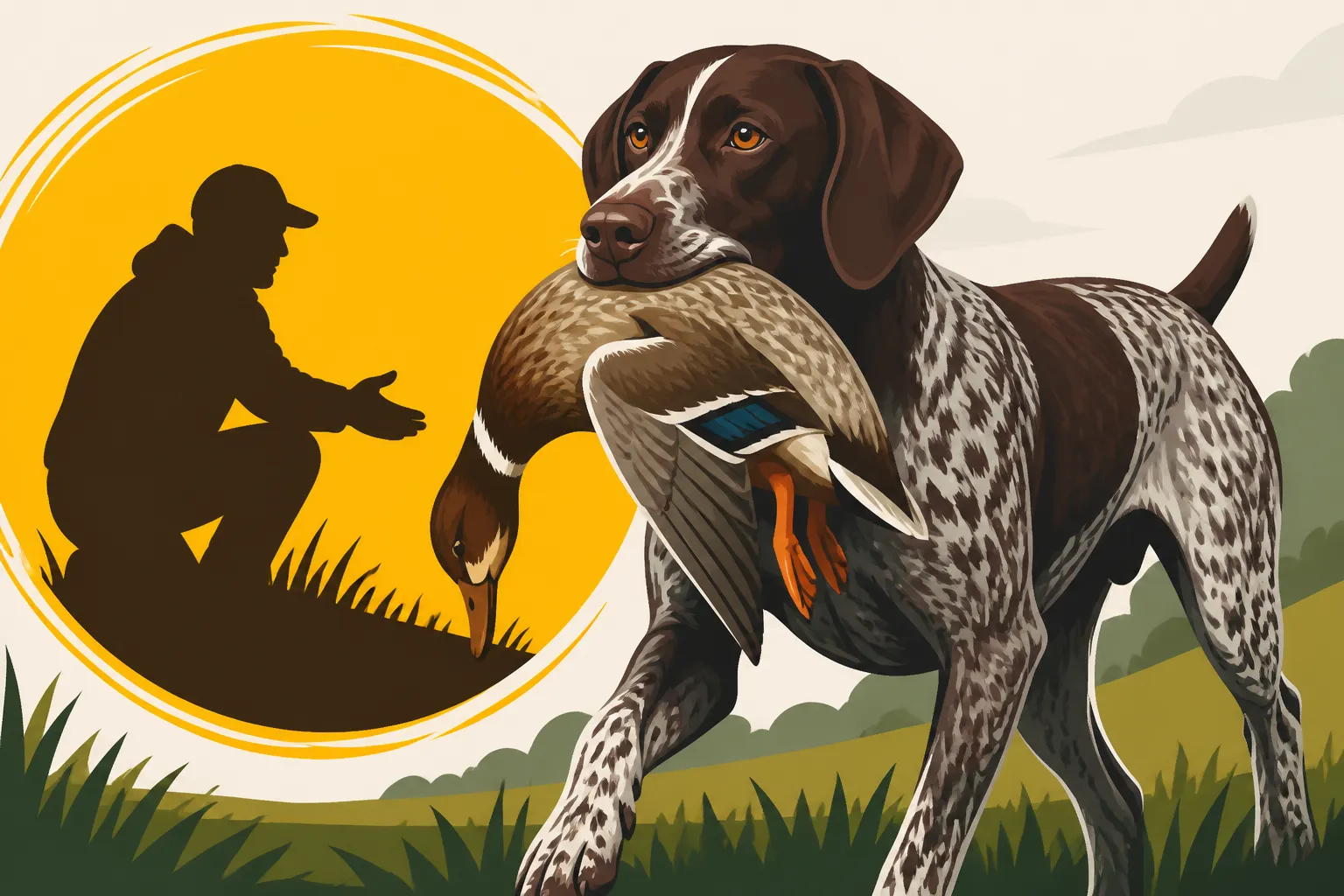
Teaching a Shorthair to Pick Up a Cripple
Few things are as frustrating, or as heartbreaking, as watching your German Shorthaired Pointer perform a beautiful point, a flawless retrieve of a downed bird, only to hesitate, or worse, ignore a crippled bird that still has life in it. You know your dog has the drive, the nose, and the desire, but when a bird is running, fluttering, or hiding, it's an entirely different game. This guide will walk you through the essential steps and advanced techniques to teach your Shorthair to confidently and effectively pick up a crippled bird, ensuring you recover every bird ethically and efficiently.
The Unique Challenge of a Crippled Bird for Your GSP
It’s easy to assume that a German Shorthaired Pointer, being the ultimate versatile hunting dog, will instinctively know how to handle every situation. After all, they point, they track, they retrieve. But a crippled bird presents a set of unique challenges that even the most natural bird dog needs specific training to overcome. It’s not just about finding a dead bird; it’s about pursuing, catching, and retrieving something that actively resists.
Why a Cripple Isn't Just Another Downed Bird
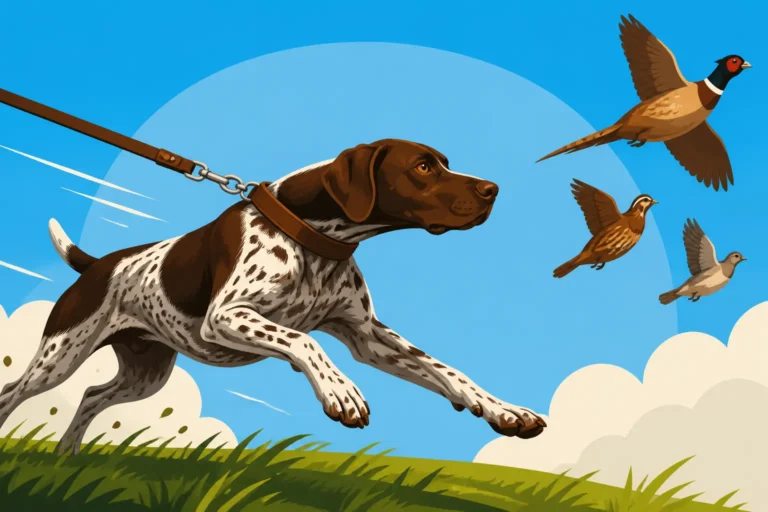
Imagine a pheasant that takes a hit but still has enough fight to run into thick cover, or a duck that splashes down far out in the marsh, diving repeatedly. These aren't static objects waiting to be retrieved. They're moving targets, often attempting to evade capture, sometimes even trying to peck or scratch at their pursuer. This dynamic can be confusing for a young Shorthair whose instinct is often to point the bird, not necessarily to engage in a chase and subdue. The dog might point, then break point if the bird moves, or even become hesitant if the bird acts aggressively. The inherent "point-and-hold" instinct needs to be layered with a "find-and-secure" command.
GSP Instincts and the Cripple Conundrum
German Shorthaired Pointers are bred for their incredible prey drive, keen nose, and biddability. They love to hunt, and they love to retrieve. However, their strong pointing instinct can sometimes work against them when dealing with a runner. A GSP might lock up on point, expecting you to come flush and shoot, even if the bird is obviously crippled and moving away. They might also be hesitant to apply the necessary pressure to capture a bird that is trying to escape. This isn't a flaw in their breeding, but rather a nuance that requires specific training to bridge the gap between their natural tendencies and the demands of ethical retrieval. Without this focused training, you might find your Shorthair losing interest in a bird that isn't holding still, or failing to follow through on a tough retrieve.
Laying the Groundwork: Essential Obedience and Retrieval Skills
Before you can tackle the complexities of a crippled bird, your German Shorthaired Pointer needs a rock-solid foundation in basic obedience and retrieval. Think of it as building blocks – you can't put the roof on until the walls are stable. These foundational skills are what give you control and confidence in high-pressure hunting situations.
Mastering Recall and the "Fetch" Command
A bulletproof "come" command is non-negotiable for any hunting dog, especially when dealing with a crippled bird that might lead your Shorthair far afield. You need to know that no matter how excited or focused they are on the chase, they will respond when called. Practice recall in increasingly distracting environments. Likewise, a consistent "fetch" or "retrieve" command is vital. Your dog needs to understand that when you say "fetch," they are to pick up the object, no questions asked, and bring it directly to you. Start with dummies and progress to dead birds in controlled settings. Build this drive and understanding meticulously. A good resource for comprehensive obedience from puppyhood, laying this groundwork, can be found with online programs such as BAXTER & Bella, which emphasize positive reinforcement for these core commands.
The Importance of Force Fetch for a Consistent Retrieve
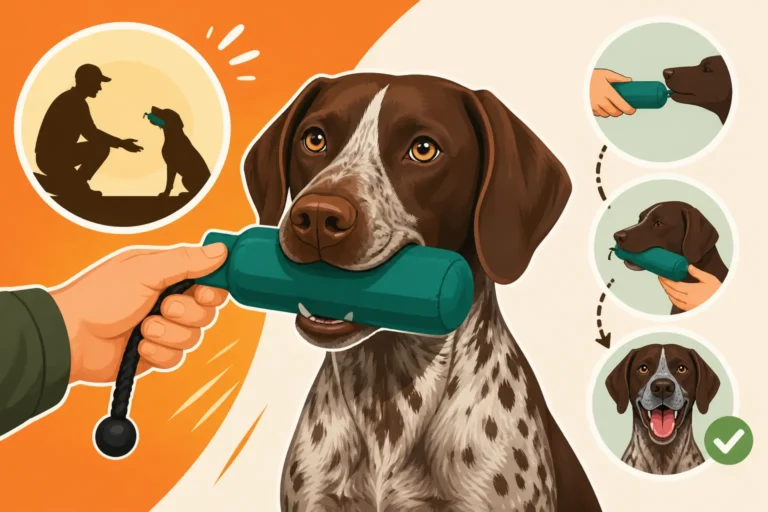
For many hunting dog owners, force fetch is a cornerstone of reliable retrieving. It ensures that your Shorthair will pick up and hold any object you command, regardless of its shape, texture, or even if it's struggling. It removes the dog's choice from the equation, making retrieval a non-negotiable task. This isn't about breaking your dog's spirit; it's about building a precise and dependable skill. When a crippled bird is flopping, biting, or covered in mud, a dog that has been force-fetched will still pick it up. You can learn more about this critical training step in Force Fetch Explained for a Shorthair Owner. Without this step, many dogs will become "soft mouthed" on difficult retrieves, dropping birds or refusing to pick them up if they don't like the feel or resistance.
Building Confidence in Diverse Environments
A crippled bird isn't always going to fall in a neatly mowed field. It might land in heavy cattails, dense briars, or deep water. Your Shorthair needs to be confident and willing to tackle any terrain. Introduce them to different environments during their basic retrieve training. Let them retrieve dummies and dead birds from various types of cover and from water. Water retrieves With a German Shorthaired Pointer offers excellent guidance on building this specific skill. The more exposure they have, the less likely they are to hesitate when a real cripple presents a difficult retrieve scenario. Use floating dummies and practice sending them through muck and reeds. You want your dog to see every challenging environment as an exciting new puzzle to solve, not a barrier.
Targeted Training: From Live Wing to Real-World Cripples
Once your Shorthair has a solid foundation in obedience and reliable retrieving, it’s time to introduce them to the complexities of a crippled bird. This phase requires patience, controlled exposure, and a gradual increase in difficulty to build both their skill and their confidence.
Introducing Live-Winged Birds
The crucial step for teaching your Shorthair to deal with a cripple is introducing them to live-winged birds that can move. Pigeons are often an excellent starting point because they are relatively inexpensive, durable, and can be used with pigeon harnesses for control.
Start by having your Shorthair retrieve a bird with a wing hobbled or in a pigeon harness. The bird can flap and move a little, simulating some resistance without being able to fly away or get too far. This teaches your dog to approach a moving target, grab it confidently, and hold it. Increase the movement gradually. The key is to build confidence, not to overwhelm them. You want them to learn that they can catch and hold a moving bird.
Simulating Real-World Scenarios with Control
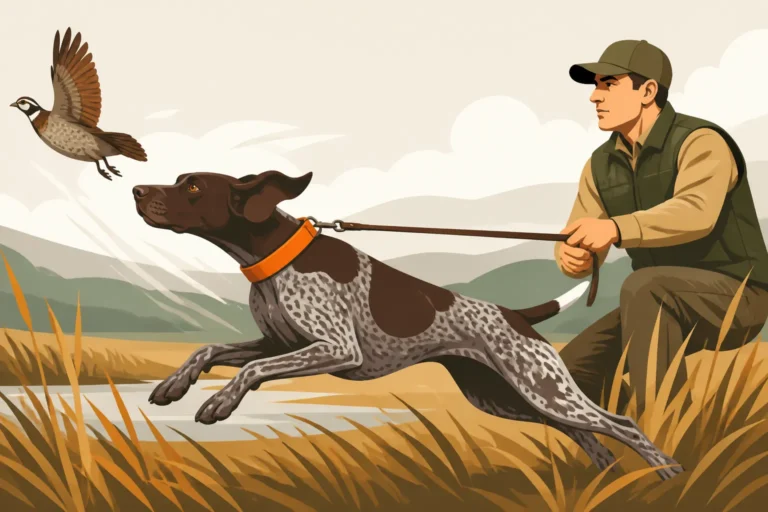
Once your dog is comfortable with hobbled birds, you can move on to more realistic scenarios. Use a check cord on your dog for safety and control. You can release a live bird (perhaps a small pigeon or quail) in light cover, giving it a head start, and then send your dog. The bird will run or flutter, and your Shorthair will need to actively pursue it.
Use an e-collar, but only after your dog fully understands the concepts and commands, and the e-collar itself has been properly conditioned. When an E-Collar Belongs on a German Shorthaired Pointer explains when and how to integrate this tool effectively. The e-collar can be used for gentle reinforcement of the "fetch" command if the dog hesitates or attempts to drop the bird, or for recall if they get too focused on the chase. You're teaching them persistence. Gradually increase the density of the cover and the distance the bird is allowed to travel before sending your dog. Practice in areas where birds might genuinely hide, like tall grass, brush piles, or along water's edge.
Encouraging Persistence and Tracking
A cripple might not be immediately visible. Your GSP needs to understand that a bird that just went down might still be alive and moving, and they need to use their nose to track it. Set up scenarios where the "crippled" bird isn't directly in sight. Let the bird run a short distance into cover before you send your dog, encouraging them with commands like "hunt dead" or "find the bird." Praise heavily when they pick up the scent and follow it to the bird. This builds their tracking ability for live birds, which is different from tracking a dead bird's scent cone.
Think about using a remote bird launcher (many reliable models are available on Amazon) to simulate a bird flushing and then "crippling" nearby. This allows you to control the bird's flight path and landing spot, setting up a perfect scenario for your dog to track a runner.
Step-by-Step Cripple Retrieval Progression
Here's a table outlining a general progression for training cripple retrieves:
| Training Phase | Bird Type / Situation | Goal | Key Skills Developed |
|---|---|---|---|
| Phase 1: Foundation | Dead dummies, dead birds (cold, warm) | Reliable retrieve, hold, deliver to hand | Basic retrieve, mouth control, obedience |
| Phase 2: Live-Winged | Pigeons with hobbled wings/harnesses, small game birds | Confident approach, grab, and hold of moving object | Overcoming hesitation, firm but gentle hold |
| Phase 3: Controlled Cripples | Live birds released into light cover (check cord) | Pursuit, capture, and retrieve of running/fluttering bird | Tracking, persistence, closing the distance |
| Phase 4: Challenging Environments | Live birds in dense cover, water, varied terrain | Application of cripple retrieval skills in difficult settings | Versatility, determination, problem-solving |
| Phase 5: Real Hunting Simulation | Shot birds that are clearly crippled, live-fire scenario | Flawless, ethical retrieval of actual crippled game during hunting | Instinctual application of all learned skills |
Each phase should only be advanced once your German Shorthaired Pointer consistently performs the tasks in the current phase with confidence and enthusiasm. Rushing through can create gaps in their understanding and lead to issues later on.
When Things Go Sideways: Troubleshooting Cripple Retrieves
Even with the best training, things don't always go according to plan in the field. Cripples can be unpredictable, and your dog might face challenges that test their training. Knowing how to troubleshoot common issues is key to turning a potentially lost bird into a successful retrieve.
Addressing Reluctance or Hesitation
Sometimes, a Shorthair might show reluctance to pick up a bird that's struggling or making noise. This can stem from a few things: perhaps they were corrected too harshly for mouthing in the past, or they simply aren't confident with the resistance.
If your dog hesitates, go back a step in your training. Revisit the live-winged bird exercises in a very controlled environment. Use softer birds, like pigeons, and ensure every successful retrieve is met with enthusiastic praise and reward. Avoid putting too much pressure on them initially. Gradually reintroduce more movement and resistance. You want to rebuild their confidence that they can handle the bird and that it's a positive experience. Make sure your "hold" command is strong; Teaching a Shorthair to Deliver a Bird to Hand reinforces how important this final step is.
When Your Shorthair Drops the Bird Short
It's a common frustration: your GSP retrieves the cripple, but instead of bringing it all the way to hand, they drop it a few feet away. This is often a sign that the "deliver to hand" portion of their retrieve training needs reinforcement.
Again, force fetch training is invaluable here. Practice your force fetch sequence all the way through to the delivery. You might need to use a longer lead or check cord initially to ensure they can't drop the bird prematurely. Give the "hold" command firmly as they approach you, and only release them from the hold once you've taken the bird. Make the delivery the most rewarded part of the retrieve. Sometimes a quick retrieve dummy tossed from your vest (readily available on Amazon) can be used for a quick "back to basics" drill right there in the field if they are struggling. For more specific guidance on this issue, check out A Shorthair That Drops the Bird Short.
Handling Hard Mouth or Mouthing Birds Hard
While the focus for cripples is to ensure the dog picks up and holds, you also don't want them to damage the bird. A dog that "mouths birds hard" can ruin the meat or even kill a bird unnecessarily. This is a delicate balance.
If you notice your Shorthair applying too much pressure, review your force fetch and hold commands. The goal is a firm but gentle grip. Use softer training dummies initially, then move to dead birds. If the problem persists with live-winged birds, consider using a softer bird like a quail or a chicken for practice. Some handlers use small amounts of a bitter spray on the training birds, but this should be done with extreme caution and under expert guidance, as it can make a dog reluctant to retrieve at all. The key is consistent, gentle correction and reinforcement of the desired light-but-firm hold. More insights on this challenge can be found in A German Shorthaired Pointer That Mouths Birds Hard.
The Ethical Imperative: Why Giving Up Isn't an Option
Beyond the satisfaction of a successful hunt, teaching your Shorthair to pick up cripples is an ethical responsibility. No hunter wants to lose a wounded animal. A well-trained GSP ensures that you maximize your chances of recovering every bird, minimizing suffering and waste.
This commitment should be instilled in your dog from a young age, and reinforced with every training session and hunt. Praise their persistence, their drive to find that bird no matter how difficult. After a long day, it’s important to give your dog a thorough check over, especially after chasing a cripple through tough cover, to make sure they haven't sustained any injuries. Checking a German Shorthaired Pointer Over After a Hunt and The Vet Schedule a Working Shorthair Should Keep offer excellent advice on post-hunt care. This dedication to training and ethical hunting strengthens the bond between you and your incredible German Shorthaired Pointer, truly embodying the spirit of the versatile gun dog.
Disclaimer
This article is for general informational purposes only and does not constitute professional advice. Laws, prices and regulations vary by location and change over time. Consult a qualified professional for guidance on your specific situation.