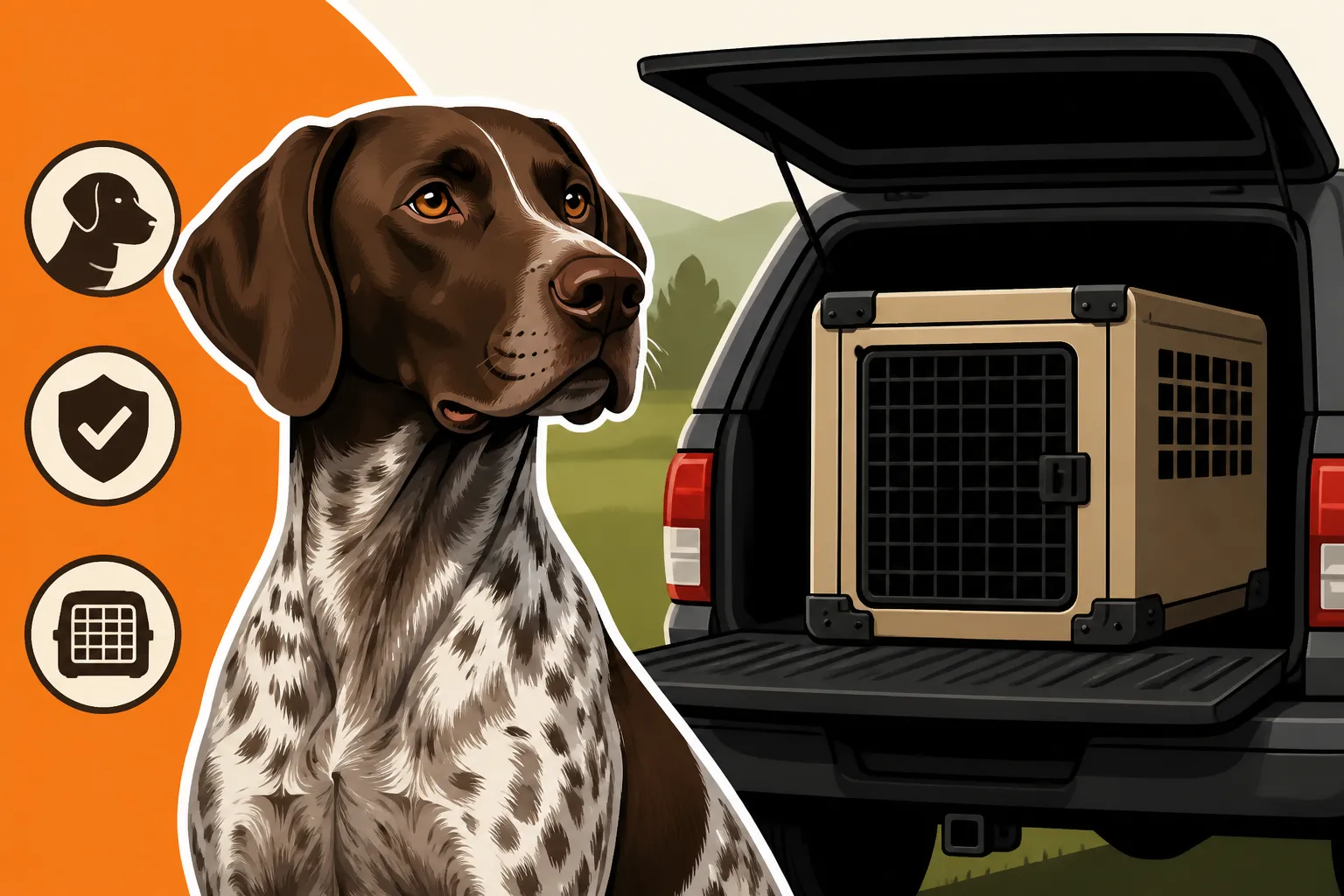
Dog Boxes and Crates for Hauling a Shorthair
One of the most common headaches for a German Shorthaired Pointer owner is safely getting that bundle of boundless energy from point A to point B. Whether you're heading to the hunting grounds, making a trip to the vet, or embarking on a family vacation, you face the very real challenge of secure and comfortable transport. This guide will walk you through everything you need to know about dog boxes and crates, ensuring your GSP's safety and your peace of mind on every journey.
The Indispensable Role of Dog Boxes and Crates for GSPs
Let's be honest, our German Shorthaired Pointers aren't exactly couch potatoes. Their zest for life, their powerful build, and their incredible hunting instincts mean they need more than just a seatbelt when they're in a moving vehicle. Relying on them to simply "behave" during travel is not only unrealistic for a breed so driven but also potentially dangerous for everyone involved. This is where dedicated dog boxes and crates become less of a luxury and more of an absolute necessity.
Prioritizing Safety in Transit
Imagine hitting the brakes suddenly with a sixty-pound GSP unrestrained in the back seat. The thought alone is terrifying. Even a minor fender bender can turn catastrophic if your dog becomes a projectile. Dog boxes and crates are designed to contain your dog, preventing them from being thrown around the vehicle or escaping in the aftermath of an accident. It’s not just about protecting your dog; it's about protecting you and your human passengers too. A well-secured crate means your dog stays put, reducing distractions while you're driving and offering a layer of protection in an emergency. It's truly a critical piece of safety equipment.
Beyond collision safety, these enclosures keep your GSP from doing things like trying to jump into the front seat at an inopportune moment, or worse, finding a way to pop a window and try to greet a passing bird while you're on the highway. We’ve all seen the dogs with their heads out the window, looking so happy, but a German Shorthaired Pointer with its incredible drive and athleticism can easily get itself into a dangerous situation with little warning. The right box or crate creates a secure, designated space for them, minimizing these risks significantly.
Essential for Training and Containment
Aside from travel, a crate or dog box is an invaluable tool for managing a GSP's natural energy and sometimes mischievous tendencies. For a young German Shorthaired Pointer, a crate becomes their den, a safe space where they can decompress and relax without chewing on furniture or getting into things they shouldn't. It aids immensely in house training, as dogs are instinctively clean and generally won't soil their sleeping area.
Even beyond puppyhood, a crate can be a lifesaver. If you have guests, need to leave your dog unsupervised for a short period, or simply need them to settle down after a vigorous run, their crate offers a clear boundary. It provides a consistent environment, whether at home, at a friend's house, or at a trial, which can be incredibly reassuring for a dog who thrives on routine. Many GSP owners use crates extensively for Crating a Shorthair That Has Energy to Burn and for Building a Shorthair's Tolerance for Being Alone, making them a cornerstone of responsible ownership.
Protecting Your Vehicle's Interior
Let's be real: German Shorthaired Pointers are not known for their pristine cleanliness, especially after a successful hunt or a romp in the marsh. Mud, burrs, water, and dog hair seem to cling to them with a vengeance. Without a crate or box, your vehicle's interior can quickly become a furry, muddy disaster zone that rivals a swamp. From a simple day at the dog park to a full-blown hunting trip, containing your GSP in a dedicated space means much easier cleanup for you.
Think about the long-term wear and tear on your car's upholstery, carpets, and even door panels from a high-energy dog. Claws can scratch, teeth can gnaw, and slobber can leave lasting marks. A sturdy crate or dog box protects these surfaces, preserving your vehicle's condition and resale value. It’s an investment that pays off in cleanliness and longevity for your ride, saving you countless hours of vacuuming and scrubbing.
Navigating the Different Types of Dog Boxes and Crates
The world of dog transport solutions is vast, with options ranging from simple wire crates to sophisticated, custom-built vehicle boxes. Understanding the pros and cons of each type is crucial for making the best choice for your German Shorthaired Pointer and your lifestyle. Each has its place, depending on your primary use, budget, and desired level of durability and safety.
Wire Crates: The Classic Indoor Option
Wire crates are perhaps the most common and recognizable type of dog crate. They consist of a metal frame with wire mesh panels, often collapsible for easy storage and transport. They offer excellent ventilation, which is a big plus for a dog like a GSP who can overheat quickly, especially after exercise. The open design also allows your dog to see their surroundings, which some dogs prefer. Many brands are readily available through retailers like Chewy, offering a wide range of sizes and configurations.
While great for indoor use and short trips, wire crates are generally not recommended for vehicle travel without additional securing measures. In a collision, the wire can bend or collapse, potentially injuring your dog. They also offer minimal protection from the elements if used in an open truck bed. However, for initial crate training, house-training a puppy, or providing a safe space at home, they are an economical and practical choice. You can add a cozy bed and a chew toy to make it a welcoming den.
Plastic Crates: Versatile and More Secure
Often referred to as "kennels" or "travel crates," plastic crates are typically made of durable, hard plastic shells with ventilation holes or grates. These crates offer more protection than wire crates in a vehicle, as the rigid sides provide a buffer against impacts. Their enclosed nature can also give some dogs a greater sense of security, mimicking a den. They are easier to clean than wire crates and can be suitable for airline travel (always check airline-specific requirements).
Plastic crates strike a good balance between portability, security, and cost. They're excellent for taking your GSP to the vet, moving them from home to a hunting lodge, or for general road trips. However, ventilation can be a concern in hot weather, especially if left in a parked car, so monitoring your dog's comfort is paramount. For GSPs, their robust nature can sometimes test the durability of standard plastic latches, so look for models with strong, secure doors.
Aluminum and Custom Vehicle Boxes: The Ultimate in Durability and Safety
When it comes to serious long-term use and maximum protection for your GSP in a vehicle, especially for hunters or those who frequently travel long distances, aluminum boxes and custom vehicle crates are the gold standard. These are often designed to fit specifically into truck beds, SUVs, or even on custom trailers. Aluminum is lightweight yet incredibly strong, providing superior impact protection. Many models feature robust locks, excellent airflow, and sometimes even insulated panels to manage temperature.
Custom vehicle boxes, like those designed to fit a specific truck bed contour, offer the best space utilization and security. They prevent the box from shifting, which is a major safety advantage. These are typically a significant investment, but for those who routinely transport their GSP in demanding conditions, whether it's through rough terrain to a remote hunting spot or for extensive competition travel, the peace of mind they offer is unmatched. These boxes often have features like storage compartments, drain plugs for easy cleaning, and integrated fans for ventilation, addressing every need a dedicated GSP owner might have. If you're wondering about the investment, you can learn more about What a Truck Bed Dog Box Costs for a Shorthair.
Selecting the Ideal Size and Material for Your GSP
Choosing the right crate or box isn't just about picking one off the shelf; it requires careful consideration of your German Shorthaired Pointer's size, temperament, and your specific needs. A crate that's too small is uncomfortable and unsafe, while one that's too large can allow your dog to move around too much during travel, potentially leading to injury.
Measuring for the Perfect Fit
The general rule of thumb for crate sizing is that your GSP should be able to stand up, turn around comfortably, and lie down in a natural position. For length, measure your dog from the tip of their nose to the base of their tail, and add 2-4 inches. For height, measure your dog from the top of their head to the floor when standing, and add 2-4 inches. It’s better to err slightly on the side of a bit more room than too little, but avoid crates that are excessively large.
Consider the growth of a puppy, too. You might start with a smaller crate with a divider, then expand it as your GSP grows, or invest in a full-sized adult crate from the beginning. Remember, this crate isn't just for comfort; it's a safety device. Too much empty space allows for too much momentum in a sudden stop. For specific guidance on the physical growth of your GSP, you might find valuable insights in articles like The Age a German Shorthaired Pointer Finishes Growing and Starts Filling Out.
Material Choice: Balancing Durability, Weight, and Insulation
When it comes to material, you're weighing several factors. Wire crates are lightweight and offer maximum ventilation, but minimal impact protection. They're easy to move around the house but less secure in a vehicle. Plastic crates offer more protection and a den-like feel, making them a good all-around choice for many GSP owners, especially for general car travel. They can be a bit heavier than wire but still manageable.
Aluminum or heavy-duty composite boxes are the top tier for vehicle safety and durability. They can withstand significant impacts and offer superior protection from the elements. However, they are often heavier and more expensive. For GSPs, who might be exposed to varying temperatures, the insulation properties of these heavy-duty boxes can be a real benefit, helping to mitigate extreme heat or cold. Remember to consider Keeping a Shorthair Warm in a Truck Box and Heat Exhaustion in an Early Season Shorthair when making your material decision, as GSPs are vulnerable to both extremes.
Critical Safety Features and Considerations for Transport
Beyond just the type and size, several specific features and considerations play a vital role in ensuring your GSP's safety during transport. Overlooking these details can turn a seemingly good crate into a liability. We're talking about things that stand between your dog and potential harm in a real-world scenario.
Crash-Test Ratings and Securing Systems
Not all crates are created equal when it comes to impact safety. Just like child car seats, some dog crates undergo rigorous crash testing to evaluate their performance in simulated accidents. Looking for crates with recognized crash-test certifications can provide an extra layer of assurance. Brands like Gunner Kennels or Ruffland Performance Kennels are known for their focus on impact resistance, often using robust rotationally molded plastic or aluminum. While these investments are significant, they offer unparalleled protection in a collision, reducing the risk of your GSP becoming injured or escaping. You can delve deeper into these types of protective gear with resources on Crash Rated Crates for a German Shorthaired Pointer.
Regardless of the crate type, how it's secured within your vehicle is paramount. A crash-tested crate is only as good as its anchor points. Use heavy-duty straps, cargo hooks, or specialized securing systems to prevent the crate from sliding, tipping, or becoming airborne in a sudden stop or impact. Never assume a crate is heavy enough to stay put on its own. Even a minor swerve can send an unsecured crate flying, putting your dog and occupants at serious risk.
Ventilation, Temperature Control, and Comfort
German Shorthaired Pointers have a short coat and are built for exertion, meaning they can easily overheat, especially when confined. Ample ventilation is non-negotiable. Look for crates with generous air vents on multiple sides to ensure proper airflow. In hot climates, or during summer travel, consider adding battery-operated fans that clip onto the crate doors or vents. Monitor the temperature inside the vehicle and the crate closely, especially when parked.
Conversely, in colder weather, especially for overnight stays or during winter hunts, consider how to keep your GSP warm. Some heavy-duty boxes offer insulation. For other crates, adding warm, dry bedding is essential. However, be cautious with excessive bedding in a vehicle crate, as it can sometimes absorb too much heat if ventilation is poor. For more on keeping your GSP comfortable in various conditions, check out Bedding That Keeps a Shorthair Off Cold Concrete and Whether a German Shorthaired Pointer Shivers Easily. Providing water access during longer trips is also crucial. Consider a spill-proof bowl attached to the crate door. And when your GSP is in its crate, make sure it has access to fresh, clean water, perhaps even from a bowl sourced from a trusted pet supplier like Chewy.
Essential Accessories for Travel Safety and Convenience
Think about what else makes travel safer and easier. A sturdy, non-slip mat or a comfortable pad inside the crate can prevent your GSP from sliding around and provide a softer surface for rest. Just make sure it doesn't impede airflow or get bunched up in a dangerous way. For some dogs, a favorite chew toy or blanket can help reduce anxiety during travel.
Consider an identification tag securely affixed to the crate itself, in addition to your dog's collar tags. Include your name, phone number, and any critical medical information. For longer trips or hunting excursions, a first-aid kit specific for dogs should always be easily accessible. While we hope for the best, being prepared for unexpected Field Injuries a Hunting German Shorthaired Pointer Comes Home With is part of responsible GSP ownership. Even with all precautions, having pet insurance like Healthy Paws can provide immense peace of mind should an unforeseen accident occur during travel.
| Crate Type | Pros | Cons | Best Use Cases |
|---|---|---|---|
| Wire Crate | Excellent ventilation, collapsible, affordable, visible surroundings | Minimal crash protection, poor weather protection, can be noisy | Home use, initial crate training, short, supervised indoor containment |
| Plastic Crate | Good crash protection, den-like feel, easy to clean, airline-ready | Ventilation can be limited, can be bulky, some lower durability | Car travel, vet visits, temporary housing, airline cargo travel (check rules) |
| Aluminum Box | Superior crash protection, excellent durability, weather resistant | Expensive, heavy, less transparent, fixed size | Truck beds, SUV cargo areas, frequent long-distance travel, hunting |
| Custom Vehicle Box | Optimal fit, maximum safety, integrated features, highly durable | Very expensive, heavy, permanent installation, specialized | Dedicated hunting vehicles, professional handlers, frequent strenuous travel |
Training Your GSP to Embrace Their Crate or Box
It’s one thing to buy the right crate; it’s another to get your German Shorthaired Pointer to view it as a positive, safe space rather than a punishment. A GSP's intelligence and sensitive nature mean that crate training requires patience, consistency, and a whole lot of positive reinforcement. Rushing the process or using the crate incorrectly can lead to anxiety and resistance, which is the last thing you want, especially for travel.
Making the Crate a Positive Place
The key to successful crate training is to introduce it gradually and associate it with good things. Start by placing the crate in a busy area of your home, like the living room, with the door open. Toss treats, toys, or even a delicious fresh food portion from Ollie inside the crate, allowing your GSP to go in and out freely. Feed meals near or even inside the crate. This builds a positive association before you ever ask them to spend time in it with the door closed.
Never use the crate as a punishment. If your GSP does something wrong, a time-out in their crate will only teach them to dread it. Instead, the crate should be a refuge, a comfortable den where they can relax. Consider draping a blanket over a wire crate to enhance the den-like feel, providing a sense of security. Always speak in a calm, encouraging tone when interacting with your GSP around the crate. Consistency is crucial, as you can read more about in The Structure a German Shorthaired Pointer Needs Daily.
Gradual Introduction to Crate Time
Once your GSP is comfortable entering the crate on their own, begin to close the door for very short periods. Start with just a few seconds while you're still in the room, then gradually increase the duration. Stay calm and quiet. If they whine or fuss, wait for a brief moment of silence before opening the door, so they don't associate whining with getting out. As they tolerate longer periods, you can start leaving the room for a few minutes at a time.
Practice short intervals in the crate before you need to use it for an actual trip. This acclimatization will make travel days much less stressful. Always offer a potty break before crating your GSP for any extended period. Providing a stimulating chew toy, like a Kong filled with frozen peanut butter, can also help keep them occupied and happy while in their crate. Building up this positive association is vital for their emotional well-being and willingness to accept crate time, and it's particularly helpful for a Whether Crate Time Helps a Clingy Shorthair.
Maintenance and Longevity of Your Dog's Travel Gear
Investing in a quality dog box or crate for your German Shorthaired Pointer means you want it to last. Like any piece of essential equipment, proper care and regular maintenance will ensure its durability, functionality, and safety for years to come. Neglecting these basics can lead to premature wear, structural compromises, and potentially unsafe conditions for your active dog.
Regular Cleaning and Inspection
After every trip, especially after hunting in muddy fields or swimming in ponds, give your GSP's crate a thorough cleaning. Mud, dirt, and even dog hair can accumulate quickly, becoming a hygiene issue and potentially harboring bacteria or parasites. For wire and plastic crates, a simple wash with soap and water, followed by a good rinse and thorough drying, usually suffices. For aluminum or custom truck boxes, hose them out, use a mild cleaner if needed, and ensure all drainage holes are clear. This also helps eliminate any lingering scents that might deter your GSP from entering it next time.
Beyond cleaning, make it a habit to regularly inspect the crate for any signs of wear and tear. Check latches, hinges, and doors for proper function and security. Look for cracks in plastic crates, bent wires on wire crates, or any loose fasteners on aluminum boxes. Pay attention to the floor of the crate and any bedding inside, ensuring there are no sharp edges or torn materials that could injure your GSP. A proactive approach to inspection can catch small issues before they become major safety hazards.
Addressing Wear and Tear and Considering Replacements
Even the most durable crates will show signs of wear over time, especially with a strong, active German Shorthaired Pointer. If you notice a latch becoming sticky, a door that doesn't close quite right, or significant structural damage, don't ignore it. Many manufacturers offer replacement parts for latches, hinges, or even door assemblies, which can extend the life of your crate. However, if the main structure of the crate is compromised, or if it has been involved in any kind of impact accident, it's crucial to consider replacing it entirely.
A damaged crate cannot provide the protection it was designed for, especially for Field Injuries a Hunting German Shorthaired Pointer Comes Home With. A crack in a plastic crate might seem minor, but it can weaken the entire structure in an impact. Similarly, bent wires on a wire crate can create sharp points that can cut your dog. Prioritizing your GSP's safety means being willing to replace equipment when it's no longer reliable, understanding that it's an investment in their well-being. Always refer to manufacturer guidelines for care and maintenance, and remember that quality equipment, though an upfront cost, lasts longer and performs better.
Disclaimer
This article is for general informational purposes only and does not constitute professional advice. Laws, prices and regulations vary by location and change over time. Consult a qualified professional for guidance on your specific situation.