The Size and Build the Shorthair Standard Asks For
It can feel overwhelming, especially for first-time German Shorthaired Pointer owners, to truly grasp what the breed standard means for their energetic companion. You might hear terms like "at the withers" or "well-sprung ribs" and wonder how they translate to the dog panting happily at your feet, or what it truly means for their health and function in the field. This guide is here to break down the specific size and build requirements outlined in the German Shorthaired Pointer breed standard, explaining why these characteristics are so important for both the show ring and, more importantly, for a healthy, capable hunting dog.
Understanding the German Shorthaired Pointer Breed Standard
When you first dive into the world of purebred dogs, the concept of a "breed standard" can seem a bit stuffy, like something only show dog enthusiasts need to worry about. But trust me, even if your GSP's idea of a "show ring" is a mud puddle in the back forty, understanding the standard is incredibly valuable. It’s the blueprint, the ideal vision that responsible breeders strive for, and it impacts everything from your dog’s health to their ability to perform the tasks they were originally bred for.
Why a Breed Standard Matters Even for Pet Owners
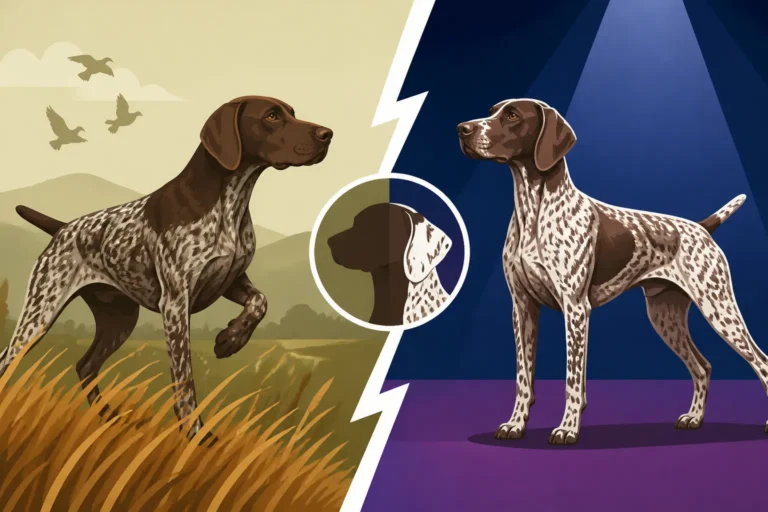
A breed standard is essentially a written description of the perfect specimen of a breed. It covers temperament, movement, coat, color, and, yes, size and build. Think of it less as a rigid set of rules designed to exclude dogs from competition, and more as a detailed guide ensuring the breed remains true to its original purpose and genetic heritage. For the German Shorthaired Pointer, that purpose was and still is a versatile gun dog—one capable of pointing, retrieving, and tracking both feather and fur, on land and in water.
So, why should you, a loving pet owner, care about these specific descriptions? Because deviations from the standard can often point to potential health issues or a compromise in the dog's ability to live a full, active GSP life. For example, a dog that is too large or too heavy might struggle with endurance in the field or be prone to joint issues later in life. A GSP bred strictly for aesthetics without regard for structure might have an inefficient gait, meaning they burn more energy to cover less ground, leading to quicker fatigue. When breeders adhere to the standard, they are not just creating beautiful dogs; they are aiming for healthy, functional dogs. This commitment to structure helps ensure the long-term well-being of the breed, which ultimately benefits every GSP owner.
The American Kennel Club's Role in the GSP Standard
The German Shorthaired Pointer has a rich history, initially developed in Germany in the late 19th century. When the breed arrived in the United States, the American Kennel Club (AKC) played a pivotal role in establishing and maintaining the breed standard here. The AKC officially recognized the German Shorthaired Pointer in 1930, bringing structure and consistency to its development within the country.
While the fundamental traits remain consistent with the breed's German roots (where they are known as Deutsch Kurzhaar), the AKC standard provides the specific guidelines followed by American breeders and judges. The AKC standard emphasizes versatility, athleticism, and a noble appearance. It's a living document, occasionally reviewed and refined, but its core tenets remain focused on preserving the GSP's functional capabilities. For a new owner, knowing the AKC's role helps you understand the lineage and health clearances often associated with well-bred puppies. It’s a point of reference that helps guide breeders in producing dogs that not only look like a GSP but can also do what a GSP was intended to do.
The Ideal Height and Weight: Not Just Numbers
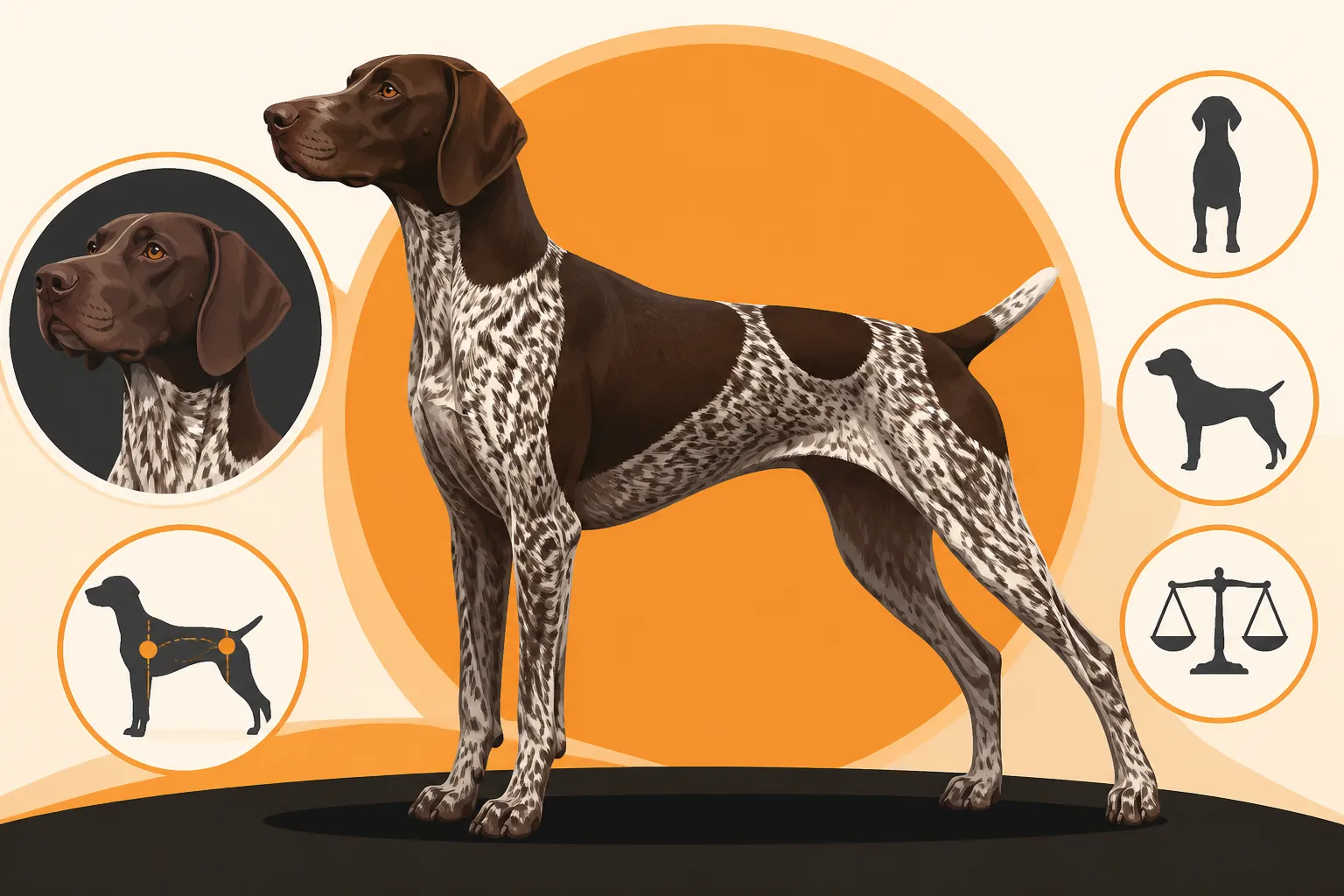
When you’re looking at a German Shorthaired Pointer, it’s not just about how tall or heavy they are. Those numbers are a framework, but they tell a story of proportion, balance, and athleticism. A GSP is built for endurance and power, and its size and weight directly reflect that working heritage.
The Inches at the Withers a Shorthair Is Judged On
The breed standard specifies a precise height range for German Shorthaired Pointers, measured "at the withers." The withers refer to the highest point of the shoulder blades, where the neck meets the back. This measurement is crucial because it indicates the dog's overall frame size and proportions.
For males, the ideal height at the withers is between 23 and 25 inches. Females are typically a bit smaller, with an ideal range of 21 to 23 inches. If a dog falls outside these specified ranges in the show ring, it is considered a fault, and in some cases, it can even lead to disqualification. For example, a male GSP measuring 22 inches would be too small, and one at 26 inches would be too large according to the standard. This isn't just an arbitrary rule; a dog significantly outside the range might struggle with the stamina or agility required for efficient hunting. Too tall, and they might be lanky and less agile; too short, and they might lack the powerful stride needed to cover ground all day. The height helps define the efficient, athletic silhouette of a true German Shorthaired Pointer.
The Weight Range in the Shorthair Standard
Complementing the height, the weight range is another critical component of the GSP standard, though it’s often discussed with more flexibility. The standard calls for males to weigh between 55 and 70 pounds, and females between 45 and 60 pounds. However, it's vital to understand that this isn't just about hitting a specific number on the scale. The weight must be in proportion to the dog's height and, most importantly, reflect an athletic, well-conditioned physique.
A GSP should never appear overweight or underweight. They should be lean, with visible muscle definition and ribs that are easily felt but not prominently seen. The Body Condition a Field Shorthair Should Carry is paramount; you should be able to discern a waist when viewed from above and a tuck-up from the side. A dog might be within the weight range but still be poorly conditioned, either too fat or too thin. For a working dog, every pound matters. Excess weight puts undue strain on joints and organs, reducing endurance and increasing the risk of injury. Conversely, being too light can indicate a lack of muscle mass or underlying health issues, both detrimental to a dog expected to work hard. When evaluating a GSP's weight, always consider it in context with their height and overall physical condition, ensuring they are hard, fit, and ready for action.
Form and Function: The Shorthair's Overall Build
The German Shorthaired Pointer's build is a testament to its purpose: a powerful, agile, and enduring hunting companion. Every aspect of their structure is designed to maximize efficiency and resilience in the field, allowing them to cover vast distances and retrieve game without faltering.
The Chest and Ribcage a Shorthair Standard Describes
The GSP's chest and ribcage are absolutely vital to its performance, and the standard details them precisely for a reason. A German Shorthaired Pointer should possess a deep, capacious chest, meaning it should extend well down to the elbows. This depth is critical because it houses the heart and lungs, providing ample room for these organs to function optimally during intense physical exertion. A deep chest allows for maximum lung capacity, which translates directly into the stamina and endurance necessary for long days of hunting.
In addition to depth, the ribs should be well-sprung, neither flat-sided nor barrel-chested. Well-sprung ribs provide additional volume for the lungs and create a strong, resilient frame. However, they should not be overly round, which can restrict movement and agility. The chest should gradually taper to form a distinct waist, allowing for flexibility and preventing a cumbersome, bulky appearance. This specific construction ensures that the GSP can breathe efficiently, recover quickly, and maintain its powerful pace for extended periods, even when navigating challenging terrain. A dog with a poorly developed chest will simply not have the engine to be a top-tier field dog.
The Movement a German Shorthaired Pointer Should Show
If you've ever watched a well-conditioned German Shorthaired Pointer move, you know it's a thing of beauty. The standard emphasizes "movement that is effortless, flowing, and powerful, yet agile." A GSP should cover ground with an easy, rhythmic stride that appears almost tireless. This isn't just about speed; it's about efficiency. The dog's forelegs should reach out smoothly, extending well forward, while the hind legs provide powerful drive, propelling the dog forward with purpose.
When viewed from the side, you should see a harmonious reach and drive, with the back remaining firm and level. From the front and rear, the legs should move parallel to each other, neither crabbing nor crossing over. Any deviation, such as paddling (feet turning out), hackney gait (high stepping), or crabbing (moving with the body at an angle), is considered a fault. These inefficiencies in gait waste energy and can lead to fatigue and injury over time. For a breed meant to run for hours, covering miles of varied terrain, efficient movement is paramount. It allows them to conserve energy, maintain their pace, and keep their focus on the hunt. For more insight into their distinct movement, check out The Gait That Separates a Shorthair From an English Pointer.
The Head and Expression: More Than Just a Pretty Face
While often overlooked by casual observers, the head of a German Shorthaired Pointer tells a significant story about its breed type, intelligence, and even its capabilities as a working dog. The standard doesn’t just describe aesthetics; it describes features that contribute to the dog's overall function and temperament.
The Head and Muzzle a Shorthair Judge Wants
The GSP’s head is characteristic and conveys intelligence and nobility. The standard calls for a skull that is sufficiently broad but not too heavy, with a moderate stop—the transition from the forehead to the muzzle. The muzzle itself should be adequately long, strong, and deep, neither pointed nor snipey. This length and strength are crucial for a retrieving dog, allowing them to firmly grasp and carry game without damaging it. A short, weak muzzle would be a serious fault, impeding their ability to effectively retrieve.
The lips should be well-fitted, not pendulous or droopy, and the jaws should be powerful. The overall expression should be intelligent, alert, and friendly. A coarse or blocky head would detract from the breed's elegant appearance, while a refined, delicate head might suggest a lack of strength for their working duties. It's a balance—strength without clunkiness, refinement without weakness.
The Ear Set on a German Shorthaired Pointer
The ears are another distinctive feature. The standard describes them as set high on the head, broad, and lying flat against the skull. They should be relatively thin and hang close to the cheeks, reaching approximately to the corner of the mouth when extended. They are neither excessively long nor heavy, maintaining a clean, balanced look with the rest of the head.
While aesthetically pleasing, the ear set also has practical implications for a hunting dog. Ears that are too low-set or overly long can be more prone to injury in heavy cover. The folded, pendulous ear, characteristic of the breed, does require regular attention to prevent infections, especially for a dog that loves water work. After a swim or a rainy hunt, ensuring their ears are dry is key to preventing problems. For more on this, you might find our guide on Ear Infections in a Shorthair That Swims helpful. Regular cleaning and checking are part of responsible GSP ownership, ensuring these handsome ears stay healthy.
The Bite a German Shorthaired Pointer Should Have
The dentition, or the arrangement of a dog’s teeth, is a key indicator of health and function, particularly for a breed that needs to retrieve. The German Shorthaired Pointer standard explicitly calls for a strong, healthy set of teeth with a complete scissor bite. In a scissor bite, the outer side of the lower incisors touches the inner side of the upper incisors, perfectly interlocking like a pair of scissors.
Any deviation from this, such as an overshot bite (upper jaw extending beyond the lower jaw) or an undershot bite (lower jaw extending beyond the upper jaw), is considered a serious fault, as it can affect the dog’s ability to grasp and hold game properly, and may even lead to dental problems later in life. Furthermore, a complete set of teeth is expected. Missing teeth, unless due to injury, can also be a fault. Strong, correctly aligned teeth are essential for a GSP’s versatile role, allowing them to carry birds and small game securely without causing damage. It’s also an important part of their overall health; regular dental care, even for a working dog, can prevent issues down the line. To learn more about common issues, consider reading Dental Disease in a Middle Aged German Shorthaired Pointer.
The Crucial Role of the Forequarters and Hindquarters
The engine of any working dog lies in its limbs. For the German Shorthaired Pointer, powerful, correctly structured forequarters and hindquarters are non-negotiable for their demanding life in the field. They are the shock absorbers, the propulsive force, and the foundation of endurance.
Strong Shoulders and Straight Forelegs
The forequarters of a GSP are crucial for both reach and stability. The standard requires well laid-back shoulders. This means the shoulder blades should be angled correctly, allowing for maximum forward extension of the front legs, contributing to that effortless, ground-covering stride we discussed. A dog with straight, upright shoulders will have a short, choppy gait, which is highly inefficient for covering miles of ground.
The forelegs themselves should be perfectly straight, parallel to each other, and well-muscled. They should appear strong and sturdy, with tightly knuckled feet. Weakness in the pasterns (the area just above the foot) or splayed feet are significant faults, as they can lead to fatigue and injury, especially when running over rough terrain. Imagine a GSP crashing through thick briar patches or leaping over downed logs; strong, straight forelegs and firm shoulders are what allow them to do this repeatedly without breaking down. Without this robust front end, a GSP's working life would be cut short due to strains and pains. If you're concerned about potential issues, our article on Shoulder and Toe Injuries in a Running Shorthair offers more detail.
Muscular Thighs and Proper Angulation
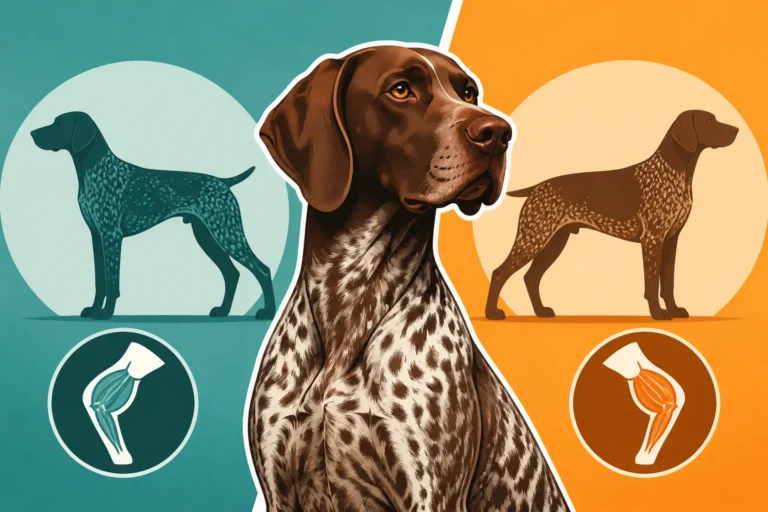
Just as important as the forequarters are the hindquarters, which provide the powerful drive that propels the German Shorthaired Pointer forward. The standard calls for strong, well-muscled thighs, indicating power and stamina. The angulation of the stifle (knee joint) and hock (ankle joint) is also critical. They should be well-angulated but not exaggerated, allowing for both powerful extension and effective shock absorption. Correct angulation enables the dog to push off with maximum force, translating into speed and jumping ability, while also reducing stress on the joints.
When viewed from the rear, the hind legs should be straight and parallel to each other, neither cow-hocked (hocks turned inward) nor bow-legged. Any deviation from this correct structure would be a serious fault, as it compromises stability and efficiency, making the dog more prone to injuries such as torn ligaments. A GSP's ability to explode into a run, jump over fences, or maintain a tireless pace through challenging cover depends entirely on a correctly built, powerful rear end. This structure also helps mitigate common breed issues like hip dysplasia, which can be exacerbated by poor conformation. You can find more information on this topic in Hip Dysplasia in a Hard Running German Shorthaired Pointer.
The Tail: A Balance of Tradition and Function
The German Shorthaired Pointer's tail is one of its most recognizable features, largely due to the traditional practice of docking. While controversial in some circles, the standard specifies a particular length and carriage for a reason rooted in the breed's working history.
The Forty Percent Tail a Shorthair Is Left With
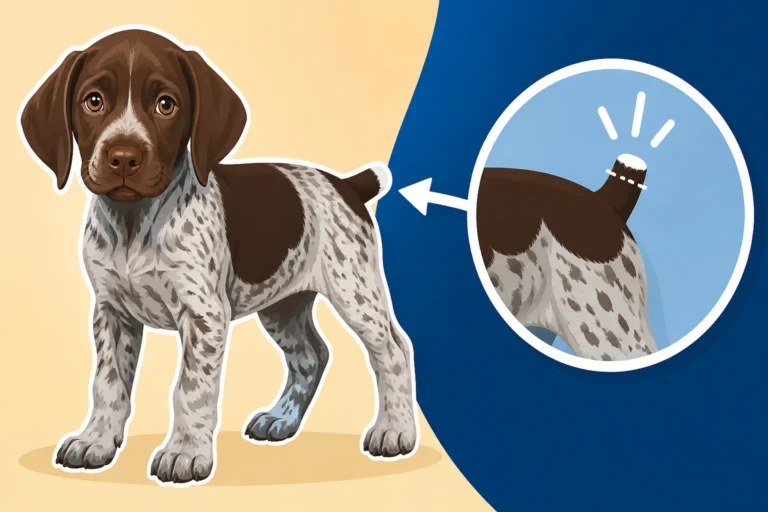
The breed standard for the German Shorthaired Pointer specifies that the tail should be docked, leaving approximately 40% of its natural length. This means the tail should be neither too long nor too short, but rather a robust, medium-length appendage. It should be carried erect or nearly erect when the dog is excited or working, but never curled over the back. A tail that is too thin, too coarse, or carried incorrectly is considered a fault.
The tradition of docking goes back to the breed's origins as a hunting dog, believed to prevent injury from heavy cover, briars, and brush. A long, thin tail could easily be snagged, cut, or broken while the dog is enthusiastically quartering through dense fields. While primarily a functional choice historically, it has become an intrinsic part of the breed's silhouette. The "forty percent" length allows the tail to still serve as a rudder for balance when running and turning rapidly, without being a liability. If you're curious about the specifics of this procedure, The Age a Shorthair Puppy's Tail Is Docked offers further details.
Whether an Undocked German Shorthaired Pointer Can Be Shown
This is a topic that sparks a lot of discussion among GSP enthusiasts. In the United States, under the AKC standard, a traditionally docked tail is expected. An undocked German Shorthaired Pointer might be penalized in the conformation ring, as it deviates from the written standard.
However, in many European countries, tail docking has been banned for ethical reasons, meaning GSPs in those regions are shown with their natural tails. These dogs can still perform brilliantly in field trials and hunts, proving that an undocked tail does not inherently diminish a dog's working ability. For owners outside the show ring, an undocked tail is often a non-issue. It does, however, mean that owners of hunting dogs with natural tails might need to be more vigilant about checking for injuries after a day in heavy cover. The question of whether an undocked tail can be damaged while hunting is a valid one, and you can explore this further in Whether an Undocked Shorthair Damages Its Tail Hunting. Ultimately, while the AKC standard maintains the docked tail, the conversation around it continues to evolve.
Coat and Condition: Protection and Presentation
The German Shorthaired Pointer's coat and overall physical condition are not just about good looks; they are integral to its ability to perform its demanding job effectively and comfortably in various weather conditions.
The Water Resistant Coat a Shorthair Carries
The GSP's coat is a marvel of practical design. The breed standard describes it as short, thick, and harsh to the touch. This isn't a soft, silky coat; it's a utilitarian garment designed for protection. The dense, wiry texture provides excellent insulation against both cold and heat, and it offers a surprising degree of protection against minor scrapes and punctures from brush and thorns encountered in the field.
Perhaps most notably, this coat is remarkably water-resistant. The natural oils in the coat, combined with its density, act as a barrier, allowing water to bead off rather than soak through to the skin. This is a critical feature for a dog that is expected to retrieve waterfowl or work in wet conditions. After a dip in a pond, a properly conditioned GSP will shake vigorously, and much of the water will fly right off, leaving them relatively dry and warming up quickly. While they might still need a little towel help, especially in colder weather, this coat significantly reduces the risk of chilling.
Overall Condition and Fitness
Beyond the coat, the standard emphasizes the German Shorthaired Pointer's overall physical condition. A GSP should always appear lean, athletic, and well-muscled. This isn't a breed meant to carry extra weight; every pound should contribute to power and endurance. When running your hands over a well-conditioned GSP, you should feel firm muscle beneath a taut skin, with ribs easily discernible but not protruding. They should have a well-defined waist and a slight tuck-up from flank to chest.
Maintaining this level of fitness requires consistent exercise and a high-quality diet. These dogs are athletes, and their feeding regimen needs to reflect their energy output. Many owners rely on specialized performance foods that provide the necessary protein, fat, and carbohydrates to fuel their active lifestyles. You can find many suitable options for performance diets and supplements on platforms like Chewy, ensuring your GSP gets the nutrition it needs to thrive. Without proper conditioning, even a perfectly structured GSP will lack the stamina and resilience to perform its duties effectively or even enjoy a healthy, active life as a companion. For a deeper dive into maintaining this ideal physique, read Keeping a German Shorthaired Pointer Lean and Hard.
Disqualifications and Faults: What to Watch For
Understanding faults and disqualifications in the breed standard isn't about being overly critical of every GSP you see. Instead, it's about appreciating the meticulous effort that goes into preserving the breed's health, temperament, and working ability. These elements of the standard highlight deviations that compromise the German Shorthaired Pointer's intended function or breed type.
Severe Structural Faults
A "fault" in the breed standard is a characteristic that deviates from the ideal but isn't severe enough to warrant disqualification. However, multiple faults, or a particularly severe single fault, can significantly impact a dog's ability to perform. When it comes to structure, severe faults can have long-term health consequences.
Examples of severe structural faults include major deviations in leg angulation (such as overly straight shoulders or hindquarters), cow hocks (hocks turning inward), splayed feet, or a soft, roached (arched) topline. Each of these structural issues compromises the efficiency of movement, leading to increased strain on joints, ligaments, and muscles. A dog with these faults will expend more energy to cover the same ground, tire more quickly, and be at a much higher risk for injuries like torn cruciates, arthritis, or back problems over its lifetime. For a German Shorthaired Pointer, whose life revolves around explosive energy and sustained activity, these structural compromises are not just cosmetic; they can drastically reduce a dog's quality of life and working career. Responsible breeders strive to minimize these faults, understanding that soundness is the cornerstone of a healthy, happy GSP.
Disqualifying Features for the Show Ring
Disqualifications are specific traits that are considered so detrimental to the breed type or function that a dog exhibiting them cannot be awarded in the conformation ring. These are not minor issues; they are clear indicators that a dog falls outside the acceptable parameters for the German Shorthaired Pointer breed.
Common disqualifying features in the GSP standard often relate to size (being significantly over or under the specified height range), temperament (showing extreme shyness or aggression), or specific physical traits that are explicitly forbidden. For instance, a flesh-colored nose or eyes that are yellow or wall eyes (blue eyes) are disqualifications, as are solid white markings without any liver or black. Other color patterns, like black and tan markings, are also explicitly disqualifying. The standard is very clear on acceptable colors and markings. For instance, Why a Flesh Colored Nose Disqualifies a Shorthair is an important read for prospective owners. While a disqualified dog can still be a wonderful, loving pet, these rules exist to maintain the purity of the breed line and ensure that dogs being bred continue to conform to the established ideal that defines a German Shorthaired Pointer. These strict guidelines help protect the future of the breed, emphasizing both its historical appearance and its working capabilities.
Here's a quick overview of the key physical aspects of the German Shorthaired Pointer breed standard:
| Feature | Male Description | Female Description | Importance |
|---|---|---|---|
| Height (Withers) | 23-25 inches | 21-23 inches | Efficiency, endurance, agility |
| Weight | 55-70 pounds | 45-60 pounds | Proportionate to height, athletic condition |
| Chest | Deep, capacious, well-sprung ribs | Deep, capacious, well-sprung ribs | Lung capacity, stamina |
| Muzzle | Strong, adequate length, deep | Strong, adequate length, deep | Retrieving ability, firm grasp |
| Bite | Scissor bite | Scissor bite | Efficient retrieving, dental health |
| Forelegs | Straight, parallel, well-muscled | Straight, parallel, well-muscled | Reach, stability, injury prevention |
| Hindquarters | Muscular thighs, well-angulated | Muscular thighs, well-angulated | Powerful drive, shock absorption |
| Tail | Docked to ~40% length, carried erect | Docked to ~40% length, carried erect | Balance, injury prevention (historical) |
| Coat | Short, thick, harsh, water-resistant | Short, thick, harsh, water-resistant | Protection from elements and cover |
| Overall | Lean, athletic, balanced, powerful | Lean, athletic, balanced, powerful | Versatility, endurance, working capability |
Disclaimer
This article is for general informational purposes only and does not constitute professional advice. Laws, prices and regulations vary by location and change over time. Consult a qualified professional for guidance on your specific situation.