The Forty Percent Tail a Shorthair Is Left With
For many folks bringing a German Shorthaired Pointer into their home, one of the first things they notice, often without even realizing it, is their distinctive, short tail. This isn't how they’re born; it’s the result of a long-standing practice called tail docking. This comprehensive guide will explore the history, reasons, procedures, and ongoing debates surrounding the GSP's forty percent tail, helping you understand this unique aspect of the breed.
Understanding the German Shorthaired Pointer's Tail
When you picture a German Shorthaired Pointer, what often comes to mind is that sleek, athletic build, those intelligent eyes, and a tail that's often just a few inches long, confidently flagging in the field or wagging furiously at your return. It's so ubiquitous that many assume it's simply how the breed is naturally. However, the vast majority of GSPs you encounter, especially in North America, have had their tails surgically shortened, a practice rooted deep in their working heritage.
The Natural State of a Shorthair's Tail
Imagine a GSP puppy just days old. Unlike the short, stubby tail you see in adult dogs, these pups are born with a full-length tail, usually tapering to a fine point. It's quite long, often reaching to the hocks or even lower, and is highly mobile and expressive. This natural tail is covered in the same dense, short hair as the rest of their body. For a pet owner who hasn't encountered a docked breed before, seeing an undocked GSP can be quite a surprise, as they look remarkably different from their docked counterparts.
This natural tail is a vital part of a dog's anatomy, used for balance, communication, and even propulsion when swimming. In the wild, it serves many purposes. However, for a breed like the GSP, developed for specific hunting tasks, the perceived disadvantages of a long tail in certain environments led to the widespread adoption of docking.
The Appearance of a Docked Tail
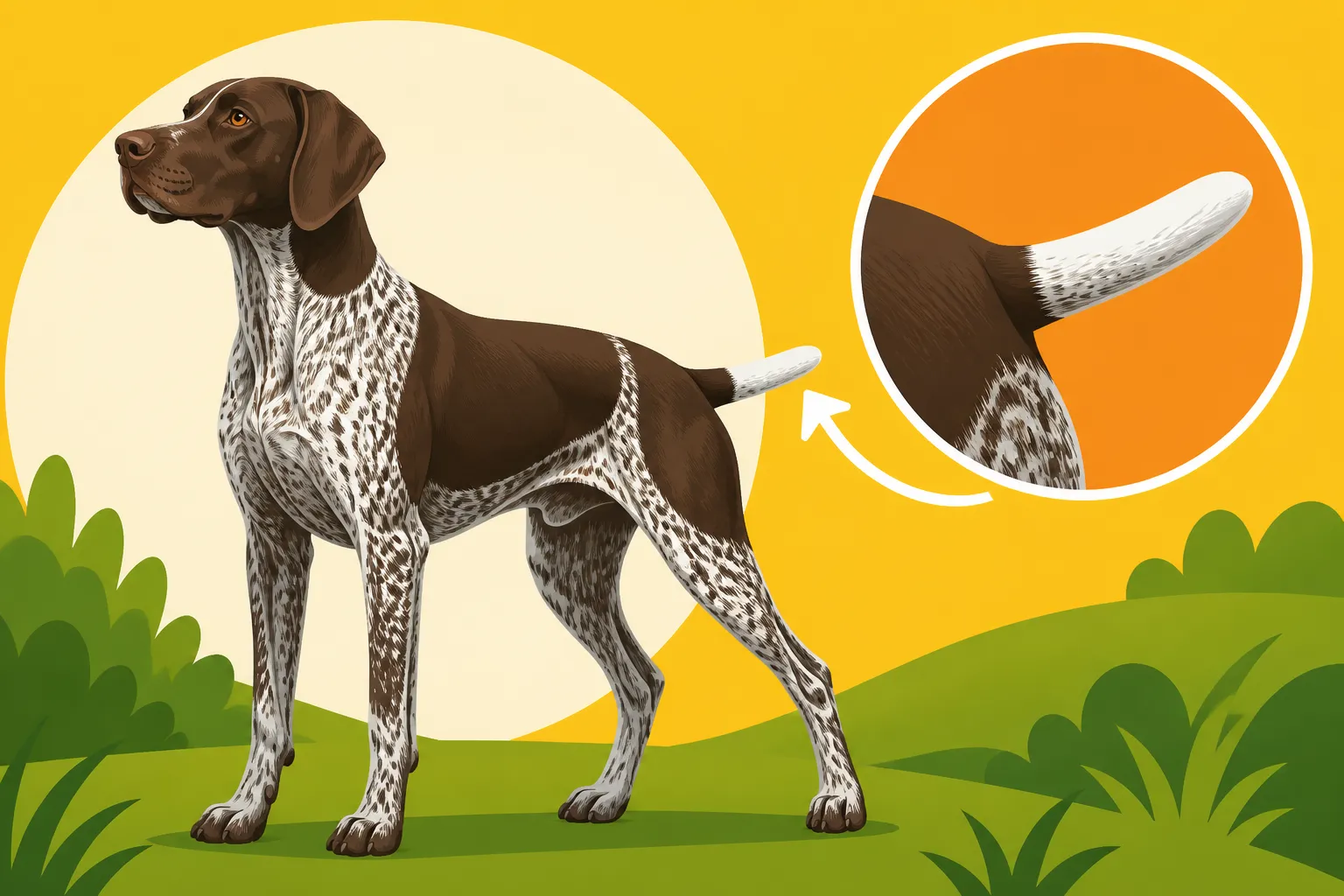
A properly docked German Shorthaired Pointer's tail is typically described as being approximately 40% of its natural length. This means it's still long enough to be expressive and functional in terms of balance, but significantly shorter than the tail the puppy was born with. It's thick at the base and tapers slightly, usually carried horizontally or slightly upwards when the dog is alert or working. The specific length can vary slightly depending on the individual breeder's preference and the breed standard interpretation, but the goal is generally a sturdy, proportionate tail that fits the dog's athletic build.
Many people find the docked tail to be an iconic part of the GSP's silhouette, contributing to their distinctive appearance. It’s a look that has been cultivated over generations and is deeply ingrained in the breed's visual identity, especially within the show ring and working dog communities.
The Historical Reasons Behind Tail Docking in Shorthairs
The practice of tail docking isn't a modern aesthetic choice; it's a tradition that goes back centuries, intertwined with the working roles of many dog breeds, including the German Shorthaired Pointer. Understanding why this practice began helps shed light on its persistence, even as societal views evolve.
Protection from Field Injuries
The primary historical justification for docking a German Shorthaired Pointer's tail stems from its work in the field. GSPs are known for their relentless drive, crashing through dense underbrush, briar patches, and thick cover in pursuit of game. A long, thin, whip-like tail, constantly thrashing, is incredibly vulnerable to injury in such environments. Imagine a dog pushing through sharp thorns and stiff branches for hours on end; a long tail can easily get snagged, cut, or even broken.
These "happy tail" injuries, as they're sometimes called in other breeds, are not just superficial cuts. They can be deep lacerations, fractures, or severe contusions that are incredibly painful and difficult to heal due to the constant motion of the tail. Every wag can reopen a wound, leading to chronic infections and prolonged recovery periods, forcing a valuable working dog out of commission. Breeders and hunters, wanting to protect their dogs and ensure they could work effectively without suffering preventable injuries, found docking to be a pragmatic solution. Why a Shorthair's Tail Is Shortened at All further elaborates on this historical rationale.
Preventing Parasites and Disease Transmission
In earlier times, particularly before modern veterinary medicine and widespread pest control, a dog's long tail could also be seen as a liability in terms of hygiene and disease. A long tail, especially one that might get matted with burrs, mud, or feces from working in harsh conditions, could become a breeding ground for parasites or a pathway for infections. While this concern is less prevalent today with better grooming practices and preventative medications, it was a genuine consideration in the historical context of working dogs in rural, often unsanitary, environments.
Docking the tail reduced the surface area available for parasites to latch onto and minimized the chance of the tail dragging through contaminated areas, thus theoretically improving the dog's overall health and reducing the risk of illness or infestation that could hinder its ability to work.
Tradition and Breed Identity
Beyond the practical reasons, tradition plays an enormous role in the continuation of tail docking. For generations, GSPs have been bred and presented with docked tails. This has shaped the very image and identity of the breed. When breed standards were formally established, the docked tail became an integral part of the accepted appearance for the German Shorthaired Pointer.
This tradition is especially strong in certain regions, notably where the dogs are still heavily used for hunting. The idea that a working GSP must have a docked tail is deeply ingrained, not just for injury prevention but because it's "how a GSP looks." For many breeders and owners, the docked tail is an unquestioned part of the breed's heritage and function, an homage to the dogs bred in The German Kennels the Shorthair Was Built In who established these traits.
The Modern Standard: What "Forty Percent" Actually Means
When discussing the German Shorthaired Pointer's tail, the "forty percent" rule is often cited. But what does this precisely mean in the context of breed standards, and how does it balance function with aesthetics?
AKC and Breed Standard Guidelines
In the United States, the American Kennel Club (AKC) breed standard for the German Shorthaired Pointer describes the tail as "docked, about 40 percent of the natural length." It specifies that the tail should appear strong, be carried well up, and when the dog is in action, it should be carried horizontally or slightly above the level of the back. A tail that is too long, too short, or carried poorly (e.g., tucked or curled over the back) can be considered a fault in the show ring.
This standard is not arbitrary. It's intended to reflect the functional needs of a hunting dog while maintaining a specific aesthetic. The 40% length is believed to be long enough for balance and communication, yet short enough to mitigate the risk of injury in dense cover. It's a balance struck to create a dog that is both beautiful and highly capable in the field. The Inches at the Withers a Shorthair Is Judged On highlights how every aspect of the dog, including its tail, is meticulously measured against a standard for breed integrity.
Aesthetic Versus Functional Length
The debate often arises whether the 40% rule is more about aesthetics for the show ring or truly about function in the field. While the breed standard certainly emphasizes a specific look, the historical foundation for docking was undeniably functional. A long, slender tail, characteristic of many pointers and setters, is indeed prone to injury when thrashed repeatedly against thick vegetation. The docked length, therefore, aims to provide enough tail for balance and expression without the extreme vulnerability.
However, critics argue that a slightly longer tail might offer better balance without significantly increasing injury risk, or that other preventative measures could be taken. For proponents of docking, the 40% length is seen as the optimal compromise, providing both practical benefit and adherence to the traditional, recognized appearance of the breed. It's a length that has been proven over generations of working dogs.
Variations and Individual Preferences
While the 40% guideline is widely accepted, you might notice slight variations in tail length even among well-bred GSPs. Some breeders might prefer a slightly longer dock, others a bit shorter, based on their interpretation of the standard or their specific working goals for their lines. These variations are usually minor and still fall within the spirit of the standard.
Ultimately, for most pet owners, the precise millimeter count isn't as critical as ensuring the dog is healthy and happy. However, for those involved in conformation showing or field trials, adhering to the standard is paramount. It’s a point of pride and adherence to the lineage and purpose of the German Shorthaired Pointer.
The Procedure: How and When Tail Docking Occurs
Tail docking is a surgical procedure, and like any surgery, it comes with considerations regarding timing, technique, and welfare. It's important for prospective GSP owners to understand how and when this is typically done.
Timing and Environment for Docking
Tail docking in German Shorthaired Pointers is usually performed when puppies are very young, typically between 2 to 5 days old. At this age, the puppies' nervous systems are not fully developed, and their bones and cartilage are still soft. This makes the procedure less traumatic and results in a quicker recovery compared to docking an older puppy or adult dog. The procedure is done quickly and efficiently, often by an experienced veterinarian or sometimes by the breeder themselves if they are trained and confident in the technique, though veterinary involvement is always recommended.
The environment should be sterile and warm, ensuring the comfort and safety of the delicate newborns. While some argue that pain perception is minimal at this age, reputable practitioners will still use local anesthesia and follow strict hygiene protocols to minimize discomfort and prevent infection. The Age a Shorthair Puppy's Tail Is Docked goes into more detail about this crucial timing.
The Docking Technique
The most common technique for tail docking involves either surgically cutting the tail or using a tight band (ligature) to constrict blood flow, causing the tail portion to wither and fall off.
When performed surgically, the veterinarian identifies the desired length, cuts through the tail, and then sutures the skin around the stump. This is typically a very quick procedure. Local anesthetic is often administered at the base of the tail to numb the area, and puppies are usually returned to their mothers immediately after, where the warmth and comfort of nursing aid in their recovery. Post-procedure, puppies are monitored for any signs of infection or complications, though these are rare at such a young age.
If a banding technique is used, a rubber band or ligature is placed tightly around the tail at the desired length. This cuts off blood supply to the portion of the tail beyond the band, causing the tissue to die and eventually fall off, usually within a few days. This method is considered by some to be less invasive than surgical cutting, but still requires careful monitoring to ensure proper healing and prevent infection. No matter the method, ensuring the health and rapid recovery of the puppy is paramount.
Post-Procedure Care
After docking, minimal specialized care is usually required for the puppies. The mother dog often keeps the area clean, and the puppies' natural healing abilities are robust. The primary concerns are to keep the puppies warm, ensure they are nursing well, and watch for any signs of infection (redness, swelling, discharge) at the site of the dock. In most cases, the docked tail heals quickly and without complication, leaving a neat, clean stump.
Breeders will carefully observe the litter to ensure each puppy is recovering appropriately and that there are no adverse reactions. The puppies generally go about their normal activities of nursing and sleeping within hours, showing little to no lasting distress from the brief procedure.
Controversies and Changing Views on Tail Docking
While tail docking has been a long-standing practice for German Shorthaired Pointers, it's also a procedure that has generated considerable debate and seen significant shifts in public and veterinary opinion over the years.
Ethical Debates and Animal Welfare Concerns
The core of the controversy surrounding tail docking lies in animal welfare. Critics argue that docking is an unnecessary surgical procedure performed on healthy animals, often without sufficient pain relief, simply for cosmetic or traditional reasons. They assert that it deprives the dog of a natural appendage used for balance, communication, and locomotion. While proponents emphasize injury prevention, opponents contend that the risk of injury is often overstated, or that alternatives to docking (like careful management or protective gear) could be employed.
The debate often centers on whether the potential benefits (preventing future injury) outweigh the immediate harm (pain and loss of a body part). Many animal welfare organizations actively campaign against docking, viewing it as a mutilation. The philosophical argument posits that dogs should be allowed to retain all their natural body parts unless there's a demonstrable medical necessity.
Legal Restrictions and Bans
Reflecting these ethical concerns, several countries and regions have implemented bans or severe restrictions on cosmetic tail docking. In much of Europe, including the UK, Germany, and many Scandinavian countries, tail docking is illegal unless performed by a veterinarian for documented medical reasons. These bans typically apply to all breeds, including traditionally docked ones like the German Shorthaired Pointer.
For owners and breeders in these regions, this means GSPs are kept with their natural, full tails. This has led to the emergence of GSPs with long tails in dog shows and working events in these countries, which can look quite different from their American counterparts. This divergence highlights the differing cultural and legal approaches to animal welfare across the globe. Whether Docking a Shorthair Is Banned in Any State explores the legal landscape in more detail.
The Role of Breed Clubs and Veterinary Associations
Breed clubs, such as the German Shorthaired Pointer Club of America, typically support docking as part of the breed standard, citing its historical and functional benefits for a working dog. They believe it is essential for the welfare of GSPs engaged in their intended purpose, arguing that the risk of painful tail injuries in the field is real and significant.
Conversely, major veterinary associations, including the American Veterinary Medical Association (AVMA) and the Canadian Veterinary Medical Association (CVMA), officially oppose tail docking for cosmetic reasons. They consider it ethically indefensible when performed without a therapeutic purpose, advocating for the retention of natural tails. This creates a tension between breed tradition and modern veterinary ethics, with owners often caught in the middle. Many vets will simply refuse to perform the procedure unless it's for a medical reason.
Living with a Docked Tail: Care and Considerations
For most German Shorthaired Pointer owners, a docked tail is simply a given. Their dog arrives with it, and it functions perfectly well. However, there are still some nuances to consider when living with a dog that has had its tail shortened.
Benefits in the Field
The primary perceived benefit of a docked tail, as discussed, is the reduction of injuries for working dogs. For a German Shorthaired Pointer that spends its days charging through thick cover, fields laden with stubble, or even icy water, a short, sturdy tail is less likely to suffer lacerations, breaks, or "happy tail" syndrome (where a vigorous tail wag repeatedly re-injures an existing wound). This means fewer trips to the vet for tail trauma and less downtime for the dog, allowing them to remain active in their work.
This practical advantage is particularly valued by serious hunters and field trial competitors. They see it not as a cosmetic alteration but as a preventative measure crucial for the dog's long-term health and ability to perform its job effectively. Field Injuries a Hunting German Shorthaired Pointer Comes Home With illustrates the types of hazards a GSP faces, making the argument for injury prevention more concrete.
Impact on Communication and Balance
One of the arguments against docking is that it can impede a dog's ability to communicate with other dogs and humans, as a significant portion of their tail language is lost. While a GSP's docked tail is still expressive—you can clearly see it wagging, tucking, or flagging—the full spectrum of subtle movements a long tail provides is indeed reduced. This might lead to slight misunderstandings in dog-to-dog interactions, though most GSPs seem to adapt just fine.
Regarding balance, a dog's tail acts as a counterbalance, especially during rapid turns, jumps, or when navigating uneven terrain. For an athletic breed like the GSP, this is particularly important. However, the 40% length is often considered sufficient to retain adequate balance for most activities. GSPs are remarkably agile, and while a full tail might offer a slight edge in extreme maneuvers, most docked GSPs demonstrate no discernible handicap in their movements or athletic prowess.
Potential for Phantom Pain or Neuromas
Like any amputation, there's a theoretical risk of phantom pain or the development of neuromas (nerve tissue growth) at the site of the tail dock. While these complications are well-documented in human amputees, they are rarely reported in dogs that have undergone tail docking as puppies. This is thought to be due to the procedure being performed at such a young age, when nerve development is still in its early stages.
However, it's a concern that animal welfare advocates often raise. For the vast majority of docked GSPs, the tail stump heals cleanly and causes no apparent long-term discomfort or neurological issues. Any concerns about a dog licking, chewing, or being sensitive around its tail stump should always be discussed with a veterinarian, who can assess for any underlying issues.
The Undocked German Shorthaired Pointer: Pros and Cons
With growing opposition to tail docking, more German Shorthaired Pointers are now seen with their natural, full tails, especially outside of North America. This raises questions for prospective owners about what to expect with an undocked GSP.
The Appearance and Movement of a Natural Tail
An undocked German Shorthaired Pointer is a striking sight, as their long, elegant tail dramatically changes their silhouette. The tail is typically broad at the base, tapering to a fine point, and can be quite long, reaching below the hocks. When relaxed, it usually hangs down, and when the dog is excited or working, it can be carried high, flagging with enthusiastic motion.
Observing an undocked GSP in motion reveals the full range of tail expression. The tail acts as a dynamic rudder, constantly adjusting for balance, especially during fast turns and jumps. It’s also a powerful tool for communication, with subtle shifts in its carriage conveying much about the dog's mood and intentions. For those accustomed to the docked look, an undocked GSP can appear quite different, almost like a different breed at first glance, but no less magnificent. Whether an Undocked German Shorthaired Pointer Can Be Shown clarifies how these dogs are viewed in different show circuits globally.
Injury Risk with a Full Tail
The main argument for docking is injury prevention, and indeed, a full-length tail is more susceptible to certain types of injuries. A long, active tail, constantly swishing through thick cover or against hard surfaces, can experience "happy tail" injuries—lacerations that are difficult to heal due to the tail's constant movement. Fractures can also occur if the tail gets caught or slammed.
For a GSP specifically bred for hunting, especially in dense brush or heavy cover, the risk of a tail injury is a genuine concern for some owners and breeders. Healing a tail injury can be a prolonged, painful, and frustrating process, sometimes even requiring amputation if severe infection or damage occurs. Owners of undocked GSPs, particularly those that work, need to be vigilant in checking their dog's tail regularly for cuts or scrapes, especially after a day in the field. Whether an Undocked Shorthair Damages Its Tail Hunting further explores these risks.
Communication and Balance Advantages
From a purely ethological perspective, a full tail offers undeniable advantages in communication. Dogs use their tails to signal everything from excitement and aggression to submission and fear. The entire length of the tail, along with its speed and height of carriage, conveys nuanced messages to other dogs and to people. An undocked GSP has a fuller repertoire of signals, which can potentially lead to clearer interactions in social settings.
For balance, especially in a dog known for its agility and speed, a full tail acts as a critical counterbalance. This can be particularly beneficial during high-speed chases, tight turns in the field, or when navigating challenging obstacles. While docked GSPs are certainly athletic, the natural tail provides that extra degree of dynamic stability.
Management Considerations for Owners
For owners of undocked GSPs, particularly those in working homes, proactive management is key to preventing tail injuries. This might involve:
- Regular Inspections: After every hunt or strenuous outdoor activity, carefully examine the tail for any cuts, scrapes, burrs, or signs of trauma.
- Protective Gear: In extremely dense or thorny cover, some owners might consider using protective tail wraps or sleeves to shield the tail, similar to how boots protect paws. Chewy offers a variety of protective wraps and gear that could be adapted for tail protection.
- Grooming: Keeping the tail clean and free of mats, especially if it collects debris, is important to prevent skin irritation or infection.
- Awareness: Being mindful of the tail in tight spaces, around doors, or when children are playing, can help avoid accidental injuries.
Ultimately, the decision to dock a GSP's tail or not is a complex one, influenced by tradition, geography, ethical viewpoints, and the dog's intended role. Regardless of tail length, the German Shorthaired Pointer remains a devoted, energetic, and intelligent companion, deserving of the best care an owner can provide.
Comparative Look: Docked vs. Undocked Tails
To summarize the key differences and considerations, here's a quick comparison of German Shorthaired Pointers with docked versus undocked tails.
| Feature | Docked Tail (Traditional) | Undocked Tail (Natural) |
|---|---|---|
| Appearance | Short, sturdy, typically 40% of natural length. | Full length, tapering, often reaching to hocks or beyond. |
| Injury Risk in Field | Significantly reduced risk of lacerations, fractures. | Higher risk of "happy tail" injuries, cuts, breaks in dense cover. |
| Balance | Generally adequate for agility and movement. | Enhanced dynamic balance, especially in extreme maneuvers. |
| Communication | Expressive, but a reduced range of subtle signals. | Full range of canine tail language and expression. |
| Breed Standard | Preferred in North American AKC conformation shows. | Accepted/required in many European conformation shows. |
| Ethical Stance | Supported by working dog communities, opposed by many vets/welfare groups. | Preferred by animal welfare groups, increasing acceptance. |
| Legal Status | Legal in some regions (e.g., US), banned in many others (e.g., UK, Europe). | Universally legal. |
| Care Considerations | Minimal post-docking care (as puppy). | Regular inspection for injury, potential use of protective gear in field. |
Final Thoughts on the German Shorthaired Pointer's Tail
Whether you choose a German Shorthaired Pointer with a traditionally docked tail or one with its natural, flowing tail, you're bringing home an incredible companion. The tail, whether short or long, is just one small part of what makes these dogs so special. What truly defines a GSP is their boundless energy, their unwavering loyalty, their keen intelligence, and their incredible drive.
The conversation around tail docking is a microcosm of larger debates in the dog world about tradition versus modern welfare standards. For many, the docked tail is an inseparable part of the breed's identity and a practical necessity for a working dog. For others, the natural tail represents a step forward in animal welfare, allowing dogs to retain their full anatomy and expressive capabilities.
Regardless of where you stand on the debate, your GSP will thrive on your love, training, and commitment to their well-being. Make sure your dog gets plenty of exercise – we're talking about The Two Hours a Day a German Shorthaired Pointer Needs – and nutritious food. You'll want to ensure they're always comfortable, whether that's with a cozy bed from Chewy or a new toy that keeps their mind active. Focus on their health, happiness, and the incredible bond you'll share, and their tail will simply be a testament to their unique lineage.
Disclaimer
This article is for general informational purposes only and does not constitute professional advice. Laws, prices and regulations vary by location and change over time. Consult a qualified professional for guidance on your specific situation.