The ACVO Eye Exam a Shorthair Needs Each Year
It’s a heart-wrenching worry to see your energetic German Shorthaired Pointer slow down or hesitate, especially when you suspect something is wrong with their vision. Our beloved GSPs live such active, full lives, and any sign of discomfort or impairment can be incredibly frustrating for both them and us. This guide aims to demystify the ACVO eye exam, explaining why it's a vital part of your Shorthair's annual health routine and what you can expect during the process.
Why Annual Eye Exams Are Crucial for Your Shorthair
Our German Shorthaired Pointers are athletes, born to run, point, and retrieve. Their world is vibrant, full of motion, scent, and sight. When their vision starts to falter, it’s not just an inconvenience; it can profoundly impact their quality of life, their ability to work, and even their safety. Regular eye examinations, particularly those conducted by a veterinary ophthalmologist certified by the American College of Veterinary Ophthalmologists (ACVO), are not just a recommendation; for GSPs, they're an essential preventative measure to catch potential issues early.
Protecting an Active Lifestyle
Imagine your Shorthair tearing through a field, eyes scanning for game, navigating uneven terrain, leaping over obstacles. Their vision is paramount to this experience. A tiny scratch on the cornea, a developing cataract, or an inherited retinal disease could go unnoticed by the casual observer, but a specialized exam can pick up these subtle changes before they become debilitating. Early detection means early intervention, which can often preserve sight or manage discomfort, allowing your GSP to continue enjoying their active life for as long as possible. We invest so much in their training and conditioning; it only makes sense to protect the tools they use most. It’s not uncommon for a dog to sustain Eye Injuries a Shorthair Gets Running Heavy Cover during their adventures, and a thorough annual exam helps ensure these aren't missed or lead to long-term problems.
Identifying Inherited Eye Conditions Early
German Shorthaired Pointers, like many purebred dogs, are predisposed to certain inherited eye conditions. While responsible breeders screen their dogs, genetic mutations can sometimes emerge or go undetected for a generation or two. Conditions such as progressive retinal atrophy (PRA), which can lead to Night Vision Loss in an Older Shorthair, or cone degeneration, which causes Day Blindness in a German Shorthaired Pointer Puppy, are particularly relevant. An ACVO exam is designed to spot the subtle signs of these conditions, often before your dog even shows obvious symptoms. This proactive approach can give you valuable time to prepare for future changes, discuss management strategies with your vet, and prevent accidental breeding of affected individuals if your dog is part of a breeding program. Understanding The Gene Behind Cone Degeneration in Shorthairs highlights why these specialized screenings are so vital.
What Happens During an ACVO Eye Exam
When you take your German Shorthaired Pointer for an ACVO eye exam, you’re not just getting a quick peek at their eyes. You're getting a comprehensive evaluation by a specialist who has undergone extensive training in veterinary ophthalmology. It's a thorough process designed to meticulously check every part of your dog's ocular health.
The Initial Consultation and History
The appointment usually begins with a detailed discussion of your Shorthair's medical history. The veterinary ophthalmologist or a technician will ask about any changes you've noticed in their vision or behavior, such as bumping into things, reluctance to go into bright light, unusual discharge, or pawing at their eyes. They’ll want to know about your GSP’s general health, any medications they’re on, and their activity level. Don’t hold back any details, no matter how small they seem; sometimes the subtlest change can be a crucial clue. For instance, if your Shorthair suddenly stops wanting to chase balls in bright sunlight, it might indicate early signs of an issue like cone degeneration, even if you’ve already done a Cone Degeneration and the Shorthair DNA Test for It and it came back clear.
The Comprehensive Ocular Examination
The actual examination involves several steps, usually performed in a darkened room to allow better visualization of internal eye structures.
- External Eye and Adnexa Exam: The ophthalmologist will first look at the areas around the eyes – the eyelids, eyelashes, and tear ducts. They'll check for any abnormalities like entropion (Rolled In Lids on a German Shorthaired Pointer) or ectropion, which can lead to irritation or infections. They'll also assess tear production using a Schirmer tear test, which involves placing a small strip of paper in the lower eyelid for a minute.
- Corneal Examination: Next, they’ll examine the cornea, the clear outer layer of the eye. They might use a fluorescein stain, a harmless orange dye that highlights any scratches, ulcers, or foreign bodies on the corneal surface. This is critical for active dogs who might run through brush.
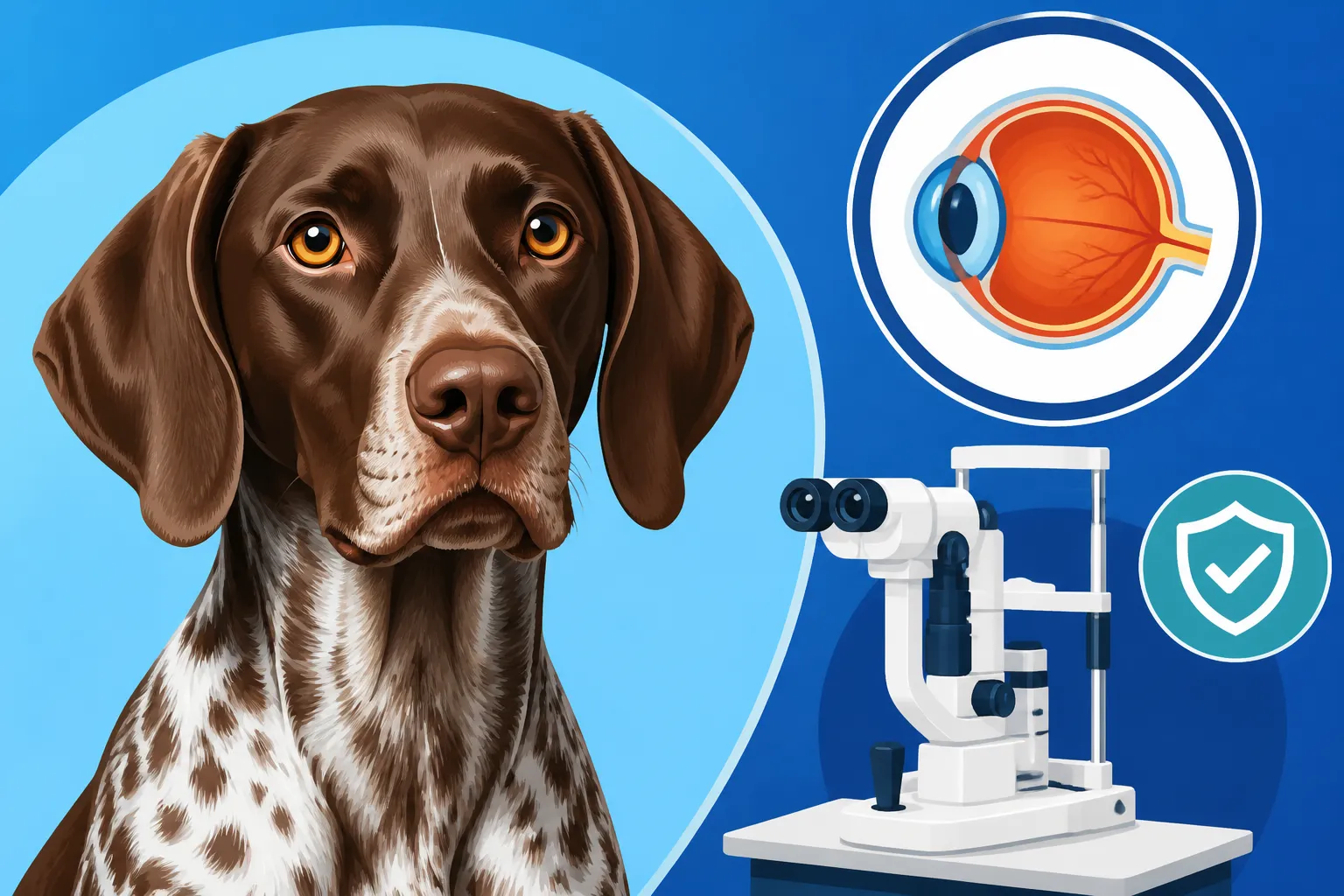
- Anterior Segment Examination: Using a specialized magnifying lens and a bright light source (often a slit lamp biomicroscope), the ophthalmologist will examine the anterior chamber (the space between the cornea and the iris), the iris (the colored part of the eye), and the lens. This allows them to detect issues like inflammation, glaucoma, or early signs of cataracts, which can manifest as Cloudy Eyes in a Shorthair Past Ten.
- Fundic Examination: To properly view the retina and optic nerve at the back of the eye (the fundus), your Shorthair's pupils will need to be dilated. This involves administering dilating eye drops, which take about 15-30 minutes to work. Once dilated, the ophthalmologist uses an indirect ophthalmoscope (a light source worn on their head with a handheld lens) to get a wide, magnified view of the retina. This is where conditions like PRA or other retinal degenerations are diagnosed.
- Intraocular Pressure (IOP) Measurement: The pressure inside the eye is measured using a tonometer. This simple, quick test is crucial for detecting glaucoma, a painful condition that can lead to rapid vision loss if not treated promptly.
It’s an incredibly thorough process, and your GSP might not love the bright lights, but the ophthalmologist is trained to make it as comfortable as possible.
Common Eye Conditions Detected in German Shorthaired Pointers
While German Shorthaired Pointers are generally a robust breed, their active nature and genetic predispositions make them susceptible to specific eye conditions. An ACVO exam is designed to catch these issues, sometimes before they cause noticeable problems for your dog.
Hereditary Conditions and Their Impact
Several eye conditions can be passed down through GSP bloodlines, making early screening vital for both individual health and responsible breeding practices.
- Cone Degeneration (CD): This is one of the more talked-about hereditary conditions in GSPs. It's an inherited retinal disease that specifically affects the cone photoreceptor cells in the eye. These cells are responsible for vision in bright light and color perception. Dogs affected by CD experience day blindness, meaning they have severely impaired vision in normal or bright light conditions. You might notice them bumping into objects, hesitating, or being generally disoriented when outdoors on a sunny day, while they navigate much better indoors or at dusk. It’s heartbreaking to see, but early diagnosis through an ACVO exam and DNA testing can help manage the condition and prevent further spread in the breed. Having a diagnosis allows owners to understand and adapt to their dog's needs, creating a safer environment.
- Progressive Retinal Atrophy (PRA): PRA is a general term for a group of inherited diseases that cause the degeneration of the retina. Unlike CD, which primarily affects day vision, most forms of PRA lead to a gradual loss of night vision first, progressing to complete blindness over time. The rods, responsible for low-light vision, are often the first to degenerate, followed by the cones. An ACVO exam can identify the subtle retinal changes characteristic of PRA long before your GSP might start showing clinical signs like bumping into furniture in dimly lit rooms. Catching it early allows you to make adjustments at home, like keeping furniture in consistent locations, to help your dog adapt.
Acquired Conditions and Environmental Risks
Beyond inherited traits, German Shorthaired Pointers are also prone to acquired eye conditions, often due to their adventurous spirit and exposure to the elements.
- Corneal Ulcers and Injuries: Given their propensity for running through dense cover and brush, GSPs are at a higher risk for corneal abrasions or ulcers. A twig, a burr, or even a dust particle can scratch the delicate surface of the cornea, leading to pain, redness, squinting, and discharge. If left untreated, these can become infected and lead to severe vision impairment or even loss of the eye. The fluorescein stain used during an ACVO exam is excellent at detecting these injuries, ensuring prompt treatment. This is where an ounce of prevention, like careful post-hunt checks, really pays off, but an annual exam provides that extra layer of security.
- Glaucoma: Glaucoma is a painful condition where the pressure inside the eye (intraocular pressure) becomes too high, damaging the optic nerve and retina, leading to irreversible blindness. It can be primary (inherited) or secondary (caused by another eye disease or injury). Because GSPs are a deeper-chested breed, they can be at risk for a variety of issues, and sometimes owners overlook subtle signs of discomfort. Regular IOP measurement during an ACVO exam is the best way to detect glaucoma early, as prompt treatment can sometimes preserve vision. Signs to watch for at home include a red, painful-looking eye, a cloudy appearance to the cornea, or a dilated pupil that doesn't constrict to light. If you notice any of these, it’s an emergency that warrants immediate veterinary attention.
| Eye Condition | Common GSP Symptoms | ACVO Exam Findings | Hereditary? | Treatment Approach |
|---|---|---|---|---|
| Cone Degeneration (CD) | Day blindness, hesitation in bright light, normal night vision | Retinal changes (e.g., tapetal hyperreflectivity), specific cone function loss | Yes | No cure, management through environmental adaptation |
| Progressive Retinal Atrophy (PRA) | Night blindness first, progressing to total blindness | Retinal degeneration, vascular attenuation, optic nerve atrophy | Yes | No cure, supportive care, environmental adaptation |
| Corneal Ulcers/Injuries | Squinting, redness, pawing at eye, discharge, cloudy spot | Fluorescein stain uptake, visible defect on cornea | No | Topical antibiotics, pain meds, protective collar, surgery if severe |
| Glaucoma | Red, painful eye, cloudy cornea, dilated pupil | Elevated intraocular pressure, optic nerve cupping, retinal changes | Can be | Emergency treatment to lower pressure, pain relief, sometimes surgery |
| Cataracts | Cloudy appearance in lens, vision impairment | Opacity within the lens, varying density | Can be | Surgical removal (phacoemulsification) for vision restoration |
| Entropion/Ectropion | Eye irritation, discharge, excessive tearing, redness | Eyelid margin rolled in (entropion) or out (ectropion) | Can be | Surgical correction |
Preparing Your Shorthair and What to Expect Afterward
Bringing your active German Shorthaired Pointer to a specialist appointment might feel a little daunting, but with a bit of preparation, you can make the experience smoother for both of you. And understanding what comes next is just as important.
Tips for a Smooth Appointment
First and foremost, try to schedule the appointment at a time when your GSP is relatively calm. If they're usually a whirlwind of energy first thing in the morning, perhaps an afternoon slot after a good walk would be better.
- Exercise Them First: A good, solid run or play session before you head to the veterinary ophthalmologist can do wonders. A tired GSP is generally a more cooperative GSP. This isn't about exhausting them, but simply burning off that initial burst of energy that can make them restless in a new environment. Think of it as allowing them to get some of The Two Hours a Day a German Shorthaired Pointer Needs in before sitting still.
- Limit Food and Water (Optional): While not strictly necessary for an eye exam, if your Shorthair is prone to car sickness or gets anxious in new places, a slightly empty stomach can help prevent upset. Ask the clinic if they have specific instructions.
- Bring Treats and a Favorite Toy: Distraction is your friend! High-value treats can help create positive associations and reward good behavior during the exam. A comforting toy can also provide a sense of security.
- Be Patient: The dilation drops take time to work, so be prepared for a waiting period. Bring a book or be ready to relax with your Shorthair. The entire process, from check-in to exam completion, can sometimes take an hour or more, especially for a thorough examination.
- Ask Questions: Don't hesitate to ask the ophthalmologist or their staff any questions you have. They are there to educate you and ensure you understand your GSP's eye health.
Post-Exam Care and Long-Term Management
After the exam, your GSP's pupils will remain dilated for several hours due to the eye drops. This means they will be more sensitive to light, and their close-up vision might be temporarily blurry.
- Protect from Bright Light: Keep your Shorthair indoors or in shaded areas for the rest of the day. If you must go outside, consider using doggy sunglasses (Doggles) if your GSP tolerates them, or at least avoid direct sunlight.
- Supervise Outdoor Activity: While their vision is compromised, it's wise to keep them on a leash in unfamiliar or busy areas to prevent accidental bumps or falls.
- Follow Up on Findings: The ophthalmologist will discuss any findings and recommend a treatment plan if necessary. This might involve eye drops, oral medications, or even surgery in some cases. Make sure you understand the instructions and when to administer any prescribed medications. For complex or chronic conditions, you might be setting up a long-term plan to ensure your German Shorthaired Pointer continues to have the best possible vision and comfort throughout The Twelve to Fourteen Years a German Shorthaired Pointer Gets.
- Consider Pet Insurance: If the ACVO exam uncovers a serious condition that requires ongoing treatment or surgery, the costs can add up quickly. Many owners find pet insurance, like a policy from Healthy Paws, to be a valuable safety net in these situations, helping to cover the often-high expenses of specialist veterinary care. Knowing that you have support for potential future bills can offer immense peace of mind. Regular veterinary care, including specialized exams, is a significant part of The Vet Schedule a Working Shorthair Should Keep.
- Annual Re-checks: Even if everything looks perfect, annual ACVO exams are highly recommended, especially for breeding dogs, so you can receive an up-to-date Reading a German Shorthaired Pointer's Eye Certificate. Conditions can develop quickly, and regular monitoring is key to maintaining optimal eye health for your beloved Shorthair.
Disclaimer
This article is intended for informational purposes only and does not constitute veterinary advice. Always consult with a qualified veterinary professional for any health concerns or before making any decisions about your German Shorthaired Pointer's care.