Telling a Shorthair’s Bloat From a Belly Full of Water
One of the most terrifying things a German Shorthaired Pointer owner can face is the sudden, alarming distention of their dog's abdomen. Is it just a belly full of water after an enthusiastic drink on a hot day, or is it the dreaded bloat, a life-threatening emergency that demands immediate action? This guide is designed to help you understand the crucial differences, empowering you to make informed, quick decisions that could save your beloved GSP's life.
Understanding Gastric Dilatation-Volvulus (GDV) in German Shorthaired Pointers
The term "bloat" is often used loosely, but in veterinary medicine, it refers to a very specific, dire condition: Gastric Dilatation-Volvulus, or GDV. This isn't just an upset stomach; it's a critical emergency where time is literally measured in minutes and hours, not days. For us GSP owners, who know our dogs are built for activity and have that distinctive deep chest, the risk of bloat is a constant, gnawing worry.
What is Gastric Dilatation-Volvulus (GDV)?
At its core, GDV begins with the stomach filling rapidly with gas, fluid, or food – a process known as dilatation. Think of it like a balloon rapidly inflating inside your dog's abdomen. This initial distension is uncomfortable and painful, but the truly catastrophic part happens next: the stomach then twists upon itself, or "volvulus." When this twisting occurs, both the entrance and exit of the stomach are sealed off, trapping everything inside. This also cuts off blood supply to the stomach wall and surrounding organs, leading to rapid tissue death. It's a cascade of events that, without immediate intervention, quickly leads to shock, organ failure, and death.
German Shorthaired Pointers, with their deep, narrow chests, are anatomically predisposed to GDV. It's not just a random occurrence; their body shape creates an environment where the stomach has more room to swing and twist. This predisposition means that even well-managed GSPs are at a higher risk than many other breeds, which is why vigilance and understanding the signs are absolutely paramount. The sheer speed at which this condition progresses is what makes it so terrifying; a dog can go from seeming mildly uncomfortable to being in profound shock within an hour or two. Knowing the specifics of the risk is part of being a responsible GSP owner. We've talked before about The Bloat Risk a Shorthair Carries Into Every Season, and this is exactly why it's such a heavy topic for us.
Key Symptoms of Bloat
Recognizing the symptoms of bloat early is the single most important factor in improving your dog's chances of survival. These signs can be subtle at first, but they escalate quickly. One of the classic, and often misunderstood, symptoms is unproductive retching. Your GSP will try desperately to vomit, gagging and heaving, but nothing or very little (perhaps just some foamy saliva) will come up. This is because the twisted stomach prevents anything from passing through. If you observe your GSP doing this, especially repeatedly, it's a huge red flag.
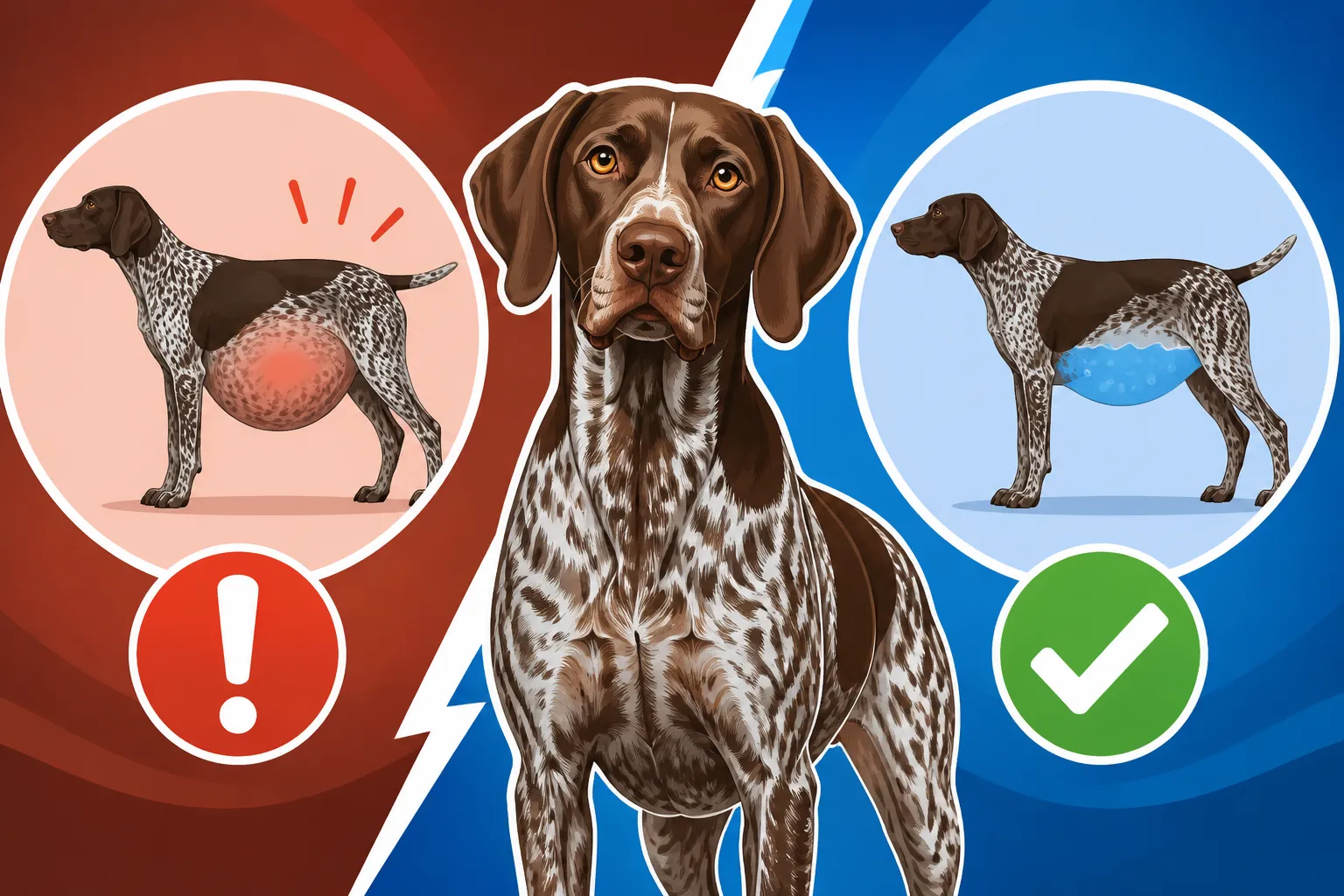
Another critical sign is abdominal distention, which can appear rapidly. Your dog's belly will look swollen, often quite firm or drum-like, and sometimes noticeably larger on one side than the other, though this isn't always immediately obvious. This isn't just a full-looking belly; it's hard, taut, and painful to the touch. Beyond these primary signs, affected GSPs will typically display extreme restlessness and discomfort, pacing incessantly, trying to find a comfortable position, or constantly looking at their flank. They might drool excessively, pant heavily, or have rapid, shallow breathing due to the pressure on their diaphragm. As the condition worsens, their gums may become pale, their heart rate will increase, and they may eventually collapse, becoming weak and unresponsive. If you notice The Unproductive Retching That Means a Shorthair Is Bloating, coupled with a visibly expanding abdomen, don't wait.
The pain associated with bloat is immense. Your dog might cry out, whimper, or show signs of acute distress when you touch their abdomen. They might also stand with their front paws elevated, trying to alleviate pressure. This rapid deterioration is what distinguishes bloat from many other conditions; the dog’s overall demeanor will shift from simply uncomfortable to gravely ill in a very short timeframe. This is why immediate, emergency veterinary care is not just recommended, but essential for survival.
The "Belly Full of Water" Scenario
On the flip side of the bloat worry is the much more benign, though still sometimes alarming, sight of a German Shorthaired Pointer with a belly full of water. After a long day of running, training, or hunting, it's completely normal for a GSP to be incredibly thirsty and gulp down an impressive amount of water in one go. This can lead to a very full-looking belly, which understandably causes panic in owners already aware of bloat risks.
Why a GSP Might Gulp Water
German Shorthaired Pointers are high-energy athletes, built for endurance and intensity. Whether they've been out in the field chasing pheasants, running alongside you on a trail, or just having an extended play session at the dog park, their metabolism kicks into high gear, generating significant body heat and leading to substantial fluid loss through panting. This means they can become dehydrated quite quickly, especially on warm days. When they finally get access to water, their natural instinct is to quench that intense thirst as rapidly as possible, often gulping down large volumes without much pause.
This rapid water intake is what can make their belly look quite distended. It's simply the stomach temporarily stretching to accommodate the sudden influx of liquid. It's a common sight for anyone who's spent time with a hardworking GSP after a strenuous activity. They might be a bit uncomfortable for a short period, possibly burping or even regurgitating some of the water if they've drunk too much too quickly, but their overall state should remain relatively normal otherwise. We've certainly discussed The Rest a Shorthair Needs Between Eating and Running, and the same principle often applies to strenuous drinking.
Symptoms of a Water-Filled Belly
When your GSP has simply drunk a lot of water, their belly will appear full and rounded, much like a Thanksgiving turkey. However, there are key distinctions from bloat. While it might look distended, the abdomen typically won't be drum-tight or painfully hard to the touch. It will feel more pliable, even if it’s very full. The distension will generally be symmetrical, rather than skewed to one side. Importantly, your dog's demeanor, while perhaps a bit "logy" or uncomfortable for a few minutes, will not be one of severe distress or rapidly escalating pain.
You might notice some burping as the dog tries to relieve any swallowed air, or they might even spit up some of the water. This is usually a natural response to over-ingestion and doesn't carry the same grave implications as the unproductive retching of bloat. The dog might lie down, perhaps sighing dramatically, but they should settle fairly quickly. Their gums will remain a healthy pink, and their breathing will be normal for a tired dog, not rapid or shallow due to agonizing discomfort. Within a relatively short time – usually 15-30 minutes – they should begin to look and act more like themselves, albeit still tired from their exertions. If you're observing Telling a Shorthair's Bloat From a Belly Full of Water, pay close attention to the comfort level.
Critical Distinctions and Immediate Actions
Distinguishing between a benign, water-filled belly and life-threatening bloat is where your keen observation skills become invaluable. It’s a moment of truth for any GSP owner, and understanding the subtle (and not-so-subtle) differences can literally be the difference between life and death.
How to Differentiate: The 'Feel Test' and Demeanor
The "feel test" is one of your first and most practical tools. Gently feel your GSP's abdomen. If it’s just full of water, it will likely feel taut but relatively soft, or at least not rock-hard and rigid. The distension will probably be uniform across the belly. If it's bloat, the abdomen will often feel incredibly firm, almost like a drum. Sometimes, one side (usually the left) will be noticeably more distended and harder than the other due to the stomach's twisting. It will also be acutely painful for your dog to have its belly touched if it's experiencing GDV.
Beyond the physical examination, your dog's overall demeanor is a crucial indicator. A GSP who has simply over-indulged in water might seem temporarily uncomfortable, perhaps a bit sluggish or burpy, but they won't be displaying signs of extreme distress. They might lie down and rest, perhaps giving you a big "water belly" sigh, but their eyes won't be wide with panic, they won't be panting frantically, and their gums will be pink. In contrast, a GSP with bloat will be in escalating pain and distress. They'll be restless, pacing, constantly shifting positions, perhaps whining or groaning. Their breathing will become rapid and shallow, their gums might turn pale or even blue, and they may stare at their flank in anguish. The unproductive retching we discussed earlier – trying to vomit but bringing nothing up – is a hallmark sign of bloat and rarely seen with just a full water belly. This behavioral difference is often the most telling clue. When you are assessing Why Bloat Follows a Shorthair's Hard Day Afield, remembering these differences is key.
When to Seek Emergency Veterinary Care
Let's be unequivocally clear: when in doubt, always treat it as bloat and seek immediate veterinary attention. The risk of waiting is simply too high. Bloat progresses rapidly, and the "golden hour" for intervention is not a myth; the sooner surgery can be performed to untwist the stomach, the higher the survival rate. If you observe any of the severe bloat symptoms – unproductive retching, a hard and painfully distended abdomen, extreme restlessness, pale gums, or collapse – do not hesitate.
Don't try home remedies or wait to see if it improves. This is a veterinary emergency that requires professional medical care, usually surgery. Call your veterinarian or the nearest emergency veterinary hospital while you are literally getting your GSP into the car. Tell them you suspect bloat so they can be ready for your arrival. Every minute counts. Financial concerns can add to the stress of an emergency, but many pet owners find peace of mind with insurance providers like Healthy Paws. Knowing that a significant portion of a potentially thousands-of-dollars surgery bill for something like bloat could be covered can remove one layer of worry during a terrifying time. We've explored Emergency Fees for a Shorthair Cut Open in the Field, but bloat surgery is in a league of its own for potential costs.
Emergency Protocol for Suspected Bloat
Here’s a quick checklist for what to do:
- Assess Symptoms: Look for unproductive retching, abdominal distention (hard, drum-like), restlessness, pain, pale gums, weakness.
- Confirm Distention: Gently feel the abdomen. Is it hard and painful? Is one side more distended?
- Check Demeanor: Is your dog in acute, escalating distress? Or just temporarily uncomfortable?
- DO NOT WAIT: If bloat is suspected, do not attempt to relieve gas or induce vomiting yourself. This can worsen the condition.
- Contact Vet IMMEDIATELY: Call your regular vet or the nearest 24/7 emergency clinic on your way there. State clearly that you suspect GDV/bloat and are en route. This allows them to prepare for your arrival.
- Drive Safely and Directly: Get to the clinic as quickly and safely as possible. Your dog's life depends on it.
Prevention and Preparedness for German Shorthaired Pointer Owners
While bloat can strike even with the best preventative measures, there are proactive steps we can take as GSP owners to significantly reduce the risk and ensure we're prepared if it does happen. Our energetic GSPs live to run and work, so managing their food and water intake around their exercise schedule is paramount.
Feeding and Watering Strategies to Minimize Risk
One of the most widely recommended preventative measures is to adjust how your GSP eats and drinks. Instead of feeding one large meal a day, break their daily food ration into two or three smaller meals. This prevents the stomach from becoming overly distended with food at any one time. Using elevated food bowls is a common recommendation, though research on its effectiveness is mixed; some studies suggest it might actually increase risk in certain breeds, while others say it helps. Given the conflicting data, it's best to consult your veterinarian for advice tailored to your GSP, considering their specific build and eating habits.
What's more universally agreed upon is avoiding strenuous exercise at least an hour before and two hours after meals. This gives the stomach time to digest food without the added agitation and movement that can contribute to twisting. Similarly, when it comes to water, especially after intense activity, offer smaller amounts frequently rather than letting your thirsty GSP gulp down an entire bowl at once. Slow feeder bowls can also help prevent rapid food or water intake. Some owners even soak their GSP's kibble before feeding to reduce the amount of air swallowed during eating. This careful management of food and water intake is a critical part of owning a breed prone to GDV.
Emergency Plan and Financial Preparedness
Being prepared for a veterinary emergency is about more than just knowing the symptoms; it’s about having a plan in place. First and foremost, know the location and contact information for the nearest 24-hour emergency veterinary hospital. Don't wait until an emergency strikes to figure this out. Have it programmed into your phone and perhaps even taped to your refrigerator. When every minute counts, fumbling for a phone number or directions can be disastrous.
Financially, bloat surgery can be incredibly expensive, often ranging from several thousand dollars or more, depending on the severity and location. This is where pet insurance can be an absolute lifesaver. Companies like Healthy Paws offer comprehensive coverage that can help significantly with the costs of emergency procedures like GDV surgery. Many GSP owners find the monthly premiums a small price to pay for the peace of mind knowing that if this terrifying event occurs, they won't have to make a decision based purely on financial constraints. Consider what Monthly Insurance Premiums on a German Shorthaired Pointer would cover, especially for unexpected critical illnesses like bloat. It's a pragmatic step in responsible pet ownership for a breed with known risks.
The Gastropexy Decision
For GSP owners, especially those with working or field dogs, or those with a family history of bloat, a prophylactic gastropexy is an option worth serious discussion with your veterinarian. This surgical procedure permanently attaches the stomach to the abdominal wall, preventing it from twisting. While it doesn't prevent the stomach from dilating (filling with gas), it essentially eliminates the "volvulus" or twisting component, which is the most dangerous aspect of GDV.
A gastropexy can often be performed at the same time as a spay or neuter, making it a single surgical event for your dog. For male GSPs, particularly, performing The Gastropexy Decision on a Hunting Shorthair at the time of neutering is a common choice, combining two necessary surgeries. While no preventative measure is 100% foolproof, a gastropexy significantly reduces the life-threatening risk of bloat, offering considerable peace of mind, especially for active dogs who push their limits in the field. It's a serious decision that requires careful consideration of your dog's individual risk factors, lifestyle, and your veterinarian's professional advice.
Disclaimer
This article is intended for informational purposes only and does not constitute veterinary advice. In an emergency situation, always contact your veterinarian or a local emergency animal hospital immediately. Early intervention is critical for conditions like bloat.