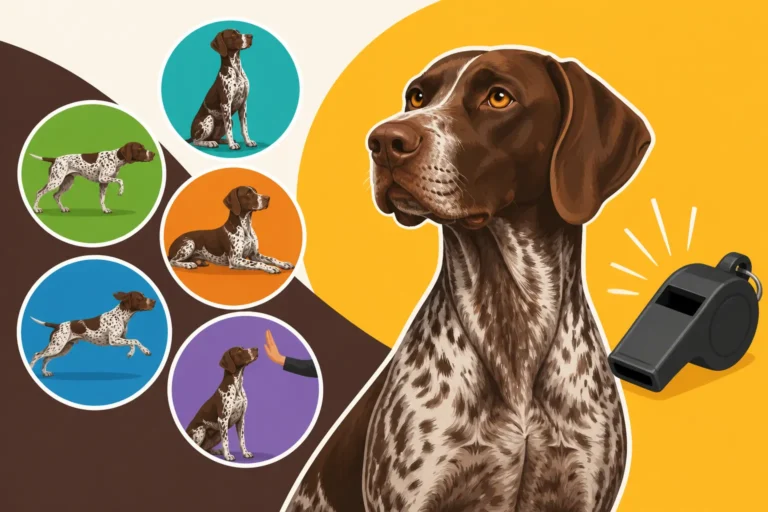
Whoa and Why Every Shorthair Starts There
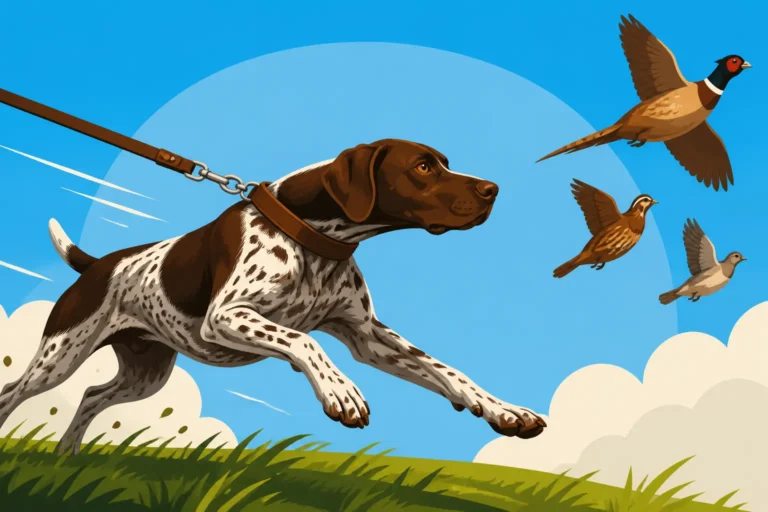
It's a scene many German Shorthaired Pointer owners know all too well: you're out in the field, your magnificent dog has locked onto a bird, tail a blur, nose twitching with intensity. Then, in a heartbeat, the bird flushes, and your dog, fueled by instinct and pure joy, breaks point and barrels after it, leaving you yelling "Whoa!" to the wind. That moment of frustration, feeling like you've lost control, is exactly why the "whoa" command is not just a command, but the absolute cornerstone of training for any German Shorthaired Pointer, whether they're destined for the field or simply to be a well-behaved family companion. This guide will walk you through why "whoa" is so vital, how to teach it effectively, and how to maintain it throughout your Shorthair's energetic life.
What 'Whoa' Actually Means for a German Shorthaired Pointer
When we talk about 'whoa' in the context of a German Shorthaired Pointer, we're not just asking them to stop or sit. It's a far more profound command, tapping into their very essence as a pointing breed. It's about channeling their explosive drive and intense focus into a moment of disciplined stillness, a controlled explosion of potential energy, held in check until you release it.
More Than Just "Stop": The Instinctual Hold
Imagine your Shorthair catching the scent of a pheasant. Their body language shifts instantly: head high, tail rigid, one front paw often lifted. This is their natural point, a magnificent display of their heritage. 'Whoa' takes this natural instinct and refines it. It's not just about stopping movement; it's about holding that point, that intense focus, even when every fiber of their being screams to chase. This requires an incredible amount of mental discipline and physical control, especially for a breed as high-drive as the German Shorthaired Pointer. They are wired to find, point, and retrieve, and 'whoa' is the critical piece that allows them to perform those tasks with you, not independently.
When a German Shorthaired Pointer is truly 'whoa'-trained, they aren't just pausing; they are actively engaging their brain to override a powerful, genetic impulse. They are saying, "I know that bird is there, I want to go, but I will wait for your signal." This isn't easy for them, which is why it requires patience and a deep understanding of their drive. It's less about a simple "stay" command and more about an active, intense, and steady hold on their entire body and focus.
The Picture of a Perfect 'Whoa'
A truly stellar 'whoa' from a German Shorthaired Pointer is a sight to behold. Your dog will be rigid, often with their body slightly angled towards the scent, head high, nose twitching, and eyes locked in the direction of the bird. Their tail might still be, or slowly wagging with controlled excitement, but their feet are planted. There's no creeping, no inching forward, no breaking point. It's a moment of absolute, breathtaking stillness and focus.
In the field, this means your Shorthair freezes, allowing you to walk up, prepare for the flush, and take the shot without them interfering or flushing the bird prematurely. At home, it translates to them holding still for a health check, waiting patiently at an open door, or stopping dead in their tracks if they bolt towards something potentially dangerous. It's not just a show command; it's a practical, life-saving skill that enhances both their performance and their safety. When executed perfectly, it's a testament to the bond and communication between you and your driven companion.
Why 'Whoa' Is the Absolute Foundation for a Shorthair
The "whoa" command isn't just another trick in your German Shorthaired Pointer's repertoire; it's the bedrock upon which all other advanced training and responsible ownership are built. For a breed renowned for its boundless energy and intense prey drive, 'whoa' provides the crucial mechanism for control and safety, transforming their raw potential into a reliable, well-mannered partner.
Safety First: Control in High-Drive Moments
Let's be honest, German Shorthaired Pointers are rockets with fur. Their prey drive is phenomenal, and it kicks in instantly. Without a solid 'whoa', a sudden squirrel darting across a busy road, a rabbit bolting through a park, or even a deer appearing in your yard can become a dangerous situation. Your Shorthair will act on instinct, and that instinct is to chase. A reliable 'whoa' means you can halt them mid-stride, keeping them safe from traffic, preventing them from getting lost, or avoiding conflict with other animals.
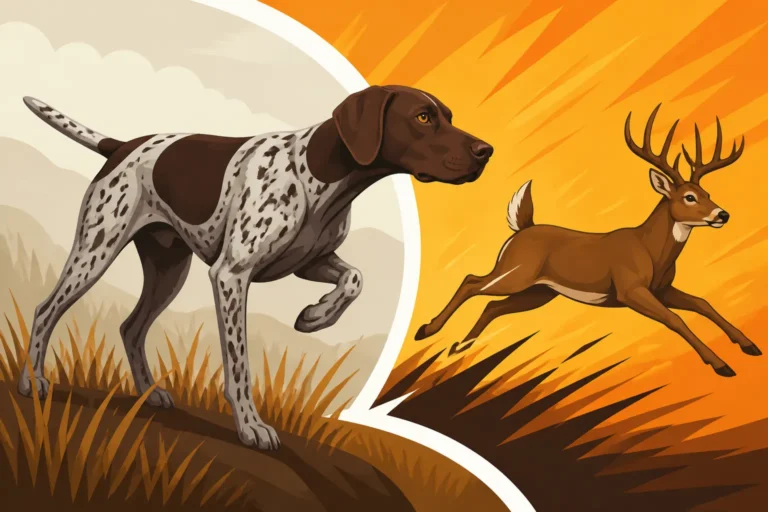
Think of a hypothetical scenario: you're walking your Shorthair off-leash in a designated area, perhaps a nature trail or a quiet field. Suddenly, a group of cyclists whiz by, startling a deer, which then bounds across your path. Without 'whoa', your dog could be off like a shot, possibly chasing the deer into private property, onto a road, or simply out of your sight. With a well-trained 'whoa', you have that critical second to give the command, stopping them in their tracks, even as their body vibrates with the urge to pursue. This isn't just about convenience; it's about life-or-death situations, making 'whoa' an indispensable safety tool.
The Cornerstone of Advanced Field Work
For those who intend to hunt with their German Shorthaired Pointer, 'whoa' is non-negotiable. Without it, your dog cannot be truly "finished" or reliable in the field. Every aspect of advanced bird dog training—from steadying to wing and shot to a proper retrieve—hinges on a rock-solid 'whoa'. A dog that breaks point is not only ineffective but can also ruin a hunt for everyone involved, scattering birds before the shooter is ready or chasing them out of range.
Consider the progression: first, your dog learns to find and point a bird. Excellent! But if they can't hold that point while you walk in, or worse, if they chase the bird as it flushes, you've lost the shot. The 'whoa' command teaches them to maintain that intense focus while allowing you to take control of the situation. It prevents the dreaded "bumping" of birds, ensures they remain steady when the gun goes off, and allows for a calm, controlled retrieve. A dog that is truly 'whoa'-broke will stand like a statue through the flush and shot, only moving to retrieve when given the command. Without this foundation, you'll be constantly struggling against their natural drive, leading to frustration for both you and your dog. It's why topics like Steadying a Shorthair to Wing and Shot always build upon a strong 'whoa' command.
Preventing Bad Habits and Frustration
Beyond the field, a lack of 'whoa' can lead to a host of problematic behaviors. An untrained Shorthair might jump on guests, barge through doorways, counter-surf with impunity, or pull relentlessly on the leash. These are all manifestations of a lack of impulse control, which 'whoa' directly addresses. By teaching them to freeze and await your next instruction, you're instilling a fundamental level of discipline that translates to all aspects of their life.
Imagine trying to groom your dog, or check their paws for burrs after a hike, if they constantly wriggle and try to escape. A simple 'whoa' can get them to stand still long enough for these essential tasks. This command reduces overall stress and frustration for both dog and owner. Instead of constantly correcting or wrestling with your dog, 'whoa' provides a clear, consistent boundary. It allows for a more harmonious household and a more enjoyable partnership with your German Shorthaired Pointer, preventing the common frustration that leads many to rehome these incredible, but demanding, dogs.
Starting 'Whoa' Early: Puppy Foundations
The journey to a reliable 'whoa' starts long before your German Shorthaired Pointer puppy is ready for the field. Laying a solid foundation during their formative months is crucial, establishing the concept of controlled stillness in a fun, positive way. You're not expecting perfection from a tiny pup, but rather introducing the building blocks of impulse control.
Introducing the Concept to Your Young Shorthair
Think of 'whoa' not as a harsh command but as a game of "freeze." Begin in a quiet environment, free from distractions. Use high-value treats and enthusiastic praise. The goal at this stage isn't a rigid, prolonged stand, but rather a brief pause, a momentary halt to their puppy antics. You can start by simply luring them into a stand with a treat, then saying "whoa" as they freeze for a second, immediately rewarding them. Keep these sessions incredibly short – just a minute or two – to prevent boredom and maintain their enthusiasm.
The key is positive association. You want your puppy to think 'whoa' means good things are coming, not that fun is ending. Gradually increase the duration of the 'whoa' by a second or two at a time. If they break, gently guide them back to position and try again. Never scold or punish. We're building desire and understanding, not fear. Using a simple wing on a string, which you can easily find on Amazon, can also be a fantastic way to introduce the visual stimulus of a bird and encourage a natural point, even at a young age, without the pressure of live game. This helps them connect the command to that instinctual freeze.
Using Daily Routines to Build Steadiness
The beauty of foundation training is that you can weave it into everyday life. Every interaction becomes a mini-training opportunity. For example, before placing their food bowl down, have your puppy 'whoa' for a few seconds. Before they rush out the door for a potty break or a walk, ask for a 'whoa'. When you're putting on their leash, ask them to 'whoa' and stand still. These small, consistent applications build the habit of pausing and waiting for your permission.
Consider incorporating these moments into their routine:
- Meal Times: As you prepare their food, have them sit or stand in a 'whoa' position before you give the "release" command to eat. This teaches them patience and impulse control around a highly motivating reward.
- Doorways: Always ask for a 'whoa' before opening any door – whether it's the front door, the back door, or even their crate door. This prevents bolting and teaches them to wait for your lead.
- Leash Manners: Before starting a walk, ask them to 'whoa' as you attach the leash. Practice having them 'whoa' briefly before crossing streets or greeting other dogs and people.
These little moments, repeated consistently, accumulate into a powerful understanding of what 'whoa' means in various contexts. For those looking for structured guidance on puppy training, many online programs, such as those offered by BAXTER & Bella, include modules on early impulse control that complement 'whoa' training beautifully. They provide a comprehensive approach to getting started right.
The Age a Shorthair Puppy Starts Whoa
There's no single magic age to start 'whoa' training, but generally, you can begin introducing the very basic concept around 4 to 6 months old, once your puppy has settled into their new home and understands basic commands like "sit" and "stay." At this age, their focus and attention span are developing, and they're becoming more aware of their instincts.
The key is not to rush. While some precocious pups might grasp it earlier, forcing the issue can lead to frustration and turn them off to training. Focus on positive reinforcement, short sessions, and making it a fun game. If your puppy seems overwhelmed or loses interest quickly, shorten the sessions or take a break. The goal in these early months is to build a positive association with holding still and waiting, laying the groundwork for more formal training later. It's not about achieving a perfect, rigid 'whoa' at four months, but rather about introducing the idea that sometimes, great things happen when they pause and listen to you. Remember, pushing a young GSP too hard too soon can hinder rather than help, especially when it comes to developing a truly reliable and enthusiastic response to commands.
Building 'Whoa' on a Check Cord and Whoa Post
Once your German Shorthaired Pointer puppy has a basic understanding of holding still, it's time to introduce more structured tools to solidify the 'whoa' command. The check cord and the whoa post or barrel are invaluable aids in teaching duration, distance, and consistency, especially when preparing your Shorthair for the real demands of the field.
The Check Cord: Your Extended Hand
The check cord is perhaps the most essential tool for teaching a reliable 'whoa'. It acts as an extension of your arm, allowing you to enforce the command gently but firmly without being right next to your dog. For a GSP, which can cover ground quickly, a check cord gives you the reach you need. You'll want a check cord that is long enough to give your dog some freedom but still allow you to intervene. Many trainers find a 15 to 30-foot cord (easily found on Amazon) to be ideal for this stage. It should be lightweight but durable, and without a loop handle that could snag on brush or get caught around your hand.
Here’s a basic approach to using it:
- Attach and Allow Freedom: Start in an open, low-distraction area like a field. Attach the check cord to your dog’s flat collar (never a harness for this work). Let your dog wander a bit, dragging the cord. This gets them used to the feeling without it being a restraint.
- The 'Whoa' Command: As your dog is moving, say "whoa" in a firm, clear voice. Simultaneously, step on the check cord, or gently lift it to create a subtle, upward pressure on their collar. The moment they stop, release the pressure instantly and offer enthusiastic praise and a treat. The key is the release of pressure as the reward.
- Consistency is Key: Repeat this process many times. Gradually increase the distance from which you give the command and the duration they hold the 'whoa'. If your dog tries to move forward, gently reapply pressure and repeat "whoa" until they stop, then release. This teaches them that resisting the command is uncomfortable, but compliance brings immediate relief and reward.
- Practice Building Whoa on a Shorthair With a Check Cord: This involves walking parallel to your dog, letting them range, then giving the command and seeing if they stop. It’s a dynamic way to practice in a field-like setting, simulating real-world scenarios where they might be moving and suddenly need to 'whoa'. The check cord allows you to correct any breaks in real time without chasing after them.
The Whoa Post or Barrel: Immovable Object
The whoa post, or whoa barrel, is another fantastic tool for building independent steadiness. Its primary purpose is to teach your German Shorthaired Pointer to hold a 'whoa' command without your constant direct physical presence or the subtle cues you might inadvertently give. It helps to generalize the command, making it less about you and more about the command itself.
Here’s how to introduce it:
- Setup: A whoa post is simply a sturdy post driven into the ground, or a whoa barrel is a wooden barrel secured so it won't roll. Attach a short lead, typically 12-18 inches, to the post.
- Introduction: Lead your dog to the post, attach their collar to the short lead, and give the "whoa" command. Position them in a proper 'whoa' stance.
- Step Away: Initially, stand right next to them, praising and rewarding for holding still. Gradually, you’ll step further away, circling the post, leaving them attached. If they move, gently put them back in position and repeat "whoa." The post or barrel prevents them from leaving, forcing them to understand that the only way to release the pressure (of being restrained) is to hold still.
- Duration and Distraction: Once they are comfortable holding 'whoa' for several minutes with you nearby, start adding mild distractions. Walk further away, briefly disappear from their sight, or even have someone else walk by. The post ensures they cannot physically break the 'whoa'. This tool is invaluable in preparing for the next stage of training. Many owners wonder Whether a Shorthair Puppy Needs a Whoa Post; while not strictly mandatory, it can significantly accelerate and solidify the 'whoa' command by removing handler dependency.
Gradual Progression and Distraction Management
Building a truly reliable 'whoa' is a process of gradual progression and meticulous distraction management. You can't expect your Shorthair to go from a quiet living room to a bustling bird field overnight. Each step must be mastered before moving to the next.
Start with minimal distractions in a controlled environment. Once your dog is consistently 'whoa-ing' on a check cord or whoa post in a quiet setting, slowly introduce more challenging elements:
- Environmental Changes: Move your training sessions to different locations – a different part of the yard, a quiet park, then eventually a field with more ambient sounds and scents.
- Visual Distractions: Begin with a neutral object, then a toy, then a retrieved bird wing on a string, then a dead bird, and finally, live birds. Each step requires patience and repetition.
- Auditory Distractions: Start with your voice, then other people, then distant sounds, and eventually, the sound of a blank pistol or shotgun, always introduced at a distance first.
The goal is for your German Shorthaired Pointer to understand that "whoa" means "freeze" no matter what exciting stimulus is around them. It's about building their confidence in the command, and your confidence in their ability to execute it, under increasing pressure. This systematic approach ensures that when they encounter a bird in the wild, that foundational 'whoa' is deeply ingrained.
Advancing 'Whoa': Steadying to Flush and Shot
Once your German Shorthaired Pointer has a solid 'whoa' on a check cord and can hold it on a whoa post with distractions, you're ready to advance to the crucial stages of steadying them to the flush and the shot. This is where 'whoa' truly shines in its purpose for a pointing breed, transforming a natural bird finder into a disciplined hunting companion.
Introducing Birds and the Live Point
This is arguably the most exciting stage of 'whoa' training, where your Shorthair's natural instincts truly come to life. You'll need access to birds, preferably pen-raised birds like pigeons or quail, which are easier to control for training purposes. The goal here is to get your dog to consistently find and point a bird, and then hold that point until you give a command.
- Controlled Introductions: Start in a large, open field where you can control the bird's movement. Plant a bird (covered so it doesn't flush immediately) and then work your dog into the wind, allowing them to scent it.
- Encourage Natural Point: As your Shorthair catches the scent and locks on, move in slowly. If they try to creep, give a soft "whoa" command and gently apply pressure with your check cord (which should still be attached and dragging, or lightly held). Praise them for holding that intense, beautiful point.
- Duration and Steadiness: The initial goal is for them to hold the point for increasing periods, even with the excitement of a live bird just feet away. Gradually increase the duration before you flush the bird. You want them to understand that holding point before the bird flushes is what earns praise and ultimately, a retrieve. This is directly related to The First Live Bird for a German Shorthaired Pointer, where the focus is on positive introduction and building confidence in their pointing ability while introducing the 'whoa' concept.
The Critical Moment: Holding Point Through the Flush
This is often the hardest part for a high-drive German Shorthaired Pointer. Their instinct is to pounce or chase the moment the bird takes flight. Your 'whoa' training must be bulletproof here. The check cord remains your best friend.
- Controlled Flush: With your Shorthair on point, positioned a few feet away with the check cord attached, you or a helper will flush the bird. As the bird takes wing, immediately give a firm "whoa" command.
- Enforcement: If your dog tries to lunge, step on the check cord or apply gentle pressure to stop them. The pressure should be enough to stop forward motion but not to scare or hurt them. The moment they stop and hold their 'whoa' through the flush, release the pressure and praise them.
- Repetition and Reward: Repeat this process. A lot. The dog needs to associate the flush with holding still, not with chasing. The ultimate reward for holding 'whoa' might be a successful retrieve of the fallen bird, but only after they've held their ground. If they constantly break point, go back a step or two in your training. This intense focus on preventing the chase is what ensures your dog will honor the point when it matters most. It directly addresses the challenge of Holding a Shorthair's Point Until You Walk In, making sure they are steady until you make your move.
Gun Introduction and Steadying to Shot
Once your German Shorthaired Pointer is consistently steady to the flush, you can begin introducing gunfire. This must be done gradually and sensitively, as some dogs can develop gun shyness if exposed improperly.
- Distance is Key: Start with a very small caliber gun (like a .22 blank pistol) or even a cap gun, fired at a significant distance from your dog – perhaps 50-100 yards away.
- Positive Association: The first shots should not be associated with birds or hunting pressure. Simply fire a shot while your dog is happily engaged in another activity, like playing fetch. The goal is for them to barely notice it or associate it with something positive.
- Integrate with Flush: Once they are completely comfortable with distant gunfire, begin to incorporate it into your flush-training sessions. When your Shorthair is holding point, and the bird is flushed, have a helper fire the blank pistol at a distance after the bird is airborne and your dog is steady to the flush.
- Gradual Reduction of Distance: Over many sessions, slowly decrease the distance of the shot, always watching for any signs of fear or anxiety. The moment they show discomfort, increase the distance again. You want them to associate the shot with the bird falling, not with pain or fear. This methodical approach is critical for Building a Shorthair's Gun Tolerance From a Distance, ensuring you create a confident, not gun-shy, hunting partner.
By steadily progressing through these stages, you'll build a German Shorthaired Pointer that not only finds and points birds instinctively but also displays the discipline to remain rock-steady through the flush and shot, making for a truly enjoyable and productive hunting experience.
Common Mistakes and How to Avoid Them
Training a German Shorthaired Pointer, especially a fundamental command like 'whoa', requires immense patience, consistency, and a deep understanding of the breed's drive. It's easy to fall into common pitfalls that can undermine your efforts and lead to frustration for both you and your dog. Knowing these mistakes upfront can help you navigate the training journey more effectively.
Rushing the Process: The Biggest Pitfall
This is perhaps the most common and damaging mistake. German Shorthaired Pointers are intelligent and eager to please, which can sometimes lead owners to believe their dog understands a concept faster than they truly do. You might see your pup 'whoa' perfectly in the living room and then immediately try it with a live bird, only to have them break. The temptation to speed through stages, especially when you see glimpses of brilliance, is strong. However, skipping steps or not spending enough time solidifying each phase of 'whoa' training will inevitably lead to an unreliable command.
A shaky foundation means that under real-world pressure – like a wild bird flushing unexpectedly, or a rabbit bolting across a field – your dog's instinct will override their training. It's crucial to resist the urge to progress too quickly. Every step, from basic puppy 'whoa' to holding point on a check cord, to steadying to flush, needs to be consistently reliable in various environments before moving on. Remember, your German Shorthaired Pointer isn't trying to fail; they just need more repetition and proof that holding 'whoa' is the most rewarding choice, even when their instincts are screaming otherwise. This often ties into Common Mistakes That Ruin Whoa on a Shorthair, highlighting the impatience and lack of consistency as primary culprits.
Inconsistent Reinforcement and Expectations
Imagine if sometimes 'whoa' meant stop, and other times it was okay to take a few more steps. Your German Shorthaired Pointer would quickly become confused. Inconsistency is a silent killer of good training. Every time you give the 'whoa' command, you must be prepared to enforce it, and it must mean the exact same thing, every single time. This means if you say "whoa" and your dog takes one step, you gently put them back in position and reinforce the command. Allowing them to "get away with" small breaks teaches them that 'whoa' is optional, or that it only matters sometimes.
This consistency extends to everyone in the household. If one person allows the dog to break 'whoa' while another strictly enforces it, your Shorthair will learn to selectively obey. This is especially true for a dog that might try to test boundaries, as many high-energy breeds do. Before starting 'whoa' training, ensure every family member understands the command, how to give it, and how to reinforce it. The consequence of inconsistency is not just a weaker 'whoa' command, but a general erosion of trust and respect in your leadership, making all subsequent training harder.
Making Training a Punishment Instead of a Partnership
German Shorthaired Pointers are intelligent, sensitive dogs. While they are driven, they respond best to positive reinforcement and clear, fair corrections, not harsh punishment. Making 'whoa' training a constant battle of wills or using heavy-handed methods can quickly lead to a dog that is fearful, resistant, or "shuts down" under pressure. You want your Shorthair to want to 'whoa' for you, not fear the consequences of not 'whoa-ing'.
Focus on building a partnership where your dog understands that listening to you leads to good outcomes. Use praise, treats, and positive reinforcement generously when they perform correctly. When a correction is needed – for example, a gentle tug on the check cord – it should be immediate, fair, and quickly followed by praise the moment they comply. Avoid yelling, anger, or prolonged physical force. A German Shorthaired Pointer that fears training will not perform to its full potential and may even develop behavioral issues. The goal is to cultivate a confident, enthusiastic dog who trusts your guidance and eagerly responds to your commands, knowing that you are working with them, not against them.
Beyond the Field: 'Whoa' in Everyday Life
While 'whoa' is undeniably critical for field work with a German Shorthaired Pointer, its utility extends far beyond hunting scenarios. A well-trained 'whoa' is a powerful tool for general obedience and safety in everyday life, helping to manage the high energy and impulsive nature of the breed in any environment.
Doorways, Gates, and Vehicle Exits
One of the most common frustrations for German Shorthaired Pointer owners is a dog that bolts out an open door or jumps excitedly out of a car. This isn't just annoying; it can be incredibly dangerous, especially if you live near a busy road or if your dog decides to greet an unsuspecting stranger with a full-body tackle. 'Whoa' provides a simple, effective solution.
By consistently applying the 'whoa' command at all thresholds, you teach your Shorthair that rushing through an opening is never an option. Before you open the door to your house, car, or even a gate in your fence, command "whoa." Make them stand patiently until you give a release command, like "okay" or "free." This instills vital impulse control and prevents accidents. Imagine your dog's safety if the garage door accidentally opens, or if they slip out of their leash at the park entrance – a rock-solid 'whoa' can literally be a lifesaver, allowing you to regain control before they run into danger.
Greeting Visitors and Managing Excitement
German Shorthaired Pointers are often exuberantly friendly dogs, and their greetings can be, shall we say, enthusiastic. A sixty-pound dog launching itself at a guest, especially a child or an elderly person, can be problematic. This is another prime opportunity to leverage your 'whoa' command.
When the doorbell rings or guests arrive, put your Shorthair on a leash if necessary, and instruct them to "whoa" a short distance from the door. Make them hold that position, even amidst the excitement of new people entering the home. If they break, gently but firmly guide them back to their 'whoa' spot. Only when they are calm and holding their 'whoa' should you allow them to greet guests, and even then, under controlled circumstances. This teaches them that calm behavior, not chaotic jumping, is what earns them the reward of interaction. It's a crucial step in teaching them polite manners and preventing guests from being overwhelmed by your otherwise charming companion.
'Whoa' as a General Impulse Control Tool
Beyond specific scenarios, 'whoa' serves as an excellent general-purpose impulse control tool for a German Shorthaired Pointer. This breed is known for its boundless energy and quick decision-making, which can sometimes lead to mischievous behavior like counter surfing, stealing food, or digging. 'Whoa' can be applied to curb these unwanted tendencies by teaching your dog to pause and wait for your permission before acting on their impulses.
You can incorporate 'whoa' into various daily situations:
- Before Receiving Toys: Have your Shorthair 'whoa' before you toss their favorite ball or squeaky toy.
- During Play: If play gets too rough or over-excited, a quick "whoa" can bring them back to a calmer state, reinforcing that you control the pace.
- Around Tempting Objects: If your dog eyes something on the coffee table or kitchen counter (a common GSP trait, as described in A Shorthair That Clears a Counter in One Reach), a timely "whoa" can remind them to stay put and resist the urge.
- During Grooming or Health Checks: When you need your Shorthair to stand still for brushing, nail trims, or a quick check for burrs after a walk, 'whoa' is invaluable. It helps them tolerate handling without fidgeting.
By consistently integrating 'whoa' into these everyday moments, you're not just teaching a specific command; you're building a foundation of self-control, respect for boundaries, and a stronger partnership with your German Shorthaired Pointer. It transforms them from a high-energy, impulsive dog into a thoughtful, responsive companion, capable of navigating the complexities of your home and the wider world with grace and discipline.
Maintaining and Reinforcing 'Whoa' Throughout Your Shorthair's Life
Teaching 'whoa' to your German Shorthaired Pointer is a significant achievement, but it's not a "set it and forget it" command. Like any skill, especially one that goes against a powerful natural instinct, 'whoa' requires ongoing maintenance and reinforcement throughout your dog's life. Neglecting regular practice can lead to a gradual erosion of reliability, especially with a breed as driven and energetic as the GSP.
Regular Practice Sessions
Even a fully "finished" German Shorthaired Pointer that is a superstar in the field needs refreshers. Just like an athlete, they need to keep their skills sharp. Dedicate short, regular sessions – perhaps 5-10 minutes a few times a week – to practice 'whoa' in various contexts. These don't always have to be formal, intense training drills; they can be fun and integrated into your daily routine.
Think about practicing 'whoa' in different environments: your backyard, a local park, a quiet field, or even inside your house. Vary the distractions: sometimes an empty field, other times with family members walking by, or even with another dog in the distance (if your dog is ready for that level of distraction). You can use training dummies or even just a ball to simulate a "point" and practice the 'whoa' at different distances and durations. The key is variety and consistency; keep it fresh, keep it fun, and keep it reliable. This continuous reinforcement ensures the command stays sharp and doesn't degrade over time.
Recognizing and Addressing Lapses
No dog is perfect, and even the best-trained German Shorthaired Pointer might have a "lapse" in their 'whoa' command. Maybe they creep an inch, or their focus wavers slightly. The critical thing is to recognize these subtle breaks immediately and address them. Don't ignore them, thinking "it's just a little bit." Allowing small breaks to go uncorrected teaches your dog that 'whoa' is negotiable.
If you notice a lapse, calmly and immediately correct it. This might mean gently putting them back into position, reapplying a brief check cord pressure, or restarting the exercise. Go back a step in your training if necessary. If they're struggling with a particular distraction, reduce the distraction level and build back up. It's not a failure on your part or theirs, but rather an opportunity to reinforce the command and strengthen their understanding. The faster you address a lapse, the easier it is to get back on track and prevent it from becoming a habit. Consistent vigilance is key.
'Whoa' as a Lifelong Skill for You and Your Dog
Ultimately, 'whoa' is more than just a command; it's a testament to the ongoing communication and bond between you and your German Shorthaired Pointer. It represents a shared understanding, a mutual trust, and a commitment to responsible ownership. For your Shorthair, it’s a lifelong skill that allows them to safely and effectively engage with their world, whether it's navigating the complexities of a bird field or simply waiting patiently at the threshold of your home.
This deep-rooted skill empowers them to channel their incredible energy and instincts in a controlled manner, making them a joy to live with and an invaluable partner. It reflects the thoughtful investment you've made in their training and well-being. The pride you'll feel when your Shorthair stands rock-solid on point, holding their 'whoa' with intense focus, is unmatched. It's a reminder of what dedicated training can achieve, forging a profound connection that lasts for The Twelve to Fourteen Years a German Shorthaired Pointer Gets and beyond.
| Training Stage | Primary Goal | Key Tools/Methods | Typical Environment |
|---|---|---|---|
| Puppy Foundation | Introduce concept of holding still | Treats, praise, short sessions, lure & reward | Quiet home, fenced yard |
| Check Cord Work | Build duration, distance, and steadiness | Check cord (15-30 ft), treats, light pressure | Open field, low distractions |
| Whoa Post/Barrel | Independent hold, remove handler influence | Whoa post/barrel, short lead, static position | Training area, limited distractions |
| Bird Introduction | Hold point on scent and sight of birds | Wing on a string, live birds (pigeons/quail), launcher | Designated bird field, controlled |
| Steady to Flush/Shot | Hold point through flush and gunfire | Live birds, check cord, blank pistol/shotgun | Hunting grounds, increasing realism |
| General Impulse Control | Apply 'whoa' to daily situations | Leash, doorways, food bowl, verbal command | Home, public spaces, high traffic |
Disclaimer
This article is for general informational purposes only and does not constitute professional advice. Laws, prices and regulations vary by location and change over time. Consult a qualified professional for guidance on your specific situation.