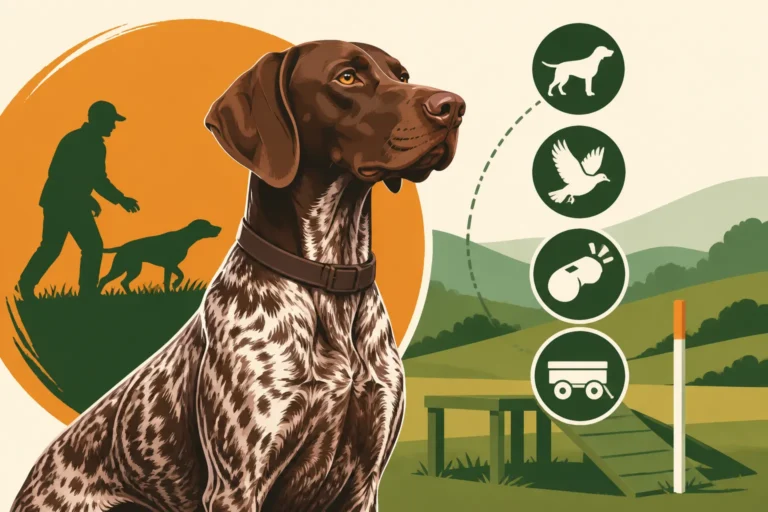
A German Shorthaired Pointer That Self Hunts
There's nothing quite like the heart-stopping moment when your German Shorthaired Pointer, a blur of liver and white, vanishes over the horizon, completely absorbed in its own mission. You call, you whistle, you panic a little, and they're just… gone, out there "self-hunting" as we call it, convinced they know best. This can be incredibly frustrating, even heartbreaking, especially when you've put in countless hours of training. This guide isn't about shaming you or your dog; it's about understanding why this happens and providing realistic, empathetic strategies to help you bring your independent hunter back into your team.
Understanding the Instinct Behind Self-Hunting
It’s easy to feel personally offended when your German Shorthaired Pointer decides to explore the next county without you, but it’s crucial to remember that this isn't usually an act of defiance. Rather, it's a deep-seated instinct manifesting itself. These dogs were quite literally bred for exactly this kind of independent, wide-ranging search.
The Hunter's DNA: What the Breed Was Built For
Think back to the origins of the German Shorthaired Pointer. They weren't just bred to find birds; they were bred to find all game, to track, to point, and to retrieve, often across vast European landscapes. Their ancestors were versatile hunting dogs, expected to cover a lot of ground efficiently and make independent decisions in the field. This isn't a breed designed to work at your heel like some other sporting dogs. They were developed to be intelligent, driven, and self-sufficient hunters, capable of covering large swaths of territory to locate quarry that might be scarce. When your Shorthair takes off on its own, it’s not misbehaving in its own mind; it’s simply doing what generations of its ancestors were explicitly selected to do. It’s following its genetic blueprint to be a productive hunter, even if that means leaving you behind for a bit.
The Thrill of the Chase: Scent and Sight Drive
German Shorthaired Pointers possess an incredibly powerful nose and keen eyesight, both of which are intensely stimulated in a hunting environment. A whisper of pheasant scent on the breeze, the fleeting glimpse of a rabbit darting into cover, or even the rustle of leaves that suggests hidden prey can instantly flip a switch in their brains. When that switch is flipped, the primal hunting drive takes over. This isn't a thought process; it's an overwhelming urge. The rush of pursuing scent, the exhilaration of spotting movement, and the sheer joy of the hunt become all-consuming. For many Shorthairs, this drive is so potent that it can temporarily overshadow even the most consistent training. It’s a powerful natural reward loop: they find something, they pursue it, and their brain releases a flood of feel-good chemicals. It’s a very hard habit to break, because nature is providing such a strong positive reinforcement.
When Instinct Overrides Training: A Delicate Balance
The challenge with a self-hunting German Shorthaired Pointer often lies in the delicate balance between allowing their natural abilities to shine and maintaining control. We want them to use their incredible noses and stamina, to range effectively and find birds, but we also need them to check in, respond to commands, and work with us. The problem arises when the instinct to hunt becomes so strong that it overrides the learned responses. This isn't always a lack of training, but sometimes a lack of proofing that training in high-distraction, high-drive environments. It means that while your dog might have perfect recall in your backyard, a full head of steam after a scent trail in the deep woods is a completely different scenario. The "whoa" command, which is fundamental to controlling a pointing dog, becomes critical here, but even a rock-solid whoa can be tested when that primal urge takes over. Building Whoa on a Shorthair With a Check Cord is an essential step in this journey, but it must be proofed repeatedly.
Recognizing the Signs of a Self-Hunting Shorthair
Sometimes, the line between an enthusiastic hunter and a self-hunter can be blurry, especially with such a high-drive breed. However, there are clear indicators that your German Shorthaired Pointer might be operating more on their own agenda than yours. Catching these signs early can make a big difference in addressing the behavior.
The Disappearing Act: Ranging Beyond Your Control
Perhaps the most obvious sign is when your Shorthair consistently ranges too far. You're walking a field, perhaps with a slight rise or a patch of dense cover, and suddenly, your dog is simply… gone. You might catch a glimpse of them a quarter-mile out, or worse, you hear the distant chirp of their GPS collar, telling you they're in the next zip code. This isn't just about covering ground efficiently; it's about covering ground without regard for your position or commands. A truly collaborative hunting dog will naturally arc its cast to stay somewhat within visual or whistle range, or at least check back periodically. A self-hunter, however, gets so absorbed in the scent or the search that they genuinely lose track of where you are, or simply don't care enough to adjust their range. This can be dangerous, not just because you might lose your dog, but also due to road hazards, other hunters, or getting into territory where they shouldn't be. You might wonder How Far a German Shorthaired Pointer Runs in an Hour – well, a self-hunter will push that limit to its absolute maximum.
Ignoring the Whistle: Selective Hearing in the Field
Another tell-tale sign is the "selective hearing" that seems to afflict German Shorthaired Pointers once they hit prime cover. You blow the whistle, once, twice, a furious volley of blasts, and you get nothing. Maybe a slight ear flick, but no change in direction, no break in their stride. They might even glance back, register your presence, and then continue their independent search. This isn't deafness; it's often a deliberate choice, driven by the intense thrill of the hunt. They've learned that continuing their own pursuit is more rewarding than responding to your command. This is where training breaks down, and it indicates that your recall isn't strong enough in high-distraction environments. The Whistle Signals a Shorthair Learns First are critical, but they need to be proofed under immense pressure, not just in the backyard. When your Shorthair is "locked on" to a scent, getting their attention back to you is paramount, and it’s a core component of Recall on a German Shorthaired Pointer That Is Locked On.
The Lone Wolf Point: Finding Birds Without Guidance
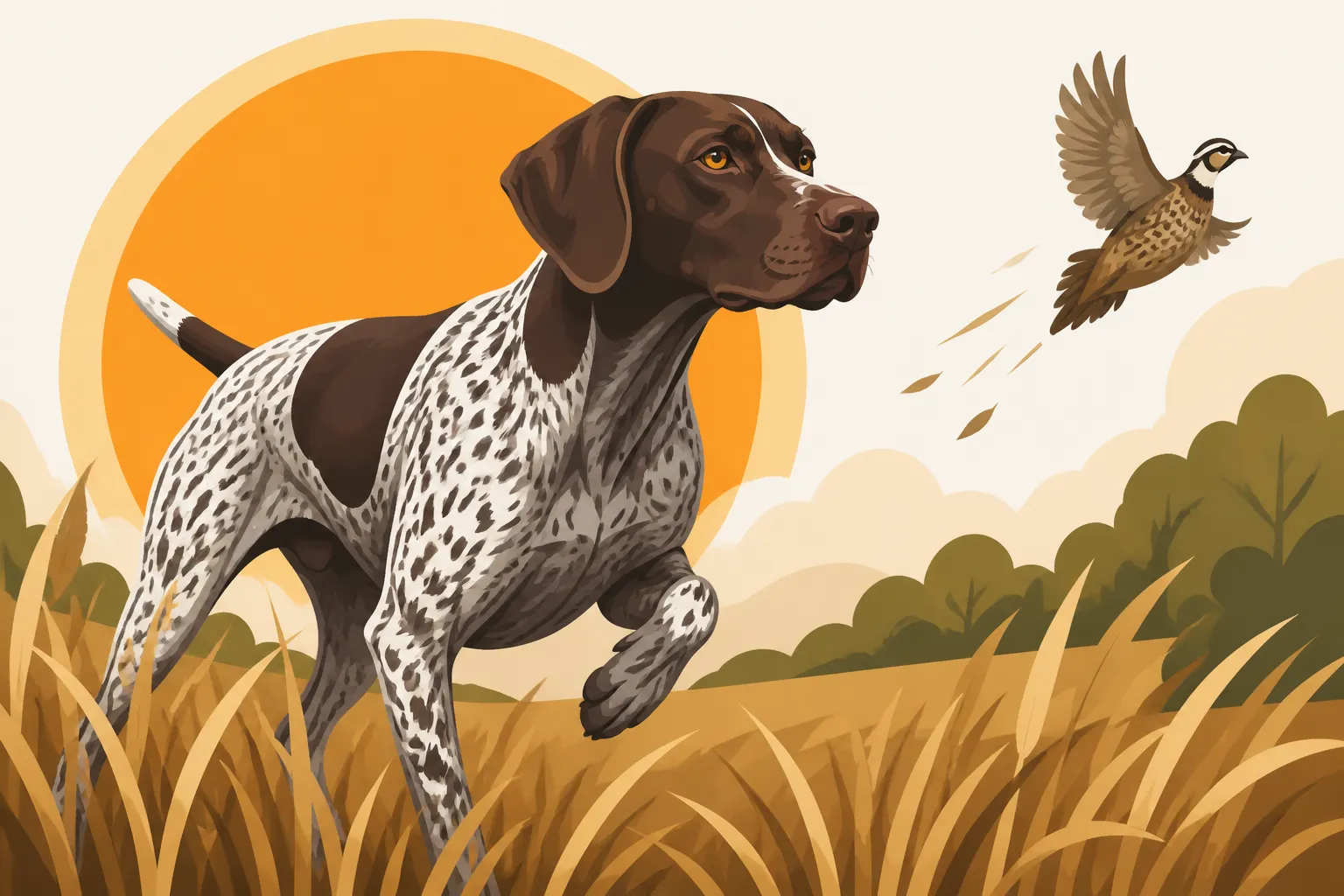
A German Shorthaired Pointer's point is a thing of beauty, a frozen tableau of intense focus. But with a self-hunter, you might find your dog locked on point… in a location you never would have chosen, or so far away you only discover them by chance. They've found the birds, which is great, but they've done it entirely on their own terms, without quartering effectively in front of you or responding to your signals to sweep a particular area. It’s like they’re saying, "I found them, now you come to me." While a good dog will sometimes find birds slightly off your intended path, a self-hunter consistently operates like a solo act, finding game for themselves rather than as part of a hunting team. This makes for inefficient hunting, as you're constantly playing catch-up, trying to figure out where your dog might be rather than directing their efforts. The goal is to be Teaching a Shorthair to Quarter in Front of You, not letting them quarter for the next county.
Preventative Measures for a Young German Shorthaired Pointer
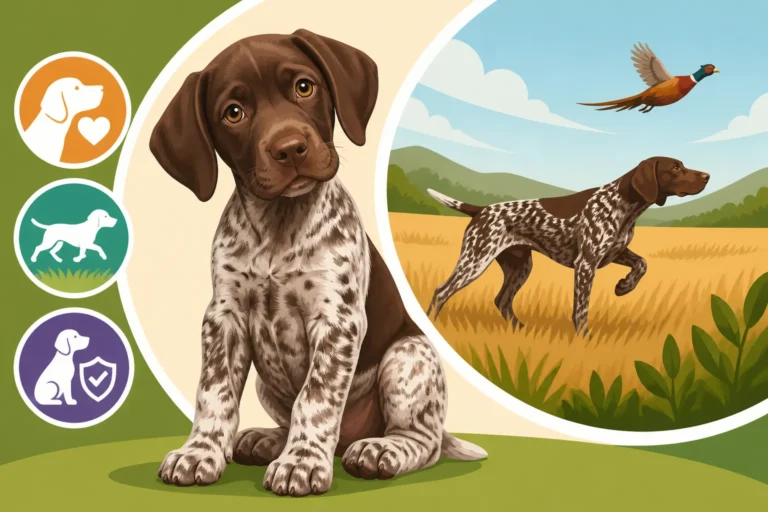
The best defense against a self-hunting German Shorthaired Pointer is a strong offense, meaning laying down solid foundational training from the earliest days. It's much easier to shape desired behaviors in a puppy than to undo ingrained habits in an adult dog.
Foundation of Recall: Building a Rock-Solid Come
If there's one command you absolutely must nail with a German Shorthaired Pointer, it's recall. Your "come" command needs to be immediate, enthusiastic, and non-negotiable, regardless of distractions. Start training recall the day your puppy comes home, making it the most rewarding thing they can do. Use high-value treats and enthusiastic praise. Practice in low-distraction environments first, then gradually increase the challenge: in the yard, at a park on a long line, then in a field with mild distractions. Never use "come" for something unpleasant, like a bath or a scolding. Always make coming back to you the best choice. Incorporate games like hide-and-seek, where coming to find you is a fun reward. A long training line, perhaps 30 feet or more, is invaluable here. It gives your puppy the illusion of freedom while you still maintain physical control, allowing you to gently enforce the recall if they start to wander. This continuous reinforcement builds a deep trust and understanding that returning to you is always positive.
Early Introduction to Controlled Birds and Environments
When it comes to bird work, control is key from the outset. Don't just throw your young Shorthair puppy into a field full of wild birds and expect them to know the rules. Their instincts will take over, and they'll likely start chasing or bumping birds, setting a precedent for self-hunting. Instead, introduce birds in a controlled manner. Start with a "wing on a string" or a clipped-wing pigeon in a small, fenced area. This allows you to observe their natural point and excitement without them getting overstimulated and running off. As they progress, use planted birds in manageable fields, working with a check cord attached to a long lead. This ensures that even when they point, you can control their movement and reinforce the "whoa" command before they chase. The goal is to teach them to hunt for you, not just for themselves. This early, controlled exposure helps them understand the partnership aspect of hunting, rather than seeing it as a solo endeavor.
Establishing Clear Boundaries and Expectations
German Shorthaired Pointers are intelligent and thrive on structure. From day one, establish clear boundaries about what is acceptable and what is not. This applies to everything from counter surfing in the kitchen (a common GSP trait) to ranging in the field. Every interaction is a training opportunity. Teach them that you are the leader and that following your direction brings rewards. Use consistent commands and body language. For their immense energy, consistent, structured exercise is paramount. The Two Hours a Day a German Shorthaired Pointer Needs isn't just a suggestion; it's a requirement to help them be calm and receptive to training. A tired GSP is a better listener. Make sure they understand that freedom (like off-leash time in the field) is earned through good behavior and responsiveness. This strong foundation of The Structure a German Shorthaired Pointer Needs Daily at home will translate to better behavior in the field. Consistency is your best friend here – never let them get away with a behavior once that you don't want them doing always.
Strategies to Reign in a Self-Hunting Adult Shorthair
If your German Shorthaired Pointer has already developed a habit of self-hunting, don't despair! It's certainly a bigger challenge to re-train than to prevent, but with patience, consistency, and the right tools, you can absolutely bring them back into your team.
Re-establishing Connection: The Power of Proximity Training
The first step is to dial back the freedom. If your dog is self-hunting, they’ve essentially lost the privilege of off-leash exploration until they can prove they're reliable. Start by working your dog on a long check cord, even in areas where you previously let them run free. This isn't punishment; it's a re-education. The goal is to teach them to stay closer to you and to respond instantly to commands. Practice in increasingly distracting environments. When they start to range too far, use the check cord to gently but firmly reel them back in while simultaneously giving your recall command. Reward heavily when they return.
This process is about rebuilding their understanding that you are the center of their universe in the field. When they return, don't just send them back out. Engage with them, praise them, give them a high-value treat, maybe a quick game of fetch, and then release them. This reinforces that coming back to you is not the end of their fun, but a valuable check-in. This proximity training helps to shorten a dog that naturally Shortening a Shorthair That Ranges Too Far by consistently bringing them back into your orbit.
Utilizing Training Tools: Check Cords and E-Collars
For a dog prone to self-hunting, certain tools become indispensable.
Check Cords: As mentioned, a long check cord (anywhere from 20 to 50 feet) is excellent for maintaining control while allowing your dog some freedom. It allows you to enforce commands like "whoa" or "come" with a physical reminder. This is especially useful in new environments or when introducing new game. The check cord should be light enough not to impede movement but sturdy enough to withstand a determined dash.
E-Collars: This is where many owners draw a line, but for a high-drive, wide-ranging German Shorthaired Pointer, a properly introduced and used e-collar can be a game-changer for safety and control. It provides a way to communicate at a distance, overriding their intense focus on scent or game when your voice or whistle simply isn't heard. The key is proper introduction and conditioning. You never want the dog to associate the e-collar with punishment, but rather with a long-distance tap on the shoulder that means, "Hey, listen to me." Start with very low levels in controlled environments, pairing the stimulation with known commands. The goal is for the dog to choose to comply to avoid the stimulation, not to fear it. Brands like Garmin and SportDOG offer robust e-collar systems designed for hunting dogs. Understanding When an E-Collar Belongs on a German Shorthaired Pointer and how to effectively conduct Conditioning a Shorthair to the E-Collar Properly is crucial for its ethical and successful use.
Consistent Reinforcement and Managing Expectations
Training a self-hunting dog requires immense patience and unwavering consistency. Every outing is a training session. You cannot allow them to self-hunt one day and expect them to stay close the next. This means you might need to sacrifice some "fun" hunts in favor of focused training sessions for a while.
Never give up: It's easy to get discouraged, but remember, your Shorthair isn't doing this to spite you. They're following incredibly powerful instincts. Your job is to channel those instincts into a partnership.
Manage your expectations: A German Shorthaired Pointer will likely never be a foot-by-foot quartering machine right under your nose. They are bred to range. The goal isn't to eliminate their drive, but to teach them acceptable boundaries and immediate responsiveness when you need them. Celebrate the small victories: the shorter casts, the quicker responses to the whistle, the more frequent check-ins. It's a continuous process, but the bond you build by working through this challenge will ultimately make your hunting partnership, and your relationship, even stronger.
| Training Tool | Primary Use | Pros | Cons |
|---|---|---|---|
| Check Cord | Proximity control, recall reinforcement | Physical control, immediate feedback, no electronic components, good for foundation work. | Can get tangled in heavy cover, limits range, requires physical effort, not effective for very wide-ranging dogs. |
| Whistle | Distance communication, directional cues | Lightweight, can be heard over distance, good for consistent signals, ideal for specific commands. | Requires dog to be receptive and trained, ineffective if dog is "locked on" or too far, not a physical correction. |
| E-Collar | Long-distance recall, correcting undesirable behaviors | Effective at extreme distances, can get dog's attention in high-drive situations, subtle communication. | Requires proper conditioning to avoid fear, can be misused, battery life considerations, higher initial cost. |
Remember, it’s about finding the right balance of guidance and freedom, always prioritizing the safety and well-being of your incredible German Shorthaired Pointer.
Disclaimer
This article is for general informational purposes only and does not constitute professional advice. Laws, prices and regulations vary by location and change over time. Consult a qualified professional for guidance on your specific situation.