Whether Running Wears a Shorthair’s Nails Down
Oh, the age-old question for us German Shorthaired Pointer owners! We look at our dogs, tireless athletes, constantly on the move, and we think, "Surely all that running must wear down their nails, right? I can skip a trimming session or two." It's a natural, hopeful thought, especially when faced with a squirming, sometimes reluctant GSP and a pair of clippers. But the truth, as with most things canine, is a little more nuanced, and frankly, a bit more work. This guide will dive deep into whether your GSP's impressive mileage translates to perfectly maintained nails, what really happens if you let them go, and how to keep those paws healthy and happy for a lifetime of adventure.
The Reality of Natural Nail Wear on a German Shorthaired Pointer
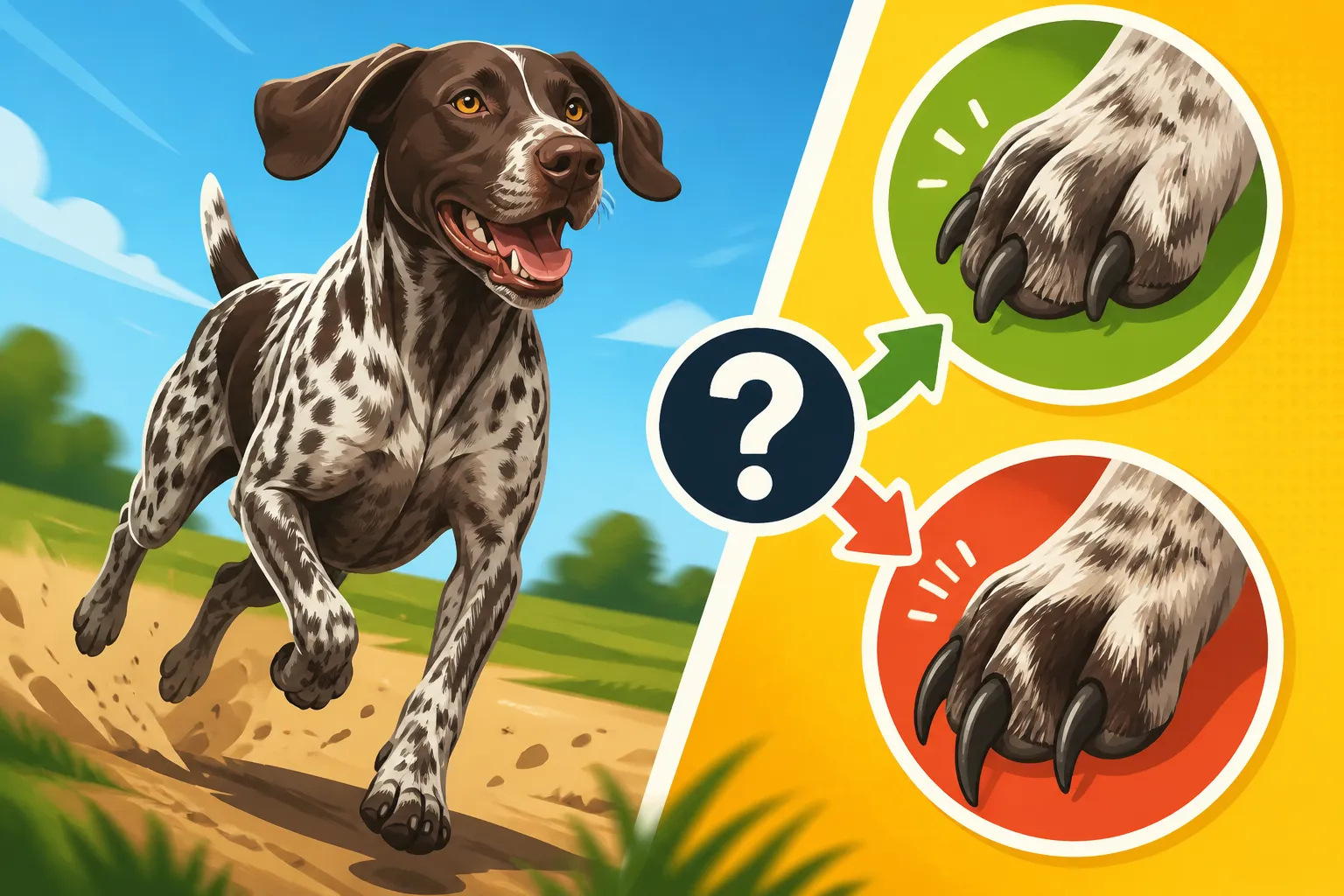
It's a lovely idea, isn't it? Your German Shorthaired Pointer tearing across a field, chasing a ball, or on a long hike, and with every stride, their nails are naturally filed down to perfection. In a perfect world, perhaps. But the reality is that while some running can contribute to nail wear, it's rarely enough to completely negate the need for regular nail care for most GSPs. This breed is built for speed and endurance, and their health and performance depend on proper foot maintenance, nails included.
Surface Matters More Than Speed
When we talk about natural nail wear, the type of surface your German Shorthaired Pointer is primarily running on makes all the difference, far more than the sheer distance or speed they cover. Think about it:
- Hard, Abrasive Surfaces: If your GSP is regularly jogging with you on concrete sidewalks, running alongside your bike on asphalt trails, or scrambling over gravel paths, these hard, rough surfaces will undoubtedly act like a giant, continuous nail file. This kind of running can certainly help keep the tips of the nails shorter and more blunt. Many owners who regularly engage their GSPs in roadwork, for instance, might find the quick of the nail recedes somewhat over time, allowing for shorter, tighter nails. This is especially true as a German Shorthaired Pointer reaches The Age a German Shorthaired Pointer Can Start Roadwork and begins to put in serious miles.
- Soft, Natural Terrain: However, a German Shorthaired Pointer spending most of its time in the field, tearing through tall grass, soft dirt, muddy marshlands, or even deep snow, won't experience much natural nail wear at all. These soft surfaces offer little resistance to the nails, which often sink into the ground rather than making firm, abrasive contact. If your GSP's primary exercise involves hours of bounding through fields or swimming in ponds, you'll likely find their nails growing just as quickly as a less active dog's, if not faster in some instances. The dewclaws, located on the inner side of the leg and typically not touching the ground at all, will certainly never wear down naturally, no matter the surface.
So, while a GSP's active lifestyle is paramount for their physical and mental health, don't assume that a hard run through the local park will replace your clippers or grinder. It's an aid, not a solution in itself.
The Myth of Self-Trimming Nails for Active Dogs
It's a common misconception, particularly among owners of high-energy breeds like the German Shorthaired Pointer, that their dog's constant activity will keep their nails perfectly trimmed. You might hear stories of farm dogs or working dogs whose nails are always short, and indeed, some truly are. But these are often dogs living in environments where they are constantly traversing very specific, abrasive terrain for hours on end, day in and day out, in ways that most domestic GSPs simply don't.
Our domestic dogs, even the most active German Shorthaired Pointers, lead a different life than their wild counterparts or even a dog working livestock all day on gravel. Their nails aren't constantly being filed down by miles of rough ground. Moreover, the structure of a dog's foot and nail means that for optimal health, the nails should ideally not even touch the ground when the dog is standing naturally. If you hear a "click-click-click" as your GSP walks across your kitchen floor, their nails are already too long.
The dewclaws are a perfect example of this myth debunked. These nails, often higher up on the leg, serve various functions, from helping grip objects to providing stability when turning at high speeds. Because they don't make ground contact, they never wear down. Neglecting them can lead to them growing in a full circle, digging into the dog's own leg, or getting painfully torn. Trimming a German Shorthaired Pointer's Dewclaws is a crucial part of routine care that no amount of running will ever address. Ignoring them can lead to pain and even serious injury.
Why Short Nails are Non-Negotiable for a GSP's Well-being
For a breed as athletic and agile as the German Shorthaired Pointer, maintaining proper nail length isn't just about aesthetics; it's fundamental to their comfort, soundness, and overall health. Long nails can cause a cascade of problems that impact everything from their ability to point effectively to their long-term joint health.
Impact on Gait, Posture, and Joint Health
Imagine trying to run a marathon in shoes that are a size too small, or with pebbles stuck in the toes of your boots. That's a bit like what a German Shorthaired Pointer experiences with overly long nails. When the nails are too long, they constantly push up against the ground, forcing the toes upwards and backwards. This unnatural pressure changes the entire angle of the paw, disrupting the dog's natural gait and posture.
Over time, this subtle but constant alteration in how they stand and move can lead to:
- Strain on Joints: The abnormal angle places undue stress on the small bones and ligaments in the paw, but the impact doesn't stop there. This stress can travel up the leg, affecting the pasterns, wrists, elbows, and even the shoulders and hips. For a breed already prone to certain orthopedic issues like Hip Dysplasia in a Hard Running German Shorthaired Pointer, adding this constant strain only exacerbates potential problems.
- Pain and Discomfort: While a stoic GSP might not outwardly show lameness immediately, long nails can cause chronic discomfort. This can manifest as reluctance to move, sensitivity when paws are touched, or subtle changes in their enthusiasm for activities they once loved. In older GSPs, who might already be Helping a Stiff Old German Shorthaired Pointer Get Up due to arthritis, long nails can make every step a painful struggle, severely impacting their quality of life.
- Splayed Toes and Arthritis: Prolonged poor nail care can lead to splayed toes, where the paw pads spread unnaturally, and even contribute to early onset arthritis in the toe joints. This can permanently alter the structure of their feet, impacting their ability to grip and maneuver in the field.
Proper nail length allows your GSP's paw to function as it was designed, providing stability, shock absorption, and efficient propulsion, protecting their joints and ensuring they remain comfortable and sound for as long as possible.
Preventing Field Injuries and Everyday Discomfort
Beyond the long-term joint implications, short nails are absolutely critical for preventing immediate injuries, especially for a German Shorthaired Pointer that regularly works in varied terrain.
- Snagging and Tearing: A GSP, with their boundless energy, will bound through thick cover, tall grass, dense brush, and over obstacles. Long nails are incredibly prone to snagging on roots, branches, or fencing. A torn nail is excruciatingly painful, often bleeds profusely, and can lead to a trip to the emergency vet, potentially sidelining your hunting partner for weeks while it heals. This is particularly true for dewclaws, which, because they don't wear down, can grow long and curl, making them highly susceptible to being ripped off. Whether a Shorthair's Dewclaws Should Be Removed is a common discussion among breeders and owners precisely because of this injury risk.
- Infections: Even if a nail doesn't tear completely, minor cracks or splits, often caused by overgrown nails catching on things, can become entry points for bacteria, leading to painful infections. This is especially problematic for hunting dogs exposed to dirt, mud, and water, where pathogens thrive.
- Pad Protection: Long nails can also alter the way the paw pads make contact with the ground, potentially making them more vulnerable to cuts, abrasions, or even A Shorthair's Pads Splitting Halfway Through the Season due to uneven weight distribution. Healthy pads are essential for a GSP's performance and comfort.
- Household Hazards: Outside of the field, long nails can cause everyday nuisances and hazards. They can scratch hardwood floors, get caught in carpets or upholstery, and even scratch people during exuberant greetings. These seemingly minor issues can add up to significant wear and tear on your home and potential frustration for you and your dog.
It's clear that neglecting nail care for your German Shorthaired Pointer isn't just about a little extra noise on the floor; it's about safeguarding their mobility, preventing pain, and ensuring they can enjoy their active lives to the fullest.
Proactive Nail Care: A Crucial Part of GSP Ownership
Given that running alone isn't going to keep your German Shorthaired Pointer's nails perfectly trimmed, proactive and consistent nail care becomes an essential part of responsible GSP ownership. It's a skill worth mastering for your dog's long-term health and comfort.
Establishing a Regular Trimming and Grinding Schedule
Consistency is truly key when it comes to GSP nail care. You're not aiming for a one-and-done solution; you're looking for a routine that keeps the nails at an optimal length year-round.
- Frequency is Crucial: For most German Shorthaired Pointers, especially those whose primary exercise is on softer ground, a weekly or bi-weekly trimming schedule is ideal. This might sound like a lot, but by doing it frequently, you only need to take off very small amounts of nail each time, making the process quicker, less stressful, and significantly reducing the risk of hitting the "quick." If you can consistently keep the nails short, the quick – the sensitive part of the nail containing blood vessels and nerves – will gradually recede, allowing you to trim the nails even shorter over time without causing pain. This is how you achieve those tight, well-maintained nails you see on working dogs. How Often a German Shorthaired Pointer's Nails Need Trimming is a question with a straightforward answer: as often as necessary to keep them short!
- Clipping vs. Grinding: Both clippers and grinders have their place. Clippers are often faster, but can leave sharp edges and carry a higher risk of quicking if you're not careful. Grinders, on the other hand, allow for very gradual removal of the nail, creating a smooth, rounded edge that's less likely to snag or scratch. Many GSP owners find that a combination works best: clip the initial length if the nails are very long, then use a grinder to smooth and shorten further, pushing the quick back. Starting nail care when your GSP is a puppy is a huge advantage, as they'll grow up accustomed to the process. Make it a positive experience every time!
Essential Tools and Techniques for At-Home Nail Care
Having the right tools and a patient approach will make nail care much easier for both you and your German Shorthaired Pointer.
- Choosing Your Tools:
- Clippers: For GSPs, a scissor-style clipper is generally preferred over guillotine types as it offers more control for strong, thick nails. Brands like Safari or Miller's Forge are widely available on platforms like Amazon and Chewy and are known for their durability and sharp blades. Always ensure your clippers are sharp; dull clippers can crush the nail, causing pain and splintering.
- Grinders: A rotary tool designed for pet nails (like a Dremel or similar pet-specific grinder) can be a game-changer, especially for GSPs with dark nails where the quick is harder to see. Introduce the grinder slowly, first just letting your dog hear it, then touching it briefly to one nail, rewarding heavily. You can find excellent grinders on Amazon with various attachments to suit your dog's nail size.
- Technique is Everything:
- Positive Reinforcement: Make nail time a positive experience. Have high-value treats ready. Praise your dog calmly and generously. Even if you only manage one nail or just a few seconds of grinding, end on a good note with rewards.
- Find Your Angle: When clipping, aim to cut straight across or at a slight angle that follows the natural curve of the paw, avoiding cutting too far back. With a grinder, gently touch the tip of the nail, moving it in small strokes. "Quicking" can happen, even to experienced owners. Have styptic powder (available on Chewy or at any pet store) on hand to stop any bleeding immediately.
- Dewclaw Focus: Remember those dewclaws! They're often overlooked but can cause significant problems if left untrimmed. Be extra vigilant about keeping them short.
- Paw Health Check: Use nail time as an opportunity to inspect your GSP's paws thoroughly. Check for any cuts, punctures, redness between the toes, or signs of irritation. Consider using a good paw balm, which you can also find on Amazon, to keep their pads supple and resilient, especially if they're running on rough terrain.
| Feature | Clippers (Scissor Style) | Grinder (Rotary Tool) |
|---|---|---|
| Speed of Use | Generally faster for quick trims | Slower, more gradual process, allows for precision |
| Nail Finish | Can leave sharp, splintered edges | Smooth, rounded edges, less prone to snagging |
| Risk of Quicking | Higher, especially with dark nails | Lower, as you remove small amounts, easier to see quick |
| Noise/Vibration | Silent "snap" can be startling | Produces noise and vibration, requires desensitization |
| Cost | Inexpensive to purchase | Higher upfront cost, but long-lasting |
| Effectiveness on Thick Nails | Can be challenging, requires sharp blades | Excellent for thick, hard nails, less chance of splitting |
| Dewclaw Care | Good for precise removal of long, curved dewclaws | Can be awkward to maneuver on dewclaws, may require a finer bit |
| Dog's Acceptance | Varies, some dogs tolerate the snap well, others fear it | Many dogs can be trained to accept the sound/vibration with positive reinforcement |
When to Seek Professional Help
Don't feel like a failure if trimming your German Shorthaired Pointer's nails at home becomes a struggle. Sometimes, a professional touch is exactly what's needed.
- Overgrown Nails: If your GSP's nails have become severely overgrown, making it difficult for them to walk or if the quick has grown out significantly, a veterinarian or professional groomer can often tackle the initial trimming more effectively and safely. They might use specialized tools or techniques to shorten the nails without causing undue stress or pain.
- Fearful or Reactive Dogs: Some GSPs develop a strong aversion to nail trimming, making it a battle for both owner and dog. A professional groomer or vet can often handle these situations with a calmer approach, utilizing gentle restraint techniques, or even recommending sedation in extreme cases. They can also provide guidance and tips for gradually desensitizing your dog to the process.
- Injury or Infection: If you notice any redness, swelling, discharge around the nail, or if your GSP has sustained a nail injury, it's time to consult your veterinarian. They can properly diagnose and treat any infections or injuries. Checking a German Shorthaired Pointer Over After a Hunt should always include a thorough paw and nail inspection. Even a seemingly minor tear can become a major problem if left untreated.
- Consulting Your Vet: Regular vet visits, part of The Vet Schedule a Working Shorthair Should Keep, are a great opportunity to discuss nail care concerns. Your vet can show you how to safely trim your dog's nails, assess their paw health, and recommend specific tools or methods tailored to your GSP's needs. Maintaining appropriate nail length contributes to overall well-being, including joint health, which might be supported by Joint Supplements for a Hunting German Shorthaired Pointer as your GSP ages.
Ultimately, while your German Shorthaired Pointer's incredible activity level is a joy to behold, it's rarely a magic bullet for perfect nail length. A consistent, proactive approach to nail care, whether done at home or with professional help, is a vital component of keeping your GSP healthy, comfortable, and ready for every adventure.
Disclaimer
This article is for general informational purposes only and does not constitute professional advice. Laws, prices and regulations vary by location and change over time. Consult a qualified professional for guidance on your specific situation.