Feeling a German Shorthaired Pointer’s Ribs and Hips
It's a common worry for German Shorthaired Pointer owners: you look at your sleek, athletic dog, and you can see their ribs, perhaps even their hip bones. Immediately, a little voice in your head asks, "Are they too thin? Am I feeding them enough?" This guide is here to walk you through exactly how to assess your GSP's body condition by feeling their ribs and hips, giving you a clear, hands-on method to understand if your energetic companion is at a healthy weight.
The German Shorthaired Pointer's Naturally Lean Build
German Shorthaired Pointers are, by their very nature, lean, muscled athletes. They were bred for endurance and speed in the field, which means they aren't meant to carry excess weight. This natural leanness can sometimes be a bit alarming to new owners, especially if they're used to breeds with more coat or a stockier build. You should be able to feel your GSP's bones easily; the trick is knowing how easily, and what that "feel" really signifies.
Their short, dense coat, while beautiful and protective against briars, also doesn't hide much. Unlike some long-haired breeds where a few extra pounds can be masked by a fluffy exterior, a GSP's sleek coat puts their physique on full display. This can be a double-edged sword: it makes it easier to spot significant changes, but it can also make you question if what you're seeing is "too much" bone or "just right." Remember, a GSP in peak working condition is a finely tuned machine, not a chunky couch potato. You can learn more about The Body Condition a Field Shorthair Should Carry to get a visual idea of what's expected.
Why Visual Cues Alone Can Be Misleading
While your eyes are a good starting point, relying solely on what you see can often lead to misjudgments. The angle of the light, the way your GSP is standing, or even just a moment after a strenuous run can make them appear thinner than they truly are. For example, if your GSP just finished a long session of retrieving or a fast run across the fields, their muscles might be temporarily more defined, making their ribs more prominent. This doesn't necessarily mean they've lost weight; it means their body is actively burning fuel and showcasing its athletic prowess.
Conversely, a GSP that's a bit out of shape might appear deceptively trim because their short coat still makes their form clear, even if they've put on a pound or two of fat that's softening their musculature. You might still "see" ribs, but without touching, you wouldn't know if those ribs are easily palpable with a thin layer of muscle over them, or if they're covered by a slight padding of fat that indicates a bit of extra weight. This is why the hands-on approach is absolutely critical for an accurate assessment. It takes the guesswork out of the visual and gives you objective feedback.
The Role of Bone Structure and Muscle Mass
Every GSP has a unique bone structure, and their muscle mass can vary depending on their activity level and genetics. A heavily muscled GSP, one that's consistently working or training hard, will naturally have more developed musculature over their frame. This muscle provides a protective, firm layer over the bones. You'll feel the ribs and hips, but they'll be covered by a solid, taut cushion of muscle.
On the other hand, a GSP that isn't as active, or perhaps a younger dog still filling out, might have less muscle development. In such cases, their bones might feel more prominent, not because they are underweight, but because they simply don't have the same robust muscle coverage. It's about finding the balance. You want to feel those bones, but they shouldn't feel sharp or completely devoid of any covering. This is where comparing your observations to a proper Body Condition Score (BCS) chart, and learning to interpret the tactile feedback, becomes invaluable.
The Hands-On Guide to Body Condition Scoring
Alright, let's get down to business. Feeling your GSP's ribs and hips is a quick, easy, and objective way to monitor their weight. It's something you can do weekly, or even daily, especially if they're a hard-working field dog whose weight can fluctuate with their activity levels. Think of it as a mini-checkup you can do right in your living room.
You're aiming to feel, not just see. This means getting your hands on your dog and really paying attention to what's underneath their sleek coat. Don't be afraid to be a little firm, but always gentle. Your GSP might even enjoy the attention! It's important to do this regularly so you learn what your dog's "normal" feels like, rather than waiting until you think there might be a problem. Consistency is key to noticing subtle changes.
Feeling the Ribs
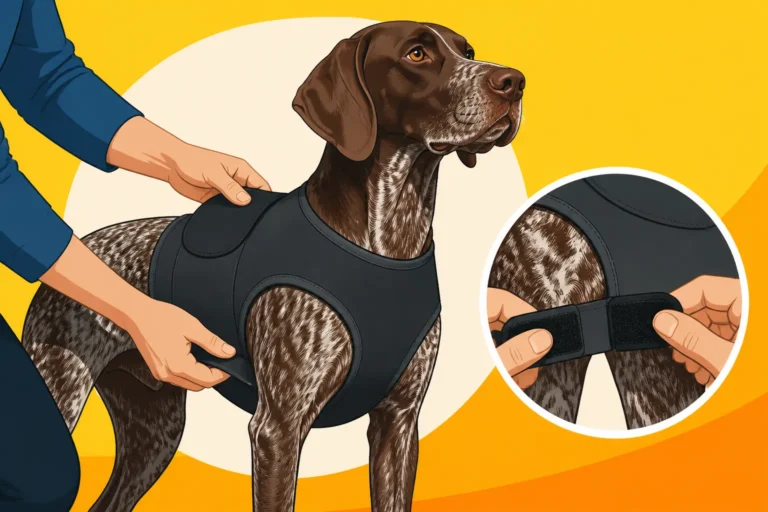
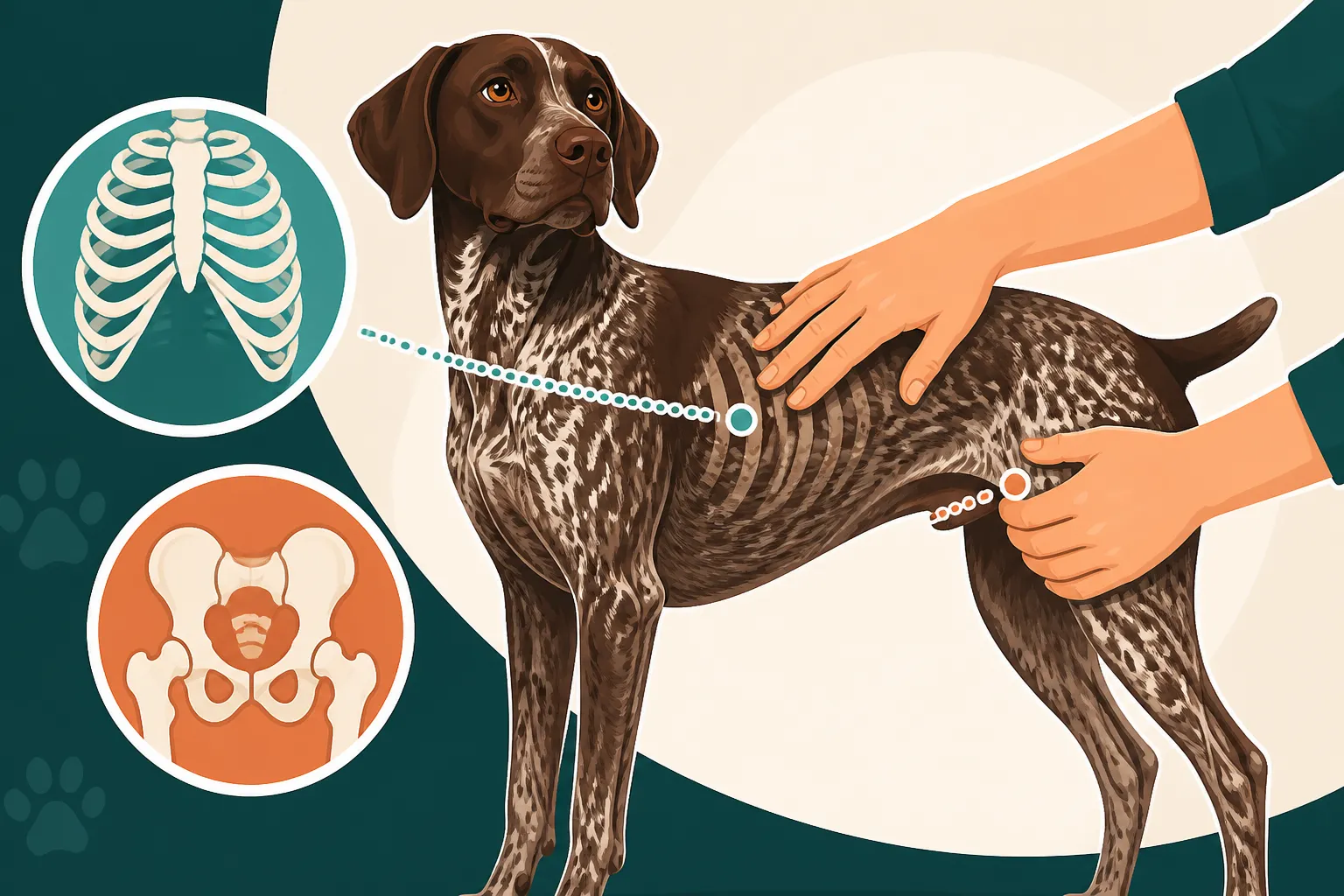
To feel your GSP's ribs, start by placing both palms flat on their side, just behind their shoulder blades. Gently run your fingers along their rib cage. You want to feel the individual ribs distinctively, almost like feeling the slats of a fence through a thin blanket.
- Ideal: You should be able to feel each rib easily with slight pressure, but without them feeling sharp or bony. There should be a thin layer of muscle and perhaps a minimal amount of fat covering them, providing a smooth transition between each rib. It shouldn't feel like you're pressing hard to find them, nor should they feel like they're poking out without any covering at all. This is the sweet spot where their energy and health are optimally supported. For a more detailed look at what's considered ideal, check out Whether You Should See a German Shorthaired Pointer's Ribs.
- Too Thin: If the ribs feel extremely prominent, sharp, and individual without any discernible covering of muscle or fat, and you can see them clearly from a distance, your GSP is likely too thin. You shouldn't have to search for the ribs at all; they'll be immediately obvious to the touch and eye.
- Overweight: If you have to press firmly to feel the ribs, and there's a noticeable layer of cushion or fat over them, your GSP is carrying too much weight. The ribs might feel like they're beneath a plush blanket, rather than a thin one.
Assessing the Hips and Spine
After checking the ribs, move your hands to your GSP's hips and along their spine. These areas are also crucial indicators of body condition, especially in a breed like a GSP where the hips can be quite prominent.
- Ideal: On the hips, you should be able to feel the bony protrusions of the hip bones (the ilium, specifically) with mild pressure. They shouldn't feel sharp or angular, but rather rounded by muscle. Along the spine, you should be able to feel the individual vertebrae when you run your fingers down their back, but they shouldn't protrude or feel like sharp knuckles. Again, a thin layer of muscle and skin should cover them.
- Too Thin: If the hip bones are very prominent, sharp, and easily visible without any covering, and the spine feels like a row of sharp knobby projections, your dog is likely underweight. You'll often see a severe "tuck-up" in their abdomen as well.
- Overweight: If you struggle to find or feel the hip bones and spine, or if there's a definite layer of fat cushioning these areas, your GSP is overweight. Their back might appear flat and wide rather than subtly ridged, and their hips will feel rounded and soft rather than distinctly bony.
Here's a quick reference table to help visualize the differences:
| Body Condition Score | Ribs | Hips & Spine | General Appearance (GSP) |
|---|---|---|---|
| Too Thin | Extremely prominent, sharp, no muscle/fat | Hip bones and spine very prominent, sharp | Visible bony protrusions, severe abdominal tuck |
| Ideal | Easily felt with slight pressure, thin muscle/fat | Hip bones felt with mild pressure, spine discernible but not protruding | Lean, athletic, well-muscled, moderate abdominal tuck |
| Overweight | Difficult to feel, requires firm pressure, thick fat layer | Hip bones and spine hard to feel, covered by fat | Rounded, loss of waist, minimal abdominal tuck |
Interpreting What You Feel: Underweight, Ideal, or Overweight
Now that you've got your hands on your GSP, let's talk about what those feelings mean for their overall health and well-being. It's not just about aesthetics; maintaining an ideal body condition is crucial for longevity, performance, and preventing health issues.
The Dangers of Being Too Thin
While a lean GSP is a healthy GSP, "too thin" crosses a line into unhealthy territory. An underweight GSP might lack the energy required for their active lifestyle, whether that's an hour-long romp in the park or a full day in the field. They might struggle to maintain body temperature, especially in colder weather, because they lack the insulating fat layer. Over time, being underweight can lead to more serious issues like a weakened immune system, poor coat quality, and even reproductive problems in breeding animals. A dog that is too thin may also be more susceptible to injuries, as their bones and joints lack proper cushioning and muscle support. If your GSP is consistently losing weight or can't seem to gain it, despite adequate food, it's a red flag. It could point to an underlying health issue that needs veterinary attention. Conditions like parasites, malabsorption issues, or even certain metabolic diseases can cause unexplained weight loss.
The Risks of Being Overweight
On the flip side, an overweight GSP is at risk for a whole host of problems. Excess weight puts undue strain on their joints, which are already prone to issues like hip and elbow dysplasia in the breed. This can accelerate the onset and severity of arthritis, making movement painful and reducing their quality of life. An overweight dog also has a higher risk of developing diabetes, heart disease, and certain types of cancer. Their stamina will be reduced, making them less able to enjoy the activities they love. The Age a German Shorthaired Pointer Slows in the Field will certainly come sooner if they're carrying extra pounds.
Just like with being underweight, persistent weight gain despite appropriate feeding and exercise could indicate a medical condition, such as hypothyroidism. It's easy to accidentally overfeed an active dog if their exercise routine dips, or if we succumb to those pleading GSP eyes asking for "just one more" treat. But the long-term consequences far outweigh the momentary pleasure of an extra snack.
The Sweet Spot: Ideal Body Condition
An ideal body condition for a GSP means they are sleek, athletic, and full of vigor. You can easily feel their ribs, but they don't look like a skeleton. You can see a distinct waist when viewed from above, and an obvious abdominal tuck when viewed from the side. Their muscles are firm and well-defined, not soft or flabby. This is the condition that supports optimal health, peak performance, and a long, active life.
When your GSP is in this sweet spot, they have the energy to run, jump, and hunt all day without undue fatigue, and they recover quickly. Their immune system is strong, their coat is healthy, and their joints are as protected as they can be. This is what we strive for as GSP owners, and regular body condition scoring is your best tool to maintain it.
Taking Action: Adjusting Diet and Consulting Your Vet
Once you've assessed your GSP's body condition, the next step is to take appropriate action. This might involve adjusting their diet, exercise, or, in some cases, seeking professional veterinary advice.
Diet Adjustments for Weight Management
If your GSP is too thin, the most obvious solution is to increase their caloric intake. This doesn't necessarily mean just feeding more of the same food, which can sometimes lead to digestive upset or simply not provide enough dense nutrition. Instead, consider switching to a high-performance dog food specifically formulated for active breeds. These foods tend to have higher protein and fat content, providing more calories in each serving. Many quality brands offer lines for "active" or "working" dogs, and you can find a good selection on platforms like Chewy or Amazon. You can delve deeper into Protein and Fat Ratios for a Hunting German Shorthaired Pointer to understand what to look for.
If your GSP is overweight, the goal is to reduce calories while ensuring they still get adequate nutrition. This often means reducing portion sizes, cutting back on treats, and ensuring they are on a high-quality, balanced diet. Some owners find success with weight management formulas that are lower in fat and calories but still provide satiety. You might also explore fresh food options, such as those from Ollie, which can offer precise portion control and high-quality ingredients. Remember that even a few extra treats throughout the day can add up quickly.
Always make dietary changes gradually over several days to avoid stomach upset. Keep a close eye on their stool and overall demeanor.
Increasing or Adjusting Exercise
For an underweight GSP, exercise might be perfectly adequate, but if they're not gaining weight, a vet visit is paramount. For an overweight GSP, increasing their exercise is a crucial part of the equation. This doesn't mean just one more short walk around the block. GSPs need substantial, vigorous exercise. Think longer runs, swimming sessions, or more intense play. Consider exploring Ninety Minutes of Real Exercise for a Shorthair for ideas. Consistent, daily activity not only burns calories but also builds lean muscle mass, which is healthy and helps boost metabolism.
Always ensure exercise is appropriate for your dog's current condition. If they're significantly overweight, start with gentler activities like walking and gradually increase intensity and duration to avoid injury. Consult your vet to create a safe exercise plan, especially if your dog has any underlying health concerns.
When to Consult Your Veterinarian
If you've made diet and exercise adjustments and your GSP's body condition isn't improving after a few weeks, or if you notice sudden, unexplained weight loss or gain, it's time to call your veterinarian. They can perform a thorough physical examination, discuss your GSP's diet and exercise routine in detail, and recommend any necessary diagnostic tests.
A vet can rule out underlying medical conditions such as thyroid disorders, parasites, digestive issues, or other illnesses that might be affecting your dog's weight. They can also help you develop a tailored weight management plan, offering guidance on appropriate food choices and exercise regimens for your individual dog. Sometimes, a blood test, like the ones discussed in Yearly Bloodwork Costs on a Shorthair, can provide valuable insights into what's going on internally. Never hesitate to seek professional advice when you're concerned about your GSP's health; early intervention can make a huge difference.
Disclaimer
This article is for general informational purposes only and does not constitute professional advice. Laws, prices and regulations vary by location and change over time. Consult a qualified professional for guidance on your specific situation.