The Weight Range in the Shorthair Standard
It can be incredibly confusing for German Shorthaired Pointer owners, especially those new to the breed, to figure out if their energetic companion is at a healthy weight. The breed standard gives numbers, but a lean, hard-working Shorthair looks very different from a more sedentary pet, and trying to reconcile that numerical range with the dog standing in front of you often leads to a lot of head-scratching. This guide will dive deep into the weight range found in the German Shorthaired Pointer breed standard, explaining what those numbers really mean and how to assess your individual dog’s health and fitness.
Understanding the Breed Standard's Weight Guidelines
When you first look at the official breed standard for German Shorthaired Pointers, you might feel like you're reading a recipe for a perfect dog. It's all very precise about ideal height and sometimes mentions a weight range. But those numbers, while a good starting point, don't tell the whole story of a healthy, thriving GSP. It's not just about hitting a specific number on the scale; it's about the overall picture of muscle, bone, and condition.
What the AKC and FCI Standards Say
Different kennel clubs have slightly varying standards, but they generally aim for the same athletic, versatile build. For instance, the American Kennel Club (AKC) standard for German Shorthaired Pointers primarily focuses on height, giving a range of 23 to 25 inches for males at the withers and 21 to 23 inches for females. It then states that dogs should appear "well-muscled" and "powerful without being bulky." While an explicit weight range might not always be front and center in every country's official standard, it’s understood that the weight should be in proportion to the height and build described. Generally, you'll find healthy adult males often fall in the 55 to 70 pound range, with females typically in the 45 to 60 pound bracket. These aren't hard and fast rules, but rather a guide for what a balanced, functional Shorthair should feel like.
The Fédération Cynologique Internationale (FCI), which represents many European kennel clubs, also emphasizes type, conformation, and working ability. Their standard, for instance, might be more specific, sometimes listing a weight range directly alongside height, perhaps around 25-32 kg for males and 20-27 kg for females, which translates roughly to 55-70 lbs and 44-60 lbs respectively. The key takeaway from both is that the dog should be fit for purpose, which for a GSP means being able to hunt all day without tiring easily, possessing both speed and stamina. A dog that is too heavy or too light for its frame will struggle to perform these tasks. It’s a standard for function as much as for aesthetics.
Why a Weight Range, Not a Single Number?
Think about humans; two people of the same height can look vastly different based on their muscle mass and bone structure. Dogs are no different! The reason breed standards provide a range rather than a single, fixed weight is because there are natural variations within any breed. A heavily muscled male at the top end of the height range will naturally weigh more than a lightly built female at the lower end, even if both are in peak condition. It's about proportion and balance. The goal is for the dog to be "fit for purpose," meaning they have the athleticism and endurance characteristic of the breed.
A slight variation in bone density or muscle development can easily shift a dog’s weight by a few pounds without impacting its overall health or ability to work. What’s truly important is how that weight is distributed and what it’s made of. Is it solid muscle, or is it padding? Is the dog agile and springy, or does it move with effort? These are the questions that a single number on the scale simply can't answer. A good breeder or judge looks for an animal that moves efficiently, with well-defined musculature, not one that simply meets a numerical target. This is particularly true for a breed like the German Shorthaired Pointer, bred for versatile field work, where agility and stamina are paramount.
The Physical Build Beyond Just the Number on the Scale
Focusing solely on the number on the scale can be incredibly misleading. Two German Shorthaired Pointers might weigh the same, but one could be a finely tuned athlete, and the other might be carrying too much extra padding. It's about what that weight is composed of and how it affects their overall structure and movement. This is where truly understanding your dog's physical build comes into play.
Muscle Mass Versus Fat: A Critical Distinction
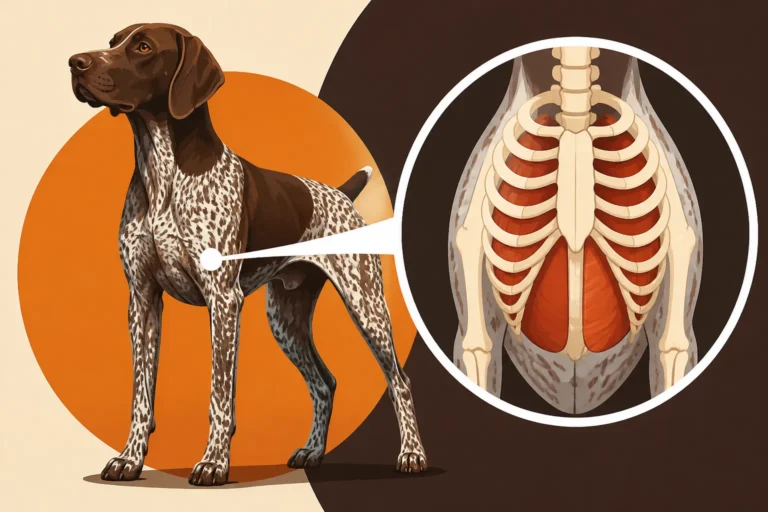
This is perhaps the most important aspect of assessing your GSP's condition. A German Shorthaired Pointer is an active, athletic breed, built for endurance and power. They should be well-muscled, with visible definition, particularly over their hindquarters and shoulders. These muscles contribute significantly to their overall weight, but it's a "good" weight that aids in their performance and protects their joints. When you run your hands over your dog, you should feel firm muscle, not soft, squishy fat. You should be able to easily feel their ribs, spine, and hip bones without them being visibly protruding.
If your Shorthair is carrying too much fat, even if they are within the breed standard's numerical weight range, it poses health risks. Excess fat puts strain on their joints, especially those prone to issues like hip or elbow dysplasia. It also increases their risk of conditions like diabetes, heart disease, and heat exhaustion. How Much Weight a Shorthair Loses Over a Season is a great read on how easily their body condition can fluctuate. Conversely, a GSP that is underweight, lacking muscle mass, might be more susceptible to injury and simply won't have the stamina to perform. You might notice their ribs and hip bones are very prominent, almost sharp to the touch, and their muscles might feel stringy rather than firm.
Bone Structure and Its Impact on Weight
Just like people, German Shorthaired Pointers come in different builds, even within the same breed. Some are "finer boned" – meaning their skeletal structure is lighter – while others are "heavy boned," possessing a more substantial frame. This inherent difference in bone structure directly impacts their natural weight. A heavy-boned GSP will naturally weigh more than a fine-boned one of the same height, even if both are in perfect athletic condition with ideal muscle mass. You can often get a sense of bone structure by looking at their leg bones and joints; a dog with substantial bone will have thicker, more robust-looking limbs.
Breed standards might indicate a preference for a certain "substance" or "bone," generally leaning towards a moderate, sturdy build that can withstand the rigors of field work. However, extremes on either side can be problematic. A dog that is too fine-boned might lack the durability needed for strenuous activity, potentially being more prone to certain types of injuries. On the other hand, an excessively heavy-boned dog, while perhaps appearing powerful, might struggle with agility and sustained speed, and could put more stress on its joints over time. It's a balance, and understanding your individual dog's inherent frame is crucial before you even consider their body fat and muscle. You need to assess The Weight a Male German Shorthaired Pointer Should Hold in context of his bone structure.
Factors Influencing a Shorthair's Actual Weight
The number on the scale isn't static, especially for a German Shorthaired Pointer. Their weight is a dynamic reflection of various factors, from their current life stage to how much they've been running through the pheasant fields. Understanding these influences helps us look beyond a generic range and focus on what's truly healthy for our individual dogs.
Age and Growth Stages
A German Shorthaired Pointer's weight changes significantly throughout its life, starting from a tiny puppy right through to its senior years. A young puppy, while growing rapidly, won't carry the mature muscle mass of an adult. It's a period of skeletal and muscular development, and their weight will steadily increase. What a Shorthair Puppy Should Weigh at Four Months is a common question, and it's important to remember they're still very much in a growth phase. Pups tend to be lean, sometimes even gangly, as their bones grow faster than their muscles fill out. Pushing a puppy to gain weight too quickly or providing too much exercise on hard surfaces can be detrimental to their developing joints.
As they transition into adolescence and young adulthood (typically around 1 to 3 years), their weight will stabilize and their musculature will fully develop. This is often when they hit their peak athletic condition. However, as they age into their senior years, changes in metabolism, activity levels, and potential health issues can cause weight fluctuations. Feeding a Senior Shorthair That Has Slowed Down often requires adjustments to their diet to prevent unwanted weight gain or loss. A senior Shorthair might naturally lose some muscle mass, which could lead to a slight decrease in weight, or if their activity drops without a corresponding diet change, they might gain weight. Regular veterinary check-ups are essential to monitor these age-related changes.
Activity Level and Energy Demands
German Shorthaired Pointers are, first and foremost, athletes. Their breed was developed to work long days in the field, covering miles of varied terrain. This high activity level directly impacts their calorie needs and, consequently, their weight. A GSP that is actively hunting several days a week, running for hours, or engaging in competitive dog sports will naturally be leaner and more muscular than a Shorthair that is primarily a house pet, even with daily walks. Their bodies are constantly burning calories to fuel their energy. The Daily Ration a Working Shorthair Actually Eats can be astonishingly high compared to a less active dog.
Conversely, a Shorthair that isn't getting adequate exercise will often struggle with weight management. Even if fed a moderate amount, if those calories aren't being burned off, they'll accumulate as fat. This is where many pet Shorthairs, despite being beloved family members, can inadvertently become overweight. It's not always about overfeeding; sometimes it's simply under-exercising. This breed needs substantial physical activity – at least Ninety Minutes of Real Exercise for a Shorthair daily – to maintain their ideal working weight and condition. A sedentary GSP is not a happy, healthy GSP, and their weight will reflect that.
Diet and Nutrition's Role
What you feed your German Shorthaired Pointer and how much you feed them are fundamental to their weight. A high-quality diet provides the necessary nutrients for energy, muscle development, and overall health. For an active GSP, this often means a food formulated for "performance" or "active dogs," which typically has higher protein and fat content to meet their immense energy demands. Brands like Eukanuba, Purina Pro Plan Sport, or Royal Canin often have formulas tailored to these needs. Protein and Fat Ratios for a Hunting German Shorthaired Pointer are critical considerations.
However, even with the best food, portion control is key. It's easy to overfeed a dog, especially if you're not carefully measuring their meals. The recommended feeding guidelines on a dog food bag are just a starting point; your dog's individual metabolism, age, and activity level will dictate their exact needs. Using a measuring cup consistently, rather than just "eyeballing it," can make a huge difference. Free-feeding, where food is left out all day, often leads to weight gain in active breeds like the GSP who might eat out of boredom. For supplements or specific dietary needs, many owners find a good selection and competitive pricing on platforms like Chewy, which can be helpful for maintaining a consistent feeding regimen. Regular weighing and body condition scoring, which we'll discuss later, will help you fine-tune their diet to maintain that ideal athletic physique.
When a Shorthair's Weight Becomes a Concern
It’s one thing to understand the ideal range, and quite another to know when your own German Shorthaired Pointer is straying into unhealthy territory. Their boundless energy can mask issues, making it crucial to be vigilant about both ends of the weight spectrum. Ignoring these signs can lead to significant health problems down the road.
Recognizing Underweight Signs
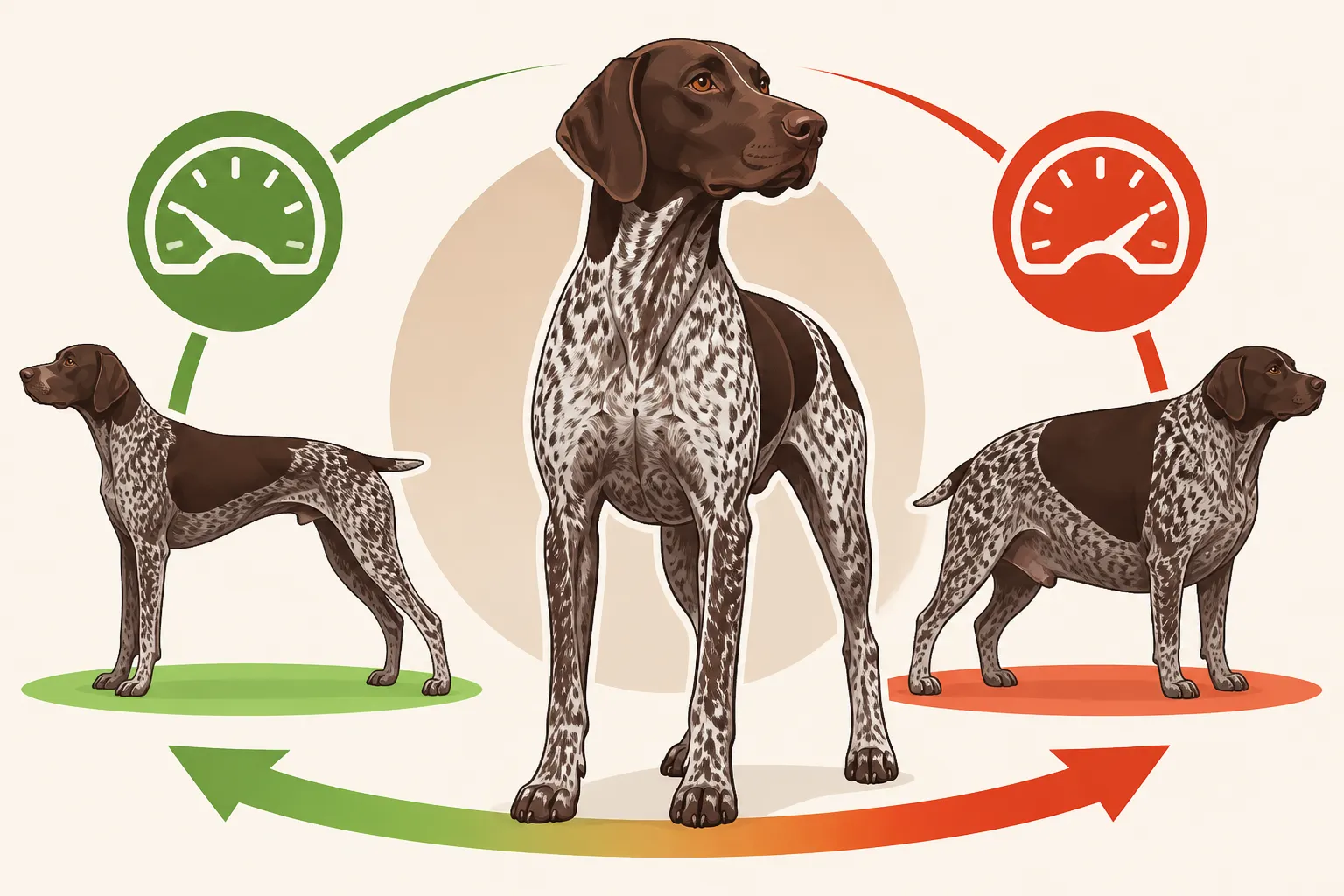
An underweight German Shorthaired Pointer might be harder to spot than an overweight one, especially if they're still active. Their natural lean build means you should always be able to feel their ribs. However, if their ribs, spine, and hip bones become distinctly visible, sharp, or very prominent without any effort, and there's a lack of muscle definition, they are likely underweight. You might notice a very tucked-up abdomen and a noticeable "waist" that's almost concave.
Beyond the visible signs, an underweight GSP might also show other symptoms. They could seem lethargic, despite their breed's inherent energy. Their coat might appear dull or dry, and they might shed excessively. They might also be more susceptible to illness due to a compromised immune system. Causes can range from insufficient food intake (not enough calories for their activity level), poor quality food, malabsorption issues, internal parasites, or underlying medical conditions such as Thyroid Failure in a Middle Aged German Shorthaired Pointer or other metabolic disorders. If you suspect your Shorthair is underweight, a vet visit is imperative to rule out any health issues and create a plan to safely increase their caloric intake and muscle mass.
Spotting Overweight Issues and Health Risks
Perhaps more common in companion Shorthairs who aren't regularly working, an overweight GSP is a concern that should be addressed promptly. The earliest sign is often when you can no longer easily feel their ribs without pressing. There might be a layer of fat covering them, making them feel like a well-padded cushion rather than distinct bones. Their waistline might disappear, and you might notice a broader back and a saggy belly. They often develop fat deposits over their hips and at the base of their tail.
The health risks associated with being overweight in a German Shorthaired Pointer are substantial. Excess weight puts immense strain on their joints, exacerbating conditions like Hip Dysplasia in a Hard Running German Shorthaired Pointer or leading to arthritis at a younger age. It increases their risk of developing diabetes, heart disease, respiratory problems, and even certain types of cancer. Overweight dogs are also far more susceptible to Heat Exhaustion in an Early Season Shorthair because the extra fat acts as insulation, making it harder for them to cool down. Furthermore, their agility and stamina will be compromised, diminishing their quality of life and potentially shortening The Twelve to Fourteen Years a German Shorthaired Pointer Gets. Addressing weight gain through diet adjustment and increased exercise, sometimes with veterinarian-recommended foods available through retailers like Chewy, is crucial for their long-term health.
Maintaining an Ideal Weight for Your German Shorthaired Pointer
Achieving and maintaining an ideal weight for your German Shorthaired Pointer is an ongoing process, a continuous dance between diet, exercise, and observation. It's not a one-time fix but a lifestyle commitment that will ensure your GSP lives a long, healthy, and happy life, full of the robust activity they were bred for.
Regular Assessment and Body Condition Scoring
Forget the scale for a moment; the most effective way to assess your GSP's weight is through regular body condition scoring (BCS). This is a hands-on and visual method that provides a much more accurate picture of their condition than a number alone. The standard BCS scale typically ranges from 1 to 9, where 1 is emaciated and 9 is morbidly obese, with 4-5 being the ideal.
Here’s how to do a quick BCS check:
- Rib Check: Gently run your hands along your dog's side. You should be able to easily feel their ribs, but not see them distinctly without deep respiration. There should be a thin layer of fat covering them, making them feel like a washboard covered by a thin blanket. If you can't feel them easily, or if you have to press hard, your dog might be carrying too much weight. If they are visibly prominent and sharp, they might be too thin.
- Waistline: Look down at your dog from above. They should have a clearly discernible waist, an hourglass figure that tucks in behind the ribs. If their body looks like a straight line from ribs to hips, or bulges out, they are likely overweight.
- Abdominal Tuck: View your dog from the side. Their abdomen should tuck up, rising from the bottom of their ribcage to their hind legs, not hanging low.
Performing these checks weekly, especially during the hunting season or periods of activity change, will give you immediate feedback. Many vets use this system, and it's a great tool for any owner to master. Remember that Feeling a German Shorthaired Pointer's Ribs and Hips is a skill that improves with practice and consistency.
Tailoring Diet and Exercise for Optimal Health
Once you've assessed your GSP's body condition, you can make informed adjustments to their diet and exercise regimen. This isn't a "one-size-fits-all" approach; it's highly individual.
Diet Adjustments:
- If your GSP is too lean or underweight: You might need to increase their caloric intake. This could mean feeding more of their current high-quality food, switching to a higher-calorie performance formula (such as those offered by Purina Pro Plan Sport or Science Diet Active), or adding healthy, calorie-dense supplements like fish oil (available from Chewy) or cooked lean meats. Always make changes gradually to avoid digestive upset. Ensure they are getting enough Electrolytes for a German Shorthaired Pointer in the Field if they are working hard.
- If your GSP is overweight: The goal is to reduce calories and increase fat burning. This usually involves reducing portion sizes (start with a 10-15% reduction), switching to a lower-calorie "light" or "weight management" dog food, and cutting out extra treats. If treats are essential for training, opt for low-calorie options like small pieces of carrot or green bean. Avoid feeding table scraps. Sometimes, vets recommend specific prescription weight-loss diets for more severe cases.
Exercise Adjustments:
- For all GSPs, regardless of weight: Consistent, vigorous exercise is paramount. This breed needs more than a leash walk around the block. They thrive on activities like running, hiking, swimming, and, of course, field work. Aim for at least 60-90 minutes of dedicated high-intensity activity daily. Running a Shorthair Beside a Bike Safely or using water work to wear a Shorthair out are excellent options for consistent high-impact exercise.
- To help an overweight GSP lose weight: Gradually increase the duration and intensity of their exercise. If they're currently sedentary, start with longer, brisk walks and slowly work up to running or swimming. Always monitor them for signs of fatigue or overheating, especially in warmer weather.
- To maintain a lean, working weight: Ensure their exercise regimen matches their field demands. During hunting season, their caloric intake will likely need to be higher, and they'll burn it off. In the off-season, if activity decreases, their food intake should be adjusted down to prevent unnecessary weight gain. Consider Conditioning a Shorthair Before Opening Day to ensure they're fit, not just lean.
A great way to keep tabs on your dog's progress is by using a combination of BCS and a simple bathroom scale (if your dog is cooperative). Track their weight weekly for a month or two to see trends. This comprehensive approach ensures your German Shorthaired Pointer remains in optimal condition, ready for whatever adventure comes next.
Disclaimer
This article is for general informational purposes only and does not constitute professional advice. Laws, prices and regulations vary by location and change over time. Consult a qualified professional for guidance on your specific situation.