Where a German Shorthaired Pointer’s Tail Is Docked
When you welcome a German Shorthaired Pointer puppy into your home, especially if you're a first-time owner of the breed, one of the first things you'll probably notice (or be told about) is their short tail. It’s not a natural occurrence; it's the result of a practice called tail docking, which has been part of the breed standard for generations. This guide is here to walk you through exactly where and why a German Shorthaired Pointer's tail is traditionally docked, delving into the historical context, the procedure itself, and the discussions surrounding it today.
The Historical Roots of Tail Docking in German Shorthaired Pointers
For many, the sight of a German Shorthaired Pointer with its distinctive short tail is just "how they are." But this characteristic is steeped in centuries of tradition and practical considerations related to the breed's original purpose. German Shorthaired Pointers were developed in Germany during the 19th century to be the ultimate versatile hunting dog – equally adept at pointing game, retrieving from land and water, and tracking wounded animals. This demanding role in the field profoundly influenced many aspects of their physical conformation, including the decision to dock their tails.
Protecting Working Dogs from Injury
Imagine a dog, full of drive and enthusiasm, crashing through dense brambles, thickets, and rough cover day in and day out. This isn't just a casual walk in the park; it's a dedicated hunt across varied and often unforgiving terrain. A long, thin tail, whipping wildly as the dog maneuvers through such obstacles, is incredibly vulnerable. It can easily get snagged, cut, bruised, or even broken. These aren't minor scrapes; tail injuries can be severely painful, lead to infections, and often require extensive veterinary care, sometimes even amputation later in life. A hunting dog out of commission due to a tail injury isn't just a heartache for the owner, it impacts their ability to do the job they were bred for.
In the early days of the breed's development, before modern veterinary medicine was widely accessible or affordable for every rural hunter, preventing such injuries was paramount. Docking the tail was seen as a proactive measure to safeguard the dog's well-being and ensure its longevity as a working companion. It wasn't about aesthetics back then; it was pure, unadulterated practicality, born from a deep understanding of the challenges these dogs faced in the field. Many owners today still believe in this preventative measure, especially those who hunt their dogs hard, understanding the risk of Field Injuries a Hunting German Shorthaired Pointer Comes Home With.
Maintaining Breed Standard and Functionality
Over time, as the German Shorthaired Pointer breed gained recognition and formal standards were established, tail docking became an intrinsic part of the breed's accepted appearance. The standard specifies not just that the tail should be docked, but also to what length. This wasn't arbitrary; it was based on centuries of observation by breeders and hunters regarding what length offered the best balance of protection and communication. A GSP's tail, even when docked, still serves as an important tool for balance and expression, albeit in a more compact form.
The German Shorthaired Pointer's original breeders, in their goal to create a truly versatile gundog, refined every aspect of the breed. Their intense focus on performance in diverse hunting situations meant that characteristics like the tail were viewed through the lens of utility. When breeders registered their dogs, conforming to these standards, including tail length, became a way to identify and propagate dogs that embodied the ideal form and function. This historical consistency contributes to why you still see almost all GSP puppies docked today, maintaining a visual tradition that dates back to the breed's very foundations. You can learn more about the breed's origins in The German Kennels the Shorthair Was Built In.
The Procedure: When and How a GSP's Tail Is Docked
Tail docking in German Shorthaired Pointers is a procedure performed early in a puppy's life, typically within the first few days. This timing is crucial for several reasons, primarily related to the puppy's development and tolerance of the procedure. While it might sound daunting to new puppy owners, responsible breeders work closely with veterinarians to ensure it is done as humanely and safely as possible.
The Critical Window for Docking
The vast majority of German Shorthaired Pointer tails are docked when the puppies are just a few days old, usually between 2 and 5 days of age. This incredibly short window is chosen for several key reasons. At this stage, a puppy's nervous system is still developing, and their pain receptors are not fully mature. While they undoubtedly still feel something, it is generally believed to be less intense than it would be if performed on an older puppy or adult dog. The bones are mostly cartilage, and the tissue is soft, making the procedure quicker and less traumatic. Blood vessels are also smaller, reducing the risk of significant bleeding.
A breeder will often coordinate with their veterinarian to have the entire litter examined and have any necessary procedures, like tail docking and dewclaw removal, done during this brief period. It's a quick process, and the puppies are usually back with their mothers and nursing within minutes, often showing little to no lasting distress. Trying to dock a tail on an older puppy or adult dog would be a completely different scenario, requiring full anesthesia and a surgical recovery, which is why it is so strictly adhered to within this early timeframe. It’s part of the standard care breeders provide for The Growth Year of a German Shorthaired Pointer Puppy.
The Veterinary Process and Desired Length
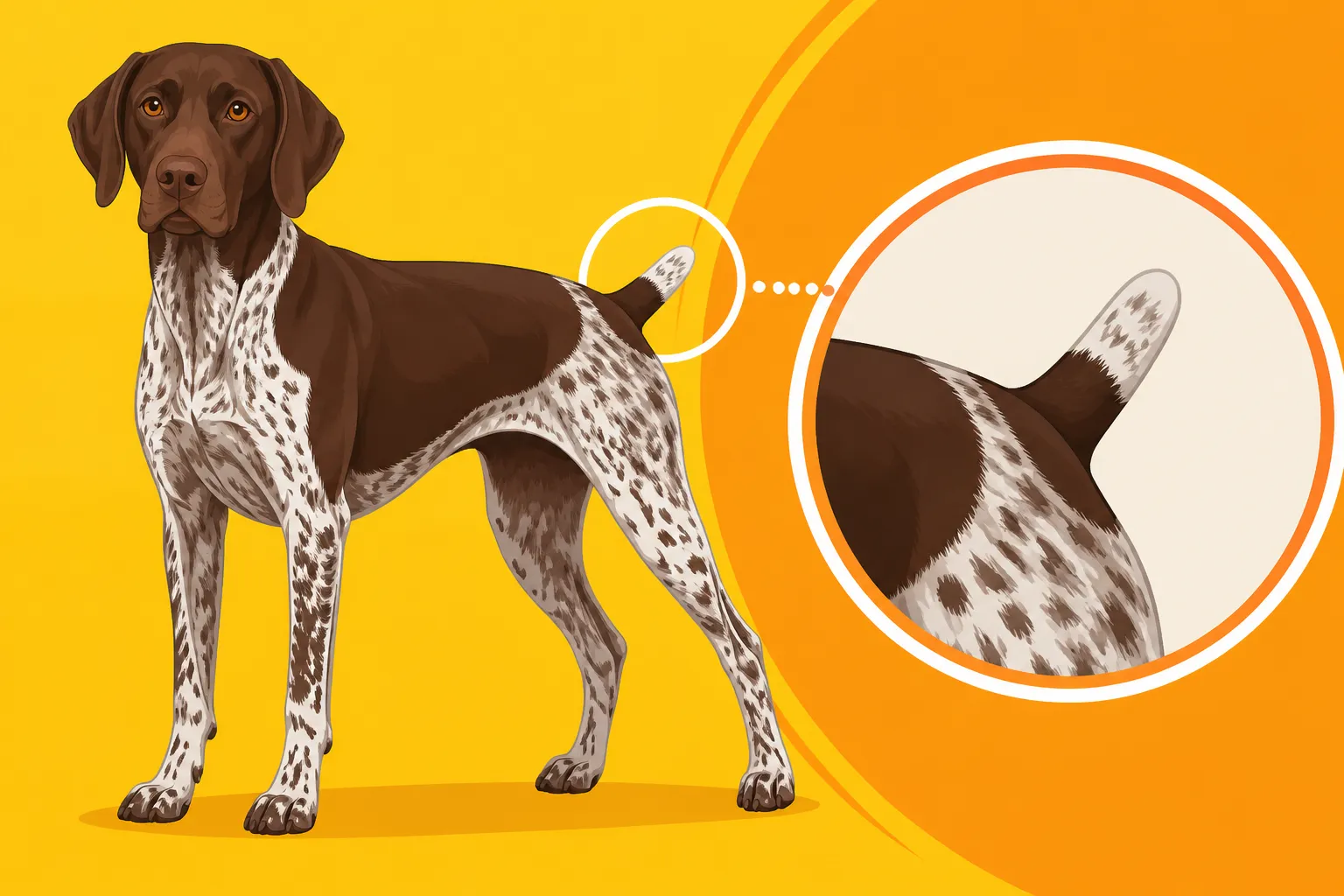
The docking procedure itself is relatively straightforward and is performed by a licensed veterinarian. They will identify the appropriate point on the tail, typically leaving a length of about 40% of the natural tail, or roughly two-fifths of the original length. This length is specified in the breed standard and is believed to offer the best functional outcome—long enough for the dog to still use for balance and communication, but short enough to minimize injury risk in dense cover. A common guideline is to leave two to three vertebrae, resulting in a tail that extends just beyond the hocks when the dog is mature.
The vet will typically use a sharp scalpel or surgical shears to make a clean cut. There's often a bit of discussion among breeders and vets about the best technique, with some opting for a careful ligature method in specific cases, but surgical excision is common. After the cut, the skin may be carefully sutured or a tissue adhesive applied to promote healing and reduce the risk of infection. The puppies are closely monitored by the breeder and veterinarian for the next few days to ensure proper healing. It's important that this is not a do-it-yourself job; it requires a sterile environment and professional expertise to minimize pain and prevent complications. If you're wondering about the exact length, we have a detailed guide on The Forty Percent Tail a Shorthair Is Left With.
The Anatomy of a GSP Tail and Docking Location
To truly understand where a German Shorthaired Pointer's tail is docked, it helps to visualize the structure of a canine tail. It's not just a fleshy appendage; it's an extension of the spine, comprised of vertebrae, muscles, nerves, and blood vessels. The specific location of the cut is key to achieving the desired functional and aesthetic outcome for the breed.
Tail Vertebrae and the Docking Point
A dog's tail is made up of a series of caudal vertebrae, typically ranging from 18 to 23 bones in an undocked dog. These bones are progressively smaller towards the tip. The GSP breed standard calls for docking to leave approximately two-fifths (or 40%) of the natural tail length. In practical terms, this usually means the tail is docked somewhere between the 3rd and 5th caudal vertebrae, counting from the base of the tail where it attaches to the pelvis. This specific range is crucial because it ensures enough muscle and nerve tissue remains for the dog to still have control and use of the tail stump for balance and expression.
If the tail were docked too short, it could potentially impact the dog's ability to communicate with other dogs or people, as tail movement is a primary form of canine body language. It could also affect balance, particularly for a dog that performs athletic tasks like navigating uneven terrain or making quick turns in the field. Conversely, leaving too much tail defeats the primary purpose of preventing injury. The vet performing the docking relies on their anatomical knowledge and understanding of the breed standard to make an accurate and consistent cut, ensuring the remaining portion is both functional and aesthetically correct according to GSP expectations.
Impact on Tail Movement and Communication
Even with a docked tail, a German Shorthaired Pointer still uses its tail stump for a surprising amount of communication and balance. While it might not have the full sweep of a long, flowing tail, the stub still wags with enthusiasm, tucks between the legs in submission, or raises with alert interest. The muscles that control tail movement are located closer to the base of the tail and the pelvis, meaning that the essential muscular function remains largely intact after docking.
For owners, understanding this can alleviate concerns about their dog's ability to express itself. You'll quickly learn to read the subtle nuances of your GSP's docked tail, just as you would any other dog's full tail. A rapid, low wag still signifies happiness, while a stiff, high-held stub indicates heightened awareness or excitement. The critical thing is that the nerves and muscles associated with the base of the tail, essential for these movements, are preserved. This thoughtful approach to the docking location is a testament to the intent behind the practice—to create a functional hunting partner, not merely to alter appearance without consideration for the dog's overall well-being and natural behaviors.
The Modern Debate and Ethics of Tail Docking
In recent years, the practice of tail docking has become a topic of significant ethical debate, with strong opinions on both sides. What was once considered a routine and necessary procedure is now scrutinized by animal welfare advocates, veterinary organizations, and even some governments. Understanding these differing viewpoints is important for any current or prospective GSP owner.
Animal Welfare Concerns and Legal Status
One of the primary concerns from animal welfare organizations and many veterinarians revolves around the pain and distress inflicted on the puppies during the procedure. While breeders and proponents argue that the pain is minimal when done at a very young age without anesthesia, opponents contend that any non-medical procedure causing pain should be questioned. They advocate for a dog's right to retain all its natural body parts unless there's a clear medical necessity. The argument often centers on the idea that prophylactic surgery (preventative measures) should not be performed if the risk of injury is not universal or if less invasive prevention methods exist.
Consequently, tail docking is now banned or heavily restricted in many parts of the world, including most of Europe, Australia, and parts of Canada. In these regions, German Shorthaired Pointers are seen with their natural, full-length tails, and they participate in hunting and dog sports without issue. In the United States, however, it remains a legal and common practice, often supported by breed clubs and recognized by the American Kennel Club (AKC) breed standard. This creates a fascinating divergence in how the breed is presented and perceived globally.
Table: Tail Docking Legality Overview (Simplified)
| Region | Legal Status of Tail Docking (Non-Medical) | Common GSP Tail Appearance |
|---|---|---|
| United States | Generally Legal | Docked |
| Most of European Union | Banned or Restricted | Natural, Full Length |
| United Kingdom | Banned (with some working dog exceptions) | Natural, Full Length (or legally docked) |
| Australia | Banned | Natural, Full Length |
| Canada | Varies by Province (increasingly banned) | Increasingly Natural, Full Length |
Note: Laws can vary and exceptions may apply. Always check local regulations.
The Argument for Continued Docking
Despite the growing opposition, many German Shorthaired Pointer enthusiasts, particularly those deeply involved in hunting and field trials, continue to advocate for docking. Their argument often circles back to the historical and practical reasons: preventing severe tail injuries in active working dogs. They point to the delicate nature of the GSP's fine, whippy tail, arguing it's particularly prone to injury when constantly thrashed against thick cover, especially compared to breeds with thicker tails. They believe that a brief, early discomfort prevents potentially much greater suffering and costly veterinary bills later in the dog's life.
Another point of contention is the breed standard. For many, maintaining the breed's traditional appearance, as defined by its official standard, is important for preserving the historical integrity of the German Shorthaired Pointer. An undocked GSP, while perfectly healthy and functional, may not conform to the visual standard recognized in certain show rings or by traditionalists. However, it's worth noting that the standard has evolved, and there are discussions about how breed standards might adapt to changing societal and ethical views. For those interested in showing, understanding Whether an Undocked German Shorthaired Pointer Can Be Shown is crucial. The debate is complex, often pitting tradition and perceived practicality against modern animal welfare perspectives.
Caring for a German Shorthaired Pointer Puppy After Docking
Bringing home a docked GSP puppy means you'll be caring for a healing area. While the procedure is usually done before you even pick up your new companion, knowing what to expect and how to properly care for the docked tail stump is important for ensuring a smooth recovery and preventing complications.
Immediate Post-Procedure Care by the Breeder
A responsible breeder, in conjunction with their veterinarian, takes on the immediate post-operative care of the docked puppies. This includes ensuring the puppies are returned to a clean, warm environment with their mother as quickly as possible. The mother's natural instincts for cleaning and nurturing usually aid in the healing process. Breeders will closely observe the tail stumps for any signs of infection, excessive bleeding, or unusual swelling. They might apply a topical antiseptic or a small amount of veterinary glue or sutures, as discussed, but typically, the puppies are simply kept clean and allowed to heal naturally.
The critical period for initial healing is usually the first week. During this time, the tissue knits together, and the risk of infection decreases significantly. By the time you pick up your German Shorthaired Pointer puppy, usually around 8 to 10 weeks of age, the tail stump will typically be fully healed, with no open wounds, just a small, neat scar. However, it’s always a good idea to discuss the docking process and aftercare with your breeder, asking specific questions about when it was done, by whom, and what, if any, specific care was provided.
What to Look For and How to Keep It Clean
Once your puppy comes home, the docked tail should be fully healed and shouldn't require special care. However, it's always wise to keep an eye on it during your regular puppy health checks. Feel free to gently touch the area; it should be firm, smooth, and not sensitive to the touch. Look for any redness, swelling, discharge, or any signs of irritation, particularly if your puppy seems to be excessively licking or bothering the area. If you notice any of these symptoms, contact your veterinarian right away, as it could indicate an infection or an issue with the healing process.
Keeping your puppy's living environment clean and dry is the best way to prevent any secondary issues. This means regular cleaning of their crate and bedding, especially in the early weeks when accidents are more common. Avoid harsh soaps or chemicals on the area. For general puppy care and supplies, many owners find a wide selection of safe and effective products at retailers like Chewy, from gentle puppy shampoos to durable bedding that can withstand the rigors of puppyhood. As your puppy grows, the tail stump will become a normal, robust part of their body, and you'll likely forget it was ever a healing site. This simple care contributes to Raising a Shorthair Puppy Toward Its First Season successfully.
Undocked German Shorthaired Pointers: Exceptions and Considerations
While tail docking is traditional for German Shorthaired Pointers, it's becoming increasingly common to encounter undocked individuals, especially in regions where the practice is restricted. This raises questions for prospective owners about what to expect, and what differences, if any, an undocked tail might present.
Living with a Full-Length Tail
An undocked German Shorthaired Pointer possesses a beautiful, long, tapering tail that is a natural extension of its energetic and expressive personality. These tails are constantly in motion, providing even more vivid cues about the dog's mood and intentions. Many owners who experience an undocked GSP appreciate the full range of expression this allows. From a purely functional standpoint, a full tail acts as a counterbalance, aiding in sharp turns and maintaining equilibrium, particularly at high speeds or over challenging terrain.
However, owning an undocked GSP does mean taking certain precautions, especially if the dog is active in fields or dense cover. Just as the old breeders feared, a long, fine tail can be prone to injury. This is sometimes referred to as "happy tail syndrome," where a dog wags its tail so enthusiastically that it repeatedly hits hard surfaces, leading to open wounds that are difficult to heal due to the constant motion. Owners of undocked GSPs, particularly those that hunt, need to be vigilant about checking their dog’s tail for scrapes, cuts, or signs of bruising after an outing. Protecting these tails in the field might involve wraps or specialized coverings, though many dogs navigate tough cover without issue. For general health checks, remember to give your dog a thorough once-over, including their tail, as discussed in Ears, Feet and the Once Over a Shorthair Needs.
Breeding and Showing Undocked Shorthairs
For breeders, the decision to leave tails undocked is often driven by legal requirements in their country or a personal ethical stance. Breeding healthy, genetically sound dogs is always the top priority, regardless of tail length. In regions where docking is banned, undocked German Shorthaired Pointers are the norm and conform to the local breed standard. These dogs compete in conformation shows, hunt tests, and field trials just like their docked counterparts. Their tails are judged based on their natural presentation, length, and set, ensuring they are healthy and free from defects.
For owners in countries where docking is customary but they choose an undocked GSP (perhaps from an imported line or a breeder making an ethical choice), there might be limitations regarding participation in certain conformation events. However, most performance events, like hunt tests and agility, focus purely on the dog's athletic ability and working drive, making tail length largely irrelevant. If you're considering breeding or showing, it's vital to research the specific rules and regulations of your local kennel clubs and breed associations regarding tail docking, as these can vary significantly and evolve over time. Regardless of tail length, ensuring your GSP is healthy and well-exercised is paramount; you can find great nutrition options for active dogs on Chewy, supporting their overall well-being.
The Broader Context: Why Other German Shorthaired Pointer Procedures Occur Early
While tail docking often sparks the most discussion, it's not the only procedure traditionally performed on German Shorthaired Pointer puppies in their first few days of life. Understanding these other practices and their rationale can provide a more complete picture of why breeders make these early interventions.
Dewclaw Removal in German Shorthaired Pointers
Similar to tail docking, the removal of dewclaws is another procedure frequently performed on German Shorthaired Pointer puppies shortly after birth, usually at the same veterinary visit. Dewclaws are the small "thumbs" located on the inner side of a dog's leg, above the paw. Front dewclaws are quite common and have some muscular attachment, while rear dewclaws are less common and often have little to no bone or muscle connection, essentially just being skin flaps.
The rationale for removing dewclaws, especially rear ones and sometimes front ones, is also primarily preventative. In active breeds like the GSP, dewclaws can be easily snagged or torn when running through dense brush, jumping, or engaging in strenuous activity. A torn dewclaw can be incredibly painful, bleed profusely, and often requires veterinary intervention to heal. By removing them early, breeders aim to prevent these potential injuries, ensuring the dog can work and play without this particular risk. The procedure, like tail docking, is done when the puppies are very young, under similar conditions, to minimize discomfort and ensure a quick recovery. We have a dedicated article on Whether Dewclaws Are Removed on Shorthair Puppies if you want to dive deeper.
Comparing Docking and Dewclaw Removal Rationale
The core reasoning behind both tail docking and dewclaw removal in German Shorthaired Pointers is consistent: injury prevention for a highly active, working breed. Both procedures are considered "preventative surgeries" rather than cosmetic alterations by their proponents. The breeders who choose these practices genuinely believe they are acting in the long-term best interest of their puppies, safeguarding them from potential pain, infection, and interruption to their working lives.
However, the debates surrounding both procedures are similar. Opponents argue that the risk of injury might not justify an elective surgery that causes pain and alters a dog's natural anatomy. They point to undocked, undewclawed dogs that live full, active lives without injury. Ultimately, the decision to dock tails and remove dewclaws rests with individual breeders and is influenced by breed standards, local laws, and personal convictions about what constitutes the best care for their German Shorthaired Pointer puppies. For many, it's a decision rooted in decades of tradition and the breed's foundational purpose as a rugged, versatile hunting companion built to withstand the rigors of the field.
Disclaimer
This article is for general informational purposes only and does not constitute professional advice. Laws, prices and regulations vary by location and change over time. Consult a qualified professional for guidance on your specific situation.