What Sets Off a Shorthair’s Seizures
Your German Shorthaired Pointer had a seizure last month, and now every twitch during a nap makes your heart stop. The worst part is not knowing why it happened or whether something you did set it off. This guide walks through the real triggers behind Shorthair seizures, from inherited epilepsy to heat, toxins and stress, and shows you how to spot patterns and lower the risk.
Why Shorthairs Have Seizures in the First Place
Before you can make sense of triggers, it helps to separate two ideas that owners often blur together: the cause of a seizure and the trigger of a seizure. The cause is the underlying reason your dog’s brain is prone to misfire. The trigger is whatever tips it over the edge on a particular day. A dog with idiopathic epilepsy has a cause that lives in the brain itself, but the timing of each episode is often nudged by something in the environment, such as poor sleep, excitement or a missed dose of medication.
I learned this the hard way with a liver-ticked female who seized for the first time the night after a long weekend of upland hunting. I was convinced the hunt had caused it. Our vet gently explained that the hunt probably did not create her epilepsy, but the exhaustion and adrenaline crash afterwards may well have been the final push. That distinction changed how I managed her for the rest of her life.
Idiopathic Epilepsy in the Breed
Idiopathic epilepsy simply means recurring seizures with no structural cause found on testing. It is the most common diagnosis in young to middle-aged dogs who start seizing, and the German Shorthaired Pointer is one of the sporting breeds where breeders and veterinary neurologists have noticed it running in certain families. Most dogs with this form have their first seizure somewhere between six months and six years of age.
Because there is an inherited component, it is worth asking your breeder about relatives. Many responsible breeders keep quiet records, and a sibling or parent with a history of fits tells you a lot about what you are dealing with. We cover what is known about family patterns in Seizure Disorders Recorded in Shorthair Lines, which is worth reading if you are planning to breed or buy a second dog from the same kennel.
If this was your dog’s first episode and you are still trying to work out what you saw, start with What a Shorthair’s Seizure Looks Like the First Time. It describes the stages of a seizure, from the restless aura beforehand to the confused recovery period, so you can describe it accurately to your vet.
Structural and Metabolic Causes
Not every seizure is epilepsy. Seizures can also come from something physically wrong in the brain, such as a tumour, inflammation, an infection or an old head injury, or from something wrong elsewhere in the body that upsets brain chemistry. Vets call these structural and reactive seizures, and they matter because treating the underlying problem can stop the episodes entirely.
Reactive seizures happen when the brain is normal but the blood chemistry is not. Low blood sugar, liver disease, kidney failure, very low calcium and abnormal sodium levels can all provoke seizures. A first seizure in a dog older than about six, or in a very young puppy, makes your vet more suspicious of these causes, and a full blood panel is usually the first step. If your Shorthair is getting on in years, our guide to Bloodwork Worth Running on an Older Shorthair explains which values matter most.
What Vets Look For on the First Visit
After a first seizure, your vet will typically take a detailed history, perform a physical and neurological exam, and run bloodwork and a urinalysis. If those come back normal and your dog is in the classic age range, a working diagnosis of idiopathic epilepsy is common. If anything looks unusual, or the seizures are frequent or severe, a referral to a veterinary neurologist for an MRI and spinal fluid analysis may follow.
Bring as much information as you can. A phone video of the episode is gold for a vet, as is a written note of the time it started, how long it lasted, what your dog was doing beforehand, and what they had eaten or been exposed to that day. That notebook becomes the foundation of your trigger diary, which we will come back to.
The Most Common Seizure Triggers in Shorthairs
Once your dog has a seizure tendency, certain situations reliably make episodes more likely. Shorthairs are high-drive, hard-running dogs, and some of the triggers that matter most for them are tied directly to the way they live and work.
Heat, Exertion and Exhaustion
Overheating is one of the most dangerous triggers for a Shorthair, because it can provoke a seizure in a dog with epilepsy and can also cause seizures in a perfectly healthy dog through heat stroke. A Shorthair running hard in early-season warmth can push its core temperature up faster than you might expect, especially with its thin coat offering little protection from direct sun.
The pattern I see most often is a dog that seizes not during the hunt but hours later, after it has cooled down and fallen asleep. Fatigue, dehydration and the drop in adrenaline all seem to lower the threshold. If you hunt or train in warm weather, learn the early warning signs in Signs a Shorthair Is Overheating in the Field and read Heat Stroke in a September Shorthair before your next early-season outing.
Practical steps that have made a real difference for our dogs include running shorter casts in heat, carrying plenty of water and offering it often, wetting the belly and groin rather than the back, and calling the day early when the dog starts flagging. A tired epileptic dog is a dog with a lower seizure threshold.
Toxins and Water Intoxication
Many seizures that look like epilepsy are actually poisoning. Common culprits include xylitol, which is found in some sugar-free gum, peanut butter and baked goods, as well as chocolate, caffeine, certain mouldy foods, slug and snail bait containing metaldehyde, some rodent poisons, organophosphate insecticides and blue-green algae in summer ponds. Shorthairs are curious scavengers, and a dog that cleans out a hunting camp rubbish bag can be in serious trouble within an hour.
Water intoxication is a lesser-known trigger that hits retrieving dogs in particular. A Shorthair making repeated water retrieves can swallow huge volumes of water, diluting the sodium in its blood. Low sodium can cause wobbliness, vomiting, collapse and seizures. If your dog loves water work, read Water Intoxication in a Retrieving German Shorthaired Pointer and build rest breaks into every session.
Some medications can also lower the seizure threshold. Certain flea and tick preventives in the isoxazoline class carry label warnings for dogs with a seizure history, and some other drugs need care too. That does not mean they are forbidden, but it does mean your vet should know about your dog’s history before prescribing anything.
Stress, Sleep and Hormonal Changes
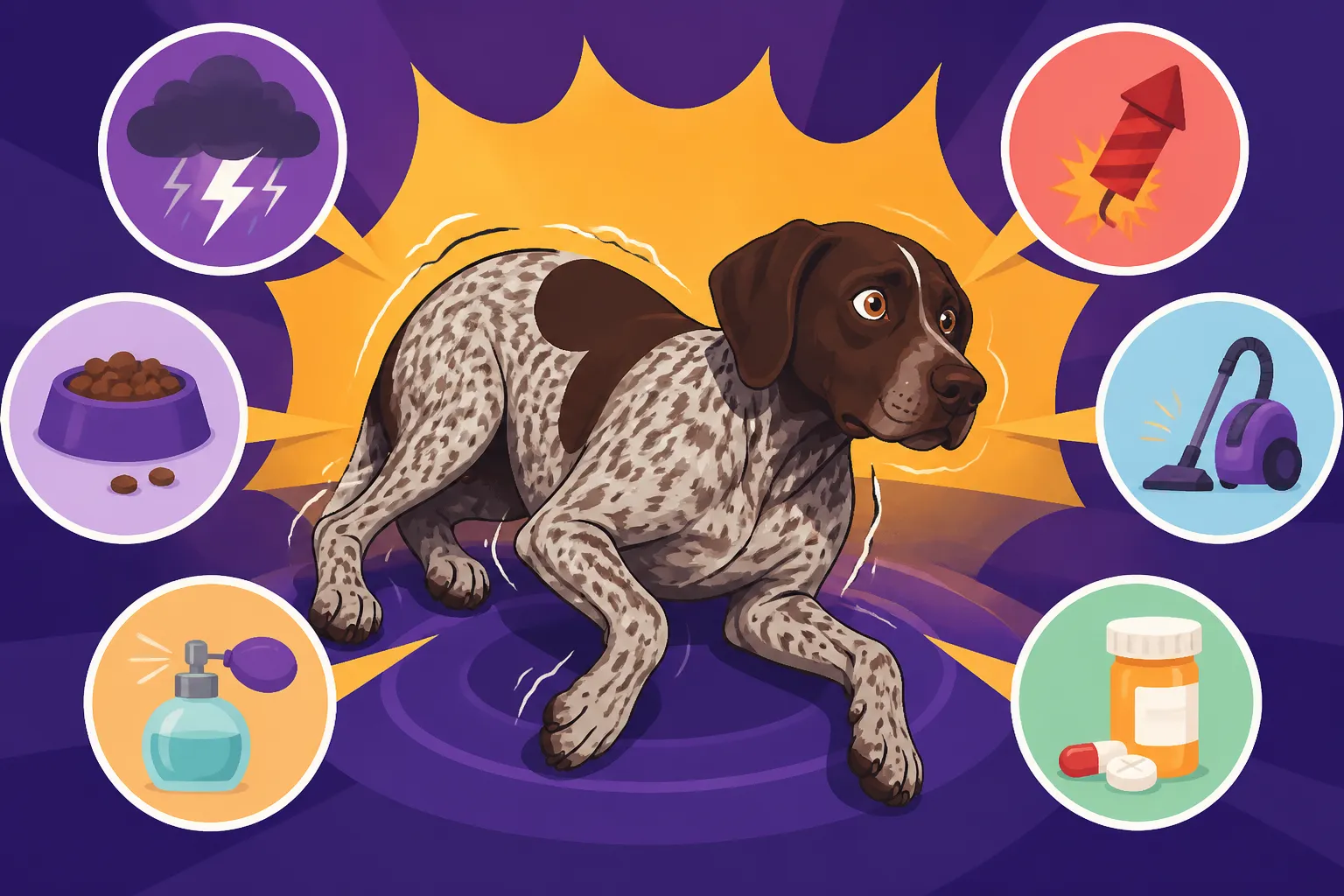
Shorthairs feel things intensely, and emotional arousal can push a susceptible dog over the edge. Owners frequently report seizures after houseguests, boarding, fireworks, thunderstorms, moving house or a big change in routine. Interestingly, many seizures happen while the dog is resting or asleep, often after an exciting day rather than during it.
Sleep disruption is a well-recognised trigger in people with epilepsy and appears to matter in dogs as well. A consistent daily routine with regular meal times, exercise and quiet rest periods is one of the simplest tools you have. If you are struggling to tell whether your dog is anxious, our guide Reading a German Shorthaired Pointer’s Stress Signals helps you catch rising tension before it becomes a problem.
Hormones can play a part too. Some intact females seem to seize more around their heat cycle. Thyroid problems can also affect overall metabolism and wellbeing, and hypothyroidism is common enough in the breed that many vets will test for it during a seizure work-up. If your dog is diagnosed, Monthly Medication for a Hypothyroid Shorthair explains what ongoing treatment looks like.
Missed Medication Doses
For a dog already on anti-seizure medication, the single most common trigger is a missed or late dose. Drugs such as phenobarbital, potassium bromide, levetiracetam and imepitoin need steady blood levels to work, and even one late dose can open the door to a breakthrough seizure. Never stop or reduce these medicines suddenly, because abrupt withdrawal can provoke cluster seizures or a prolonged seizure that becomes an emergency.
Set phone alarms, use a weekly pill organiser, and make sure anyone caring for your dog, from a dog sitter to a boarding kennel, understands the exact schedule.
Comparing Triggers and What You Can Do About Them
The table below sums up the triggers owners report most often in Shorthairs, how they tend to show up, and what you can realistically do to lower the risk.
| Trigger | How it typically appears | What you can do |
|---|---|---|
| Heat and overexertion | Seizure during or hours after hard exercise in warm weather | Shorter sessions, frequent water, rest in shade, stop early |
| Exhaustion and poor sleep | Seizure during rest after a big day or travel | Keep routines steady, plan quiet recovery days |
| Toxins | Sudden onset with tremors, drooling or vomiting | Secure rubbish, avoid xylitol, check ponds for algae |
| Water intoxication | Wobbliness, vomiting and collapse after water retrieves | Limit repetitions, use flat retrieving dummies, rest often |
| Stress and excitement | Seizure after guests, storms, boarding or travel | Predictable routine, safe quiet space, gradual changes |
| Missed medication | Breakthrough seizure in a previously controlled dog | Alarms, pill organisers, written schedules for carers |
| Hormonal or metabolic change | Seizures clustered around heat cycles or with illness | Regular bloodwork, discuss spaying and thyroid testing with your vet |
Keeping a Seizure Diary
A trigger diary is the most useful tool most owners never use. Each time your dog seizes, note the date and time, how long it lasted, what happened in the 24 hours beforehand, including exercise, food, treats, sleep, visitors, weather and medication timing, and how long recovery took. Over a few months, patterns often emerge that neither you nor your vet would have spotted otherwise.
- Write down the start and end time of each seizure, using a phone timer if you can.
- Record your dog’s activity, meals and any unusual exposures from the previous day.
- Note the weather, especially heat and storms.
- Log every medication dose, including the exact time it was given.
- Bring the diary to every vet check so dose changes can be based on real data.
When a Seizure Becomes an Emergency
Most single seizures stop on their own within one to two minutes. However, a seizure lasting longer than five minutes, or several seizures in a row without full recovery between them, is a medical emergency known as status epilepticus or cluster seizures. Body temperature climbs quickly during a long seizure, which adds the risk of brain damage from overheating.
During a seizure, keep your hands away from your dog’s mouth, move furniture or hard objects out of the way, dim the lights and keep noise down. Time the episode. If it passes the five-minute mark, or if a second seizure follows quickly, get to an emergency vet immediately. Ask your vet in advance whether a rescue medication to give at home makes sense for your dog.
Living With and Paying for a Seizure-Prone Shorthair
A seizure diagnosis is frightening, but many epileptic Shorthairs live long, active lives with good management. Some even return to hunting with sensible precautions, which we explore in Whether an Epileptic Shorthair Can Keep Hunting.
Long-Term Management at Home
Successful long-term care usually rests on a few habits: giving medication on time, running regular blood tests to check drug levels and liver function, keeping exercise and sleep consistent, and avoiding known triggers. Many dogs need a dose adjustment or a second drug at some point, so think of treatment as an ongoing conversation with your vet rather than a one-time fix.
It is also worth having an honest family discussion about safety. An epileptic dog should not swim unsupervised, and stairs, pools and balconies need some thought. None of this means wrapping your dog in cotton wool. It means removing the few situations where a seizure could turn into a serious injury.
The Cost of Diagnosis and Ongoing Care
The costs of a seizure disorder come in two waves. The first is diagnosis, which can range from basic bloodwork to a full neurology referral with MRI under anaesthesia. The second is lifelong care, which means daily medication, monitoring blood tests several times a year and the occasional emergency visit. Over a dog’s lifetime, this adds up to a meaningful sum.
This is where pet insurance becomes relevant, but timing is everything. Policies from providers such as Healthy Paws generally will not cover conditions that showed signs before enrolment or during the waiting period, so insuring a Shorthair while it is young and healthy matters far more than shopping after the first seizure. If you are comparing plans, check the Healthy Paws policy wording for how it treats hereditary conditions such as epilepsy, along with its waiting periods and reimbursement structure, on the provider’s own site. Our guide to Monthly Insurance Premiums on a German Shorthaired Pointer explains how premiums are usually calculated for the breed.
If your dog is already insured with Healthy Paws or another company, keep copies of every vet record and seizure diary entry, since detailed notes make claims much smoother. And if your dog is uninsured, ask your vet about payment plans and generic versions of anti-seizure drugs, which can bring long-term costs down considerably.
Disclaimer
This article is for general informational purposes only and does not constitute professional advice. Laws, prices and regulations vary by location and change over time. Consult a qualified professional for guidance on your specific situation.