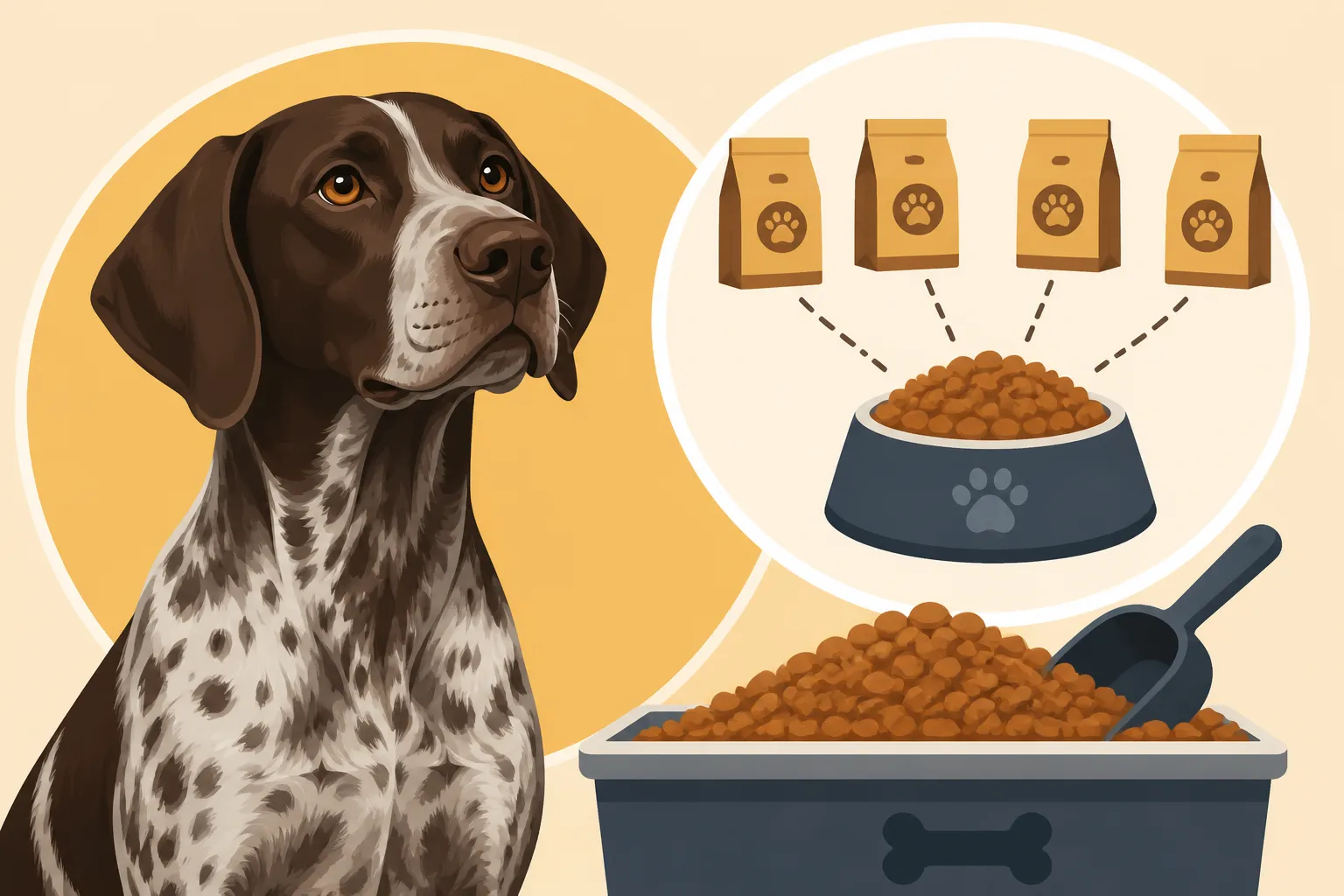
How Many Pounds of Food a Shorthair Eats Monthly
Figuring out exactly how many pounds of food your German Shorthaired Pointer needs each month can feel like a real puzzle, and honestly, the answer isn't a simple one-size-fits-all. Many new GSP owners get frustrated trying to reconcile the feeding guidelines on a bag of kibble with the insatiable appetite of their perpetually active companion. This guide will help you understand the variables at play, how to calculate a realistic monthly food estimate, and how to adjust as your Shorthair's life changes.
Understanding the German Shorthaired Pointer's Unique Energy Needs
German Shorthaired Pointers aren't just dogs; they're athletes in a short, sleek package. Bred to be versatile hunting partners, they possess an incredible amount of energy, stamina, and drive. This isn't a breed that's content with a leisurely stroll around the block once a day. They thrive on vigorous exercise, whether that's hours spent running through fields, swimming in lakes, or engaging in intense training sessions. Their high metabolism and lean muscle mass mean they burn through calories at a much faster rate than many other breeds, which directly translates into higher food requirements.
The typical GSP spends its life in motion, always ready for the next adventure. This inherent athleticism means their bodies are constantly demanding fuel to maintain energy levels, repair muscles, and keep their systems running efficiently. If you've ever watched a Shorthair quarter a field or retrieve ducks from icy water, you understand the sheer physical output involved. It's like having a miniature marathon runner living in your home, and just like any athlete, proper nutrition is paramount to their performance and overall health. Skimping on calories for a truly active GSP isn't just about them feeling hungry; it can impact their muscle mass, coat condition, and even their immune system.
Beyond just physical activity, even a German Shorthaired Pointer who lives primarily as a companion animal still carries the genetic blueprint for high energy. They might not be hunting pheasants, but they'll likely be tearing around the yard, playing intense games of fetch, or joining you on long hikes. Their minds are also active, constantly processing scents and sights, which can also contribute to their energy expenditure. It's a fundamental aspect of the breed that dictates much of their care, including their dietary needs, and it's why generic feeding charts often fall short for these incredible dogs.
Factors Influencing Monthly Food Consumption
The amount of food your German Shorthaired Pointer devours each month isn't static. It's a dynamic figure that shifts based on several key factors. Understanding these can help you better estimate your monthly needs and avoid underfeeding or overfeeding your active companion. It’s never as simple as just "a cup twice a day" when you have a GSP.
Age and Life Stage
A German Shorthaired Pointer puppy, for instance, is a little growth machine. They are rapidly developing bones, muscles, and organs, and this intense growth spurt demands a significant amount of calories and specific nutrients. A puppy's metabolic rate is much higher than an adult's, and they might eat more, relative to their body weight, than a mature dog. A common mistake is to feed puppy food for too long, or not enough of it, hindering their development. Typically, you'll see a drop in overall food volume needed once they hit adulthood and their rapid growth phase levels off, usually around 12 to 18 months, though they will continue to fill out.
As your Shorthair enters its senior years, usually around The Age a German Shorthaired Pointer Is Called Senior, their metabolism often slows down, and their activity levels might decrease. An older GSP might not be able to run as hard or as long as they once did, which means their caloric needs will naturally reduce. Continuing to feed them the same volume of food they ate in their prime can lead to unhealthy weight gain, putting strain on their joints and increasing the risk of other health issues. It's crucial to monitor their body condition and adjust their diet accordingly, potentially switching to a senior-specific formula that has fewer calories but still provides essential nutrients.
Activity Level and Workload
This is perhaps the single biggest determinant of how much your German Shorthaired Pointer will eat. A Shorthair that's actively hunting several days a week during season, running miles in cover, or competing in field trials has vastly different caloric requirements than a Shorthair that primarily enjoys daily walks and some playtime in the yard. Working dogs can burn thousands of extra calories in a single day, necessitating a significant increase in their food intake.
Consider a GSP named "Dash" who is out with you for four to six hours, pointing birds, retrieving, and covering vast distances. His energy expenditure could easily be double or even triple that of a GSP named "Buddy" who enjoys a couple of hour-long off-leash romps at the park each day. Dash will likely need a high-performance kibble, often with a higher fat and protein content, and a larger volume of it, especially on days leading up to, during, and immediately after a hunt. Calorie Needs of a German Shorthaired Pointer in Season are drastically different, and failing to meet them can lead to weight loss, fatigue, and even injury.
Food Type and Caloric Density
Not all dog foods are created equal, and the caloric density—how many calories are packed into each cup or pound—varies significantly between brands and formulas. A budget kibble might contain more fillers and fewer calories per cup, meaning you'll have to feed a larger volume to meet your Shorthair's energy needs. Conversely, a high-quality, performance-grade kibble designed for active breeds will be much more calorie-dense, and you'll feed less by volume to achieve the same caloric intake.
For example, a premium performance food might have 450 calories per cup, while a maintenance formula might only have 350. This difference adds up quickly over a month. If your Shorthair needs 2,000 calories a day, they'd eat roughly 4.5 cups of the performance food versus nearly 6 cups of the maintenance food. This is why simply looking at "cups per day" on a bag can be misleading; you really need to consider the caloric content. This is also where options like fresh or raw diets, such as those offered by services like Ollie, come into play. These diets can be highly calorically dense and nutrient-rich, potentially changing the volume of food needed while still providing ample energy.
Metabolism, Environment, and Individual Differences
Just like people, every German Shorthaired Pointer is an individual. Some naturally have a faster metabolism, burning through calories more quickly, while others might be a bit more efficient with their energy. Factors like genetics, whether they've been spayed or neutered (Whether Neutering Timing Changes a Shorthair's Joints), and even the ambient temperature can influence their caloric needs. A Shorthair exercising in cold weather will burn more calories to stay warm than one working in mild conditions.
It's also worth noting that some Shorthairs are simply "hard keepers," meaning they struggle to maintain weight despite adequate food, often due to their extremely high activity levels or inherent metabolic quirks. For these dogs, you might find yourself consistently feeding at the higher end of recommended ranges, or even beyond, using calorie-dense foods or supplements. Conversely, some pet GSPs, especially if under-exercised, can easily gain weight, requiring a reduction in their daily intake. This highlights the importance of regularly assessing The Body Condition a Field Shorthair Should Carry and adjusting food based on what your dog's body is telling you, rather than just what the bag says.
Calculating and Adjusting Your Shorthair's Monthly Food Intake
Once you understand the factors at play, you can get a better handle on how much food your German Shorthaired Pointer will need each month. This isn't an exact science, but with careful observation and adjustment, you can ensure your Shorthair is getting the right amount of fuel.
Estimating Daily Caloric Needs
The first step is to get a baseline for your dog's daily caloric needs. Many dog food brands provide a caloric content per cup or per gram on their packaging. You can also find general calculators online that estimate daily calories based on your dog's weight, age, and activity level. For a healthy, active adult German Shorthaired Pointer, daily caloric needs can range from about 1,200 calories for a moderately active pet up to 2,500-3,500 calories for a hard-working hunting dog, and sometimes even more during peak season.
Let's say your 60-pound GSP, actively working several days a week, needs around 2,500 calories per day. If your chosen performance kibble (which you might purchase from a retailer like Chewy) contains 450 calories per cup, that means your dog would need approximately 5.5 cups of food per day (2500 calories / 450 calories/cup = 5.55 cups). This is your starting point. Remember, these are estimates, and your individual dog might vary.
Translating to Monthly Pounds
Once you have your daily cup estimate, converting it to monthly pounds is straightforward.
Using our example of 5.5 cups per day:
- Daily cups: 5.5
- Monthly cups: 5.5 cups/day * 30 days/month = 165 cups/month
Now, you need to know how many cups are in a typical bag of food. A standard 30-pound bag of kibble might contain anywhere from 100 to 120 cups, depending on the kibble density. Let's assume your performance kibble has about 4 cups per pound (this can vary wildly, so check your bag!).
- Pounds needed monthly: 165 cups / 4 cups/pound = 41.25 pounds per month.
So, in this scenario, your highly active 60-pound GSP would likely consume over 40 pounds of food each month! This is a significant amount and helps illustrate why these dogs need so much fuel.
Here's a simplified table to help visualize typical monthly consumption based on different activity levels for an average 60lb GSP:
| Activity Level | Estimated Daily Calories | Cups/Day (approx. 450 kcal/cup) | Cups/Month | Lbs/Month (approx. 4 cups/lb) |
|---|---|---|---|---|
| Sedentary (rare for GSP) | 1,000 – 1,500 | 2.2 – 3.3 | 66 – 99 | 16.5 – 24.75 |
| Moderately Active Pet | 1,500 – 2,000 | 3.3 – 4.4 | 99 – 132 | 24.75 – 33 |
| Active Companion/Light Work | 2,000 – 2,500 | 4.4 – 5.5 | 132 – 165 | 33 – 41.25 |
| Heavy Work/Hunting Season | 2,500 – 3,500+ | 5.5 – 7.7+ | 165 – 231+ | 41.25 – 57.75+ |
Note: Calorie per cup and cups per pound are estimates and vary significantly by specific food product. Always check your chosen food's label.
Monitoring and Adjusting
The numbers above are just a starting point. The real work comes in monitoring your German Shorthaired Pointer's body condition. You should be able to easily feel their ribs when you run your hands along their side, but not see them prominently. Their waist should be evident when viewed from above, and they should have a tuck-up from their chest to their abdomen when viewed from the side. Keeping a German Shorthaired Pointer Lean and Hard is vital for their health and longevity.
If your Shorthair is gaining weight, gradually reduce their daily intake by 10-15% and reassess in a couple of weeks. If they're too thin, increase by a similar amount. It's a continuous process of observation and adjustment, especially as seasons change or their workload fluctuates. Don't forget that treats also add calories! Even a few handfuls of training treats can significantly impact their daily intake. During intense training or hunting, adding Joint Supplements Worth Giving a Working Shorthair or Electrolytes for a German Shorthaired Pointer in the Field can also be important, but always factor these into their overall nutritional picture.
Beyond the Bowl: Ensuring Optimal Nutrition and Hydration
Understanding monthly food consumption isn't just about the volume of kibble; it's about the comprehensive picture of your Shorthair's health, energy, and well-being. Nutrition is the foundation, but hydration and overall care are just as critical for these hard-working dogs.
Quality of Food Matters
The quality of the food you choose plays a huge role in how well your German Shorthaired Pointer thrives, and it can actually influence the volume they need to eat. High-quality foods, often rich in animal protein and healthy fats, are more bioavailable, meaning your dog's body can absorb and utilize more of the nutrients. This can lead to your dog feeling satisfied with less volume compared to a cheaper food with more fillers. It's an investment that pays off in their health, energy, and even the appearance of their coat.
Think about it: if your dog isn't getting adequate nutrition from a less-dense food, they might still feel hungry and try to eat more, or their body might not perform optimally. Feeding What Performance Kibble Costs for a Shorthair might seem like a higher upfront expense, but it can mean better health outcomes and fewer vet visits in the long run. If you're exploring options, many online pet supply retailers offer a wide variety of performance foods, making it easier to find one that fits your GSP's needs.
Hydration: A Non-Negotiable Necessity
For a breed as active as the German Shorthaired Pointer, adequate hydration is not just important; it's absolutely non-negotiable. Especially when they're working hard in the field or exercising vigorously, they can quickly become dehydrated, leading to serious health issues like heat exhaustion or even kidney problems. Water is crucial for every bodily function, from nutrient transport to temperature regulation. Watering a German Shorthaired Pointer Through a Long Day is something every GSP owner must prioritize.
Always ensure fresh, clean water is available. When you're out and about, especially during hunts or long training sessions, carry plenty of water and offer it frequently. Collapsible bowls are a lifesaver for this. A dehydrated dog can't perform, and their appetite might even be suppressed, further complicating your feeding strategy. Don't underestimate the role of water in your Shorthair's overall monthly "consumption" – it's just as vital as their food.
Regular Health Check-ups and Monitoring
Even with the best diet and exercise plan, regular veterinary check-ups are essential. Your vet can provide invaluable insights into your German Shorthaired Pointer's health, discuss any dietary concerns, and help you fine-tune their nutritional plan. They can also screen for underlying health issues that might impact appetite or metabolism, such as thyroid problems, which can cause Weight Gain That Points at a Shorthair's Thyroid. While a good diet can help prevent many health issues, some, like The Bloat Risk a Shorthair Carries Into Every Season, are inherent to the breed and require awareness and preventative measures.
Monitoring your dog's stools can also give you clues about their digestive health and whether their food is being properly utilized. Consistent loose stools, for example, might indicate that the food isn't agreeing with them or that you're overfeeding. Also, keep an eye on their energy levels and coat condition. A dull coat or lethargy, despite adequate food, could signal a nutritional deficiency or an underlying health concern. Organizations like Healthy Paws can help cover unexpected vet bills, but proactively managing your Shorthair's diet and health is the best first line of defense.
Disclaimer
This article is for general informational purposes only and does not constitute professional advice. Laws, prices and regulations vary by location and change over time. Consult a qualified professional for guidance on your specific situation.