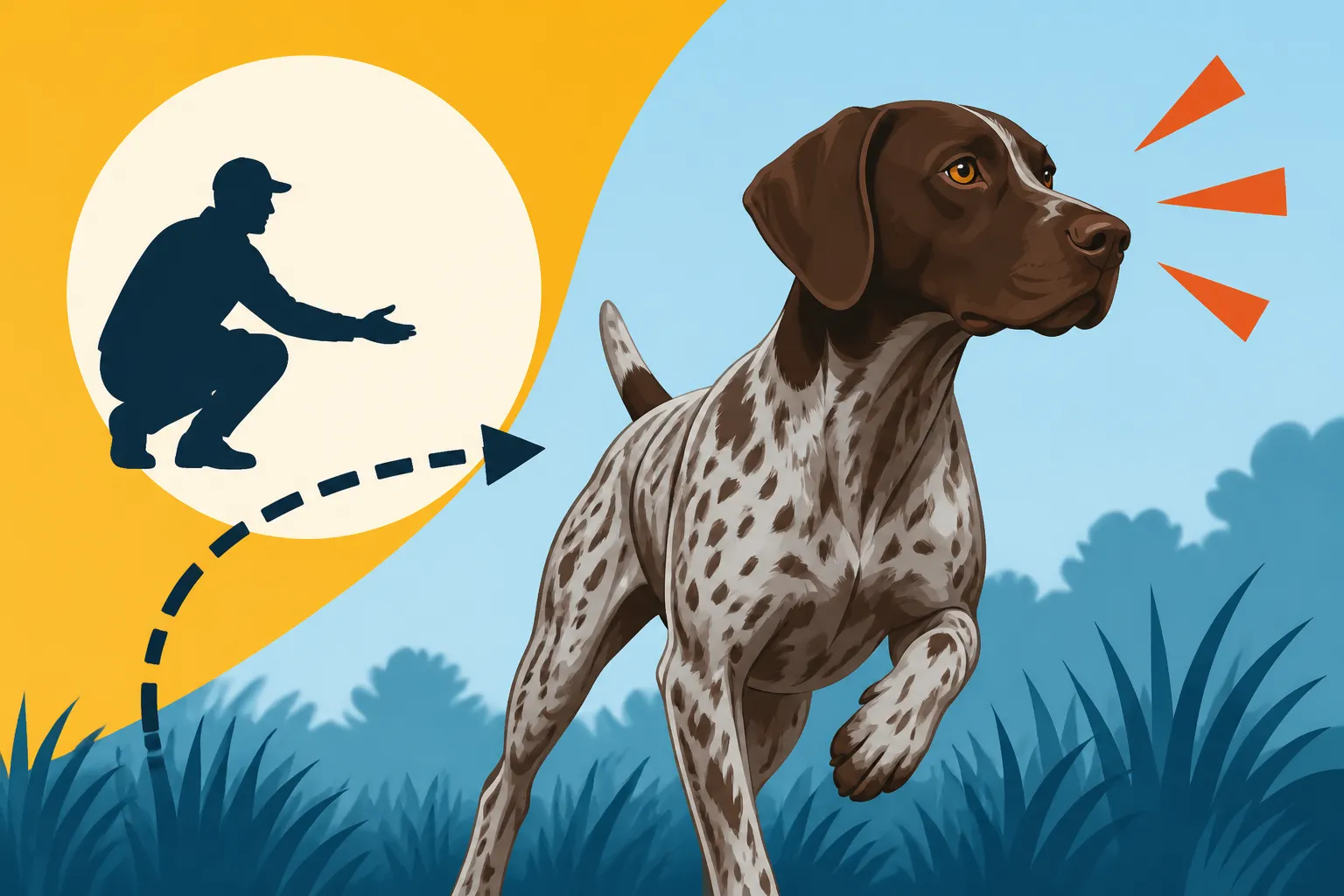
Recall on a German Shorthaired Pointer That Is Locked On
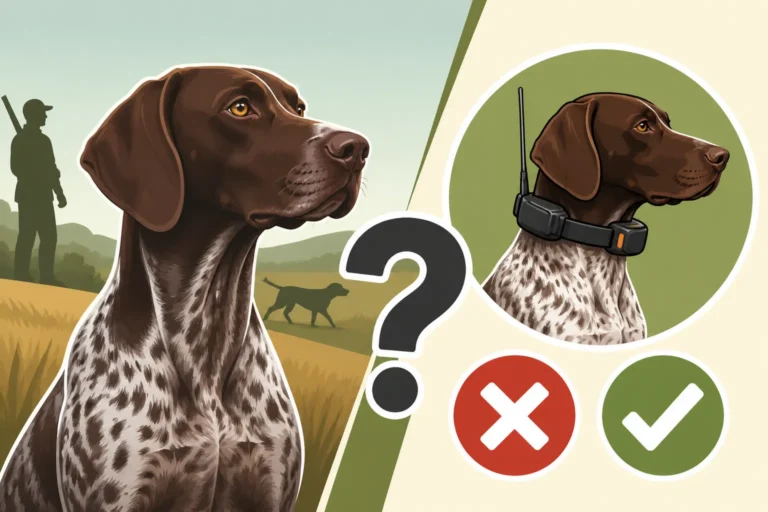
There's nothing quite as frustrating, or frankly, terrifying, as calling your German Shorthaired Pointer when they're absolutely locked onto something – a pheasant flushing from cover, a deer bolting across a field, or even just a particularly intriguing scent trail – and watching them ignore you completely as they launch themselves into pursuit. It feels like your voice simply ceases to exist, and in that moment, all the training, all the hours you've put in, seem to vanish. This guide is all about tackling that exact scenario, helping you understand why your Shorthair gets so fixated and, more importantly, how to build a recall that stands a chance against that powerful, inherent drive.
Understanding the "Locked On" Mentality in GSPs
To truly conquer the challenge of recall with a German Shorthaired Pointer who is utterly fixated, we first need to get inside their heads a little. It's not about them being disobedient; it's about their genetics kicking in with an intensity few other breeds possess.
The Instinctive Drive to Hunt
German Shorthaired Pointers were purpose-bred. They weren't developed to be cuddly lap dogs or casual companions. They were engineered, over generations, to be ultimate versatile hunting machines. Think about it: they had to point, retrieve, track, and do it all day long, often across varied terrain and in all sorts of weather. This means they possess an incredibly powerful prey drive that is deeply ingrained.
When your GSP locks onto something, whether it's the flash of a squirrel's tail, the distinct scent of a rabbit, or the rustle of a bird in the brush, their entire being shifts into hunting mode. It's not a conscious choice to ignore you; it's an automatic, ancient response. Their eyes narrow, their ears might perk or flatten, their body tenses, and every fiber of their being is screaming "GET IT!" This isn't a minor distraction; it's the culmination of centuries of selective breeding asserting itself. For many GSPs, this drive is almost impossible to turn off with a simple verbal command if not deeply conditioned beforehand. They are literally doing what they were born to do, and your voice, even when you're hollering at the top of your lungs, often just doesn't register in that highly stimulated state.
Sensory Overload and Tunnel Vision
When a German Shorthaired Pointer is "locked on," their senses don't just become more acute; they become hyper-focused on the target, almost to the exclusion of everything else. It's like their brain hits a switch, and all extraneous input is filtered out. They experience a kind of sensory tunnel vision, where the scent cone, the visual movement, or the sound of the prey becomes the only thing that matters.
Imagine being utterly engrossed in a task, say, solving a complex puzzle or trying to track a subtle detail, and someone from across the room calls your name. You might hear a sound, but it doesn't quite register as a command or even as a voice directed at you. Your GSP is experiencing something similar, but amplified by their incredible senses and hunting instinct. Their hearing, which is usually phenomenal, effectively shuts down to your voice because the rustling grass, the chirping bird, or the distant scent is providing far more crucial information for their primal programming. This isn't defiance; it's a physiological response to intense environmental stimuli. Understanding this helps us approach training not with frustration, but with a strategy that can truly compete with that innate drive.
Foundations of a Rock-Solid Recall
Before we even think about tackling a "locked-on" GSP, we need to ensure the very foundation of their recall is stronger than any distraction. This isn't just about teaching them what "come" means; it's about making "come" the most irresistible offer in their entire world.
Building High-Value Motivation
For a German Shorthaired Pointer, "come" needs to be more than just a command; it needs to be an event, a lottery win, the best thing that could possibly happen in that moment. Generic kibble or a quick pat on the head simply won't cut it when they're staring down a rabbit. You need to identify what truly motivates your GSP. Is it a piece of cooked chicken? A squeaky toy? A vigorous game of tug? Whatever it is, it needs to be something they rarely get otherwise, something that truly lights up their eyes.
When you practice recall, especially in the early stages, make sure the reward is consistently exceptional. Don't just give one treat; give a handful. Make it a celebration with enthusiastic praise and playful interaction. The idea is to create an overwhelmingly positive association with returning to you. They need to believe, deep down, that abandoning whatever exciting thing they've found to come back to you will always, without fail, lead to something even better. Think about how you feel when you hear good news – that's the kind of internal excitement you want to trigger in your dog. Resources like BAXTER & Bella, which emphasize positive reinforcement and building a strong, joyful relationship, are invaluable for laying this kind of foundation. They understand that a dog who loves to engage with you will be far more responsive.
Consistency and Positive Reinforcement
Consistency isn't just a buzzword in dog training; it's the bedrock of a reliable recall, especially with a high-drive breed like the GSP. Every single time you call your dog, they absolutely must come. If you call them and they ignore you, and you let it slide, you've just taught them that "come" is optional. This is why you start recall training in a completely distraction-free environment, like your living room or a securely fenced yard, and gradually introduce challenges.
Always, always reward your German Shorthaired Pointer when they come, even if it took them a moment longer than you wanted. Never scold or punish them for coming, no matter how frustrated you might be that they were distracted. The recall itself must always be a positive experience. If they associate coming to you with getting in trouble, you're actively poisoning the command and teaching them to avoid you when called, especially if they're already engaged with something interesting. Use enthusiastic praise, happy tones, and those high-value rewards every single time. Short, frequent training sessions are far more effective than long, infrequent ones. Building this habit means your GSP sees "come" as a positive, automatic response rather than a suggestion they can weigh against a pheasant.
Training Strategies for Distraction-Proof Recall
Now that we understand the deep-seated drive of a German Shorthaired Pointer and have laid the groundwork for a positive, high-value recall, it's time to put those principles into action with specific training strategies designed to stand up to real-world distractions.
The Long Line Method
One of the most effective ways to bridge the gap between training in a safe, controlled environment and allowing your GSP more freedom is through the use of a long line. This is typically a lead that's anywhere from 15 to 50 feet long, giving your dog the sensation of freedom while you maintain ultimate control. It's an indispensable tool for preventing your dog from learning that ignoring you has a reward (like chasing a deer to the horizon). You can find a wide variety of durable long lines on platforms like Amazon, making it easy to get the right length and material for your training needs.
Here’s how to use it: Attach the long line to a well-fitting harness (never just a neck collar, as a sudden stop could injure their neck). Take your GSP to a mildly distracting environment – maybe a park during off-peak hours, or a large field without too much wildlife. Let them explore, but always keep the end of the long line in your hand or secured to your belt (with a quick-release knot for safety). When you call them, if they hesitate, give a gentle but firm tug on the line while simultaneously repeating your recall command cheerfully. The instant they turn toward you, start reeling them in like a fish, praising enthusiastically the entire time, and deliver that jackpot reward when they reach you. The key is to make it impossible for them to blow you off. Every single call must result in them coming back to you. This builds muscle memory and reinforces that your command means "return" regardless of what else is happening. This method helps lay the groundwork before you even think about full off-leash work, creating a consistent expectation of compliance. Check Cords and Whistles a Shorthair Owner Buys offers more insights into similar control tools.
Introducing the E-Collar Thoughtfully
For many German Shorthaired Pointer owners, especially those who hunt or spend a lot of time in wide-open spaces, an e-collar (electronic collar) becomes an invaluable tool for ensuring a reliable recall over long distances or in high-distraction scenarios. However, it's crucial to understand that an e-collar is not a magic bullet and should never be used for punishment. It's a communication device, creating an "invisible leash" that allows you to reinforce known commands, including recall, from afar.
Proper introduction is paramount. Start by finding your dog's "working level" – the lowest stimulation level they respond to. This is usually just a tickle or a vibration, not a shock. Always pair the e-collar stimulation with a command they already know, like "come." For example, you might say "come" and immediately give a low-level stimulation. The instant they respond, turn off the stimulation and reward them heavily. The dog learns that turning off the unpleasant sensation is tied to the desired behavior, not directly to the stimulation itself. Over time, you can fade the verbal command, and the e-collar becomes a silent cue. This method provides the ability to get your GSP's attention when they're truly "locked on" and physically cannot hear you, giving you a critical tool for safety and control. For a deeper dive into responsible e-collar use, consider resources like When an E-Collar Belongs on a German Shorthaired Pointer, which emphasizes careful conditioning.
Proofing in High-Distraction Environments
Once your GSP has a solid recall on a long line and understands the e-collar (if you choose to use one), it's time to "proof" their recall by introducing gradually increasing levels of distraction. This is where the rubber meets the road. Don't go from a quiet park to a field full of flushing pheasants on day one.
Start small. Maybe have a friend walk across the field with another dog at a distance. Let your GSP notice them, then immediately call them back. If they come, mega jackpot! If they hesitate, use your long line or e-collar to gently guide them back, always ending with praise and reward. Slowly decrease the distance to the distraction, or increase the intensity of the distraction itself. Perhaps a remote-controlled bird launcher (without birds yet) or a helper dragging a scent lure. The goal is to set your dog up for success by ensuring they can succeed at each level before moving on. If they fail, you've likely introduced too much distraction too quickly. Go back a step. This systematic approach builds confidence in your GSP and reinforces that your recall command is the most important thing, no matter how exciting the environment gets. Remember that Off Leash Time a German Shorthaired Pointer Needs Weekly should always be a structured and safe experience, especially during the proofing stages.
Common Recall Pitfalls and How to Avoid Them
Even with the best intentions and the most dedicated training, it's easy to fall into common traps that can undermine your German Shorthaired Pointer's recall. Recognizing these pitfalls is the first step toward avoiding them and building a truly reliable response.
Over-relying on the Command
One of the quickest ways to dilute the effectiveness of your recall command is to use it too often, especially when you know your dog is unlikely to respond. Think of it like a smoke detector: if it goes off every time you burn toast, you start to ignore it. If you constantly yell "Come!" at your GSP when they're sniffing something fascinating 50 yards away and you have no way to enforce it, that word quickly becomes background noise. It loses its urgency and its power.
Instead of constantly repeating the command, try to set up situations where you know your dog will succeed. If you're in a high-distraction environment and your dog is showing signs of locking on, don't just shout "Come!" hoping for the best. Instead, get closer to them, use your long line or e-collar if applicable, and then give the command once, clearly and cheerfully. You want to save your recall command for times when you are fairly confident your dog will respond or when you have the tools to ensure they do. This preserves the command's value and makes it something your GSP takes seriously. This approach ensures that your efforts aren't wasted and your dog doesn't learn that ignoring you is an option.
Punishing or Scolding After Recall
This is perhaps the most critical rule of recall training: never, ever punish or scold your German Shorthaired Pointer after they have come to you, regardless of how long it took or what mischief they were up to beforehand. Imagine you're a child, and your parent calls you for dinner. You're busy playing, but you eventually come inside. If your parent then immediately scolds you for taking too long or for getting your clothes dirty while playing, you're going to be less inclined to come next time.
The same principle applies to your GSP. If they finally peel themselves away from that irresistible scent trail or squirrel chase, and your first reaction is to yell, scold, or even just put them immediately back on a leash and end the fun, you're teaching them that coming to you is a negative experience. They need to associate returning to you with safety, praise, and high-value rewards. Even if you're internally fuming, when they arrive, you must put on your happiest face, heap on the praise, and give them their jackpot reward. You can address the previous "misbehavior" later by preventing it from happening again (e.g., using a longer line or higher fence), but the act of returning to you must always be celebrated. A GSP that hesitates because they fear a scolding is a GSP that might eventually run further or even into danger. The Two Hours a Day a German Shorthaired Pointer Needs for exercise also highlights the importance of positive interactions during their active time.
Lack of Consistent Practice
Recall, especially for a high-drive German Shorthaired Pointer, is not a "set it and forget it" skill. It's like an athlete's conditioning: if you don't practice regularly, you lose muscle memory and performance. A GSP's innate drive is always there, lurking beneath the surface, and if your recall isn't regularly reinforced, that drive can easily override it.
Many owners make the mistake of thinking that once their dog has a good recall, they don't need to practice anymore. This couldn't be further from the truth for a breed like the GSP. Short, daily recall practice sessions, even in your living room, are invaluable. Call your dog from another room, reward them. Call them while they're playing with a toy, reward them. Vary the environment, the distractions, and the rewards. The more you practice, the more automatic and ingrained the response becomes, making it more resilient in the face of strong temptations. Think of it as continually "depositing" positive experiences into your recall bank, so when you need to make a "withdrawal" in a critical moment, the funds are there. Without consistent reinforcement, that "locked on" instinct will slowly but surely erode your hard-won training.
Beyond Basic Recall: Advanced Techniques for a Locked-On GSP
For German Shorthaired Pointers, whose hunting instincts can be incredibly powerful, a basic "come" might not always be enough. Sometimes, you need something extra, a command with a heightened sense of urgency and importance. This is where advanced recall techniques come into play.
Emergency Recall Cue
For those moments when your German Shorthaired Pointer is truly locked on to something potentially dangerous – a busy road, another dog that might not be friendly, or an unsafe area – you need an emergency recall cue. This isn't your everyday "come." This is a completely separate command, often a distinct whistle sound or a unique, rarely used word (e.g., "MAGNET" or "NOW!"). The power of this cue comes from its rarity and the sheer magnitude of the reward associated with it.
You introduce this cue in a highly structured way. Start in a low-distraction environment. Give the emergency cue, and immediately follow it with an enormous jackpot reward – a handful of irresistible treats, a favorite toy, or a frantic play session. Repeat this many times, but only in controlled settings, never when you're uncertain of success. The key is that this cue is never diluted by casual use. It's reserved for literal emergencies. If you use it, you must be prepared to deliver an astronomical reward. This creates a "break glass in case of emergency" command that, because of its unique association with unparalleled rewards, can often cut through even the most intense fixation. Whistle Commands a Shorthair Should Know can help you explore distinctive sounds for this special cue.
Teaching "Here" as a Magnetic Pull
While "come" is a fundamental command, sometimes it can become a bit generalized. For a German Shorthaired Pointer, teaching a specific, highly charged word like "Here!" or "Front!" can serve as a potent recall with a magnetic pull, signifying immediate and enthusiastic return right to your side. This isn't just about stopping their progress; it's about making them reorient their entire focus and trajectory directly to you, like they're being drawn by an invisible string.
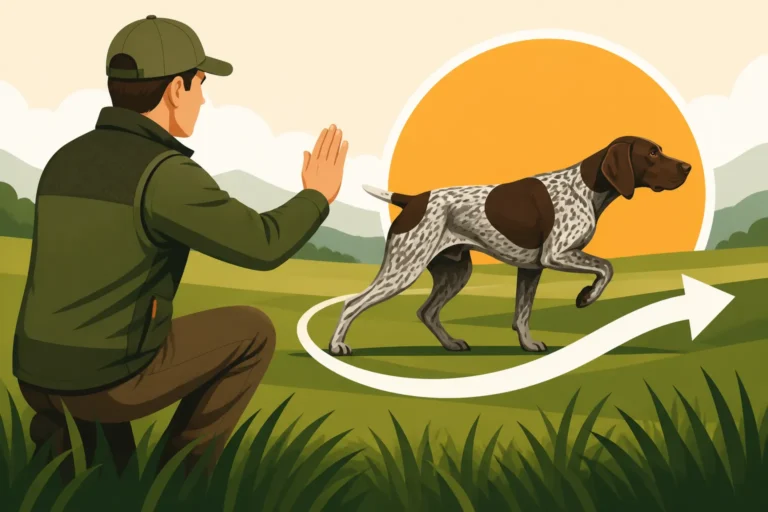
To instill this, always practice "Here!" when you are standing still, making yourself the fixed point of return. When your GSP comes, use an irresistible, multi-layered reward: first, a high-value treat, then enthusiastic praise, and finally, perhaps a brief game of tug or chase. The goal is to make your location, your "here," the epicenter of all good things. Practice having them run around you and then call "Here!" as they pass, immediately rewarding them for turning into you. This builds a strong physical and mental association of "Here!" with returning to your immediate vicinity with speed and enthusiasm, overriding other stimuli. This command is designed to be so compelling that even A Shorthair That Pulls Toward Every Bird It Sees will find it hard to resist.
The Role of Impulse Control Training
Ultimately, a locked-on German Shorthaired Pointer is simply acting on impulse. Their powerful drives dictate their actions. Therefore, building strong impulse control is a critical component of advanced recall training. Commands and games like "leave it," "wait," and "stay" are not just obedience exercises; they are mental muscle builders that teach your dog to pause, think, and defer to your instruction even when their instincts are screaming otherwise.
Start impulse control training in low-distraction environments. Place a treat on the floor and tell your GSP "leave it." Only when they look away or offer another behavior do you reward them (not with the original treat, but a different one). Gradually increase the duration and distraction. Play games where you ask them to "wait" before being released to a toy or their food bowl. These exercises teach your GSP that delaying gratification and listening to you leads to a better outcome. A dog that has a strong "leave it" command is far less likely to bolt after a deer, and a dog that can "wait" is more likely to pause and hear your recall over the sounds of the chase. This foundation of self-control is what gives your recall command the power to interrupt a primal urge, even in A German Shorthaired Pointer That Self Hunts.
Living with a High-Drive German Shorthaired Pointer
Even with the most dedicated training and the most reliable recall, it's essential to understand that owning a German Shorthaired Pointer means living with an incredibly powerful, instinct-driven animal. Managing their environment and channeling their energy appropriately are just as crucial as the training itself.
Managing Expectations and Environment
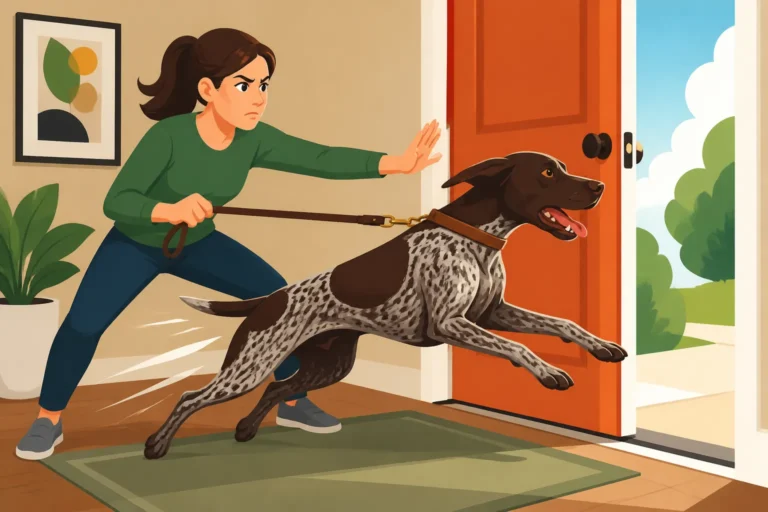
Let's be realistic: a German Shorthaired Pointer's prey drive is a core part of their identity. It will always be there. While you can train and manage it, it's unlikely to ever completely disappear. Therefore, a significant part of living harmoniously with a high-drive GSP involves managing your expectations and their environment. Don't set your dog up for failure by putting them in situations where even a rock-solid recall might be severely tested, especially in the early stages of training or in extremely high-risk areas.
This means secure fencing at home is non-negotiable. German Shorthaired Pointers are incredible jumpers and problem solvers when motivated. If they catch a scent of a rabbit on the other side of your fence, they will find a way. When you're out and about, always consider the potential distractions. Is this park known for squirrels? Is there a walking trail where deer are common? If so, is your recall truly proofed for that level of distraction? In urban or high-traffic areas, or places where you know temptation will be overwhelming, keep your GSP on a leash or a long line. It’s better to prevent the chase than to rely on an emergency recall in a dangerous situation. Being proactive in managing the environment is a sign of a responsible owner and helps keep your energetic companion safe. For more on securing your property, check out Fencing That Holds a German Shorthaired Pointer.
Providing Appropriate Outlets
A "locked on" German Shorthaired Pointer is often a dog whose intense drives are not being adequately met. These dogs were bred to work, to run, to use their nose and their brain for hours on end. If they're not getting appropriate outlets for these instincts, they will find their own, and that often means chasing squirrels, deer, or anything else that moves, regardless of your commands. Think of it like a pressure cooker – if you don't release the steam, it's going to find a way out, often explosively.
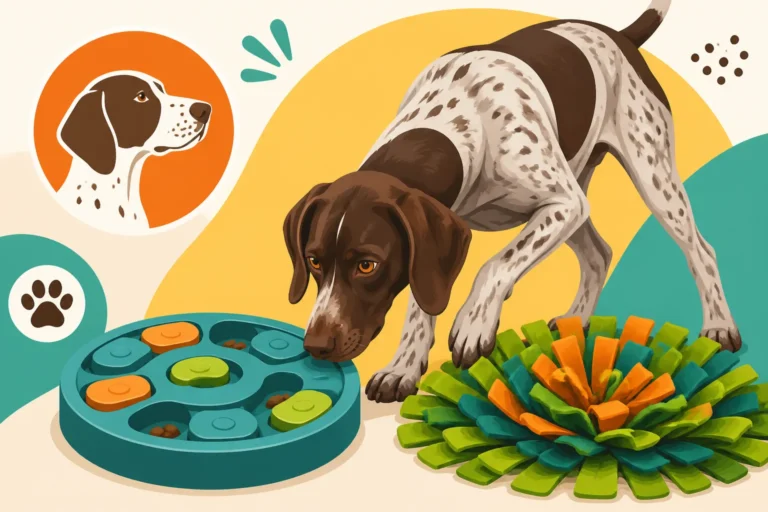
Providing proper physical and mental exercise is paramount. This goes beyond a simple walk around the block. Your GSP needs vigorous, sustained activity. This could be daily running, biking with them, or swimming. But physical exercise alone isn't always enough. You also need to engage their minds and their hunting instincts in a controlled, safe way. Scent work, tracking games, agility, or even formal bird training (even if you don't intend to hunt professionally) can be incredibly fulfilling. These activities allow them to use their natural abilities in a constructive manner, which can significantly reduce the intensity of their "locked on" responses in other situations. A tired GSP, both physically and mentally, is a more receptive and obedient GSP. Understanding How Many Seasons a German Shorthaired Pointer Hunts can give you an idea of their inherent drive and stamina, and activities like Running a Shorthair in a Dock Diving Event provide excellent ways to burn off that energy.
| Training Tool | Pros | Cons | Best Use |
|---|---|---|---|
| Long Line | Provides physical control without being on a short leash; allows practice in mildly distracting environments; prevents self-rewarding chasing. | Requires owner to manage the line; can get tangled; still requires owner presence and quick reflexes. | Early proofing in low-to-moderate distraction areas; teaching distance control; preventing failures. |
| E-Collar | Effective for long-distance communication; can interrupt deep fixation; provides a consistent, clear cue. | Requires careful, proper conditioning; misuse can cause fear/anxiety; not a substitute for teaching commands. | Advanced proofing in high-distraction environments; hunting situations; emergency recall over distance. |
| High-Value Rewards | Creates powerful positive associations; makes recall highly desirable; builds strong motivation to return. | Can be less effective in extreme "locked on" moments if not deeply ingrained; requires consistent delivery. | All stages of training, especially foundational and maintenance; critical for building positive associations. |
| Whistle | Distinctive sound cuts through noise; often less "emotional" than a human voice; effective over distance. | Requires consistency; dog must be trained to associate specific signals with recall; can be ignored if overused. | Emergency recall; long-distance work; maintaining consistency across different handlers. |
Disclaimer
This article is for general informational purposes only and does not constitute professional advice. Laws, prices and regulations vary by location and change over time. Consult a qualified professional for guidance on your specific situation.