Force Fetch Explained for a Shorthair Owner
Many German Shorthaired Pointer owners dream of a dog that instinctively retrieves fallen game or even just their tossed tennis ball with enthusiasm and a soft mouth, delivering it gently to hand. But the reality can often be frustrating: your Shorthair might grab the bird only to drop it a few feet away, chew on it, or simply refuse to pick it up at all. This guide is here to unravel the often misunderstood world of force fetch, explaining what it is, why it's a valuable tool, and how you can implement it with your GSP to achieve a reliable, consistent retrieve.
Understanding the "Why" Behind Force Fetch
It's common for owners, especially those new to working dogs, to hear "force fetch" and immediately feel a knot of discomfort. The name itself sounds harsh, suggesting something cruel or overly dominant. But let's be clear: a properly executed force fetch isn't about breaking your dog's spirit or causing pain. Instead, it's a systematic, pressure-and-release training method designed to teach your German Shorthaired Pointer how to retrieve, hold, and deliver an object on command, regardless of distractions or desire. It instills reliability where natural instinct might fall short.
Debunking the Myths of Force Fetch
One of the biggest misconceptions about force fetch is that it's inherently negative or abusive. This couldn't be further from the truth when done correctly. A skilled trainer uses minimal, consistent pressure to communicate the desired action, and then immediately releases that pressure when the dog complies. It's akin to teaching a child to tie their shoes; there's a certain amount of guidance and repetition, and perhaps a bit of frustration on both sides, but the goal is a useful skill, not punishment. The dog learns that by performing the action, the discomfort stops, and they earn praise and reward. This builds a strong, clear communication channel.
Another myth is that force fetch ruins a dog's natural desire to retrieve. In fact, many professional trainers find the opposite to be true. A dog that is confident in how to perform a task, and understands the expectations, often retrieves more eagerly because the ambiguity is removed. They aren't guessing what you want; they know. This clarity can actually enhance their natural drive, allowing them to focus on the hunt rather than being confused by the retrieve. Think of it as providing a framework for their instinct.
Why Natural Retrievers Still Benefit
You might be thinking, "My German Shorthaired Pointer loves to retrieve! Why would I need force fetch?" And it's true, many GSPs are born with a strong retrieve drive. They'll chase, pick up, and bring back a bumper all day long. However, what happens when the retrieve is difficult? What if it's in cold water, heavy cover, or involves a bird they're not excited about? What if they drop the bird short, or mouth it too hard?
This is where the reliability of force fetch shines. A naturally retrieving dog might decide on a cold morning that wading into icy water isn't worth it, or that a particularly stinky duck isn't appealing. A force-fetched dog, however, understands the command and the expectation. They learn to retrieve and deliver consistently, regardless of personal preference or challenging conditions. This isn't about removing their joy, but about adding a layer of unwavering obedience to an already valuable natural talent, making them a truly finished gun dog. It's about ensuring consistency when it matters most, particularly for Teaching a Shorthair to Deliver a Bird to Hand or Teaching a Shorthair to Pick Up a Cripple.
Is Force Fetch Necessary for Your German Shorthaired Pointer?
This is a really important question for any German Shorthaired Pointer owner to ponder. Not every dog needs to be force fetched, especially if their role is purely as a companion. But for those with a serious hunting partner, or even just a dog that needs a bulletproof retrieve for everyday situations, it’s a game-changer. It boils down to your goals and the demands you place on your Shorthair.
Assessing Your Dog's Current Retrieve
Before you even consider force fetch, take an honest look at your GSP's current retrieving habits. Does your dog consistently pick up any object you throw, in any environment, and bring it directly back to you, placing it gently in your hand? Or are there variations? Maybe they'll fetch a bumper but ignore a dead pigeon. Perhaps they bring it back but drop it at your feet, or play keep-away. Maybe they mouth the object, leaving teeth marks. These inconsistencies are precisely what force fetch aims to resolve.
A perfect retrieve is one where the dog picks up the object, holds it without chewing, and brings it straight back to the handler, then releases it on command. Any deviation from this perfect sequence indicates areas where "desire" alone isn't enough. Force fetch builds a clear understanding of the command "fetch" or "retrieve" that overrides those natural inclinations to drop, chew, or ignore. It transforms the act from a suggestion into a non-negotiable command, essential for a hunting companion.
When Force Fetch Becomes Essential for a Hunter
For the hunting German Shorthaired Pointer, a reliable retrieve isn't just a nicety; it's a critical safety and efficiency tool. Losing a downed bird means wasted effort, potentially illegal harvesting if you can't find it, and simply not bringing home your quarry. A dog that drops a bird short in tall grass, or decides a cripple isn't worth chasing into dense cover, can be incredibly frustrating and costly.
Moreover, in competitive hunt tests or field trials, a consistent, clean retrieve to hand is often a scoring requirement. Without it, even the most stylish point might not earn you the ribbon. Force fetch ensures your GSP understands that picking up and delivering the bird is part of their job description, a task to be completed with precision every single time. It prepares them for scenarios like Water Retrieves With a German Shorthaired Pointer or retrieving in thick cover where natural enthusiasm alone might not be sufficient. If you’re serious about your Shorthair as a working dog, force fetch isn't just an option; it's a fundamental part of their education. Whether Force Fetch Is Necessary for a Pet Shorthair is a good question to ask yourself if you're not planning to hunt.
Essential Tools and Preparation for Force Fetch
Embarking on force fetch requires the right equipment and a mindful approach to your German Shorthaired Pointer's readiness. It's not about expensive gadgets, but about selecting tools that allow for clear communication and consistent pressure and release. Preparation is key to ensuring the process is fair and effective for your Shorthair.
Basic Equipment You'll Need
Let's talk gear. You don't need a huge arsenal, but a few specific items are crucial for successful force fetch training.
- Force Fetch Table or Barrel: This is arguably the most important piece of equipment. Training on a raised surface, like a sturdy table or a barrel, helps in several ways. Firstly, it limits the dog's movement, keeping them focused on the task at hand and preventing them from backing away. Secondly, it elevates them to your level, making it easier for you to apply consistent pressure and interact directly. You can find ready-made force fetch tables or easily construct one yourself from plywood and sturdy legs. A robust grooming table can often be repurposed for this initial stage.
- Training Collar: A properly fitted slip collar (often called a 'choke chain,' though the goal is not to choke) or an e-collar is necessary for applying pressure. The key here is proper fit and correct application. For the slip collar, it should sit high on the neck, just behind the ears, and release instantly when tension is removed. For an e-collar, you'll need one with variable stimulation levels and a reliable momentary pulse setting. Many trainers prefer e-collars because they offer consistent pressure from a distance, which is invaluable as you progress. Make sure you understand how to use either tool humanely and effectively. Companies like Dogtra or Garmin make excellent e-collars, many of which are available on Amazon.
- Training Dummy/Bumper: Start with a non-descript, easy-to-hold dummy. A wooden dowel, a piece of PVC pipe, or a standard white canvas bumper works well. The goal is for the dog to learn to hold anything, not just their favorite toy. Later, you'll transition to more realistic retrieves like dead birds or Dokkens.
- Lead/Check Cord: A short lead attached to the training collar is necessary for control, especially when you're initially teaching the "hold" command. For later stages, a longer Check Cords and Whistles a Shorthair Owner Buys can be useful for extending the retrieve.
When to Start and What to Expect
Timing is everything in dog training, and force fetch is no exception. While some trainers start very early, most agree that a German Shorthaired Pointer puppy should be mentally mature enough to handle the pressure and understand the concept. Typically, this means waiting until they are around 6-8 months old, after they've developed some basic obedience skills and a good bond with you. Think about The Age a Shorthair Puppy Starts Whoa – that foundation is a good indicator of readiness for more complex tasks.
Before beginning force fetch, your Shorthair should have a solid grasp of basic obedience commands like "sit," "stay," and "here." They need to understand the concept of pressure and release in a positive context, even if it's just from leash work. This isn't a first step in training; it's a building block upon existing foundations.
Expect it to take time. Force fetch is a process, not a one-day fix. It's usually broken down into distinct stages (ear pinch, toe pinch, fetch over varying distances, retrieving in different environments), each building on the last. Some dogs pick it up faster than others, but patience, consistency, and short, frequent training sessions (5-10 minutes, 2-3 times a day) are far more effective than long, drawn-out, infrequent ones. You're building a habit and a conditioned response, and that takes thoughtful repetition.
Breaking Down the Force Fetch Process
Force fetch is a systematic process, typically broken into several distinct stages. Each stage builds upon the previous one, ensuring the dog understands the desired action through consistent pressure and immediate release. It’s crucial to master each step before moving on.
Stage 1: The "Hold" Command and Ear Pinch
This is where it all begins – teaching your German Shorthaired Pointer to simply hold an object. Your Shorthair should be on the force fetch table, wearing its training collar, with you positioned directly in front.
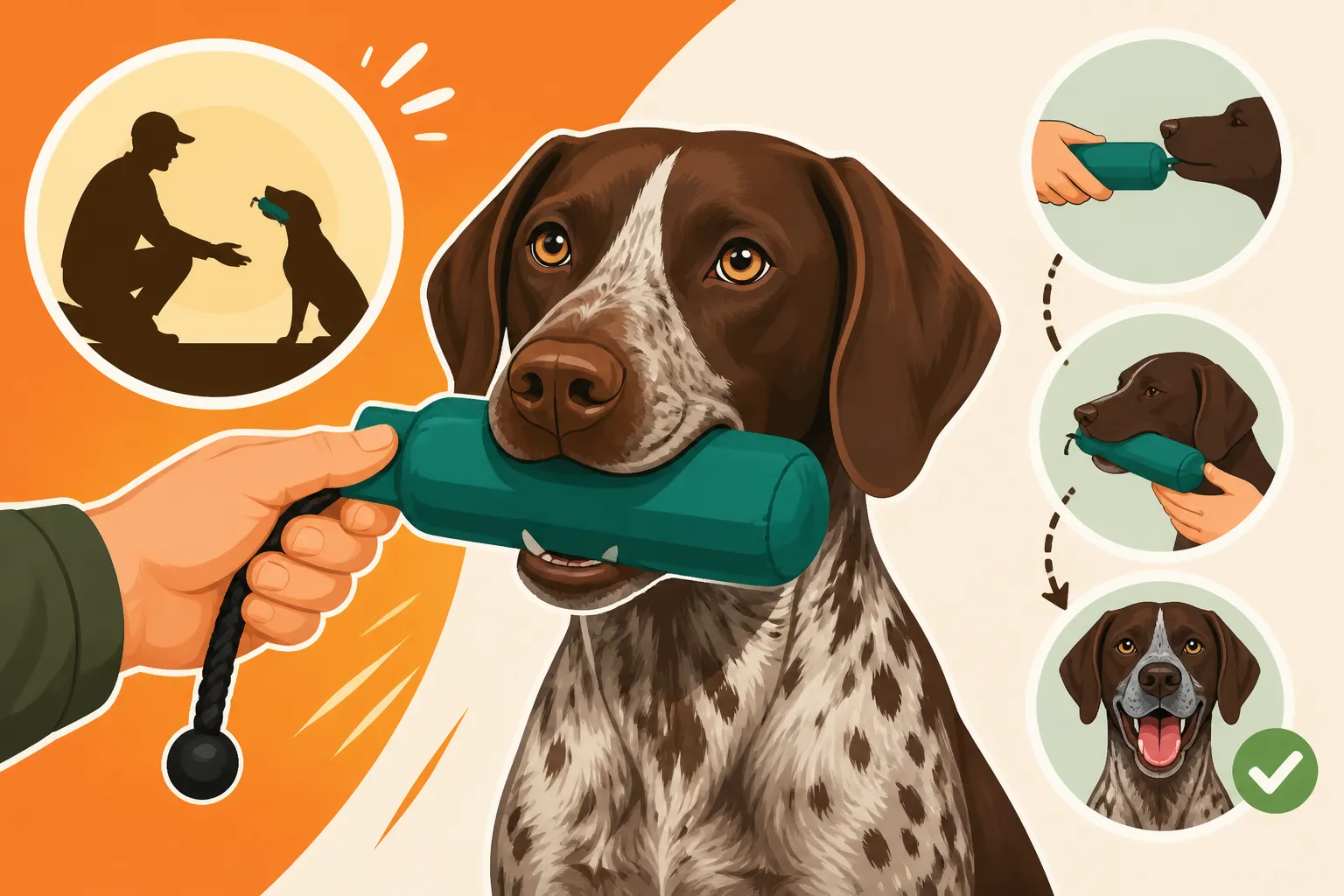
- Introduce the Dummy: Gently place the training dummy into your dog's mouth and give the command "Hold!" (or whatever command you choose).
- Apply Pressure: As you say "Hold," gently apply pressure to your dog's ear with your thumb and forefinger. This is the "ear pinch." The pressure should be just enough to be uncomfortable, but not painful.
- Release and Praise: The instant your dog closes its mouth around the dummy in response to the pressure, release the ear pinch immediately and lavishly praise them. It's crucial that the release of pressure coincides with the correct action. Hold the dummy in their mouth with one hand, reinforcing the "Hold" command, for a few seconds.
- Repeat and Refine: Repeat this process many times. The dog quickly learns: "Ear pinch means discomfort, closing my mouth on the dummy means discomfort stops."
- Remove the Dummy: After a few seconds of holding, gently remove the dummy with the command "Release!" or "Give!" and praise.
The goal here is a conditioned response: "Hold" + ear pinch = hold dummy. Once your Shorthair consistently picks up and holds the dummy as soon as you give the "Hold" command and apply the pinch (before you even pinch, ideally), you're ready to move on. This stage can take several days or even a week, depending on the individual dog. Remember, the pressure is a teaching aid, not a punishment. The dog controls the pressure by performing the correct action.
Stage 2: The "Fetch" Command and Pressure to Pick Up
Once your GSP reliably holds on command, you'll teach them to pick up the dummy from the ground. This stage usually involves a transition from the ear pinch to toe pressure or flank pressure, or consistent e-collar stimulation.
- Place the Dummy: With your Shorthair still on the table, place the dummy on the table directly in front of their mouth.
- Give the Command and Apply Pressure: Give the command "Fetch!" and simultaneously apply pressure. Many trainers transition to using a low-level continuous e-collar stimulation at this point, or a gentle but firm toe pinch (pinching a toe between your fingers).
- Guide to the Dummy: Guide your dog's head down to the dummy if necessary. As soon as their mouth touches the dummy and they attempt to pick it up, release the pressure immediately.
- Reinforce "Hold": Once they've picked it up, immediately give the "Hold!" command and ensure they maintain a firm but gentle grip for a few seconds.
- Repeat and Increase Distance: Practice this repeatedly. Gradually, you'll place the dummy further away on the table, requiring your dog to reach for it. Then, you'll move the dummy to the floor in front of the table, teaching them to step down to retrieve it.
The key is that the pressure starts when you say "Fetch!" and stops the moment the dog picks up the dummy. This teaches them that the act of picking up the dummy is the way to turn off the pressure. This method helps prevent issues like A Shorthair That Drops the Bird Short by ensuring they understand the entire retrieve sequence.
Stage 3: Extending the Retrieve and Delivering to Hand
With your German Shorthaired Pointer now consistently holding and picking up the dummy on command, the next phase is to extend the retrieve and solidify the delivery to hand. This is where the practice truly comes together for practical application.
- Short Retrieves: Begin by tossing the dummy a very short distance – just a few feet – from the force fetch table. Give the "Fetch!" command. If your dog hesitates or doesn't pick it up, immediately revert to the pressure (e-collar, ear pinch, etc.) until they retrieve it. As they pick it up, stop the pressure, give the "Hold!" command, and when they return, give the "Give!" command.
- Increasing Distance and Distractions: Gradually increase the distance you throw the dummy. Practice in different locations with minor distractions. The goal is to generalize the command so your Shorthair understands "Fetch!" means "pick it up and bring it to me" no matter where they are or what else is happening.
- Walking Fetch: Practice "walking fetch" where you walk your dog on a leash and toss the dummy a few feet to the side. Give the command, and as they pick it up, continue walking, encouraging them to walk with the dummy in their mouth. This simulates retrieving while moving, as they would in the field.
- Delivery to Hand: This is a critical component. Some dogs will retrieve the dummy but drop it short. To reinforce delivery to hand, when your dog approaches, gently take the dummy from their mouth while giving the "Give!" command, followed by praise. If they drop it before reaching you, use a check cord to guide them closer, and if necessary, a quick "no" or an e-collar correction to prevent them from dropping it early, then immediately re-cue "Hold" and guide them in.
Consistency is paramount at this stage. Every time you say "Fetch!", your German Shorthaired Pointer must pick up the item and bring it directly back to you for delivery. This reliability is what makes force fetch such a powerful training method for a hunting Shorthair, ensuring they become a rock-solid retrieving partner. This ensures that you won't have a dog that drops the bird short.
Troubleshooting Common Force Fetch Challenges
Even with a systematic approach, it’s normal to encounter bumps along the road when teaching force fetch. German Shorthaired Pointers are smart, but they are also sensitive and have strong opinions! Understanding common issues and how to address them is crucial for success and maintaining a positive relationship with your dog.
The "Soft Mouth" vs. "Hard Mouth" Dilemma
One of the primary goals of force fetch is to achieve a "soft mouth"—meaning your GSP holds the retrieve gently, without damaging the bird or dummy. Conversely, a "hard mouth" is when a dog habitually crushes or chews on the retrieve.
-
Addressing a Hard Mouth: If your Shorthair is mouthing or chewing, it typically stems from anxiety or a lack of understanding during the "hold" phase.
- Go Back to Basics: Revisit the "hold" command on the table. Ensure you are removing pressure immediately the instant they hold gently. Any chewing or mouthing should be met with a quick, firm "no" or a short, sharp correction (via e-collar or slip collar), followed by re-establishing the gentle hold.
- Vary the Dummy: Sometimes, a dog might mouth a particular type of dummy. Try different materials – a wooden dowel is less satisfying to chew than a soft canvas bumper. Ensure you're not leaving the dummy in their mouth for too long, as boredom can lead to chewing.
- Patience and Repetition: It takes time to override a natural chewing instinct. Be hyper-vigilant and consistent. Always reinforce the gentle hold. A German Shorthaired Pointer That Mouths Birds Hard addresses this specific issue.
-
Preventing a Soft Dog from Shutting Down: Some German Shorthaired Pointers are very sensitive and might "shut down" or refuse to participate if they perceive the pressure as too harsh.
- Adjust Pressure: Use the absolute minimum amount of pressure necessary to elicit a response. If using an e-collar, start at the lowest detectable level and only increase if there's no response.
- Positive Reinforcement: Balance pressure with ample praise and positive reinforcement when the dog performs correctly. Make it clear that compliance brings relief and reward.
- Short Sessions: Keep training sessions very short (5-10 minutes) and end on a positive note, even if it's just a simple "hold." Never force a session beyond your dog's mental capacity.
- Build Confidence: Ensure your Shorthair is confident in other areas of training. A confident dog is less likely to be overwhelmed by a new challenge.
Refusal to Pick Up or Dropping the Retrieve
These are common frustrations that force fetch directly addresses.
-
Refusal to Pick Up: If your GSP refuses to pick up the dummy, it means they haven't fully understood that picking it up is the way to turn off the pressure.
- Revisit Stage 2: Go back to placing the dummy right in front of their mouth on the table. Apply pressure, say "Fetch!", and physically guide their mouth to the dummy if needed. The instant their mouth closes around it, release the pressure. They need to make the connection between the action and the relief.
- Consistency: Never let them get away with not picking it up. If you give the command, follow through with the pressure until they comply. This is critical for establishing the reliability of the command.
-
Dropping the Retrieve Short: This is a classic GSP move, especially when they're excited or just want to play. They bring it back, but not all the way to your hand.
- Use a Check Cord: For initial retrieves, keep your dog on a short lead or check cord. When they retrieve the dummy, use the lead to guide them directly to your side, preventing them from veering off or dropping it early.
- Reinforce Delivery to Hand: As they approach, don't reach for the dummy until they are in the correct "heel" position and you give the "Give!" command. If they drop it early, immediately (but gently) re-apply pressure and guide them to pick it up again and deliver it correctly. This might mean starting with very short retrieves and gradually increasing distance.
- Avoid Playing Keep-Away: Do not chase your dog for the dummy. This teaches them that dropping it is part of a fun game. Stand firm, use your command and pressure to encourage proper delivery.
Remember, force fetch is a clear system of communication. If your Shorthair isn't performing, it's usually because the communication isn't clear enough, or the pressure/release timing isn't precise. Patience and consistency will lead to breakthroughs.
Beyond the Basics: Advanced Retrieve Concepts
Once your German Shorthaired Pointer has a reliable force-fetched retrieve, the possibilities for practical application and advanced skills truly open up. This foundation allows you to introduce more complex scenarios and refine their performance in the field.
Conditioning for Real-World Retrieves
A perfect retrieve on a training table is fantastic, but the real test comes in the actual hunting environment. You need to generalize the force fetch command to every conceivable scenario your Shorthair might encounter.
- Varying Terrain and Cover: Practice retrieves in thick brush, tall grass, over fences, and through various types of terrain. Your GSP needs to understand that "Fetch!" applies whether they are retrieving a pheasant from a thorny rose bush or a pigeon from an open field. This builds confidence and grit.
- Water Work: For a German Shorthaired Pointer, water retrieves are often a big part of their job. Start with easy, shallow water retrieves and gradually progress to deeper, colder water. Ensure your dog understands how to enter the water willingly and return with the retrieve, even if it's challenging. Check out Water Retrieves With a German Shorthaired Pointer for more in-depth guidance.
- Introducing Different Game: Begin with training bumpers, then progress to frozen dead birds (pigeons or ducks are good starters), and eventually, freshly shot game. The different textures, smells, and weights will test their "hold" and dedication. Many GSPs love fetching, but they need to learn to be reliable on all types of game.
- Weather Conditions: Train in various weather conditions – heat, cold, wind, light rain. A finished gun dog needs to perform regardless of comfort. Always prioritize safety and avoid extreme conditions, but exposing them to typical hunting weather builds resilience.
The goal is to eliminate any surprises. When a bird falls in the field, your Shorthair should retrieve it as a matter of course, without hesitation or concern for the conditions.
Steadiness, Honoring, and Blind Retrieves
With a solid force fetch, you can now layer on more advanced skills that are essential for a polished gun dog.
- Steadiness: This means your German Shorthaired Pointer remains steady (sitting or standing still) when the bird is flushed, shot, and falls, only going for the retrieve on your command. Force fetch is crucial here because it ensures that even if your Shorthair wants to go, they will wait for the "Fetch!" command before moving. You can build this using a check cord and eventually an e-collar for reinforcement. Steadying a Shorthair to Wing and Shot is a companion skill to a reliable retrieve.
- Honoring/Backing: In a multi-dog hunt, honoring (or backing) is when your Shorthair holds point or remains steady while another dog points and retrieves. A force-fetched retrieve allows you to enforce that "stay" command even when another dog is working and there's a bird on the ground. Your dog knows that their job is to wait for your command to retrieve, not just to jump in.
- Blind Retrieves: This is the pinnacle of retrieving. A blind retrieve is when your dog goes to retrieve a bird they did not see fall, guided by your hand signals and whistle commands. Force fetch builds the understanding that when you say "Fetch!" and give directions, they must go in that direction and search for the hidden bird, then bring it back. Without the fundamental understanding that "Fetch!" means find and bring, blind retrieves are impossible. This level of communication requires absolute trust and a deep understanding of your commands, which force fetch helps establish. This also ties into The Structure a German Shorthaired Pointer Needs Daily to maintain these advanced skills.
Advanced work isn't just about showing off; it's about creating a truly versatile and valuable hunting partner. Force fetch isn't the end of training; it's the solid ground on which you build a truly exceptional German Shorthaired Pointer.
Disclaimer
This article is for general informational purposes only and does not constitute professional advice. Laws, prices and regulations vary by location and change over time. Consult a qualified professional for guidance on your specific situation.