Why Bloat Follows a Shorthair’s Hard Day Afield
There's nothing quite like the immense satisfaction of watching your German Shorthaired Pointer perform brilliantly in the field, working scent, pointing steadfastly, and retrieving tirelessly. But as the day winds down and you’re driving home with a tired, content dog, a nagging worry can creep in: the specter of bloat. This guide will meticulously unpack exactly why a hard day afield significantly elevates the risk of Gastric Dilatation-Volvulus (GDV) in your beloved Shorthair and, more importantly, what you can do to prevent it and respond effectively if it strikes.
Understanding Bloat: What it is and why it's a GSP concern
Bloat, or Gastric Dilatation-Volvulus (GDV), is every German Shorthaired Pointer owner's nightmare, and for good reason. It's a terrifyingly rapid and often fatal condition where your dog's stomach fills with gas, food, or fluid, and then twists on itself. The sheer speed with which it can progress from a seemingly normal dog to a life-threatening emergency is truly heartbreaking and a huge source of anxiety for those of us with deep-chested, high-energy breeds like GSPs.
The Mechanism of GDV in Deep-Chested Breeds
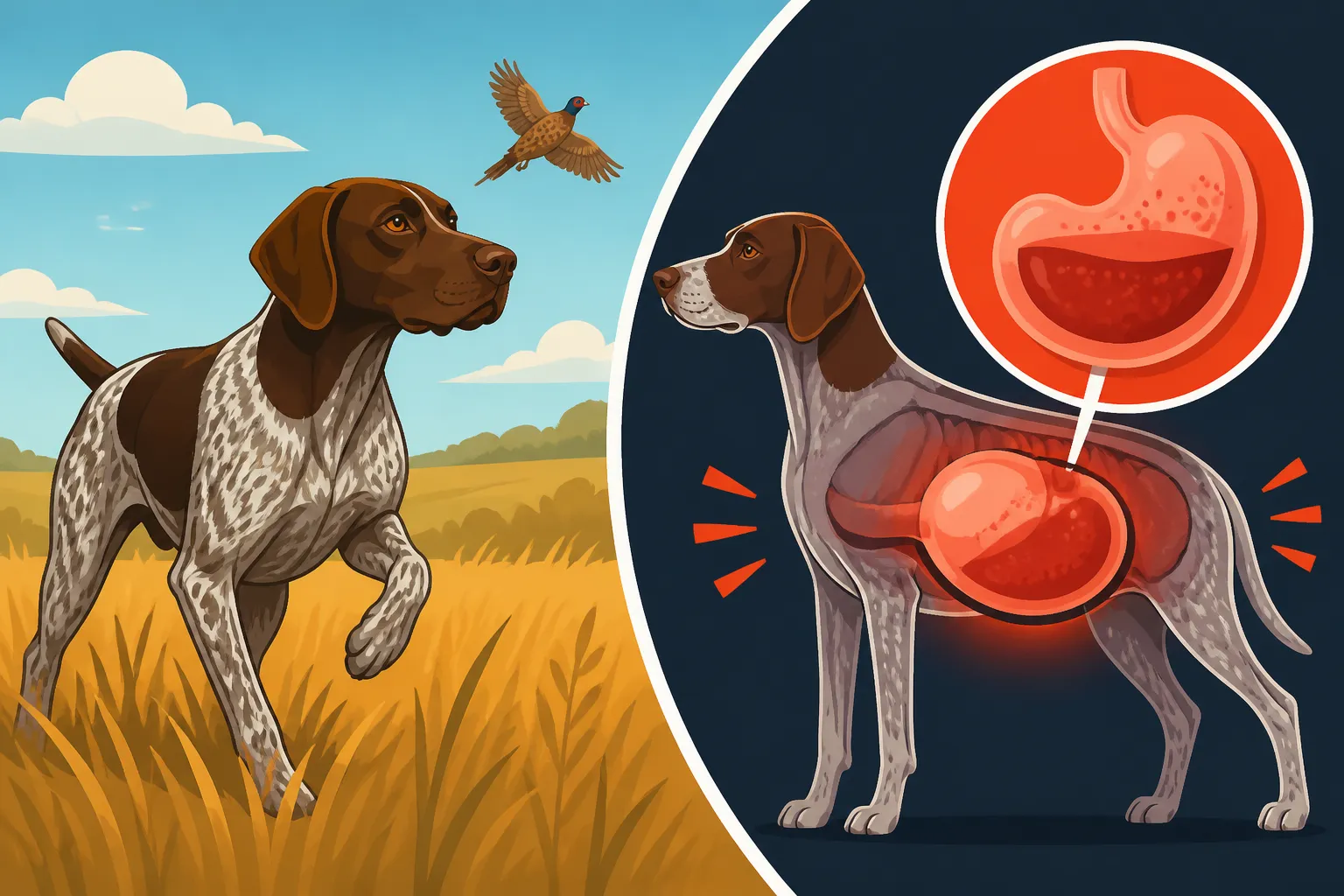
When we talk about GDV, we're essentially talking about two phases. First, the "dilatation" phase: the stomach rapidly expands with gas. This is uncomfortable, obviously, but not immediately deadly. The real problem, the "volvulus" phase, occurs when this distended stomach then twists, pinching off both the entry (esophagus) and exit (duodenum). This traps everything inside, cutting off blood supply to the stomach and often affecting other vital organs.
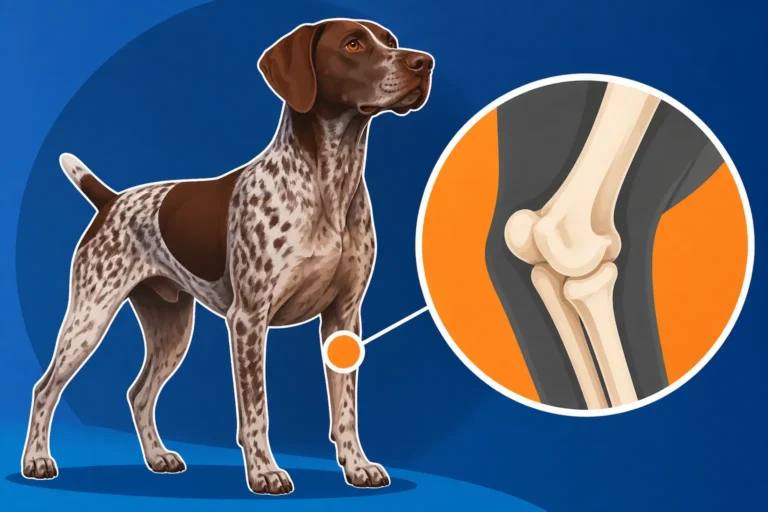
German Shorthaired Pointers, with their magnificent athletic build, fall squarely into the category of breeds prone to GDV. Their characteristic deep chests and narrow waists, while perfect for lung capacity and agility in the field, are unfortunately a significant anatomical predisposition. Imagine a bowling ball in a tall, narrow vase; it has more room to swing and twist than a bowling ball in a wide, shallow bowl. This anatomical reality means their stomach has more space to rotate, making them prime candidates for this devastating condition. It’s a cruel irony that the very traits that make them such exceptional athletes also put them at increased risk.
The Immediate Danger and Symptoms of Bloat
The danger of bloat lies not just in the stomach twisting, but in the cascade of systemic problems that follow. The pressure from the swollen stomach can compress major blood vessels, leading to shock. It impairs breathing because the diaphragm can't move properly, and it can even cause parts of the stomach lining to die due to lack of blood flow. The pain is excruciating, and without immediate veterinary intervention, death can occur within hours.
Recognizing the early signs is absolutely critical. You might see unproductive retching – your dog trying to vomit but nothing comes up. This is a classic, but often overlooked, symptom of bloat. Other signs include a distended or swollen abdomen (though this isn't always obvious in the early stages, especially with their deep chests), restlessness, drooling, pacing, and signs of discomfort or pain when you touch their belly. Your dog might also seem weak, collapse, or have pale gums. When you see your dog exhibiting unproductive retching, it’s not just an upset stomach; it’s a red flag demanding immediate attention. Don’t wait; every minute counts.
The Perfect Storm: How a Hard Day Afield Triggers Bloat
A German Shorthaired Pointer's natural drive to hunt, retrieve, and cover ground is truly astounding. But these very activities, especially over a "hard day afield," create a confluence of factors that dramatically increase the risk of bloat. It's not usually one single event, but rather a combination of physical exertion, stress, and specific eating and drinking behaviors that set the stage for GDV.
High-Intensity Exercise and Stress
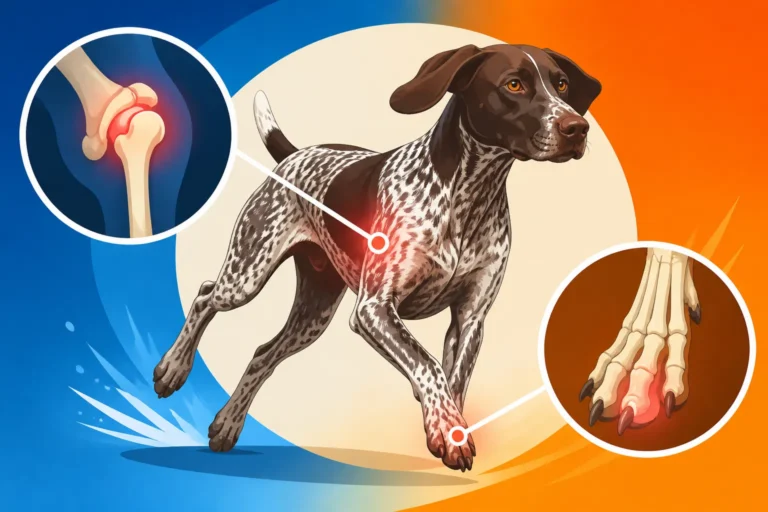
Picture your GSP on a pheasant hunt: sprinting through tall grass, plunging into icy water for a retrieve, navigating dense cover, all while processing countless scents. This isn't just a casual walk in the park; it's a marathon of high-intensity, stop-and-go exercise coupled with immense mental and physical stress. When a dog is exerting itself this intensely, its body prioritizes blood flow to working muscles and vital organs, diverting it away from the digestive system. The gut slows down, peristalsis (the normal wave-like contractions that move food along) becomes sluggish, and gas can accumulate more easily.
Furthermore, the stress of the hunt itself—the excitement, the anticipation, the constant vigilance—can also contribute. Stress hormones can impact digestion and gut motility, making the stomach more susceptible to issues. Imagine the adrenaline pumping through your dog's veins; this can lead to gulping air, which adds to gas build-up in the stomach. All of these factors combined mean that the stomach environment after a long, strenuous day is far from ideal for digestion and gas regulation. This is a different kind of challenge than even something like heat exhaustion, which also demands vigilance.
Eating and Drinking Habits Around Exertion
This is where many well-meaning owners inadvertently increase the risk. After hours of running and working, your Shorthair is usually ravenous and incredibly thirsty. Offering a large meal or a huge bowl of water immediately after strenuous activity is a major no-no. When a dog eats or drinks rapidly, especially after exercise, they tend to gulp down a significant amount of air along with their food or water. This air can then become trapped in the stomach, contributing to the initial dilatation phase of bloat.
Think about it: your dog is panting heavily from exertion, taking in even more air, and then slurping down water or wolfing down kibble. This creates the perfect scenario for excessive gas in the stomach. Moreover, the type of food can play a role. Some studies suggest that diets high in fat or certain ingredients might contribute, though the link isn't as strong as the behavioral factors. What's clear is that the timing and manner of feeding and watering around a hard day afield are critical. We discuss the critical rest a Shorthair needs between eating and running in more detail elsewhere, and it’s a vital piece of the bloat prevention puzzle.
Post-Exercise Relaxation and Gas Accumulation
The final, often overlooked, piece of the bloat puzzle after a hard day afield is the period of relaxation and rest. You get your GSP home, they’ve eaten and had a good drink, and now they're settling down for a well-deserved nap. It's during this time, when the body is shifting from an activated, high-alert state to a relaxed one, that the stomach can become particularly vulnerable.
As the dog relaxes, the diaphragm's movement changes, and the abdominal muscles are less engaged. If there's already gas accumulating from rapid eating/drinking and the slowed digestion during exercise, this relaxed state allows the stomach to distend more freely. The trapped gas, combined with the deep-chested anatomy, creates an unstable environment where the stomach is more likely to twist. Many bloat cases are observed in the hours after a meal and exercise, when the dog is seemingly calm, leading owners to believe the danger has passed. This is why vigilance is crucial even when your dog is just resting. Recognizing this specific vulnerability is key to preventing a potential crisis.
Proactive Measures: Preventing Bloat After a Hard Day
Knowing the risks is one thing, but actively implementing strategies to mitigate them is where you can truly protect your German Shorthaired Pointer. Prevention is always better than treatment, especially with a condition as severe as bloat. These proactive steps, while requiring a bit of planning and discipline, can drastically reduce your dog's risk after a strenuous day.
Strategic Feeding and Watering
This is arguably the most critical area for prevention. Instead of offering one large meal immediately after a hunt, break your dog's daily ration into two or three smaller meals. And never, ever feed your GSP within an hour before or after intense exercise. The stomach needs time to settle and digest without the added stress of physical activity. For a working dog, managing the monthly food bill for a hard-working Shorthair can be a significant expense, but proper nutrition and feeding practices are paramount.
When it comes to water, offer small, frequent amounts rather than allowing your dog to gulp down a large volume all at once after a hunt. Keep a collapsible bowl and water bottle handy in the field and offer sips during breaks. At home, wait until your dog has completely cooled down and is breathing normally before allowing free access to water. Some owners even use elevated food bowls, though scientific evidence on their effectiveness for bloat prevention is mixed and some studies even suggest they might slightly increase risk in certain breeds. However, the pace of eating and drinking is universally agreed upon as a critical factor. Consider slow feeder bowls if your GSP is a rapid eater.
Managing Post-Hunt Activity and Rest
After a grueling day of hunting, your GSP will be tired, but a sudden crash followed by total inactivity isn't ideal either. Aim for a gradual cool-down period. This could involve a short, leisurely walk on a leash after getting out of the field, or simply allowing them to walk around for 15-20 minutes before settling down. This gentle movement helps their body return to a resting state more smoothly and can aid in expelling any accumulated gas.
Once home and after their small, spaced-out meal and sips of water, ensure your Shorthair has a quiet, comfortable place to rest. Avoid rough play, excited greetings, or anything that would encourage rolling, jumping, or excessive abdominal movement for at least a few hours after eating. This period of calm relaxation allows the digestive system to do its job without undue agitation. Think of it as allowing the "food baby" to settle properly without jostling it around. You want to avoid any activities that could mirror the frantic energy of the hunt itself.
Considering a Gastropexy for Prevention
For German Shorthaired Pointers, especially those actively used in hunting or those with a family history of bloat, a prophylactic gastropexy is a significant consideration. This surgical procedure involves permanently attaching the stomach to the abdominal wall, preventing it from twisting. While it doesn't prevent the stomach from dilating (filling with gas), it largely eliminates the life-threatening "volvulus" or twisting component.
The decision to pursue a gastropexy is a big one, often discussed with your veterinarian. It's commonly performed at the same time as a spay or neuter, but can be done as a standalone procedure. For owners concerned about the bloat risk a Shorthair carries into every season, particularly for high-performance dogs, this procedure can offer immense peace of mind. While no surgery is without risk, the survival rate for dogs undergoing a gastropexy is significantly higher than for those needing emergency surgery for a full-blown GDV. It's an investment in your dog's long-term health and a conversation worth having with your vet, especially if you plan to keep your GSP in active field work. We delve into the gastropexy decision on a hunting Shorthair in more depth in another article.
Recognizing the Signs and Emergency Response
Even with the most diligent preventative measures, accidents can happen. That's why being able to quickly identify the signs of bloat and knowing precisely what to do next is absolutely paramount. Time is the most critical factor in successful treatment of GDV. Hesitation can, unfortunately, be fatal.
Subtle vs. Obvious Symptoms
One of the most insidious aspects of bloat is that its early signs can be subtle, easily mistaken for general discomfort or a typical upset stomach after a long day. You might see your GSP looking a bit anxious, pacing, or trying to settle down but constantly shifting positions. There might be some drooling or lip licking. They might stare at their flank or show mild abdominal pain if you gently touch their belly.
As the condition progresses, the symptoms become more obvious and alarming. The classic unproductive retching, where your dog strains and dry-heaves but nothing comes up, is a strong indicator. Their abdomen might become noticeably distended and hard to the touch, though, as mentioned, this can be harder to spot in a deep-chested GSP. They may become restless, pant heavily, and show signs of extreme pain. Their gums might become pale or bluish, and their pulse might be rapid and weak. If you're struggling to differentiate, asking yourself if your dog is exhibiting bloat from a belly full of water can be tricky, but understanding the specific signs can save precious time.
| Symptom | Description | Urgency |
|---|---|---|
| Unproductive Retching | Dog tries to vomit but no food or liquid comes out, often accompanied by heaving. | Immediate |
| Distended Abdomen | Swelling and hardness of the belly, particularly on the left side (may be hard to see in early stages). | Immediate |
| Restlessness / Pacing | Inability to get comfortable, constant shifting, looking at flank. | High |
| Drooling / Lip Licking | Excessive saliva production. | Moderate |
| Pale Gums | Gums lose their healthy pink color, appearing pale white or grayish. | Immediate |
| Rapid, Weak Pulse | Heart rate increases but pulse feels faint. | Immediate |
| Weakness / Collapse | Dog may appear lethargic, unsteady, or unable to stand. | Immediate |
| Whining / Groaning | Vocalizations indicating pain or distress. | High |
Immediate Actions to Take and Getting to the Vet Quickly
If you suspect bloat, even slightly, it is a dire emergency that requires immediate veterinary attention. Do not try to "wait and see," do not try home remedies, and do not waste time calling multiple vets for quotes. Get your dog to the nearest emergency veterinary clinic, immediately. Call ahead if you can, just to let them know you’re coming and what your concerns are. This allows them to prepare for your arrival.
Once you’re in the car, try to keep your dog as calm and comfortable as possible, but don't delay the journey. Every minute that passes increases the risk of irreversible damage and decreases the chances of survival. This is not the time to second-guess yourself; trust your gut. Many German Shorthaired Pointer owners understand the costs associated with their active dogs, and having pet insurance from providers like Healthy Paws can be a lifesaver in these unexpected, high-cost emergencies. Knowing that you might have coverage for significant veterinary bills can help you focus entirely on getting your dog the care they need without financial hesitation. For comprehensive advice on what happens next, consult our guide on emergency care for a bloating German Shorthaired Pointer.
Disclaimer
This article is intended for informational purposes only and does not constitute veterinary advice. Always consult with a qualified veterinarian for any health concerns or before making any decisions about your pet's health or treatment.