Whether a Shorthair Can Wear an E-Collar at a NAVHDA Test
Anyone who's invested their heart and soul, not to mention countless hours, into training a German Shorthaired Pointer for NAVHDA tests knows the gnawing uncertainty: can I use my trusty e-collar on test day? It's a question that brings up a lot of anxiety because you want to ensure your dog performs their best, but you also want to adhere strictly to the rules. This guide is here to untangle the confusion and clearly lay out the regulations around e-collar use in NAVHDA tests, helping you understand not just what the rules are, but why they exist, and how to prepare your versatile companion for success without any last-minute surprises.
Understanding NAVHDA's Stance on Training Aids
When you're working with a German Shorthaired Pointer, especially one destined for the field, you quickly realize they're a breed with incredible drive, intelligence, and an independent streak. NAVHDA, the North American Versatile Hunting Dog Association, was founded to celebrate and cultivate these very traits. Their testing system is designed to evaluate a dog's inherent abilities and trained skills in a simulated hunting environment, and to do that fairly, they have strict rules about what can and cannot be used during a test.
The Core Philosophy Behind NAVHDA Testing
NAVHDA isn't just a competition; it's a celebration of the versatile hunting dog. The core philosophy is all about assessing a dog's natural instincts, like pointing, tracking, and retrieving, and how well those instincts have been honed through training. They want to see the dog work in a way that truly reflects its genetic predisposition and the handler's skill in developing those predispositions, rather than a dog merely performing due to continuous electronic input. The tests are designed to highlight a dog's innate desire to hunt and its biddability – its willingness to cooperate with the handler.
Think of it this way: the judges are trying to get a clear picture of your dog's abilities, not the effectiveness of a specific piece of equipment. If a dog relies heavily on an e-collar during every training session, it becomes difficult to truly gauge its natural desire to honor a point or retrieve a bird when that specific tool is removed. The goal is to produce well-rounded hunting companions, and part of that means demonstrating control and responsiveness through traditional commands, whistle cues, and body language. It's about showcasing the partnership you've built, where the dog understands its job and performs it reliably because of solid foundation training, not just because a device is prompting it. The Two Hours a Day a German Shorthaired Pointer Needs is a good read on the sheer volume of exercise and mental stimulation these dogs thrive on, which directly impacts their training success.
Specific Rules Regarding E-Collars During Tests
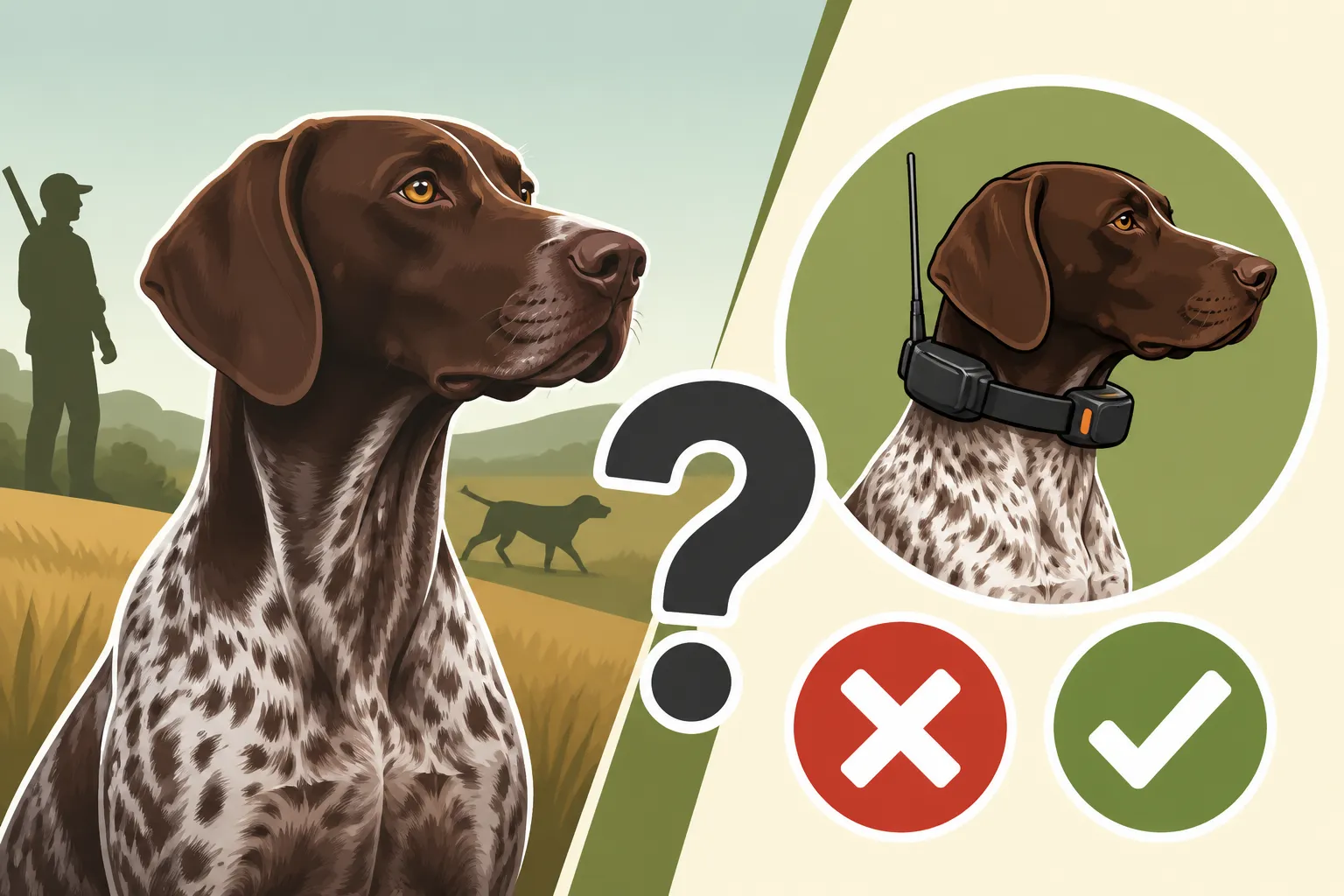
So, let's get straight to the point: no, a German Shorthaired Pointer, or any dog, is not permitted to wear an e-collar, or any electronic training device, during an official NAVHDA test. This rule is absolute and non-negotiable across all test levels, from Natural Ability to Utility. The moment a dog enters the test field, any electronic collar, whether it's turned off or not, must be removed. This isn't just about preventing unfair advantages; it's about ensuring a level playing field for all participants and maintaining the integrity of the test's assessment of a dog's inherent abilities and trained responses.
The rationale is quite simple: NAVHDA wants to observe the dog's performance based on the commands and training it has received, independent of electronic stimulation. They consider an e-collar, even if inactive, to be a training aid. Allowing it, even as a "safety blanket," could subtly influence a dog's behavior or a handler's confidence, which could, in turn, affect the objective evaluation. This rule is clearly stated in the NAVHDA Aims, Programs, and Test Rules, and it's something every handler needs to understand long before test day. Judges are vigilant about this, and attempting to run your dog with an e-collar on, even mistakenly, will lead to disqualification. It's crucial to leave it in your vehicle or with a trusted friend outside the test area to avoid any misunderstandings.
Training with E-Collars Outside of Test Day
Now, just because you can't use an e-collar during a NAVHDA test doesn't mean it has no place in your German Shorthaired Pointer's training journey. In fact, for many owners of these high-drive, wide-ranging dogs, an e-collar is an indispensable tool that dramatically enhances safety and reliability in the field.
The Role of E-Collars in GSP Field Training
For a German Shorthaired Pointer, a breed famous for its incredible range and stamina, an e-collar often becomes a vital part of their field training. These dogs are born to run, to cover ground, and to hunt, and sometimes their enthusiasm can carry them further than you'd like, especially in open country or dense cover. An e-collar, when used correctly and humanely, offers a way to maintain communication and control at a distance that verbal commands or a check cord simply can't match. E-Collars Built for a Running German Shorthaired Pointer offers more insights into the specific features beneficial for our energetic companions.
Many experienced handlers use e-collars to reinforce commands like recall ("here!"), whoa, and breaking point, particularly once the dog has a solid understanding of these commands on a check cord or long line. The goal isn't to punish, but to provide a consistent, clear signal that can cut through distractions like scent of birds or the excitement of a chase. For instance, if your GSP is locked on a point but decides to creep forward, a subtle, low-level stimulation can serve as an "interrupter" to remind them of the "whoa" command you're simultaneously giving verbally. The key is that the dog understands the command first, and the e-collar merely becomes an extension of your voice and hand signals. This tool can be particularly useful for establishing an incredibly reliable recall, which is paramount for a dog that will be hunting in areas where livestock or roads might be present. Companies like Garmin and SportDOG offer excellent remote trainers that many GSP owners find indispensable for their range and durability. You can find a wide variety of these devices on Amazon, often with features like waterproof designs and long battery life crucial for a hunting dog.
Ethical Considerations and Proper E-Collar Use
Let's be very clear: an e-collar is not a shortcut or a replacement for good, consistent, positive reinforcement training. It's a tool, and like any powerful tool, it requires understanding, skill, and ethical considerations to be used effectively and humanely. The wrong approach can not only damage your dog's trust in you but also lead to fear, anxiety, and a complete breakdown in their desire to work. Conditioning a Shorthair to the E-Collar Properly is a critical read if you are considering this path.
The foundation of e-collar training should always be built on a strong positive reinforcement history. Your dog needs to know what you want them to do before the e-collar is introduced as a reinforcing cue. Always start at the lowest possible stimulation level, often referred to as a "working level," which is just enough for your dog to perceive it. It should be a tap on the shoulder, not a shock. Many owners find it incredibly beneficial to seek guidance from experienced professional trainers who specialize in e-collar conditioning for hunting dogs. They can teach you how to properly introduce the collar, pair it with known commands, and build up your dog's understanding and confidence. Programs like those offered by BAXTER & Bella, while not specifically e-collar focused, provide a fantastic foundation in positive puppy training and obedience that can make later e-collar conditioning much smoother and more ethical. Remember, the goal is always to create a dog that wants to comply because it understands and trusts you, not one that fears correction.
Preparing Your Shorthair for Test Day Without an E-Collar
Since the e-collar must come off for the test, your preparation needs to focus on ensuring your German Shorthaired Pointer performs just as reliably without it. This means truly cementing those foundation commands and getting them accustomed to test-like scenarios.
Building Reliable Foundation Commands
The secret to success on NAVHDA test day, without an e-collar, lies in the absolute reliability of your foundation commands. This isn't about hoping your dog will respond; it's about knowing, with unwavering certainty, that they will. This takes time, consistency, and a deep understanding of your dog's motivation.
Start with the basics, but take them to an advanced level. "Whoa" is perhaps the most critical command for a pointing dog. Your dog needs to freeze in place, regardless of flushing birds, gunshots, or other distractions. Begin training "whoa" in a controlled environment, slowly adding distractions. Use a check cord for physical reinforcement, gradually transitioning to purely verbal and whistle commands. Building Whoa on a Shorthair With a Check Cord outlines this process beautifully. Practice "whoa" when birds flush, when the gun fires, and when another dog is working nearby. Your recall also needs to be impeccable. A GSP that won't come back when called is a liability in the field and a guaranteed failure in a test. Make recall the most rewarding thing your dog can do, using high-value treats, exciting toys, and enthusiastic praise. Practice it frequently, even when they're distracted. Consistent practice, even for just short, focused sessions daily, reinforces these commands until they become second nature, ingrained habits rather than conscious decisions for your dog.
Simulating Test Conditions in Training
One of the biggest mistakes handlers make is only training in their backyard or a familiar field. To truly prepare your Shorthair for test day, you need to expose them to as many varied and challenging conditions as possible. This means simulating the very environment and pressures they'll face without the aid of an e-collar.
Seek out different training grounds – open fields, dense cover, areas with different types of birds (pheasants, quail, chukar). Expose your dog to varying weather conditions, from cool mornings to warmer afternoons. Crucially, practice with other dogs present, whether they are working or simply spectating. Your GSP needs to learn to focus on you and the birds despite the presence of other canines. Practice introducing the gun sound from varying distances, gradually decreasing the distance until they are comfortable with shots fired over a flushed bird. Introducing a German Shorthaired Pointer to Birds and Introducing the Gun Without Ruining a Shorthair are invaluable resources for this stage. When you're ready, remove the e-collar completely during these practice sessions. Let your dog get used to working without that familiar receiver around its neck. Observe their behavior. Are they still responsive? Do they maintain their focus? This is where you'll identify any weak spots in your training that need further attention. If they struggle without the collar, go back to basics, reinforce those commands, and then try again. The goal is for your dog to perform consistently and confidently, regardless of whether a device is on their neck.
The Impact of E-Collar Training Philosophy on Test Performance
The way you approach e-collar training fundamentally shapes your dog's performance, especially when that tool is removed. It's about developing a dog that is not only well-trained but also confident and eager to please.
The "Invisible Leash" and Mental Conditioning
The concept of an "invisible leash" is paramount when using an e-collar as part of your training regimen, particularly if your goal is NAVHDA testing. It means that the e-collar, while a physical device, should primarily serve as a bridge to mental conditioning. Your German Shorthaired Pointer should eventually perform commands not because they feel a physical sensation from the collar, but because they have learned to associate your verbal or whistle command with the desired action, and because they understand the consequence (or lack thereof) of non-compliance. Whistle Commands a Shorthair Should Know are perfect for developing this type of long-distance communication.
The goal is for the e-collar to become redundant over time, or at least for its presence to be a non-factor in your dog's decision-making process. A well-trained GSP, conditioned with an e-collar, will still respond perfectly even when the collar is absent. Why? Because they've learned the command, they've learned the expectation, and they've learned that you are the source of direction and reward, not the device. It builds incredible trust and responsiveness. When a dog only performs with the e-collar on, it indicates a dependency, not true understanding or desire. Your dog should choose to respond to your voice and whistle, confident in their understanding and eager for your approval. If you notice signs of stress or fear, such as Reading a German Shorthaired Pointer's Stress Signals, it's a sign that the training approach needs adjustment.
Alternative Training Aids and Strategies
Beyond the e-collar, a variety of traditional training aids and strategies are perfectly acceptable and highly effective for preparing your GSP for NAVHDA tests. These tools have been used for generations to build responsive, reliable hunting dogs.
- Long Lines and Check Cords: These are your best friends for teaching "whoa," recall, and quartering. A 30-foot or even 50-foot check cord allows you to introduce distance control while still having a physical means of correction or guidance. It's how you establish the initial understanding of commands before moving to off-leash work, potentially incorporating an e-collar later to layer that reliability.
- Whistles: A simple whistle is an incredibly powerful tool for long-distance communication. Its sound carries further and is more consistent than your voice, especially in windy conditions or dense cover. Teach specific commands like "come," "stop" (for "whoa"), or "turn" with different whistle blasts. This is an essential skill for a wide-ranging GSP.
- Bird Work: There's no substitute for actual bird exposure. Using live pigeons, chukar, or pheasants in controlled scenarios allows your dog to develop its natural pointing, flushing, and retrieving instincts under realistic conditions. It also provides the ultimate distraction for proofing those obedience commands.
- Body Language and Voice: Never underestimate the power of your own presence. A consistent, calm, and confident demeanor, coupled with clear verbal commands, forms the backbone of your relationship and your dog's responsiveness. Your energy directly impacts your GSP's performance.
Here's a quick comparison of various training tools:
| Training Aid | Primary Use | Pros | Cons | NAVHDA Test Use |
|---|---|---|---|---|
| Check Cord/Long Line | Foundation commands, distance control | Physical guidance, immediate feedback, builds understanding | Can get tangled, limited range, dog can feel pressure | Yes |
| Whistle | Long-distance commands, consistent sound | Cuts through noise, wide range, less vocal strain | Requires consistent conditioning, dog must associate with command | Yes |
| E-Collar | Distance control, recall, breaking point | Excellent range, consistent stimulation, immediate interruption | Requires careful conditioning, potential for misuse, not for beginners | No |
| Mouthpiece/Dummies | Retrieve training, holding birds | Builds soft mouth, consistent retrieve, prepares for live birds | Only for retrieving, not for obedience/field control | Yes |
| Voice Commands | All commands, personal communication | Builds bond, versatile, always available | Limited range, can be inconsistent in tone/volume, easily ignored | Yes |
Ultimately, preparing your German Shorthaired Pointer for a NAVHDA test is a holistic endeavor. It's about developing a capable, confident hunting partner through consistent, thoughtful training, using all the appropriate tools outside of the test, and building a bond of trust and understanding that transcends any single piece of equipment. When your GSP enters that test field, the judge should see a dog that performs reliably because it wants to, and because you've equipped it with the understanding to do so, no matter what. For more insights on the different test types, check out What the Natural Ability Test Scores on a Shorthair and Preparing a Shorthair for the Utility Preparatory Test.
Disclaimer
This article is for general informational purposes only and does not constitute professional advice. Laws, prices and regulations vary by location and change over time. Consult a qualified professional for guidance on your specific situation.